Oil projects drive a sharp rise in planned borrowing
Timor-Leste's proposed 2027 state budget would raise the ceiling for public debt issuance to $1.6 billion, from $850 million in 2026, while more than doubling the allocation for the Ministry of Petroleum. The $2.568 billion consolidated spending proposal places petroleum development alongside infrastructure, education and health as priorities for the coming year.
Contents
- Oil projects drive a sharp rise in planned borrowing
- What the larger petroleum allocation would support
- Greater Sunrise has several decisions ahead
- Roads, water and electricity receive more funding
- Schools, clinics and veterans remain major commitments
- A new planning process starts with political priorities
- Diversification depends partly on another petroleum push
- The dates shaping the budget and gas plans
- Key Points
The petroleum ministry would receive $291.8 million, up from $128.5 million in 2026, according to the proposal's budget classification book. The additional $163.3 million represents an increase of about 127%. Projects named in the spending plans include the Kuda Tasi and Jahal fields and Greater Sunrise.
The proposed borrowing ceiling would rise by $750 million, or about 88%. The government intends to direct borrowing toward oil and gas exploration, refining and transport, transport and communications infrastructure, and investments intended to secure the country's economy.
A borrowing ceiling is the maximum amount the government would be authorised to raise under the proposal. Actual borrowing would depend on the financing arrangements and investment decisions that follow. Loans bring money forward for projects, while creating repayment obligations for later budgets.
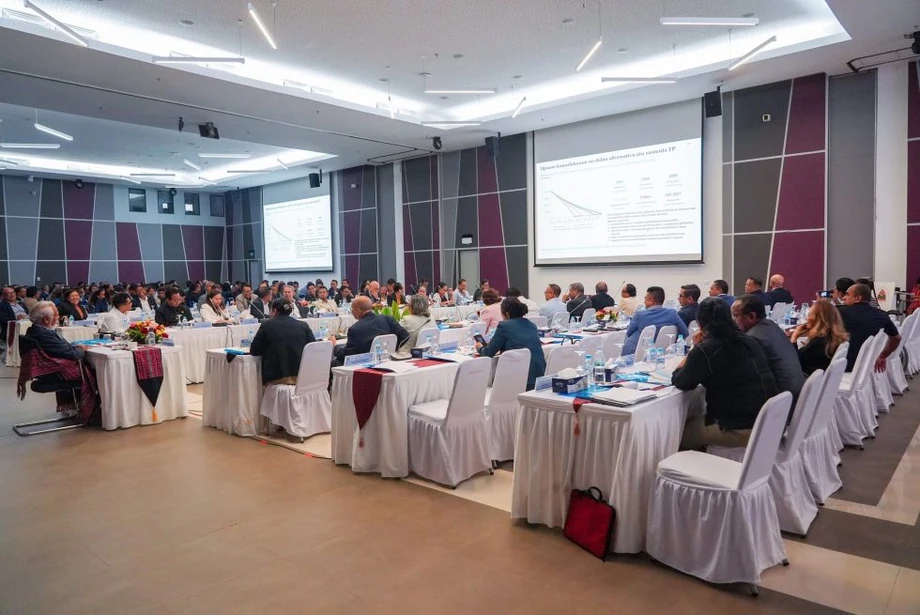
The government submitted the proposal to parliament on October 1, 2026. Debate on its broad principles is scheduled for November 9 to 11, followed by detailed consideration from November 24 to December 4.
The central choice is how to finance projects expected to generate future income while maintaining public services today. Petroleum receives the largest allocation among the ministries detailed in the proposal, even as the government presents economic diversification as a guiding aim.
What the larger petroleum allocation would support
The Ministry of Petroleum's proposed $291.8 million allocation amounts to about 11.4% of the $2.568 billion consolidated budget. The increase from 2026 is larger than the entire $128.5 million allocation the ministry received that year.
Kuda Tasi, Jahal and Greater Sunrise are the named petroleum projects behind the increase. Greater Sunrise is especially relevant because Timor-Leste is pursuing greater control of the resource while working with Australia on the rules needed for development.
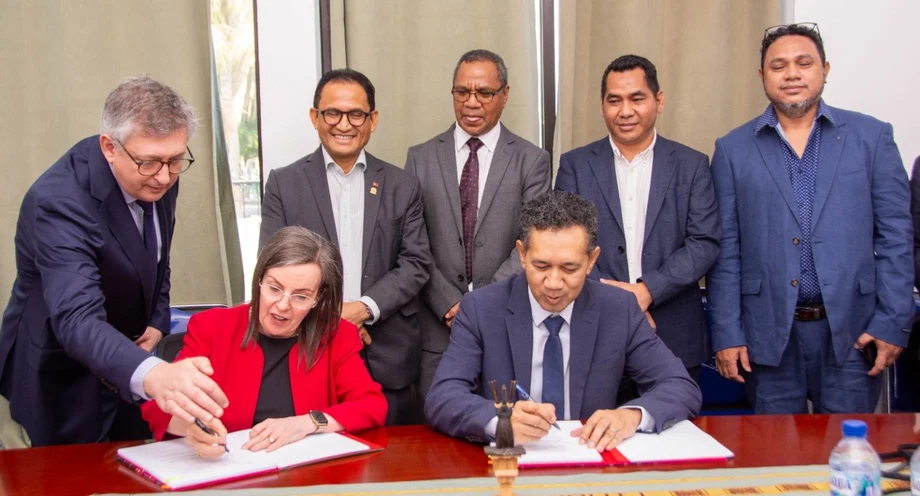
Timor GAP, the national petroleum company, signed an agreement on October 27, 2026, to buy Woodside Energy's 33.44% interest in Greater Sunrise for up to $200 million. The Greater Sunrise stake agreement requires $13.71 million when the transaction closes, with most of the potential payment tied to later development milestones.
A further $11.29 million would fall due after a final investment decision, the formal commitment to finance and proceed with development. The largest instalment, $175 million, depends on the project reaching its first cargo of liquefied natural gas. LNG is gas cooled into liquid form so it can be transported by ship.
Combined with a separate agreement to acquire Osaka Gas's 10% interest, completion of both purchases would put Greater Sunrise entirely under Timor GAP's control. Woodside and Timor GAP are targeting completion of their transaction in the first half of 2027, subject to approvals.
The budget information does not specify how much of the ministry's allocation would go to each named field, how much of the borrowing authority would be used, or the interest rates and repayment periods of future loans. Those details will determine the cost and timing of the financing programme.
Greater Sunrise has several decisions ahead
Timor-Leste and Australia have also advanced the legal arrangements for Greater Sunrise. At a September 25 meeting in Dili, Petroleum and Mineral Resources Minister Francisco da Costa Monteiro said negotiations had produced technical agreement on a Petroleum Mining Code, a Production Sharing Contract and a Fiscal Regime.
The three Greater Sunrise frameworks cover different parts of development: the rules for petroleum operations, the contractual allocation of production, and taxation. They must pass through the approval procedures of both countries.
The anticipated approval process was about three months, pointing to around December 2026 if that timetable holds. Monteiro said work in 2027 would move toward an approved single development concept and detailed design.
Timor-Leste wants a pipeline to Natarbora on its southern coast, where an LNG development could support industry, jobs and exports. Turning that ambition into operating facilities requires engineering, financing and construction alongside the ownership and regulatory decisions.
An independent assessment in 2018 put Greater Sunrise development costs at $15.6 billion. That historical estimate gives a sense of the project's scale, although a current financing plan would need to reflect the development design and updated costs.
Roads, water and electricity receive more funding
The Ministry of Public Works would receive $251.1 million in 2027, an increase of $13.1 million from its $238 million allocation in 2026. That is a rise of about 5.5%, much smaller in percentage terms than the petroleum ministry's increase.
The funding is intended for roads, sanitation, water, electricity and other infrastructure supporting economic development. For households, these services affect access to schools and clinics, the reliability of water supplies and the cost of travelling between communities. For businesses, they affect the movement of goods and the ability to operate reliably.
Some education and health projects would also be financed through Public Works, municipal budgets and allocations for Oecussi. Readers therefore need to look beyond the education and health ministries alone to understand spending directed toward those services.
The government links these investments to stronger production, employment and living conditions. Their practical value will depend on which projects receive money and when they are completed, alongside the continuing cost of operating and maintaining them.
Schools, clinics and veterans remain major commitments
Education would receive $171 million through its ministry, up $7.1 million from $163.9 million in 2026. The increase is about 4.3%, with funding intended to support the operation of the education system.
Municipal authorities would separately administer $24.7 million for school meals. This is a concrete example of how an education programme can appear outside the education ministry's allocation: local authorities would receive the money used to deliver the service.
The Ministry of Health would receive $81 million, an increase of $3.1 million from $77.9 million in 2026, or about 4%. Health infrastructure spending through other parts of government would sit alongside that ministry budget.
Together, the education and health ministries would receive $252 million. The petroleum ministry's $291.8 million allocation would exceed that combined figure by $39.8 million. The comparison concerns the ministry allocations; education and health also receive support through the other budget channels described above.
The Ministry for the Affairs of National Liberation Combatants would receive $172.4 million, compared with $165 million in 2026. The additional $7.4 million represents an increase of about 4.5%.
That allocation finances pensions, allowances and other assistance for former combatants and their families. Alongside schools and health services, it represents a continuing public commitment that the budget must accommodate while expanding investment.
A new planning process starts with political priorities
Prime Minister Kay Rala Xanana Gusmão opened preparations for the 2027 budget on June 12, 2026, at the Ministry of Finance's Kay Rala Xanana Gusmão Auditorium in Dili. The government's budget planning announcement identified economic diversification and changes to the planning method as priorities.
The government subsequently began work through a Political Review Committee, known by its Portuguese initials CRP. Created by a Council of Ministers resolution, it replaces the previous Budget Review Committee.
Under the new approach, political priorities are set before ministries and other public bodies prepare their budget proposals. Institutional plans are meant to follow the Government Programme, the Strategic Development Plan 2011-2030 and established spending limits.
The preparatory discussions included 28 proposed policy priorities. They covered room in the public finances, central government needs and investment in health, education and agriculture. Ministries and municipalities had taken part in earlier budget planning sessions to identify needs.
The change puts more weight on deciding what the government wants to achieve before dividing money among institutions. Parliament's detailed scrutiny will bring that approach down to specific allocations, projects and borrowing powers.
Diversification depends partly on another petroleum push
The government presents the 2027 budget as a way to strengthen resilience through economic transformation and diversification. Its stated goals include increasing productive capacity, creating jobs, improving living conditions and reducing exposure to shocks from outside the country.
Petroleum investment occupies a central place in that strategy. The government wants energy development to support other activity through infrastructure, electricity, industry and export income. Roads, education, health and municipal services are also part of the proposed spending programme.
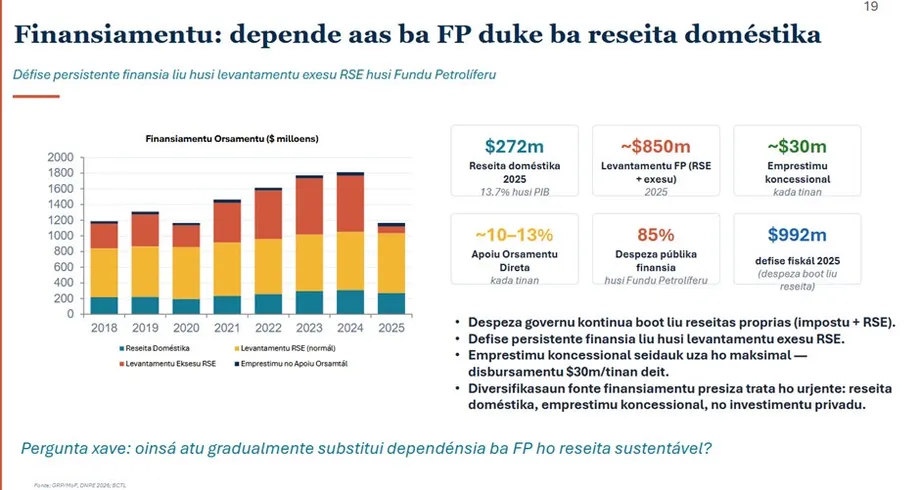
The financing pressure predates this budget. In November 2025, Timor-Leste's Petroleum Fund was estimated at nearly $20 billion, while the country depended heavily on withdrawals and its previous gas producer, Bayu-Undan, had ceased production.
The earlier airport and gas plans described a risk that the fund could be depleted around the mid-2030s without new petroleum revenue. Borrowing for investment adds another commitment to manage while the country seeks new income and a broader economic base.
The dates shaping the budget and gas plans
The 2027 proposal has developed alongside decisions on Greater Sunrise ownership and regulation. The main dates show how closely the budget debate and petroleum programme now run together:
- June 12, 2026: Gusmão opens the 2027 budget planning sessions in Dili.
- September 25, 2026: Officials discuss technical agreement on three Greater Sunrise legal and fiscal frameworks.
- October 1, 2026: The government submits the 2027 budget proposal to parliament.
- October 27, 2026: Timor GAP signs the agreement to acquire Woodside's Greater Sunrise interest.
- November 9 to 11, 2026: Parliament is scheduled to debate the budget's broad principles.
- November 24 to December 4, 2026: Detailed budget debate is scheduled.
- Around December 2026: The anticipated approval timetable for the Greater Sunrise frameworks reaches its target period.
- First half of 2027: Woodside and Timor GAP target completion of their stake transaction, subject to approvals.
Parliament's immediate task is to examine the proposed spending and borrowing authority. Greater Sunrise then has its own approval, ownership and development milestones, each affecting when the government's petroleum ambitions can move into construction and future production.
Key Points
- Timor-Leste proposes a consolidated 2027 budget of $2.568 billion.
- The debt issuance ceiling would rise to $1.6 billion from $850 million in 2026.
- The petroleum ministry would receive $291.8 million, about 127% more than in 2026.
- Public Works would receive $251.1 million, Education $171 million and Health $81 million.
- Municipal authorities would administer a separate $24.7 million school meals allocation.
- Greater Sunrise ownership, regulatory approvals and development planning are advancing alongside the budget.
- Parliament's scheduled budget debates run from November 9 to December 4, with a break between the general and detailed stages.