Four leaders prepare to meet alongside ASEAN
The leaders of the United States, India, Japan and Australia are preparing to meet in Manila during the November ASEAN gatherings, bringing the Quadrilateral Security Dialogue back to the leaders' table for the first time since September 2024. Maritime security, critical minerals and relations with China form the backdrop to the planned summit.
Contents
- Four leaders prepare to meet alongside ASEAN
- A return after more than two years
- Rubio rejects an anti-China label
- Why maritime security reaches the dinner table
- Critical minerals widen the agenda
- Manila balances alliance ties and dialogue
- Partner consultations before Shenzhen
- Security assurances face practical tests
- Key Points
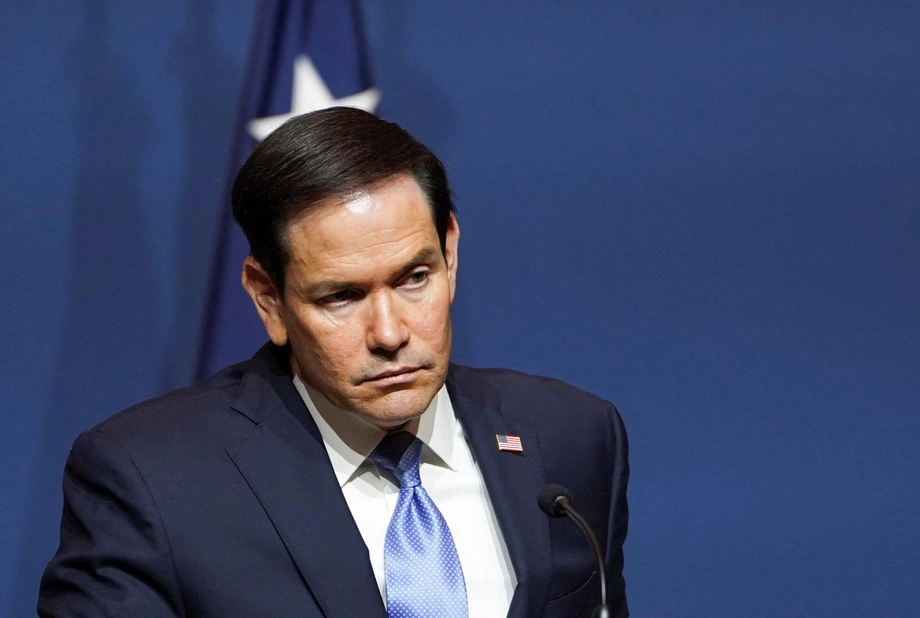
US Secretary of State Marco Rubio confirmed the plan on Saturday during the G20 Foreign Ministers' Meeting in Atlanta, Georgia. The expected participants are US President Donald Trump, Indian Prime Minister Narendra Modi, Japanese Prime Minister Sanae Takaichi and Australian Prime Minister Anthony Albanese. It would be Trump's first Quad leaders' summit of his current presidential term.
The Philippines, which chairs the Association of Southeast Asian Nations this year, will host the bloc's leaders' summit and other meetings from November 16 to 18. The broader program runs from November 15 to 18. A precise date for the Quad meeting has not been announced.
Manila's gathering would place consultations among the four partners immediately before Trump's expected talks with Chinese President Xi Jinping in Shenzhen. That sequence gives the meeting importance beyond its immediate agenda: Washington would consult key regional partners before negotiating with Beijing.
Rubio said the grouping had developed momentum through cooperation on maritime security and disaster response. He also indicated that the leaders could announce further measures in November, without identifying what those measures would be.
A return after more than two years
The previous Quad leaders' summit took place in Wilmington, Delaware, in September 2024, when Joe Biden was US president. India was scheduled to host the next gathering in 2025, but repeated delays accompanied worsening relations between New Delhi and Washington over US tariffs, oil sanctions and visa restrictions.
Foreign ministers continued meeting despite the gap between leaders' summits. Their meetings in May and July kept cooperation moving, while Australia holds the grouping's rotating chair this year. The earlier Manila summit plan also identified the opportunity to bring leaders together while they were already attending ASEAN events.
The main milestones show how the proposed meeting fits into a crowded diplomatic calendar:
- September 2024: Quad leaders last met in Wilmington, Delaware.
- 2025: A planned leaders' summit in India did not take place.
- May 2026: Quad foreign ministers met in New Delhi and launched a critical minerals framework valued at $20 billion.
- July 2026: Foreign ministers reaffirmed support for a free and open Indo-Pacific and ASEAN's central role.
- November 16 to 18, 2026: Manila hosts ASEAN leaders and related meetings, providing the setting for the planned Quad summit.
- November 18 to 19, 2026: Leaders are expected in Shenzhen for the APEC Economic Leaders' Meeting.
Rubio rejects an anti-China label
The Quad is an informal partnership, rather than a treaty alliance requiring all four members to defend one another. Its members cooperate on maritime awareness, disaster response and economic security, while sharing concerns about China's expanding military and economic influence.
Rubio, the US secretary of state, rejected the description of the grouping as a coalition directed against Beijing. Speaking in Atlanta, he explained its stated purpose:
It is not an anti-China or anti-anybody coalition.
He said its objections concerned conduct by governments, while acknowledging that the same country repeatedly featured in those concerns:
It's not a format that exists to be against any country. To the extent we express concern about things in the Quad, it's concern about behaviors. It's concern about activities.
China's embassy in Washington responded by objecting to exclusive groupings and confrontation between blocs. Embassy spokesperson Liu Chang set out Beijing's position:
Cooperation between countries should be conducive to regional peace, stability and prosperity, and not target any third party.
Washington and Beijing therefore approach the grouping from different starting points. Rubio presents it as cooperation around shared interests and opposition to coercive conduct. Beijing objects to arrangements it sees as drawing countries into competing camps.
Why maritime security reaches the dinner table
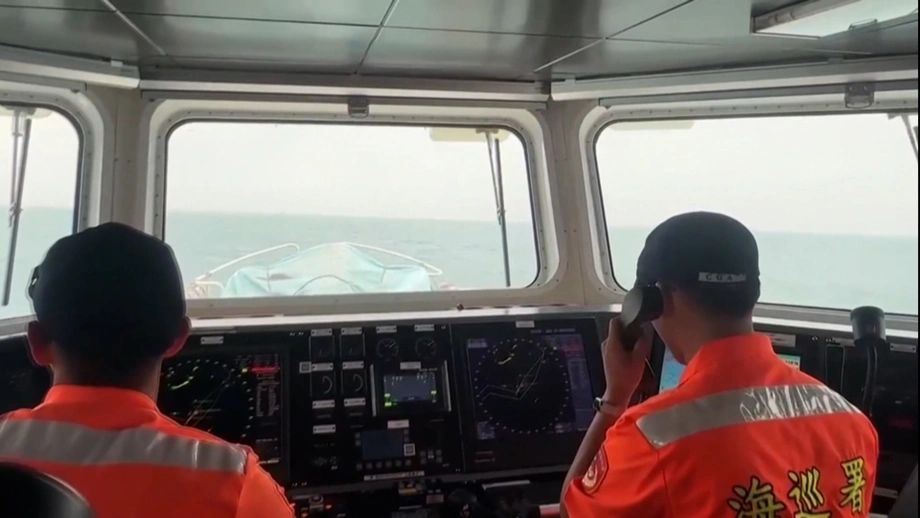
Rubio warned during the G20 gathering that attacks and coercion affecting the South China Sea and Taiwan Strait put economies at risk. He identified food security as one of the most serious consequences when ships cannot travel safely.
Sea routes carry food as well as fuel and industrial goods. If vessels face delays, danger or pressure to change course, deliveries can become less reliable and transport can become more expensive. For families, food security means being able to obtain enough affordable food consistently. A disruption at sea can therefore become a household problem far from the site of a confrontation.
The Quad foreign ministers' statement issued after their May meeting in New Delhi expressed serious concern about the East China Sea and South China Sea, including the militarization of disputed features. Such features include reefs and small islands whose control or surrounding maritime rights are contested.
The ministers opposed destabilizing actions taken by one side, including through force or coercion, that threaten regional peace and stability. Their language connects the handling of territorial disputes with the wider ability of countries to trade and navigate safely.
The Philippines has a direct stake as both the summit host and a country involved in South China Sea disputes. Its diplomatic task is to accommodate discussions about maritime security while also hosting a wider regional gathering attended by governments with different relationships with Beijing.
Critical minerals widen the agenda
The Quad's May meeting launched the $20 billion Quad Critical Minerals Initiative Framework, giving economic security a prominent place alongside maritime cooperation. Critical minerals are materials considered essential for important industries, including electronics, batteries and some defense equipment.
The framework puts attention on how those materials are obtained and supplied. Manufacturers need dependable access to inputs before they can produce finished goods. Export restrictions or sudden interruptions can affect factories and buyers across several countries.
The foreign ministers' joint statement also expressed grave concern about economic coercion, arbitrary export restrictions and policies that create industrial overcapacity. Overcapacity occurs when an industry can produce more than markets can readily absorb, potentially placing pressure on competitors and trade relationships.
The ministers called for reliable, open supply chains and trusted infrastructure. Their statement did not name China in those passages, while Rubio's remarks made clear that concerns about a particular country's conduct remained part of the political discussion.
Another possible development during Trump's visit is a framework agreement between Manila and Washington for the Pax Silica initiative. A signing is a possibility rather than a confirmed part of the visit. The initiative is a separate item from the Quad's critical minerals framework.
Manila balances alliance ties and dialogue
President Ferdinand Marcos Jr. has made official and state visits to all four Quad countries during the past two years. Those relationships give the Philippines established channels with each expected participant, although hosting the gathering would not make it a Quad member.
Malacañang, the Philippine presidential office, has confirmed Trump's attendance at the ASEAN gathering but declined to disclose his itinerary, saying it lacked authority to speak for him. Manila would also be the first venue outside the four member countries to host a Quad leaders' summit.
Washington has paired the summit preparations with renewed assurances about Philippine security. US Ambassador Lee Lipton described the American commitment as "ironclad" following Defense Secretary Pete Hegseth's visit to Cebu the previous week.
Lipton linked that commitment to the anniversary of the bilateral defense agreement:
As we mark 75 years of the US-Philippines Mutual Defense Treaty, our message is clear: our alliance is stronger than ever.
He also described the interests Washington says it shares with Manila:
We stand firmly with the Filipino people in defending sovereignty, protecting territorial integrity and upholding the freedom of navigation on which we all rely for vibrant global commerce.
Philippine diplomacy with Beijing is continuing alongside those alliance assurances. In a November 3 call, Philippine Foreign Secretary Ma. Theresa Lazaro and Chinese Foreign Minister Wang Yi agreed to maintain communication and manage differences peacefully. Their effort to calm relations followed weeks of maritime and diplomatic disputes before the Manila summit.
Partner consultations before Shenzhen
Trump is expected to travel from the Philippines to Shenzhen for the November 18 to 19 Asia-Pacific Economic Cooperation meetings. Marcos and other leaders are also expected to attend. Trump's planned meeting with Xi would be their third bilateral encounter of the year.
Edgard Kagan, a former US ambassador to Malaysia, described the timing of the Quad meeting before the China talks as significant. He argued that consultation with partners could strengthen Washington's position before direct negotiations with Beijing:
It always helps prior to engagements with the [People's Republic of China] for the U.S. to coordinate and consult with key allies and partners.
Kagan viewed the sequence primarily as an effort to prepare the American negotiating position. The Manila meeting would give the four governments a chance to discuss shared priorities before Trump sits down with Xi, particularly where maritime and economic concerns overlap.
Security assurances face practical tests
The planned summit comes during changes in US military activity that have prompted questions among regional partners about Washington's priorities. In June, the United States renamed its Indo-Pacific Command the Pacific Command, reversing the designation adopted in 2018.
Trump subsequently ordered annual military drills with South Korea reduced from 11 days to five. That removed six days from the exercise schedule, a reduction of more than half. Washington also reassigned the aircraft carrier USS George Washington from its base in Japan to the war against Iran, leaving the Indo-Pacific without a permanently stationed US aircraft carrier.
The administration has asked regional allies and partners to pay a larger share of defense costs. Those decisions form part of the setting in which governments will assess Trump's visit and any commitments announced in Manila.
Kagan acknowledged a perception of wavering US commitment, while pointing to Trump's planned Philippines trip, attendance at the previous ASEAN summit in Malaysia, and visits to Japan and South Korea as evidence of continued engagement.
For the Manila gathering, the practical measures announced will matter alongside the diplomatic symbolism. Rubio has pointed to possible new steps, while existing cooperation already connects maritime security, disaster response and critical mineral supplies. The summit would restore direct discussion among the four leaders after more than two years, immediately before another major round of diplomacy with China.
Key Points
- Quad leaders plan to meet in Manila alongside the November 16 to 18 ASEAN meetings, with the exact summit date still unannounced.
- Trump, Modi, Takaichi and Albanese are expected to attend the first Quad leaders' gathering since September 2024.
- Rubio rejects an anti-China label, while Beijing objects to groupings directed against third countries.
- Maritime security, food supply risks and a $20 billion critical minerals framework form important parts of the diplomatic agenda.
- The Philippines is strengthening cooperation with Washington while maintaining dialogue with Beijing over maritime disputes.
- The planned summit precedes Trump's expected talks with Xi at the November 18 to 19 APEC meetings in Shenzhen.