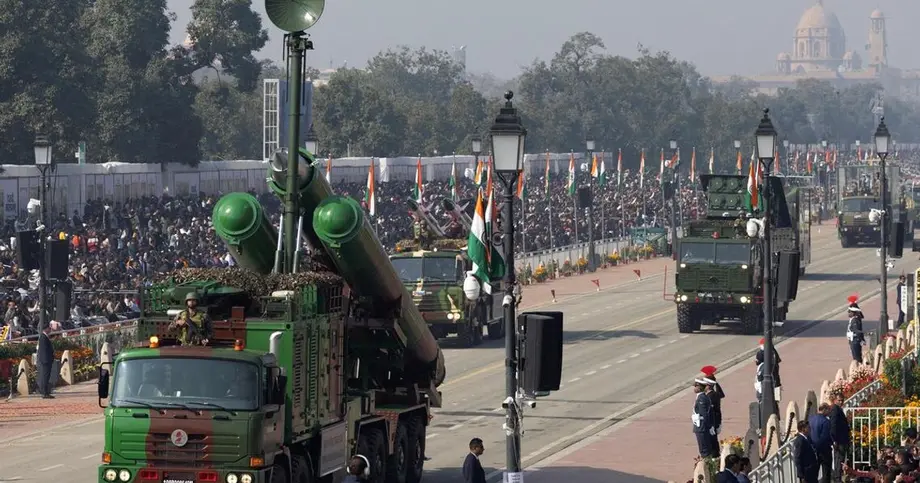
Manila seeks about 60 more missiles as first deliveries near completion
India and the Philippines are in the final stages of talks over a BrahMos missile purchase potentially worth US$700 million to US$800 million, with Manila expected to seek about five systems containing nearly 60 missiles. The negotiations would expand a defence partnership established through a US$375 million agreement in 2022, whose deliveries are nearing completion.
Contents
- Manila seeks about 60 more missiles as first deliveries near completion
- What Philippine officials have said
- A much larger follow-up to the 2022 order
- Why BrahMos matters to coastal defence
- South China Sea pressure shapes Manila's choices
- India's export ambitions extend beyond the Philippines
- How the negotiations reached this point
- Key Points
The proposed purchase, described by three people with direct knowledge of the talks in reporting published on November 5, 2026, comes as the Philippines strengthens its coastal defences amid confrontations with China in the South China Sea. Two Indian sources gave the estimated price and quantity.
Philippine defence ministry spokesperson Arsenio Andolong said President Ferdinand Marcos Jr had expressed a desire to acquire additional BrahMos missiles. Defence Secretary Gilberto Teodoro also publicly discussed Manila's interest on November 4, saying the Philippines had shared requests with India to adapt the system to Philippine conditions.
The negotiations bring together two objectives: Manila wants more military capacity to defend its maritime interests, while New Delhi is expanding overseas sales of a missile developed jointly with Russia. A second Philippine order would deepen an existing customer relationship rather than open a new market.
The proposed contract would be considerably larger than the first agreement. At US$700 million to US$800 million, its estimated value is about 1.9 to 2.1 times the US$375 million purchase agreed in 2022. The quantities and price remain negotiating estimates. No signing date, delivery schedule or detailed package of equipment and services has been announced.
What Philippine officials have said
Teodoro addressed the Delhi Defence Dialogue virtually on November 4. He said the Philippines hoped to secure additional BrahMos units and had given Indian authorities a wish list intended to make the system more suited to the Philippine environment.
His comments identify a practical part of the negotiations beyond the number of missiles: Manila wants the equipment to meet its particular operating needs. The contents of that wish list were not disclosed, leaving the requested changes unspecified.
Andolong's statement places Marcos behind the effort to acquire more missiles. He offered no further details about the proposed purchase. India's defence and foreign ministries, along with manufacturer BrahMos Aerospace, did not respond to requests for comment.
The Philippine statements establish public interest in another purchase, while the estimated five systems, nearly 60 missiles and US$700 million to US$800 million price come from people familiar with the negotiations. A completed agreement would set out the obligations of the buyer and supplier, including what equipment must be delivered and when.
A much larger follow-up to the 2022 order
The 2022 agreement, valued at US$375 million, established the Philippines as a customer for BrahMos for naval use. India is now approaching the end of deliveries under that contract as the two governments discuss an expanded purchase.
The estimated second contract would cost US$325 million to US$425 million more than the first. Expressed as a percentage, that is an increase of about 87% to 113%, calculated from the original US$375 million value and the proposed US$700 million to US$800 million range.
The announced figures describe two different parts of the proposed purchase: about five systems and nearly 60 missiles. A missile is the weapon that is fired; a missile system includes the equipment needed to deploy and operate weapons. The detailed configuration of the prospective Philippine package has not been published.
For Manila, expanding an existing purchase would build on equipment already being delivered. For India, the talks offer a chance to turn an initial export contract into a larger continuing defence relationship.
Why BrahMos matters to coastal defence
BrahMos is a supersonic cruise missile developed jointly by India and Russia. Supersonic means it travels faster than sound. A cruise missile uses powered flight to travel toward its target, with guidance helping it follow its intended route.
The BrahMos family can be launched from land, sea and air platforms. In simple terms, different versions can be fired using equipment on the ground, aboard ships or carried by aircraft. The Philippine negotiations concern additional BrahMos systems within a broader effort to strengthen coastal defences.
Coastal missile equipment gives a military another means of responding to threats approaching from the sea. Its usefulness depends on more than the missile itself: crews need to identify targets, receive reliable information and operate the equipment effectively. Teodoro's request for adjustments places Philippine operating conditions within the purchase discussions.
BrahMos is described as among the world's fastest cruise missiles. Speed is one part of its military appeal because a faster approaching weapon leaves less time for a target to react. The prospective Philippine purchase would add weapons to a modernisation programme taking place alongside persistent pressure in disputed waters.
South China Sea pressure shapes Manila's choices
The Philippines and China have clashed in recent years over overlapping claims in the South China Sea. Manila is strengthening its armed forces and coastal defences while also pursuing legal and diplomatic measures concerning its maritime rights.
In July 2026, the Philippines made a South China Sea seabed submission to the United Nations Commission on the Limits of the Continental Shelf. The filing sought recognition of rights over seabed and subsoil beyond the standard exclusive economic zone of 200 nautical miles off western Palawan. China and Malaysia objected, citing their respective positions on overlapping claims and entitlements.
That process concerns resources beneath the sea. The missile talks concern military capacity. Together, the two developments show Manila pursuing its maritime interests through different government channels, with scientific submissions and diplomacy proceeding alongside defence procurement.
The Philippines has also sought a South China Sea code during its 2026 chairmanship of the Association of Southeast Asian Nations, or ASEAN. Foreign ministers have expressed hope that negotiations with China can conclude by December 2026. Such an agreement would address conduct at sea, where vessels operating close together face risks of collisions and dangerous encounters.
India's export ambitions extend beyond the Philippines
India's defence exports reached 384.24 billion rupees, approximately US$4.11 billion, in the fiscal year ending in March, according to government data. That was an increase of more than 62% from the preceding year.
A second Philippine order valued at US$700 million to US$800 million would be a substantial contract within that expanding export business. Its value would be set through the purchase agreement, while the timing of deliveries would determine when equipment reached Manila.
Interest in BrahMos increased after the four days of fighting between India and Pakistan in 2025, when India used the weapon in battle for the first time. That combat use has become part of the commercial context as New Delhi seeks more overseas customers.
India announced the supply of BrahMos missiles to Indonesia in July and has also signed a deal with Vietnam. It is discussing the system with other countries, including the United Arab Emirates, Thailand, South Africa and Brazil. The Philippine negotiations therefore sit within a wider sales effort reaching Southeast Asia and markets farther away.
How the negotiations reached this point
The prospective expansion follows several years of procurement, deliveries and growing interest in the weapon. The key dates show how the Philippine relationship has developed alongside India's broader export campaign:
- 2022: The Philippines agreed to a US$375 million BrahMos purchase for naval use.
- 2025: India used BrahMos in battle for the first time during its four days of conflict with Pakistan.
- July 2026: India announced the supply of BrahMos missiles to Indonesia.
- November 4, 2026: Teodoro told the Delhi Defence Dialogue that Manila wanted more BrahMos units and had submitted requests for adaptations.
- November 5, 2026: Details emerged of advanced talks for about five systems and nearly 60 missiles, potentially worth US$700 million to US$800 million.
The next procurement milestone would be a signed agreement defining the purchase. Meanwhile, deliveries under the original Philippine contract are nearing completion, giving both governments an existing programme on which to build.
Key Points
- India and the Philippines are in final-stage talks over an additional BrahMos purchase.
- The proposed package comprises about five systems and nearly 60 missiles, with an estimated value of US$700 million to US$800 million.
- Marcos has expressed interest in more missiles, and Teodoro has requested adaptations for Philippine conditions.
- The estimated contract value is about 1.9 to 2.1 times the US$375 million agreement signed in 2022.
- Manila is pursuing stronger coastal defences alongside legal claims and negotiations over South China Sea conduct.
- India's defence exports reached 384.24 billion rupees in the fiscal year ending in March, rising more than 62%.