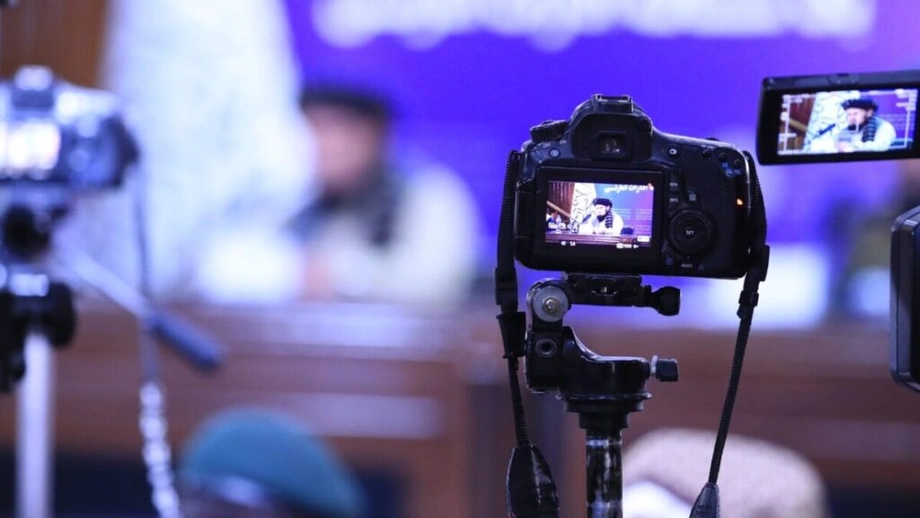
77 journalists detained as intelligence unit tightens control
The Taliban have detained 77 journalists for periods ranging from one week to two years since returning to power in August 2021, according to Reporters Without Borders (RSF). In an investigation published on November 4, 2026, the press freedom organisation identified Bureau 015, a unit of Taliban intelligence, as a centre of surveillance, intimidation and alleged torture directed at Afghan media workers.
Contents
- 77 journalists detained as intelligence unit tightens control
- How Bureau 015 reaches into newsrooms
- Farhad describes beatings and electric shocks
- Ahmad recounts a mock execution and imprisonment
- Women, poverty and security reporting face restrictions
- An approved guest list and threats beyond Afghanistan
- A proposed influence programme worth 70.7 million afghanis
- Five years of restrictions and influence operations
- The Taliban deny arbitrary arrests and mistreatment
- Key Points
Journalists interviewed by RSF described beatings, electric shocks, pressure to identify colleagues and a mock execution. The organisation also examined audio messages containing instructions to newsrooms and threats against journalists, including some who had left Afghanistan. RSF changed the names of journalists whose identities could put them at risk.
The investigation describes two connected efforts to control what Afghans hear and read: restricting independent reporting and producing material that promotes Taliban rule. Bureau 015 allegedly monitors news coverage, helps organise raids, records forced confessions and takes part in online influence operations.
Hamdullah Fitrat, the Taliban's deputy spokesman, rejected allegations of arbitrary arrests and mistreatment. He told RSF that intelligence bodies, including Bureau 015, operate within the law.
Célia Mercier, head of RSF's South Asia desk, described the bureau's position within the wider campaign against independent journalism:
The Taliban have built a real system of surveillance, intimidation and repression to silence the media in Afghanistan. Directorate 015 is at the center of this system, in which journalists are treated as enemies of the regime solely for carrying out their professional duties.
How Bureau 015 reaches into newsrooms
Bureau 015, also called Directorate 015 or Unit 015, operates under the Taliban's General Directorate of Intelligence (GDI). RSF said it has functioned under Taliban rule since August 2021, with personnel in Kabul and the provinces.
Officers monitor radio, television and other media, flag material they consider objectionable and summon journalists for questioning. Its operations section conducts raids, arrests media workers and seizes equipment, often in coordination with the Ministry for the Promotion of Virtue and Prevention of Vice.
RSF cited operations against the offices of the Afghanistan Journalists and Media Organizations Federation in July 2025 and broadcaster TOLOnews in May 2026. Those examples show how scrutiny of individual reports can extend to action against the organisations that produce them.
The process described by journalists gives intelligence officers influence over routine editorial decisions. A report about daily life can lead to a summons; a newsroom's choice of interview guest can bring threats. Editors therefore face pressure before publication as well as punishment afterward.
Farhad describes beatings and electric shocks
Farhad, a journalist identified by a pseudonym, told RSF that intelligence agents covered his head with a black cloth bag after his arrest and took him to an intelligence facility in Kabul. They searched his phone and computer and accused him of spying because of his reporting on ordinary people's lives.
Several days later, he said, he was transferred to Bureau 015 and held for two weeks in a small cell. Different interrogators questioned him at all hours and pressed him to identify other journalists.
Farhad described physical abuse during those interrogations:
They struck me very hard on my back and feet, and they also used a stun gun.
He said he continued to experience health problems afterward. His account also describes the isolation of detention: he was alone in his cell and sometimes heard voices without seeing other prisoners.
RSF's figure of 77 detained journalists covers the period since the Taliban takeover. The organisation gave detention lengths ranging from a week to two years, showing that the pressure has included both shorter periods of confinement and prolonged imprisonment.
Ahmad recounts a mock execution and imprisonment
Ahmad, another journalist whose name was changed, said officers forcibly took him to Bureau 015 and accused him of espionage. He told RSF that the beatings during questioning were so severe that he lost consciousness.
He was subsequently moved to another intelligence unit. According to RSF, Bureau 015 has no prison of its own, and most detainees are transferred after interrogation to GDI Directorates 40 or 90. Farhad's account describes temporary confinement inside Bureau 015, while Ahmad's follows a longer route through intelligence detention and prison.
Ahmad said agents took him to a hill at 2 a.m., pressed a gun against his temple and told him they had killed other people like him there. He described the incident as a mock execution, a threat staged to make a prisoner believe death is imminent.
A court later sentenced him to prison for "propaganda against the regime," he said. After several months, he was transferred to Bagram prison, about 60 kilometres north of Kabul. He said his hands and feet remained restrained even when he used the toilet, and described punishments involving cold water.
Ahmad said he saw his family only twice during his detention. He left Afghanistan after his release.
Women, poverty and security reporting face restrictions
Ahmad said pressure on his television station began with programme bans and the gradual exclusion of women journalists. Shortly after the Taliban returned to power, the organisation had to give the Ministry of Information and Culture an undertaking about whom it would put on air.
The station promised not to broadcast programmes featuring men and women together or interview people expressing views opposed to Taliban rule, he said. Those conditions affected both the people producing television and the range of voices audiences could hear.
Another journalist now in exile told RSF that officers instructed him not to report on women's rights, security incidents or poverty. They also ordered him to invite supporters of the authorities rather than people they considered opposed to national interests.
RSF said it had identified more than 20 nationwide directives, alongside a growing number of provincial orders, restricting press freedom. Newsrooms therefore face restrictions from multiple levels of authority, as well as direct demands from intelligence personnel.
The subjects journalists described as restricted concern everyday decisions: whether a place is safe, how families are coping financially and what women are allowed to do. Removing those subjects from coverage narrows the information available to the people living through them.
An approved guest list and threats beyond Afghanistan
Audio messages examined by RSF contained demands that journalists exclude guests who questioned Taliban policies and instead invite commentators from a list approved by the authorities. One journalist said the list contained no more than about 50 names.
The recordings also included demands for reports and interviews on subjects chosen by Taliban officials. In one message, an officer described the relationship between the authorities and journalists as requiring mutual cooperation, then instructed media outlets to produce particular content.
A list of approved commentators gives officials control over more than individual appearances. Television discussions can retain the appearance of debate while drawing their participants from a narrow group acceptable to those in power.
Journalists told RSF that leaving Afghanistan did not always end the intimidation. A threatening message cited in the investigation warned an exiled journalist:
We will find you, wherever you are, wherever you hide.
RSF's account places those messages alongside pressure inside Afghanistan: summonses, restrictions on guests, demands for favourable coverage and threats directed at people continuing their work abroad.
A proposed influence programme worth 70.7 million afghanis
Bureau 015's responsibilities also extend to social media, according to RSF. The organisation said the unit has personnel who monitor online content, a section responsible for propaganda and disinformation, and a studio used to produce videos and record detainees' forced confessions.
Documents made public in September 2026, presented as originating from Taliban intelligence, described a proposed influence programme with a budget of 70.7 million afghanis, equivalent to more than 900,000 euros. They referred to nearly 1,500 social media accounts allegedly used to promote Taliban authorities and discredit opponents.
The amount was a proposed budget; whether it was approved or spent was not established in the investigation. The programme described in the documents would give the authorities a large collection of accounts through which to repeat messages and attack critics.
RSF examined posts published in August 2026 by X accounts named in the documents. It found repeated messages supporting the Taliban, including identical or closely similar posts appearing within minutes of one another.
Some profiles used female identities or claimed to come from Panjshir, a former centre of resistance to Taliban rule. Such identities can make a message appear to come from people whose support readers might otherwise consider unlikely. RSF said the patterns echoed findings from a May 2025 investigation into coordinated messaging and false female identities.
Five years of restrictions and influence operations
The investigation brings together events spanning the Taliban's return to power, actions against media organisations and the later examination of online activity. The main dates are:
- August 2021: The Taliban returned to power. RSF dates Bureau 015's operation under Taliban rule to this period.
- May 2025: An investigation identified coordinated messages supporting the Taliban and accounts using false female identities.
- July 2025: RSF cited an operation against the offices of the Afghanistan Journalists and Media Organizations Federation.
- May 2026: RSF cited an operation targeting TOLOnews.
- August 2026: Accounts later examined by RSF published repeated messages supporting Taliban rule.
- September 2026: Documents describing the proposed influence programme became public.
- November 4, 2026: RSF published its investigation into Bureau 015.
The chronology connects pressure on journalists with efforts to shape online discussion. Newsroom restrictions determine which subjects and speakers reach domestic audiences, while coordinated accounts help circulate messages favourable to the authorities.
The Taliban deny arbitrary arrests and mistreatment
Hamdullah Fitrat, the Taliban's deputy spokesman, told RSF that the relevant intelligence departments, including Bureau 015, operated within the framework of the law. He rejected the allegations of arbitrary treatment and detention:
No one is subjected to arbitrary treatment, and no one is arbitrarily arrested.
His denial stands against detailed testimony from journalists describing their treatment in custody and the audio messages RSF said it reviewed. The journalists' accounts include physical injuries, isolation, threats against colleagues and family separation, alongside restrictions on the reporting they were permitted to produce.
For Afghan audiences, the consequences extend beyond the detention of individual reporters. Excluding women, restricting coverage of poverty and security, limiting interview guests and commissioning favourable stories all change the picture of the country that reaches the public.
RSF's investigation describes a system in which the same intelligence unit allegedly helps suppress independent accounts and produce messages that serve the authorities. That connection is central to its warning about the future of independent journalism under Taliban rule.
Key Points
- RSF said 77 journalists had been detained since August 2021, for periods ranging from one week to two years.
- Journalists accused Bureau 015 personnel of beatings, electric shocks, threats and coercive interrogations.
- RSF documented more than 20 nationwide directives restricting press freedom, alongside provincial orders.
- Newsrooms faced demands to exclude critical guests and restrict reporting on women's rights, poverty and security.
- Documents described a proposed influence programme worth 70.7 million afghanis involving nearly 1,500 social media accounts.
- Taliban deputy spokesman Hamdullah Fitrat denied arbitrary arrests and mistreatment.