More than 60 appeals put detention challenges on hold
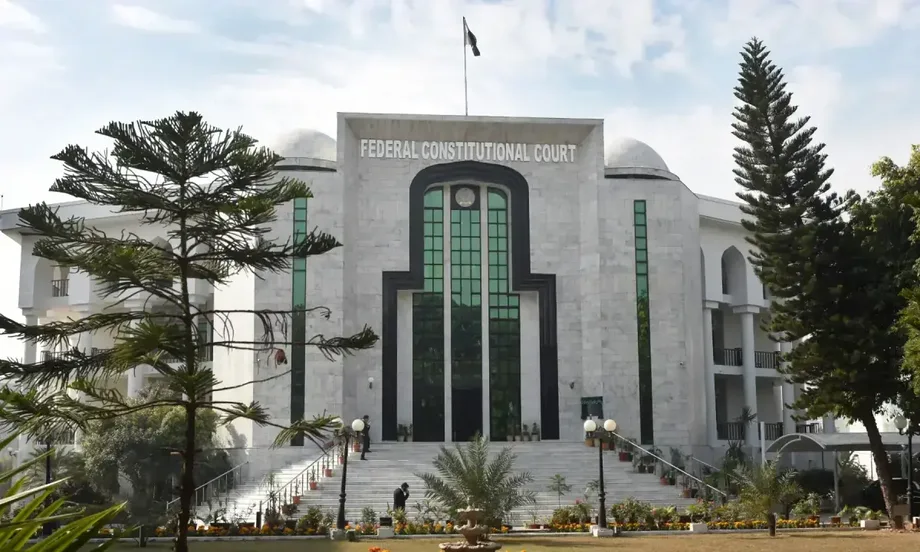
Pakistan's Federal Constitutional Court has suspended proceedings at the Peshawar High Court concerning the preventive detention of Pakistan Tehreek-e-Insaf workers in Khyber Pakhtunkhwa, invoking constitutional restrictions that apply when the armed forces act in aid of civilian authorities.
Contents
- More than 60 appeals put detention challenges on hold
- Why the high court had granted relief
- What the Aftab Alam judgment decided
- What Article 245 means for these cases
- Judges question the reach of the restriction
- How emergency rule led to the court dispute
- Afridi and other political figures are also involved
- Lawyers seek a hearing before restrictions continue
- What the next report could change
- Key Points
A bench comprising Chief Justice Aminuddin Khan and Justice Aamer Farooq issued the interim order on Thursday while considering challenges to high court decisions granting detainees temporary release against surety bonds of Rs100,000 each. More than 60 appeals against the high court's interim orders have been listed before the constitutional court.
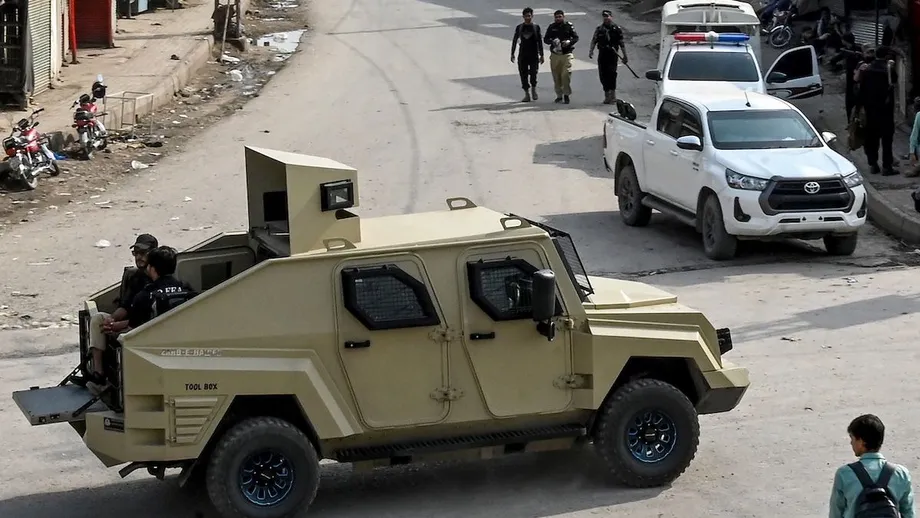
The dispute follows the October 11, 2026 proclamation of emergency and governor's rule in Khyber Pakhtunkhwa, which transferred provincial executive control to the federal government through the governor. Troops were subsequently directed to act in aid of civil power across the province.
The immediate consequence is a pause in the high court proceedings through which detained activists have sought relief. The wider issue is how far Article 245 of Pakistan's Constitution restricts access to a high court when military assistance to civilian authorities covers an entire province.
The constitutional court has ordered KP Advocate General Sanaullah Khan to submit a report within seven days identifying areas where military assistance is no longer required. That report could lead the court to modify its order. The Peshawar High Court had scheduled its next hearing for November 12, but the suspension now governs the affected proceedings.
Why the high court had granted relief
The provincial authorities detained PTI workers and activists under Section 3 of the Maintenance of Public Order Ordinance, 1960, commonly called the MPO. Preventive detention allows authorities to hold someone to prevent an anticipated threat to public order, rather than as punishment following a criminal conviction.
The Peshawar High Court granted interim relief after the provincial government failed to submit a report explaining the reasons and circumstances behind the detentions. Alongside release against the surety bonds, it directed that the detainees should not be arrested while their detention challenges remained pending.
The high court relied on its May 31, 2023 judgment in Aftab Alam and another vs. Secretary Home and Tribal Affairs, KP government. The provincial Home and Tribal Affairs Department, acting through its additional chief secretary, challenged the interim orders before the constitutional court.
The constitutional court said the earlier Aftab Alam judgment required careful examination to determine whether the high court's interpretation of Article 245 was constitutionally correct. Its present intervention is an interim step, with a fuller constitutional ruling still to follow.
What the Aftab Alam judgment decided
In Aftab Alam, Justice Syed Arshad Ali recorded that the petitions had been disposed of through a short order on May 31, 2023. The case concerned preventive detentions following protests over Imran Khan's arrest on May 9, 2023. The judgment described attacks on public property, vehicles and military installations during the unrest, and said the situation returned to normal after Khan's release on May 11.
The judgment recorded that the provincial government requested military assistance on May 10, 2023, and that the federal government authorised the deployment that day under Article 245 and Section 4(3)(ii) of the Anti-Terrorism Act, 1997. Rules of engagement were issued in consultation with Headquarters 11 Corps, Peshawar, specifying the contours of deployment in the respective formation areas of responsibility.
The PHC set aside the challenged Section 3 MPO detention orders for absurdity, vagueness and a lack of reasons or sufficient supporting material. It ordered the petitioners' immediate release, unless required in another case, subject to bail bonds of Rs100,000 each with two sureties each in the same amount, to the satisfaction of the deputy commissioner, additional deputy commissioner or assistant commissioner. The petitioners also had to undertake not to engage in anti-state activities or act prejudicially to public safety. Those who had already furnished the required bonds and undertaking under the court's May 18 order did not have to do so again.
The short order confirmed releases already secured on those terms, while allowing the district administration and provincial government to initiate fresh MPO proceedings where sufficient material showed that a petitioner's activities threatened public safety or public order and detention was necessary. Petitioners whose detention orders had been suspended, but who had not been arrested and were not required in another case, had five days from the judgment to furnish the bonds and undertaking. The bonds were valid for six months from their execution.
On jurisdiction, the PHC treated Article 245(3) as a conditional restriction, requiring the relevant area where the armed forces were acting in aid of civil power to be specified and identified. It concluded that courts retained jurisdiction to review action that was unlawful, exceeded jurisdiction or was mala fide. The judgment also quoted Article 245(4), under which qualifying proceedings instituted on or after the armed forces began acting in aid of civil power remain suspended for the duration of that role.
What Article 245 means for these cases
Article 199 gives high courts authority to hear petitions challenging unlawful exercises of public power and seeking protection of fundamental rights. In detention disputes, this provides a route for asking judges to examine whether the state has acted lawfully.
Article 245 places restrictions on that authority when the armed forces are acting in aid of civil power. Clause 3 says a high court shall not exercise Article 199 jurisdiction in relation to an area where such military assistance is taking place. It also preserves jurisdiction over proceedings already pending immediately before the armed forces began that role.
Clause 4 addresses proceedings brought on or after military assistance begins. Those proceedings remain suspended for the period during which the armed forces continue acting in that capacity.
The bench, headed by Chief Justice Aminuddin Khan, applied that provision to the deployment in Khyber Pakhtunkhwa. Its written order stated:
Since the armed forces have been called to act in aid of civil power in the entire province of KP pursuant to the Oct 11 order … the proceedings before the PHC instituted under Article 199 on or after Oct 12 shall, in terms of clause 4 of Article 245, remain suspended,
The filing date and the area covered by the deployment therefore matter directly. A proceeding already pending before military assistance began falls under the constitutional exception, while the FCC order suspends the affected proceedings instituted from October 12.
Judges question the reach of the restriction
Advocate General Sanaullah Khan argued that the high court could not directly entertain Article 199 petitions concerning areas where the armed forces were acting in aid of civil power. His position would restrict the route used by the detainees to challenge their custody.
Justice Aamer Farooq questioned how that argument would operate across the high court's daily work, which includes many petitions under Article 199. He asked:
Does this mean the high court should not hear such cases?
Sanaullah replied that matters such as tenancy disputes could still reach the high court after passing through the competent forums. His response drew a distinction between direct constitutional petitions and matters arriving after consideration elsewhere.
The FCC described the situation covered by Article 245 as an emergency that is temporary in nature. It said the restriction on jurisdiction lasts while the armed forces continue acting in aid of civil power.
The bench also referred to Article 236(2), concerning emergency provisions, and observed that courts had examined the constitutionality of emergency proclamations despite language restricting judicial intervention. It said these questions required careful examination and an authoritative constitutional ruling.
How emergency rule led to the court dispute
The October measures combined a change in provincial administration, military assistance and preventive detentions. Each step now forms part of the legal dispute over the high court's authority.
- On May 31, 2023, the Peshawar High Court delivered the Aftab Alam judgment later relied on when granting relief to detainees.
- On October 11, 2026, the president issued a proclamation under Articles 232 and 234, imposing emergency and governor's rule in Khyber Pakhtunkhwa. The federal government also authorised military assistance under Article 245.
- On October 12, the Interior Ministry requisitioned troops, and the Defence Ministry directed forces deployed in KP to act in aid of civil power across the province.
- On October 13, Sohail Afridi's brother petitioned the high court over the chief minister's alleged abduction and continued detention.
- On Thursday, the constitutional court suspended the affected high court proceedings and ordered a report within seven days on where military assistance remained necessary.
- November 12 had been set for the next high court hearing in the detention litigation.
The federal government's stated purposes for the deployment included protecting lives, people and property, as well as government installations. Authorities subsequently invoked the MPO to detain people for the maintenance of public peace and order.
Afridi and other political figures are also involved
Sohail Afridi, whose powers as chief minister were suspended following governor's rule, is among the political figures whose detention has reached the courts. His brother's petition sought his immediate release and an independent judicial inquiry into his disappearance, alleging violations of his fundamental rights.
The high court has also considered petitions concerning the whereabouts of Provincial Assembly Speaker Babar Saleem Swati and National Assembly member Junaid Akbar. On Tuesday, Justices Syed Arshad Ali and Muhammad Faheem Wali referred those matters to the high court chief justice for consideration by a larger bench. The advocate general also supported constituting a larger bench.
Advocate Bashir Khan Wazir, representing petitioners, told the high court that Afridi and Swati had been missing for several days. He said the governor and advisers had confirmed that Afridi, Swati and Akbar were in protective custody.
Wazir also invoked a bill passed by the provincial assembly concerning immunity for the speaker and assembly members, arguing that those protections barred their arrest. The application of that claimed protection is another legal issue raised by the petitioners.
Lawyers seek a hearing before restrictions continue
Former additional advocate general Shah Faisal Ilyas, appearing for one of the parties before the FCC, objected to an injunction being issued before the respondents were heard. He argued that the provincial government's objections to the high court orders could not be sustained.
Chief Justice Aminuddin Khan directed Ilyas to review the constitutional court's order and submit formal objections. The court issued notices to the respondents, giving them an opportunity to present their positions.
The bench also ordered notice to the attorney general for Pakistan under Order XXVIIA of the Code of Civil Procedure, 1908, because the case involves important questions of constitutional interpretation. That procedure brings the government's principal law officer into litigation over such questions.
Sanaullah separately relied on Article 10, which addresses safeguards concerning arrest and detention, including provisions dealing with preventive custody. He argued that MPO action rested on a government official's assessment of the need to prevent conduct prejudicial to public safety and law and order.
The dispute therefore brings together two questions: the legal basis for holding individual detainees and the high court's authority to examine their petitions during the deployment. The FCC is currently considering the jurisdictional question that controls whether those proceedings can continue.
What the next report could change
The seven day reporting requirement gives the provincial government a concrete task: identify parts of Khyber Pakhtunkhwa where the armed forces are no longer needed in aid of civil power. The FCC said it could modify its order after examining that information.
The geographical scope matters because Article 245 ties its restriction to areas where military assistance is taking place. A change in the deployment could therefore change where the suspension applies. No date has been announced for a final constitutional ruling, and the stated directions leave the treatment of individual release orders to further proceedings.
The legal battle is unfolding amid a wider confrontation between the federal government and PTI. Before emergency rule, PTI had announced a march to Islamabad demanding the release of its jailed leader, former prime minister Imran Khan. Negotiations between the two sides failed to produce an agreement.
The federal government cited the provincial administration's alleged deliberate disengagement from the fight against terrorism when imposing governor's rule. Opposition figures including Maulana Fazlur Rehman, National Assembly Opposition Leader Mehmood Khan Achakzai and Senate Opposition Leader Raja Nasir Abbas criticised the move.
For detained workers and their families, the practical issue is access to a judge who can examine the reasons for custody. The FCC's next decisions will determine when and where those challenges can resume while military assistance continues.
Key Points
- The FCC suspended affected PHC proceedings brought under Article 199 on or after October 12, citing Article 245.
- More than 60 appeals challenge interim orders granting detainees release against Rs100,000 surety bonds each.
- The PHC had granted relief without receiving a provincial report explaining the detentions.
- The PHC's May 31, 2023 Aftab Alam judgment set aside unsupported MPO detention orders, made release conditional on bail bonds and treated Article 245(3) as a conditional jurisdictional restriction.
- KP's advocate general must report within seven days on areas where military assistance is no longer required.
- Sohail Afridi, Babar Saleem Swati and Junaid Akbar feature in related proceedings concerning detention and whereabouts.
- The FCC has sought responses from the parties and notified Pakistan's attorney general before further constitutional consideration.