A legal overhaul aimed at the delays investors face
Nepal's government has proposed changing 494 provisions across 59 laws, combining faster business approvals, shorter tax deadlines, new financing options and changes to land acquisition in one investment and infrastructure reform package.
Contents
- A legal overhaul aimed at the delays investors face
- How the package was assembled
- What the proposed approval deadlines would mean
- One online process, fewer repeated documents
- Tax refunds, foreign finance and women entrepreneurs
- Land and construction payments get their own timetable
- Opening electricity networks and protecting official decisions
- Domestic businesses want a role in major projects
- The route from draft to implementation
- Key Points
The draft prepared through the Office of the Prime Minister and Council of Ministers would amend 326 existing provisions and add 168 new ones. Its most concrete feature is a set of legal deadlines covering 190 government processes, from correcting company registration errors within three days to concluding electricity purchase agreements within 90 days.
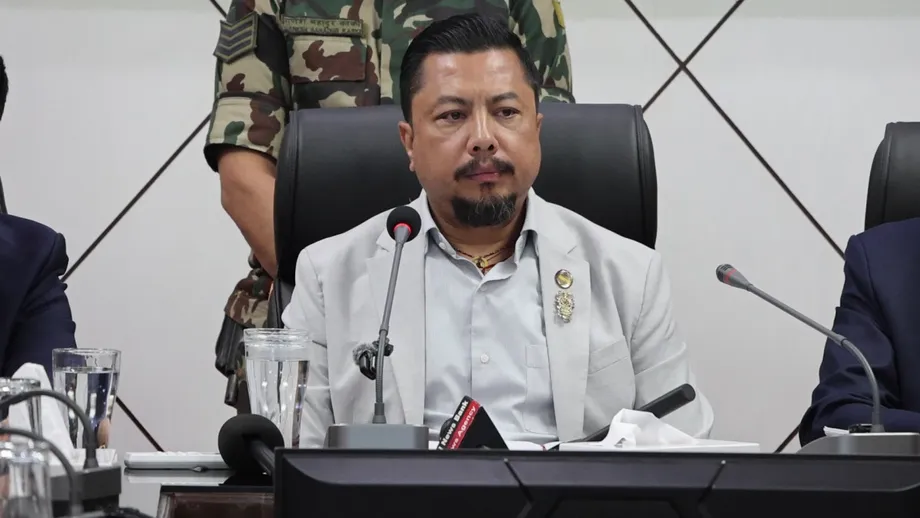
Sudip Dhakal, the prime minister's adviser on policy, administration and good governance, presented the package at a press conference in Kathmandu ahead of the planned Nepal Infrastructure Conference. He said it followed consultations with businesses, government ministries and other stakeholders.
The measures remain proposals undergoing the government's legislative process. Law, Justice and Parliamentary Affairs Minister Sovita Gautam said the government could use an ordinance if Parliament was not sitting, then take a replacement bill through both houses. An ordinance allows the government to introduce legislation while Parliament is not in session, subject to the constitutional process.
Infrastructure Development Minister Sunil Lamsal said the conference would focus on demonstrating legal protections for investment, workers and markets, rather than simply displaying large projects and collecting investment pledges. His ministry's ambitions extend beyond approvals to protecting projects against obstruction after the government has authorised them.
For businesses, the package addresses several stages of the same investment: registering a company, securing land, obtaining permission, arranging finance, building infrastructure and receiving payment. Its practical value would depend on those stages working together, rather than a faster decision at one office being followed by a long wait at another.
How the package was assembled
Dhakal said the private sector submitted 987 suggestions concerning 66 laws. Consultation workshops, a policy drafting week and discussions within ministries followed. Under the National Planning Commission's coordination, officials then worked through 664 recommendations under 440 headings to prepare the final draft.
The resulting package covers 59 laws. Dhakal described an effort to move beyond repeated small adjustments to old legislation, including laws dating from the Panchayat period and as far back as 2010 in Nepal's Bikram Sambat calendar.
Finance Minister Swarnim Wagle placed the package within a broader legislative programme. He said the government was working on 166 laws, with these 59 being advanced together. He contrasted that workload with 35 laws enacted during the previous three and a half years.
Those figures describe different stages of lawmaking: the 166 laws are under government consideration, while the earlier 35 were enacted. Gautam separately said more than 54 bills had moved forward through the Cabinet since the start of Shrawan, a month in Nepal's calendar, and that officials would continue working through the Tihar and Chhath holidays.
What the proposed approval deadlines would mean
The draft would give government offices specific periods for handling applications. A company registration error would have to be corrected within three days. Officials would have five to seven days to request missing documents together, reducing repeated demands that send applicants back to the same office.
Industrial permits and expedited approvals for buildings assessed as posing low risk would have a 15 day deadline. Changes in land use and orders authorising tree cutting would have to be decided within 30 days. Exemptions from landholding ceilings and advance tax rulings would have 60 day limits.
Electricity purchase agreements and payment service licences would have to be concluded within 90 days. An electricity purchase agreement sets the terms under which a buyer purchases a producer's power. An advance tax ruling gives a business an official answer about how tax rules apply before it proceeds with a transaction.
Dhakal said faster processing would still require examination of applications and compliance with environmental and legal duties. The draft would retain review requirements rather than introduce automatic approval when an office misses its deadline.
One online process, fewer repeated documents
The government proposes a single online portal covering application registration, approval and complaints. Public offices would also be barred from asking applicants to submit documents already held in government records.
A business could therefore move through the process using an existing government record instead of repeatedly obtaining and delivering the same paperwork. Bringing complaints into the same system would connect an application with the applicant's effort to challenge a delay or resolve a problem.
Industry expansion would also become simpler under the draft. Businesses increasing their capital or production capacity would notify the authorities within 30 days, replacing the current requirement to seek prior approval.
For an operating factory, that changes when the government becomes involved. The business would move from waiting for permission before expanding to reporting the change within a defined period. Other legal obligations attached to the activity would continue to apply.
Tax refunds, foreign finance and women entrepreneurs
The proposed tax changes combine shorter assessment periods with deadlines for returning money to businesses. The tax assessment period would fall from four years to two, cutting the stated period by half.
Exporters would receive value added tax refunds within 15 days, while other eligible taxpayers would receive them within four months. VAT refunds return eligible tax already paid. For a business waiting for that money, the payment date affects how much cash it has available for wages, supplies and its next orders.
Foreign loans could be converted directly into shares without first sending the money abroad. In simple terms, a foreign lender could exchange debt owed by a Nepalese business for an ownership stake, avoiding an outward transfer followed by a new investment transfer.
The draft would also allow foreign lenders to take immovable property as mortgage security. Security gives a lender a claim over specified property under the loan arrangement. In designated new cities, nonresident Nepalis and foreigners would be allowed to own housing within prescribed limits.
New small enterprises with 51 percent ownership held by women would receive a 50 percent income tax reduction for their first three years. The measure targets both a defined ownership share and the early period when a business is establishing itself.
Land and construction payments get their own timetable
Approved industrial, infrastructure and new city projects would receive a decision on exemptions from landholding ceilings within 60 days. A landholding ceiling limits how much land may be held; an exemption allows an eligible project to exceed that limit.
The draft also brings land valuation into project preparation. Compensation would have to be determined within 60 days, followed by payment within 30 days. For affected landholders, the proposal connects the valuation decision to a separate payment deadline, rather than leaving payment timing open after compensation is set.
Public infrastructure contracts would face a readiness requirement. Authorities could not invite bids until land acquisition, detailed design and environmental approval had been completed. That would move essential preparation ahead of the competition to select a contractor.
Completed work would also carry a payment deadline. Inspection and payment would have to be finished within 30 days after completion and submission of the bill. Contractors would therefore have a stated period for both verification of their work and settlement of the amount owed.
Together, the land, procurement and payment provisions address three different points at which construction can stall: before a site is available, before a project is ready to build, and after a contractor has finished work but is waiting for money.
Opening electricity networks and protecting official decisions
The energy proposals would open transmission and distribution systems to wider access and create a route for private participation in electricity trading and energy storage. Transmission carries power over larger networks, while distribution delivers it to customers.
Access to those networks matters because producing electricity and moving it to a buyer are separate activities. The proposed framework would let private businesses take a broader role across the electricity market, including storing energy for use at another time.
Solar or wind generation for an owner's own use would be permitted without a licence up to a specified capacity. Larger projects and other activities would remain subject to the applicable permission requirements.
Government officials would receive protection for decisions made within their authority, in good faith and with supporting records, if those decisions were later found technically mistaken. Dhakal said bribery, collusion and fraud would remain within the jurisdiction of the Commission for the Investigation of Abuse of Authority.
The proposal links greater responsibility for timely decisions with protection for documented, honest judgment. Its stated aim is to reduce officials' fear of deciding while keeping corruption investigations in place.
Domestic businesses want a role in major projects
Anjan Shrestha, president of the Federation of Nepalese Chambers of Commerce and Industry, welcomed the legal reform effort while arguing that attracting foreign capital starts with improving conditions for Nepal's own investors.
Shrestha identified slow customs clearance and lengthy transport times across the country as practical obstacles to competition. He described the problem in these words, translated from Nepali:
Our logistics and efficiency are weak. It takes a very long time to clear goods at customs and transport them east to west.
Shrestha also called for domestic construction companies to be mandatory partners in joint ventures on large projects financed by foreign investment. A joint venture brings companies together to carry out a project, sharing responsibilities under an agreed arrangement.
He pointed to experience gained by local engineers and technicians through the Delhi Metro and Nepal's Nagdhunga tunnel project. His proposal would give Nepalese firms a direct role in major construction contracts and opportunities to learn alongside their partners.
Lamsal said the government had already issued a directive before Dashain prioritising Nepalese products and domestic businesses in public procurement. He said the government intended to extend domestic product preferences to construction by both public and private developers after Parliament resumed.
Wagle linked the legal package to plans to advance eight to 10 large infrastructure projects at the same time, increase private investment and implement alternative development financing arrangements. He said the government wanted to move away from expecting the state alone to finance and deliver every development project.
The route from draft to implementation
Gautam said the amendment drafts had reached the Law Ministry and were being finalised. Lamsal described their submission to the prime minister's office for processing through the relevant ministries and the Law Ministry.
Ministers outlined an accelerated sequence tied to the conference, festivals and the first months after enactment:
- Before Dashain: Lamsal said a directive prioritising domestic products in public procurement had been issued.
- During Tihar and Chhath: Gautam said the Law Ministry and government officials would continue preparing the legislation.
- After Tihar: Lamsal said the government aimed to formalise the changes and publish them in the Nepal Gazette.
- Before the planned conference: Ministers aimed to complete the legal package and prepare associated regulations, procedures, standards and guidelines.
- Within the first 100 days after enactment: The implementation roadmap calls for rulemaking, system development and trial implementation.
The timetable combines a push to prepare supporting rules before the conference with further implementation work after enactment. Gautam said an ordinance, if used, would later be followed by a replacement bill for passage through both parliamentary houses.
The conference date, final statutory wording, permitted housing ownership limits and capacity threshold for solar or wind generation were not specified in the announcements. Those details will determine the precise scope of several proposed benefits.
Businesses and households would encounter the reforms through specific transactions: an exporter receiving a refund, a landholder receiving compensation, a contractor receiving payment or an entrepreneur obtaining a permit. Delivering those services within the proposed deadlines is the concrete task behind the government's conference ambitions.
Key Points
- Nepal proposes amending 326 provisions and adding 168 across 59 laws.
- The package sets legal deadlines for 190 processes, including permits, land decisions and electricity purchase agreements.
- Proposed changes include faster VAT refunds, simpler business expansion and direct conversion of foreign loans into shares.
- Land compensation, construction readiness and contractor payments would receive specific requirements and deadlines.
- New small enterprises with 51 percent ownership held by women would receive a 50 percent income tax reduction for three years.
- Ministers aim to complete reforms before the infrastructure conference, with an ordinance possible if Parliament is not sitting.
- The implementation roadmap includes rules, digital systems and trials during the first 100 days after enactment.