Asif defends a partnership in which power is unequal
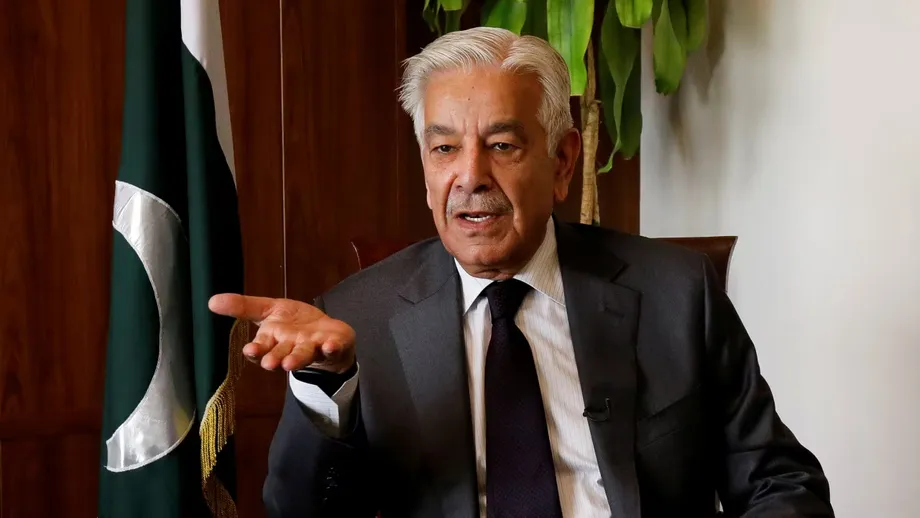
Pakistan's Defence Minister Khawaja Asif acknowledged in a September 2025 interview that civilian leaders and the military do not share power equally, while defending an arrangement he said allows them to reach decisions by consensus. His comments placed the country's foreign policy and diplomatic engagement at the centre of a debate about who exercises authority under Prime Minister Shehbaz Sharif.
Contents
- Asif defends a partnership in which power is unequal
- What the hybrid model means in practice
- A White House visit offered Asif's clearest example
- Security talks reached beyond Pakistan's borders
- An earlier dispute involved another army chief
- How the debate developed over time
- Parliament faces questions about responsibility
- Key Points
Speaking to journalist Mehdi Hasan, Asif rejected the suggestion that the military alone runs the country. Yet when asked whether Army Chief Field Marshal Asim Munir was more powerful than the defence minister, he accepted that the relationship was unequal. The admission came from the cabinet member responsible for the defence portfolio, giving particular weight to his description of how government works.
Asif, explaining how civilian and military leaders handle disagreements, said:
We can agree to disagree. It is by consensus, whatever is taking place,
Pakistan has an elected civilian administration, but its armed forces have long exercised substantial influence over defence, national security and relations with other countries. Asif's defence of what he calls a hybrid governance model presents that shared decision process as a practical strength. His acknowledgement of unequal power also brings the authority of elected ministers into sharper focus.
The central issue is straightforward: a minister can hold responsibility for a policy while sharing control over the decisions behind it. For Pakistan's Parliament and voters, understanding that division matters when judging the government's diplomatic commitments, security choices and economic performance.
What the hybrid model means in practice
Asif uses the term hybrid governance to describe civilian and military authorities participating together in important government decisions. In this arrangement, the prime minister and cabinet remain in office while the armed forces help shape the country's strategic direction.
Consensus means reaching a position that the participants can accept. Asif's account suggests that consultation between political leaders and military commanders is a regular part of governing, including on foreign policy. His acknowledgement that power is unequal leaves a practical question about how much room each participant has to reject the other's preferred course.
Asif did not explain how a disagreement would be resolved if civilian and military leaders could not reach consensus. That missing detail matters because agreement is easiest to describe when institutions already support the same policy; the distribution of authority becomes most consequential when their preferences diverge.
Pakistan's history gives the discussion particular force. Since independence in 1947, the country has experienced extended periods of direct military rule. The armed forces have also retained influence during civilian administrations, especially in dealings with India, Afghanistan, China and the United States.
A White House visit offered Asif's clearest example
Munir's June 2025 visit to the White House provided a concrete example of the diplomatic role Asif was defending. US President Donald Trump hosted the army chief for a luncheon in the Cabinet Room, followed by a meeting in the Oval Office, according to Pakistan's Inter-Services Public Relations, the military's communications arm.
US Secretary of State Marco Rubio and Steve Witkoff, the special representative for Middle Eastern affairs, attended. Pakistan's national security adviser accompanied Munir. The combination of senior American diplomatic officials and Pakistan's military leadership placed the meeting firmly within the business of international relations.
Asif, praising the visit in a post on X, described it as an unprecedented development in relations between the two countries. The defence minister said:
This is the first time a US President has formally hosted a Pakistani army chief in such a manner,
Asif called the meeting a watershed in the countries' 78-year relationship. He credited Sharif and Munir jointly with diplomatic successes, economic recovery and Pakistan's stance against what he described as Indian aggression. Those were the minister's assessments of the partnership's achievements.
Security talks reached beyond Pakistan's borders
Iran and Israel were among the subjects discussed at the White House. According to the Pakistani military's account, the participants addressed rising tensions between the two countries and the importance of resolving the conflict through dialogue.
Munir also thanked Trump for his role in brokering a ceasefire during the recent confrontation between India and Pakistan. The military's account presented that acknowledgement as appreciation for the American president's diplomatic intervention.
The agenda helps explain why the June meeting became part of the debate about Pakistan's governing arrangements. An army chief was discussing both an immediate security concern involving India and a wider regional conflict involving Iran and Israel. His role extended into subjects that also fall within the work of a prime minister, foreign minister and diplomatic service.
Asif treated that involvement as evidence that civilian and military cooperation was delivering results. The same events also made Munir's access and influence visible: he was a central participant in discussions with the US president about Pakistan's security and regional diplomacy.
An earlier dispute involved another army chief
Asif's September remarks followed a disputed allegation about former army chief General Qamar Javed Bajwa. In August 2024, the defence minister said Bajwa had sought an extension of between six months and one year in November 2022, ostensibly to help resolve a political deadlock.
Asif also alleged that Bajwa had threatened to impose martial law if necessary. Martial law places authority under military control, making the allegation much more serious than a disagreement over the length of an appointment.
Punjab Assembly Speaker Malik Muhammad Ahmed Khan disputed Asif's account, saying Bajwa had not expressed a desire for another extension. The allegation and the denial belong together: Asif described an attempt to prolong military leadership during a political crisis, while Khan challenged the central claim about the requested extension.
The dispute concerned a former commander; the September 2025 interview concerned the current governing partnership. Together, they show how questions about military appointments, political influence and civilian authority have continued across changes in army leadership.
How the debate developed over time
The events span several years, from the disputed account of Bajwa's intentions to later changes in military command arrangements:
- November 2022: The period in which Asif later alleged that Bajwa sought another extension as army chief.
- August 2024: Asif made the allegation publicly, and Punjab Assembly Speaker Malik Muhammad Ahmed Khan disputed it.
- June 2025: Trump hosted Munir at the White House for discussions that included regional security.
- September 2025: Asif defended hybrid governance in his interview with Mehdi Hasan and acknowledged unequal power.
- November 2025: The 27th Constitutional Amendment was reported to have created a Chief of Defence Forces position and changed higher military command arrangements.
- August 2026: Further legislation was reported to have established a statutory framework for the new command structure.
The later constitutional and legislative developments extended the discussion from informal influence to the organisation of military authority. A statutory framework means rules set out in legislation, rather than arrangements resting only on practice or agreement among officeholders.
The reported command changes also broadened the institutional stakes. Debate about the strength of one army chief became connected to the powers attached to an office and the mechanisms through which civilian institutions could examine their use.
Parliament faces questions about responsibility
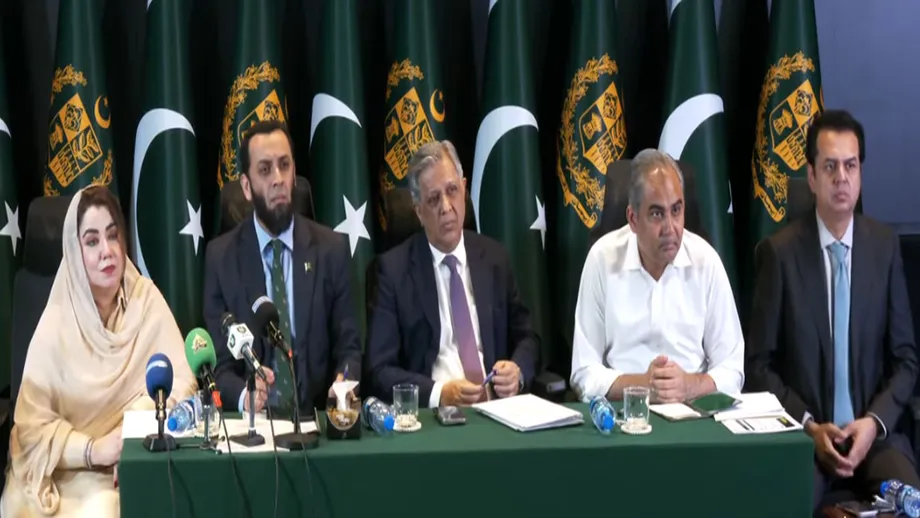
Pakistan's cabinet includes ministers with distinct responsibilities: Ishaq Dar for foreign affairs, Khawaja Asif for defence, Mohsin Naqvi for interior affairs and Muhammad Aurangzeb for finance. Decisions on security relationships can cross those boundaries, bringing diplomacy, domestic security and public spending into the same discussion.
Relations with the United States, China and Saudi Arabia, alongside tensions involving Iran, make parliamentary scrutiny especially consequential. Defence cooperation can involve commitments whose effects reach beyond the armed forces, including decisions about deployments and Pakistan's position during regional conflicts.
Parliamentary scrutiny means elected representatives can seek explanations, examine government decisions and question ministers about the commitments made in the country's name. Sensitive operational information may require confidentiality, while the broader purposes and responsibilities of a policy remain matters for government accountability.
The debate also extends to provincial autonomy and public money. The Eighteenth Constitutional Amendment and the National Finance Commission Award concern the balance between the federation and the provinces, including responsibilities and revenue sharing. They bring another layer to the question of where decisions are made and which institutions answer for them.
Asif's defence rests on results: closer cooperation between Sharif and Munir, he argues, has helped Pakistan diplomatically and economically. His admission of unequal power adds a separate, concrete concern for elected institutions: ministers must explain decisions to Parliament even when authority over those decisions is shared unevenly.
Key Points
- Khawaja Asif acknowledged unequal civilian and military power in a September 2025 interview while defending decisions reached by consensus.
- He credited Prime Minister Shehbaz Sharif and Field Marshal Asim Munir jointly with diplomatic and economic gains.
- Munir's June 2025 White House visit included discussions about India, Iran and Israel.
- Asif's earlier claim that former army chief Qamar Javed Bajwa sought another extension was disputed by Punjab Assembly Speaker Malik Muhammad Ahmed Khan.
- Reported command changes in November 2025 and August 2026 extended the debate to the legal structure of military authority.
- The central accountability issue concerns how elected ministers and Parliament oversee policies shaped jointly with military leaders.