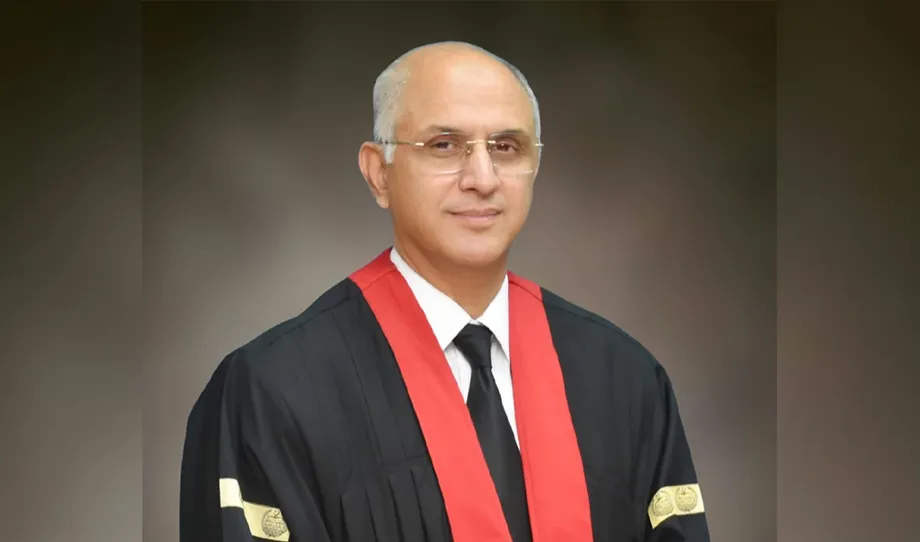
A judge leaves years before retirement
Justice Mohsin Akhtar Kayani resigned from Pakistan's Lahore High Court on October 28, 2026, telling President Asif Ali Zardari that constitutional changes had weakened judicial independence and that his conscience no longer allowed him to remain on the bench. He also cited personal reasons and health concerns following recent surgery.
Contents
- A judge leaves years before retirement
- What Kayani said about leaving
- How the amendments changed judicial power
- The transfer that changed his position
- Why Dogar's arrival triggered a legal fight
- A divided Supreme Court ruling
- The challenge continued after the judgment
- From interference allegations to resignation
- A career centred on rights cases
- Key Points
Kayani, who said he had disposed of more than 23,000 cases, was due to retire on February 10, 2032. His departure comes roughly five years and three months before that date, following a disputed transfer from the Islamabad High Court and a prolonged legal struggle over judicial appointments, seniority and control of court business.
In his resignation letter, the Lahore High Court judge directly connected his decision to the 26th and 27th Constitutional Amendments:
In my considered view, the changes introduced through the 26th and 27th Constitutional Amendments have compromised the independence and institutional integrity of the high courts.
Kayani becomes the fourth superior court judge reported to have resigned following the amendments. Supreme Court justices Syed Mansoor Ali Shah and Athar Minallah, and Lahore High Court justice Shams Mehmood Mirza, resigned in 2025, also citing concerns about the changes.
His resignation brings together several disputes that have developed since 2024: allegations of intelligence agency interference, changes to the selection of senior judges, the creation of a Federal Constitutional Court and new powers to transfer judges between high courts. For people bringing cases, Kayani's central concern was whether courts could still decide their claims independently.
What Kayani said about leaving
Kayani described service at the Islamabad and Lahore high courts as a privilege. He said his judicial career had been devoted to upholding the Constitution, protecting fundamental rights and administering justice without fear or favour.
The judge nevertheless argued that control over appointments and transfers had shifted in a direction that damaged the courts. In his letter to the president, he explained his assessment:
I have witnessed what I regard as the executive's growing control over judicial institutions, extending to the appointment and transfer of judges. Such interference has, in my assessment, seriously eroded public confidence in judicial independence and the fairness of the judicial process.
The executive is the branch of government that carries out laws and runs public administration. Judicial independence means judges can decide cases according to the law without pressure from that government or other powerful institutions. Appointments and transfers matter because they help determine who hears cases and who leads a court.
Kayani called the decision painful and said judicial office must remain connected to independence, loyalty to the Constitution and protection of human dignity. His letter also thanked his teachers, fellow judges and family for their support during the deliberations that led to his departure.
How the amendments changed judicial power
The 26th Constitutional Amendment, enacted in October 2024, changed the selection of Pakistan's chief justice, allowing a choice from the Supreme Court's three most senior judges for a term of three years. It also changed the appointments framework involving the Judicial Commission of Pakistan, increasing political involvement in the process.
Seniority had therefore become part of a wider struggle over judicial leadership. A system that selects from several senior judges gives the selecting authorities a choice over who leads the court, rather than allowing length of service alone to determine the outcome.
The 27th Constitutional Amendment, signed into law in 2025, established a Federal Constitutional Court and moved selected constitutional powers away from the Supreme Court. The government argued that the new arrangement would reduce accumulated cases and produce quicker decisions. Critics argued that it would weaken the Supreme Court.
The amendment also changed Article 200, which governs transfers between high courts. Under the revised arrangements, transfers could proceed on the Judicial Commission's recommendation without obtaining the affected judge's consent. For a serving judge, that change meant relocation could happen without agreement.
Kayani's objections concerned both institutional authority and working conditions: who selects judges, who can move them and how much freedom courts retain to manage their affairs. The opposition Pakistan Tehreek-i-Insaf has separately accused Prime Minister Shehbaz Sharif's government, backed by Chief of Defence Forces Field Marshal Asim Munir, of concentrating power in executive and military leadership.
The transfer that changed his position
The Judicial Commission approved Kayani's transfer from Islamabad to Lahore by a majority vote on April 28, 2026, at a meeting chaired by Chief Justice of Pakistan Yahya Afridi. Islamabad High Court Chief Justice Sardar Muhammad Sarfraz Dogar had initiated the proposal.
The same decision sent Justice Babar Sattar to the Peshawar High Court and Justice Saman Rafat Imtiaz to the Sindh High Court. The Ministry of Law and Justice subsequently notified the transfers. They were described as the first direct application of the 27th Amendment's transfer provisions to the high courts.
Kayani's transfer is dated April 29, 2026, although the move was also reported as taking place in May. Before leaving Islamabad, he had been its senior puisne judge, meaning the most senior judge after the chief justice, and had expected to become chief justice.
At Lahore, he was placed 12th on the seniority list, although his position was also reported as 10th. Either position put him below the place he had held in Islamabad. Seniority matters because it affects a judge's standing within a court and prospects for leadership.
Kayani was initially assigned to Lahore's principal seat but was not assigned to a division bench, where two or more judges hear cases together. Shortly before resigning, he returned to the Islamabad and Rawalpindi area under a new duty roster to hear cases alone at the Lahore High Court's Rawalpindi registry.
Why Dogar's arrival triggered a legal fight
Dogar's own move from Lahore to Islamabad in February 2025 had already prompted a dispute about transfers and seniority. He had ranked 15th at the Lahore High Court, but his position after transfer to Islamabad placed him ahead of judges already serving there and opened the route to court leadership.
Two other judges arrived from the Sindh and Balochistan high courts. Kayani and four Islamabad colleagues challenged the transfers, joined by challenges from the Karachi Bar Association and Islamabad High Court Bar Association.
The dispute centred on whether moving a judge between courts could also rearrange the leadership order. For judges who had built their careers in Islamabad, the arrival of a senior colleague from elsewhere could change who would next become chief justice.
Five judges questioned Dogar's seniority and appointment in February 2025 and did not attend his oath ceremony. The legal challenge went beyond objections to an individual appointment: it asked how the constitutional rules governing transfers fitted with those governing fresh judicial appointments.
Kayani and other senior Islamabad judges later challenged Dogar's administrative powers as well. They alleged that the chief justice's office had become a "monocracy", meaning authority concentrated in one person, and that judges could be left off the roster at will. A roster assigns judges to cases and benches, making it a practical source of power within a court.
A divided Supreme Court ruling
On June 19, 2025, the Supreme Court's Constitutional Bench upheld the transfers by a majority of three to two. The majority held that a transfer under Article 200, whether permanent or temporary, was constitutionally permitted and was different from a fresh appointment.
The ruling applied the transfer framework in force before the 27th Amendment. It described safeguards requiring the judge's consent and presidential consultation with the chief justice of Pakistan and the chief justices of both affected high courts.
The majority left the transfer notifications standing but returned part of the matter to the president. It directed him to examine service records, determine seniority and decide whether the postings were permanent or temporary. Dogar was allowed to continue as acting chief justice while those matters were settled.
Justice Naeem Akhtar Afghan, joined in dissent by Justice Shakeel Ahmed, took the opposite position. Afghan considered the transfer notification legally invalid, arguing that the process had bypassed the appointments framework under Article 175A and lacked meaningful consultation. His dissent also cited constitutional protections under Articles 2A, 4 and 25.
The ruling therefore settled the immediate validity of the transfers by a narrow majority while leaving important administrative decisions with the president. Its consent requirement belonged to the earlier legal framework; the later amendment changed that requirement before Kayani's own transfer in 2026.
The challenge continued after the judgment
Kayani and justices Tariq Mehmood Jahangiri, Babar Sattar, Sardar Ijaz Ishaq Khan and Saman Rafat Imtiaz subsequently filed an appeal within the Supreme Court against the June 19 ruling. Senior counsel Muneer A. Malik and Barrister Salahuddin Ahmed moved the appeal jointly.
The judges argued that Article 200 permitted temporary transfers for a specified period, rather than permanent moves of the kind upheld by the majority. They also argued that the Islamabad High Court Act 2010 provided for appointments from other provinces without providing the same route through transfers.
The appeal sought to prevent the transferred judges from being treated as Islamabad High Court judges until they took fresh oaths under Article 194. It also challenged the balance between presidential transfer powers and the Judicial Commission's appointment powers under Article 175A.
President Zardari confirmed the three transfers on June 29, 2025. The outcome of the subsequent appeal, and of the separate challenge to Dogar's administrative powers, was not specified when Kayani resigned.
From interference allegations to resignation
Kayani's dispute with powerful institutions predates his move to Lahore. In March 2024, he was one of six Islamabad High Court judges who wrote to members of the Supreme Judicial Council seeking guidance over alleged intelligence agency interference in judicial affairs.
The judges alleged attempts to pressure them through the abduction and torture of relatives and secret surveillance inside their homes. Sattar and Imtiaz, who were transferred alongside Kayani in 2026, were also among those six judges.
The main events unfolded over more than two years:
- March 2024: Six Islamabad judges raised allegations of intelligence agency interference with the Supreme Judicial Council.
- October 2024: The 26th Constitutional Amendment changed judicial selection arrangements.
- February 2025: Dogar and two other judges were transferred to the Islamabad High Court, triggering challenges.
- June 19, 2025: The Supreme Court upheld those transfers by three votes to two.
- June 29, 2025: President Zardari confirmed the transfers after the judges had challenged the ruling.
- 2025: The 27th Constitutional Amendment created the Federal Constitutional Court and changed transfer rules.
- April 28 and 29, 2026: The Judicial Commission approved Kayani's transfer, followed by his move to the Lahore High Court.
- October 28, 2026: Kayani submitted his resignation.
A career centred on rights cases
Kayani joined the Islamabad High Court bench on December 23, 2015, after a legal career that began with enrolment as a district court advocate in 1995. He qualified to practise before the high court in 1997 and the Supreme Court in 2009.
His education began at F.G. Boys High School in Islamabad and continued at F.G. College for Men, from which he graduated in 1989. He earned his law degree from the University of Punjab in 1994, a master's degree in political science in 1996, an LLM from Karachi University in 2003 and a master's degree in Pakistan studies in 2005.
He also completed a postgraduate human rights diploma through Peshawar University in collaboration with the Norwegian Institute of Human Rights and Oslo University. His professional roles included Islamabad District Bar Association joint secretary in 1998 to 1999 and general secretary in 2002 to 2003, followed by Islamabad High Court Bar Association president in 2013 to 2014.
On the bench, Kayani heard prominent cases involving enforced disappearances, in which people are taken away and their whereabouts are concealed. His judicial biography described his support for legislation imposing strict penalties for such disappearances.
Ordinary people seeking justice remained central to his resignation letter. Kayani said their needs had too often been neglected while others benefited from the system. Explaining his intended return to legal practice, he wrote:
I, therefore, consider that the time has come for me to lay down my robes and return to legal practice, through which I intend to continue serving the people, protecting their rights, and promoting legal awareness.
His departure removes a judge experienced in rights litigation from the bench. His stated next step is to represent and assist people as a lawyer, continuing the work through a different role.
Key Points
- Justice Mohsin Akhtar Kayani resigned from the Lahore High Court on October 28, 2026, citing conscience, personal reasons and health concerns.
- He said the 26th and 27th Constitutional Amendments had weakened high court independence and increased executive control.
- His departure followed a disputed transfer from Islamabad to Lahore in April 2026.
- A Supreme Court majority had upheld earlier transfers into the Islamabad High Court in June 2025, prompting an appeal.
- Kayani said he had disposed of more than 23,000 cases and intended to return to legal practice.
- His scheduled retirement date was February 10, 2032.