From public ridicule to evidence before a world court
On November 1, 2016, an opinion column in Myanmar's state newspaper compared Rohingya people to a thorn that should be removed if it pierced. Another column that month described them as "human fleas." These messages appeared before the military campaign of August 2017 that forced more than 700,000 Rohingya to flee to Bangladesh.
Contents
- From public ridicule to evidence before a world court
- How dehumanising language worked
- Cartoons carried the message into popular culture
- The pressure on people who helped
- Humanitarian access became a target
- Prejudice reached beyond nationalist leaders
- Exclusion also operated through citizenship
- What the genocide case asks judges to decide
- The evidence and the court's timeline
- What challenging hatred means in practice
- Key Points
Today, the relationship between such language, state policy and mass violence is part of a case before the International Court of Justice (ICJ). The United Nations Independent Investigative Mechanism for Myanmar (IIMM) has shared nine analytical reports with the parties, including one devoted to anti-Rohingya hate speech on Facebook. The court is scheduled to deliver its judgment on November 19, 2026.
A recent social media post attributed to a popular figure, presenting contempt for Rohingya appearance as humour, has renewed discussion of racism in Myanmar. The person's name, the date and the full post have not been identified publicly in the account of the controversy. The broader pattern, however, has a detailed record: public figures depicting a community as inferior, institutions restricting its rights, and campaigns punishing people who offered help.
Academic research adds a crucial part of that story. Hatred was directed at Rohingya people, while threats and public humiliation were also directed at their neighbours, aid workers and defenders. Supporting an excluded community could bring accusations of betraying the nation.
For families seeking food, medical treatment or protection, that pressure had practical consequences. It could discourage a shopkeeper from selling rice, a humanitarian worker from keeping a job, or a neighbour from maintaining an ordinary relationship.
How dehumanising language worked
The United States Holocaust Memorial Museum's hate speech exhibition documents messages that presented Rohingya people as pests, threats or intruders rather than members of a human community. Its examples span state newspapers, religious messaging, cartoons and Facebook.
The November 1, 2016 column appeared in The Global New Light of Myanmar and urged the Buddhist government to act against the Rohingya. The November 27 column in the same state newspaper portrayed them as a destructive infestation. Such comparisons give exclusion the language of protection: removing people is presented as caring for society.
Ash in Wirathu, the Buddhist nationalist monk associated with anti-Muslim campaigns, used a similar argument in a Facebook post on April 8, 2016. He compared Muslims to banyan trees damaging Buddhist statues, then urged their removal. Wirathu wrote:
I mean send them away from human society.
The museum records more than 1,600 reactions and more than 1,140 shares for the post. Its target extended beyond the Rohingya to Muslims more broadly, connecting religious identity with a supposed danger to Buddhism.
Myanmar's prejudice also includes judgments about skin colour and appearance. The recurring suggestion that beauty, fairness and national belonging go together draws a boundary between people considered properly Myanmar and those cast outside it. When ridicule serves that boundary, calling it humour leaves the underlying exclusion intact.
Cartoons carried the message into popular culture
On September 18, 2017, APK Cartoonist shared a cartoon titled "Crocodile Tears," depicting displaced Rohingya as crocodiles speaking to international media about returning home. The image also appeared on the cover of People's Affair Journal.
The museum records more than 6,900 likes and more than 4,200 shares. The cartoon portrayed refugees as deceptive at the very time that large numbers were escaping violence. Readers were invited to distrust their accounts and their attachment to Myanmar.
Newspapers gave exclusion an institutional platform. A monk gave it religious authority. A popular cartoonist made it familiar and shareable. Facebook connected these forms of communication, allowing messages to circulate beyond the audience of a sermon or a printed journal.
Those examples help explain why the issue reaches beyond offensive vocabulary. A community can be portrayed as dangerous, its suffering dismissed as dishonest, and assistance to it presented as disloyal. Each message addresses a different reason someone might otherwise intervene.
The pressure on people who helped
A study in the Journal of Genocide Research, Beyond Hate Speech, examines what scholars call "in-group policing." In plain language, this means pressuring members of one's own community to follow a particular line toward outsiders, using threats, shame or punishment.
The study describes organised attacks in June and October 2012 that displaced more than 120,000 Muslims in Rakhine State. During the same period, political parties, civil society coalitions and monks demanded that Rakhine people cut social ties with Rohingya people.
An October meeting of monks in Sittwe called for groups to enforce discipline and for photographs identifying alleged national traitors. People who gave or sold food and basic supplies to Muslims faced beatings and public humiliation. Some were forced to apologise publicly or carry signs accusing themselves of betrayal, with photographs circulated on Facebook.
The pressure continued during the military operations of 2016 and 2017. Images identified people accused of transporting rice or selling goods to Muslims. Publicising their punishment warned others that ordinary trade could carry a personal cost.
The study argues that Facebook changed the reach of this intimidation by turning local threats into public displays. A photograph could humiliate one person while instructing many others about the consequences of helping. That mechanism helps explain how social isolation could deepen even among people who had previously maintained everyday ties.
Humanitarian access became a target
Humanitarian organisations faced campaigns accusing them of favouring Rohingya people. Local employees could become targets because they worked for agencies providing assistance to an unpopular minority.
The same academic study recounts that Médecins Sans Frontières identified intimidation, including Facebook posts, as its primary challenge in Myanmar in February 2013. It also describes humanitarian workers resigning after threats. In March 2014, crowd attacks on aid organisations' offices in Sittwe forced emergency evacuations.
A 2018 United Nations fact finding mission documented a Facebook campaign branding an activist a national traitor. Posts were shared or copied more than 1,000 times, with comments calling for his murder, according to the study.
These events connect speech with access to basic necessities. Threatening a humanitarian employee can interrupt care; punishing a trader can reduce access to food. An investigation focused on insults against Rohingya people alone would leave out the campaigns directed at those able to assist them.
Prejudice reached beyond nationalist leaders
A 2018 survey by the People's Alliance for Credible Elections, covering more than 2,800 respondents, found deep discomfort with Muslims in ordinary social roles. Just 8 percent said they would be comfortable with a Muslim boss, compared with 81 percent for a Buddhist boss. For neighbours, the figures were 9 percent and 84 percent respectively.
Those results, cited in the academic article Hate Speech and Incitement, amount to gaps of 73 percentage points for bosses and 75 percentage points for neighbours. They describe attitudes toward Muslims generally, reaching beyond the Rohingya community.
The article identifies Buddhist nationalists, nationalist politicians and military members as major producers of hate speech. Their messages travelled through social media, print, video, music and sermons. The breadth of those channels helps explain how exclusion became part of daily public life rather than remaining confined to military statements.
Political opening did not resolve that hostility. The study traces incitement through the transition from military rule to governments with civilian participation and onward to the February 1, 2021 coup. It argues that successive governments failed to protect vulnerable communities as prejudice and violence escalated.
Exclusion also operated through citizenship
Myanmar's citizenship system gave the question of belonging an administrative force. Recognition, identity documents and the ability to exercise rights became closely connected, leaving many Rohingya without effective citizenship protection.
The history is more detailed than a single law removing everyone's citizenship at once. Section 6 of the 1982 Citizenship Law preserved citizenship for people already recognised as citizens. Yet a documentation exercise in 1989 left many Rohingya who surrendered identity cards without replacements that enabled them to exercise those rights.
The loss of citizenship documents later intersected with exclusion from elections. Temporary identity documents allowed voting in 2010, but their cancellation in 2015 removed the basis on which many Rohingya had participated. A community that had elected representatives lost much of its political voice.
For a family, citizenship affects more than voting. Documents can determine access to travel, education, work and medical care. Hostile narratives about who belongs become especially powerful when officials can translate them into restrictions on daily life.
What the genocide case asks judges to decide
The Gambia filed its case on November 11, 2019, alleging that Myanmar violated the 1948 Genocide Convention through its treatment of the Rohingya. Myanmar denies genocide and describes its military operations as a response to the Arakan Rohingya Salvation Army (ARSA).
Genocide has a specific legal meaning. It involves prohibited acts, including killing or causing serious bodily or mental harm, committed with the intention of destroying a protected national, ethnic, racial or religious group, wholly or partly. The judges must assess the acts and the intention behind them.
The Global Centre for the Responsibility to Protect's case assessment describes The Gambia's reliance on United Nations investigations, satellite imagery and human rights findings. The Gambia argues that the scale, targeting and repeated pattern of attacks show an intention to destroy the Rohingya as a group.
The Gambia also presented sexual and reproductive violence as part of the alleged genocidal acts. It argued that military production and distribution of anti-Rohingya propaganda helped place the operations within a longer history of persecution. Myanmar challenged the relevance and evidential weight of reports used against it.
The ICJ decides disputes between states. Its judgment concerns Myanmar's responsibility under the treaty; proceedings against individual suspects belong to criminal courts. Eleven states have intervened in the case, reflecting the convention's shared obligation to prevent and punish genocide.
The evidence and the court's timeline
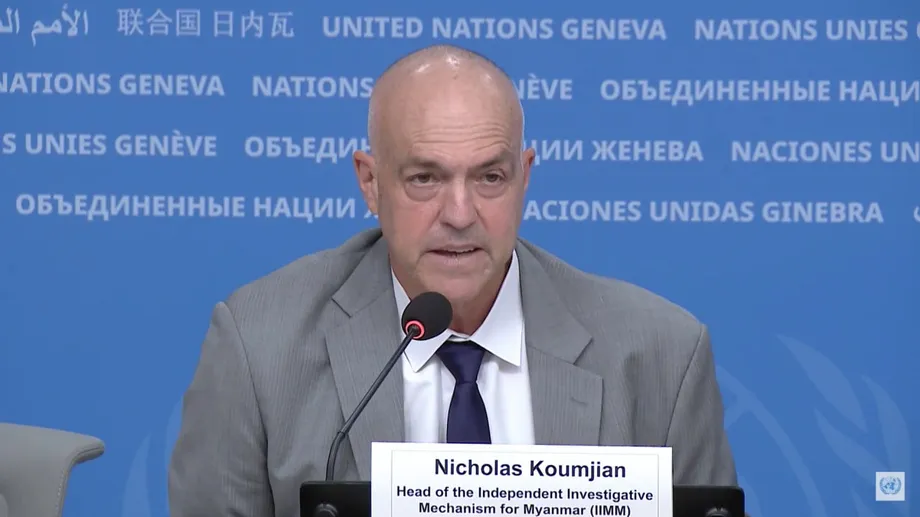
The IIMM's case overview lists nine analytical reports, 40 detailed witness statements, two records of meetings with military defectors and an affidavit by its head, Nicholas Koumjian. Alongside hate speech, the reports address land destruction and dispossession, detention, military command structures, and efforts to investigate sexual violence.
The mechanism shared a selected portion of its evidence with both parties. It required consent from people who provided information, assessed risks and used safeguards such as removing identifying details. Rohingya witnesses, including people travelling from refugee camps in Cox's Bazar, testified in closed examinations during the merits proceedings.
The principal dates show how the case moved from urgent protective orders toward a judgment:
- November 11, 2019: The Gambia filed its application under the Genocide Convention.
- January 23, 2020: The ICJ unanimously ordered Myanmar to prevent genocidal acts, preserve evidence and report on compliance.
- July 2022: The court affirmed its jurisdiction by 15 votes to one.
- January 12 to 29, 2026: Judges heard arguments and examined witnesses and an expert.
- January 29, 2026: The court announced that deliberations had begun.
- November 19, 2026: The judgment is scheduled for delivery.
The IIMM dates the start of deliberations to January 29; the Global Centre's February 10 assessment places it in the preceding week. The scheduled November judgment is the next announced decision in proceedings that have lasted seven years. Until then, the court's determination of Myanmar's responsibility remains pending.
What challenging hatred means in practice
Myanmar's resistance to the 2021 coup has opened space for some activists to reconsider discrimination against Rohingya people and other marginalised communities. Opposition to military rule, however, exists alongside older prejudices about ethnicity, religion and national identity.
The research points to a concrete test of change: whether people can support Rohingya rights without facing threats or accusations of betrayal. Safety for aid workers, freedom to sell food, protection for advocates and the restoration of ordinary social ties all matter alongside changes in public language.
Rohingya refugees also face immediate questions of security and return. Investigators have warned that continuing violence prevents return from being safe and sustainable. Accountability, protection from renewed abuse and the ability to rebuild daily life remain connected concerns.
The historical record brings those concerns together. State newspapers helped spread contempt. Popular culture encouraged disbelief of refugees. Public shaming discouraged assistance. Administrative restrictions narrowed rights. Understanding those connections makes the stakes of an apparently casual joke easier to see: words about who counts as human can help determine who receives protection when violence comes.
Key Points
- State newspaper columns, religious messaging and popular cartoons spread dehumanising portrayals of Rohingya people before and during the 2017 violence.
- Academic research documents threats and public humiliation against people who sold food, provided aid or defended Rohingya rights.
- A 2018 survey found only 8 percent comfortable with a Muslim boss and 9 percent comfortable with a Muslim neighbour.
- The IIMM shared nine analytical reports and 40 witness statements for the ICJ proceedings, including analysis of Facebook hate speech.
- Myanmar denies genocide. The ICJ is scheduled to deliver its judgment on state responsibility on November 19, 2026.