Citizenship promised in law, lost in practice
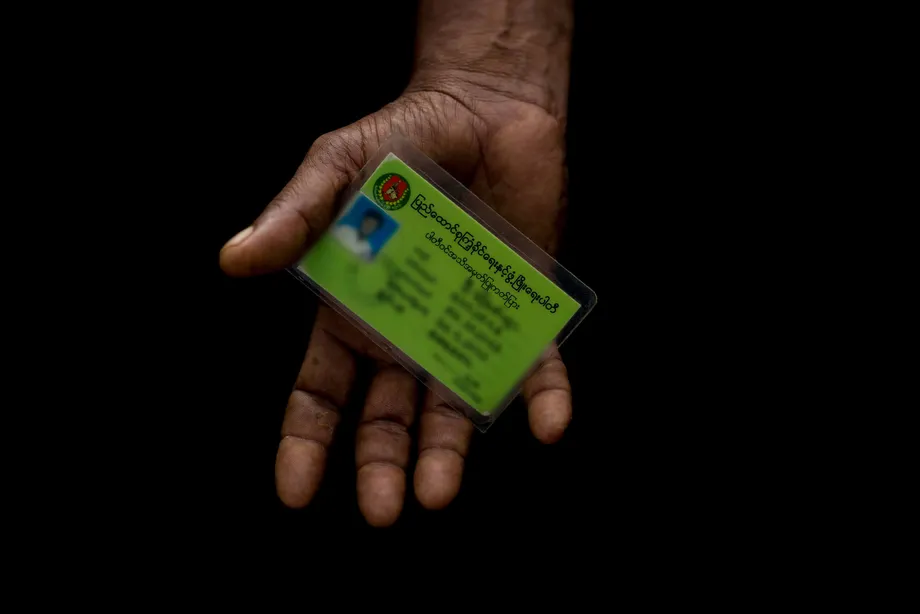
Myanmar's 1982 Citizenship Law contained a protection with lasting consequences for the Rohingya: Section 6 preserved citizenship for people already recognized as citizens. Yet during a nationwide documentation exercise in 1989, many Rohingya surrendered their identity cards and never received the replacements that would allow them to exercise those rights.
Contents
- Citizenship promised in law, lost in practice
- Recognition narrowed before the 1982 law
- A hierarchy built around ancestry
- How white cards became an electoral dividing line
- The milestones behind political exclusion
- Why verification cards failed to build trust
- What missing documents mean for families
- Refugees sought a voice from Bangladesh
- Reform proposals connect citizenship and security
- Key Points
The Advisory Commission on Rakhine State, chaired by former United Nations Secretary-General Kofi Annan, documented that breakdown in its 2017 final report. It helps explain how a community that had voted and elected representatives after independence in 1948 became largely excluded from the 2015 general election.
By 2014, around 90 percent of Rohingya held temporary identity documents known as white cards, according to an Australian Department of Home Affairs briefing. Those cards allowed voting in 2010 but offered no citizenship status. Their cancellation in 2015 removed both an essential identity document and the basis on which many Rohingya had participated in elections.
Former Buthidaung parliamentarian Shwe Maung experienced that reversal personally. Elected in 2010, he was barred from seeking reelection five years later on citizenship grounds. He now chairs the Arakan Rohingya National Congress and leads the Arakan Institute for Peace and Human Rights.
His experience connects two parts of the crisis often discussed separately: the loss of legal recognition and the loss of political power. For ordinary families, the same documentation system also governs access to schools, work, travel and medical care.
Recognition narrowed before the 1982 law
Myanmar's early citizenship framework offered several routes to membership in the new state. The Union Citizenship Act 1948 recognized claims through ancestry and birth, while also allowing naturalization, the process through which an eligible person becomes a citizen.
Elizabeth L. Rhoads, in her legal history of citizenship published in Citizenship Studies, describes an early system combining citizenship through descent with citizenship through birth in the country. Access was broader in law than it often became in administrative practice.
Many Rohingya received National Registration Cards after 1951, alongside other residents recognized as Burmese nationals. Government agencies treated holders as citizens, and Rohingya participated in elections during the parliamentary period from 1950 to 1962. Prime Minister U Nu also referred to the Rohingya as an indigenous ethnic community during the 1950s.
The military takeover in 1962 brought increasing restrictions. Officials began using a disclaimer on National Registration Cards, stating that possession did not necessarily establish citizenship, to challenge Rohingya status. Recognition of children as citizens became harder.
In 1978, the Nagamin citizenship scrutiny operation required Rohingya in Sittwe and northern Rakhine to present documents under threat of arrest. The Australian briefing estimates that about 280,000 fled to Bangladesh, including around 150,000 carrying valid identity documents. Large numbers were subsequently returned, without restoration of their previous legal position.
A hierarchy built around ancestry
The 1982 law made membership of a recognized national ethnic group central to citizenship. The government's eventual list of 135 recognized groups excluded the Rohingya. For people outside those categories, proving ancestry and residence became a demanding route to legal recognition.
The law is commonly described as establishing three categories: full, associate and naturalized citizenship. Rhoads analyzes four types by also distinguishing citizenship by birth within the hierarchy. Both descriptions identify unequal routes to citizenship and unequal rights attached to different status.
The Australian Department of Home Affairs' statelessness briefing, effective June 2, 2021, explains that Section 6 preserved existing citizenship. It also describes how officials refused replacement documents to Rohingya who met the requirements, sometimes confiscating, destroying or failing to return their older cards.
Applicants could be required to provide birth certificates, household records and information about parents, grandparents and great-grandparents. Losing an older document therefore made the next application more difficult. Officials also had broad discretion over decisions.
Rhoads calls the resulting condition deferred citizenship: a person's status remains pending for years, with consequences extending to their children. Her research places Rohingya experiences within a wider pattern affecting Tamils, Chinese, Gurkhas and other minorities whose belonging officials repeatedly scrutinize.
How white cards became an electoral dividing line
Authorities began issuing Temporary Registration Cards, commonly called white cards, to undocumented Muslims in Rakhine and returning refugees in 1995. Approximately 700,000 Rohingya eventually received them. The cards supported lawful residence and everyday applications, including requests for marriage and travel permission.
White card holders could vote in the 2008 constitutional referendum and the 2010 general election. Three Rohingya served in the national parliament following the 2010 vote. Their participation followed earlier Rohingya representation, including four parliamentary seats won in 1990.
President Thein Sein announced the cancellation of white cards on February 11, 2015, requiring their surrender between April 1 and May 31. The Constitutional Tribunal also ruled that temporary card holders were ineligible to vote. The vast majority of Muslims in Rakhine consequently lost their electoral voice.
By December 2016, about 390,000 Rohingya and Kaman Muslims had surrendered their cards. Many received only receipts and were expected to enter another citizenship verification process. For some families, household lists became their only remaining identification.
The Annan commission found that exclusion extended across political institutions. Citizenship requirements governed the founding and leadership of political parties, candidacy and entry to the civil service. Muslims in Rakhine were left without representation at either Union or state level following the 2015 election.
The milestones behind political exclusion
Myanmar's citizenship crisis developed through successive laws, administrative campaigns and electoral decisions. The major dates show how temporary documentation gradually replaced more secure recognition.
- 1948: Independence and citizenship legislation establish routes through ancestry, birth and naturalization.
- 1962: Military rule begins, followed by growing challenges to Rohingya citizenship and documentation.
- 1978: The Nagamin scrutiny operation triggers mass flight to Bangladesh.
- 1982: A new Citizenship Law establishes a hierarchy centered on ancestry and recognized ethnic groups.
- 1989: Citizenship scrutiny leaves many Rohingya without replacement cards after surrendering older documents.
- 1995: Authorities begin issuing white cards to undocumented Muslims in Rakhine and returning refugees.
- 2010: Rohingya vote, and three serve in the national parliament.
- 2015: White cards are cancelled and most Rohingya lose the ability to vote or stand for office.
- 2017: The Annan commission recommends reviewing the citizenship law; military violence drives mass displacement to Bangladesh.
- 2020: Rohingya organizations and Fortify Rights seek voting access for refugees ahead of the November 8 election.
- 2021: The military seizes power, again invoking allegations concerning electoral eligibility.
Rhoads records that military controlled media alleged after the February 2021 coup that 350,000 voters lacked Citizenship Scrutiny Cards. Her analysis describes lengthy pending applications and restrictive documentation requirements as continuing features of the citizenship system.
Why verification cards failed to build trust
National Verification Cards, or NVCs, offered entry to a scrutiny process rather than citizenship itself. Many Rohingya objected because accepting them meant undergoing verification of a status they believed they already possessed.
The Myebon pilot program, launched in July 2014, required applicants to identify as Bengali. By July 2015, 105 of the initial 1,280 applicants had received full citizenship and 459 had received naturalized citizenship, according to the Australian briefing. At least 14 applications had been rejected.
The Annan commission recorded an important change in 2016: the relaunched NVC application no longer formally required ethnicity or religion. It nevertheless received complaints that ethnic references continued to be included on some occasions. Earlier requirements to register as Bengali had already damaged confidence.
Government figures cited in the commission's Rakhine final report showed about 4,000 Muslims, alongside 9,000 Kamans, recognized as citizens or naturalized citizens. Against an estimated one million stateless Muslims in the state, the 4,000 amounted to roughly 0.4 percent. About 10,000 Muslims had received NVCs.
Fortify Rights' 102-page report Tools of Genocide, published in 2019, documented coercion in the NVC process. The Australian briefing also records that, in March 2021, UN Special Rapporteur Thomas H. Andrews described citizenship as inaccessible to almost all Rohingya, with high unofficial fees and burdensome evidence requirements.
What missing documents mean for families
Household lists record residents, addresses and personal details. In northern Rakhine, authorities have conducted annual checks of Rohingya households. People absent during inspections risk removal from the list, weakening their ability to prove residence and increasing exposure to arrest for immigration offences.
Children face difficulties from the beginning of life. The Australian briefing describes restrictions on birth certificates and an onerous process introduced in January 2016 to add newborn Rohingya to household lists. Parents without documents can struggle to secure records for their children.
Household registration is needed for identity documents, school enrollment, health services, electricity, water, marriage permission and travel permission. A missing entry can therefore affect several parts of a family's life at once.
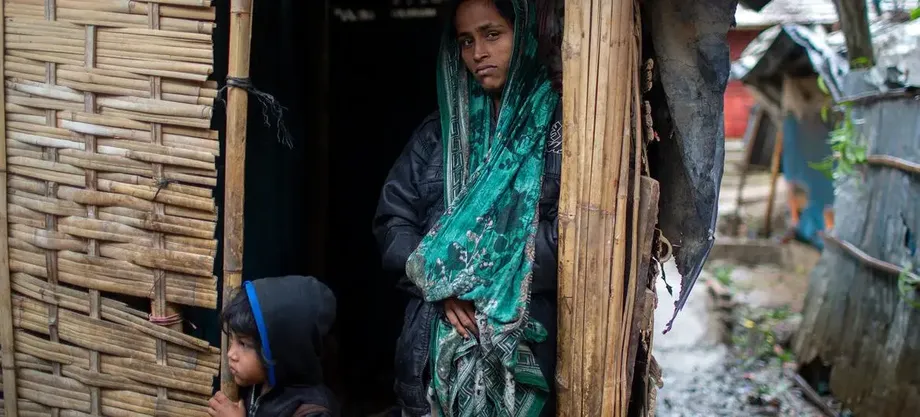
The Annan commission estimated in 2017 that approximately 120,000 people remained confined in displacement camps, most relying entirely on foreign aid. Some held valid citizenship documents. Movement restrictions prevented Muslim businesses and laborers from participating freely in the economy.
The commission called for access to education, health care and livelihoods regardless of citizenship, religion or ethnicity. Its recommendations linked freedom of movement directly to services: permission to attend a school or receive treatment has limited practical value when someone cannot travel there.
Refugees sought a voice from Bangladesh
The Arakan Rohingya Society for Peace and Human Rights wrote to Myanmar's Union Election Commission on May 3, 2020, seeking voter registration and voting arrangements inside refugee camps in Bangladesh.
On July 2, the commission announced that Myanmar nationals abroad could cast advance ballots for the November 8 election. Fortify Rights urged the government to extend electoral participation to Rohingya refugees, using existing identity records and other evidence to establish eligibility.
Matthew Smith, chief executive officer of Fortify Rights, argued in the organization's July 2020 appeal that arrangements could be made before the vote:
Rohingya voted in past elections, and they should have the right to vote in November. Mass absentee voting is possible. The government has ample time to ensure the upcoming elections are free and fair.
Fortify Rights pointed to approximately 850,000 Afghan refugees who voted in Pakistan and Iran during Afghanistan's 2004 presidential election. It proposed using household lists, previous identity cards, UN documents and testimony to support Rohingya electoral access and citizenship restoration.
The organization interviewed 29 Rohingya refugees, including 17 women, between January and June 2020. Several identified the NVC process as an obstacle to returning. A 40-year-old woman originally from Maungdaw Township explained her opposition:
We will not go back as long as we are forced to accept the NVC there. If we accept the NVC, we will become people of Bangladesh.
Her words express the fear that verification would formalize foreign status rather than restore recognition in Myanmar. Refugees were seeking a secure legal place in the country as well as a way home.
Reform proposals connect citizenship and security
The International Commission of Jurists, a legal organization distinct from the International Court of Justice, examined the wider problem in its briefing Citizenship Law and Human Rights in Myanmar: Why Law Reform is Urgent and Possible. It said more than 25 percent of people enumerated in the 2014 census lacked a legal identity.
Its citizenship reform briefing proposed changes to legislation, constitutional protections for political participation and interim measures against racial or ethnic discrimination. Section 347 of the 2008 Constitution guarantees equality before the law to any person, while other provisions reserve rights, including health and education, to citizens.
The Annan commission recommended reviewing the link between ethnicity and citizenship, removing distinctions between categories of citizens and creating ways for stateless permanent residents to acquire citizenship. It also called for a transparent, voluntary verification process with a clear timetable. No binding schedule for completing those reforms was established in these recommendations.
International legal action added another layer of protection. On January 23, 2020, the International Court of Justice unanimously ordered provisional measures in the genocide case brought by The Gambia. Myanmar was required to prevent genocidal acts, preserve evidence and report on compliance, initially in May 2020 and then every six months during the proceedings.
Shwe Maung argues that humanitarian assistance, accountability and refugee return must be joined to political inclusion. He calls for nondiscriminatory citizenship protections, civilian security and meaningful Rohingya participation in decisions about their future. He also argues that both the military and the Arakan Army have exclusionary policies toward Rohingya, despite fighting each other.
The practical demands are connected: reliable documents, equal citizenship, permission to move, access to services and the ability to choose representatives. Restoring any one while leaving the others restricted would leave major parts of daily life under official discretion.
Key Points
- Section 6 of the 1982 Citizenship Law preserved existing citizenship, but documentation practices left many Rohingya without effective recognition.
- White cards allowed participation in the 2010 election; their cancellation helped exclude most Rohingya in 2015.
- National Verification Cards opened a scrutiny process without guaranteeing citizenship.
- Missing identity and household records restrict education, health care, employment and movement.
- Rohingya refugees sought voting arrangements in Bangladesh ahead of the 2020 election.
- Legal and advisory bodies proposed citizenship reform, equal access to services and stronger political participation.