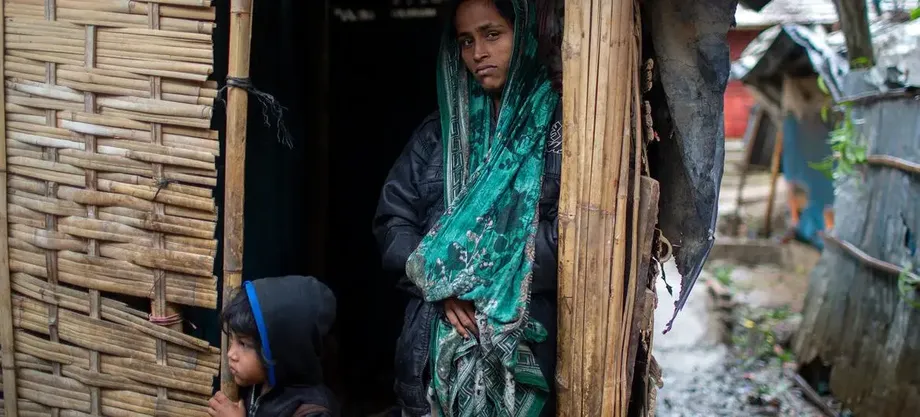
Investigators identify units behind attacks on civilians
United Nations investigators have identified some Myanmar military units and their command structures behind airstrikes on civilians, moving their inquiry beyond documenting destruction toward establishing who may bear criminal responsibility. Their eighth annual report, covering July 2025 to June 2026 and published on August 11, 2026, describes escalating attacks before the military organized elections in December 2025 and January 2026, followed by continuing violence after voting ended.
Contents
- Investigators identify units behind attacks on civilians
- How aerial tactics reduce warning time
- Election criticism became a criminal matter
- Torture investigations extend beyond the military
- Rakhine attacks expose people already displaced
- Sagaing and Karen reports describe further bombing
- New flight makes Rohingya return more difficult
- Different casualty figures measure different losses
- Evidence is reaching courts, but verdicts are separate
- Key Points
The Independent Investigative Mechanism for Myanmar (IIMM) says it documented deliberate attacks on homes, schools, medical facilities, religious buildings and camps for displaced people. Its investigations also cover arbitrary detention, torture and sexual violence by the military and affiliated forces, alongside alleged serious crimes by armed groups fighting them.
In its official 2026 report excerpts, the mechanism confirms that investigators identified some units responsible for aerial attacks and examined their command structures. It also reports progress in investigating detention crimes linked to a 2025 law criminalizing criticism of the election, and allegations of reproductive violence against detained women and girls.
The findings draw on information from more than 1,600 sources, including over 750 witness accounts, as well as photographs, video, forensic evidence and satellite imagery. These are investigative findings, not criminal convictions. The mechanism collects and preserves evidence for courts rather than prosecuting defendants itself.
Nicholas Koumjian, head of the IIMM, described the human suffering behind that work:
Behind every piece of evidence we collect are people whose lives have been devastated by these crimes.
The distinction between preserving evidence and obtaining a judgment matters: identifying a unit or tracing orders can help build a case, but a court must still assess responsibility under the applicable law.
How aerial tactics reduce warning time
The investigation describes growing military use of paramotors, gyrocopters and drones to drop unguided explosives from low altitude. A paramotor is a motorized paraglider; a gyrocopter is a small aircraft whose rotor turns through airflow. These aircraft allow attacks using equipment cheaper than conventional combat jets.
In upper Sagaing Region, investigators are examining allegations that paramotor pilots switched off their engines before reaching targets. Gliding silently toward a community can leave residents little warning to flee or take shelter. The allegations concern specific incidents under investigation, rather than a finding that every attack follows this method.
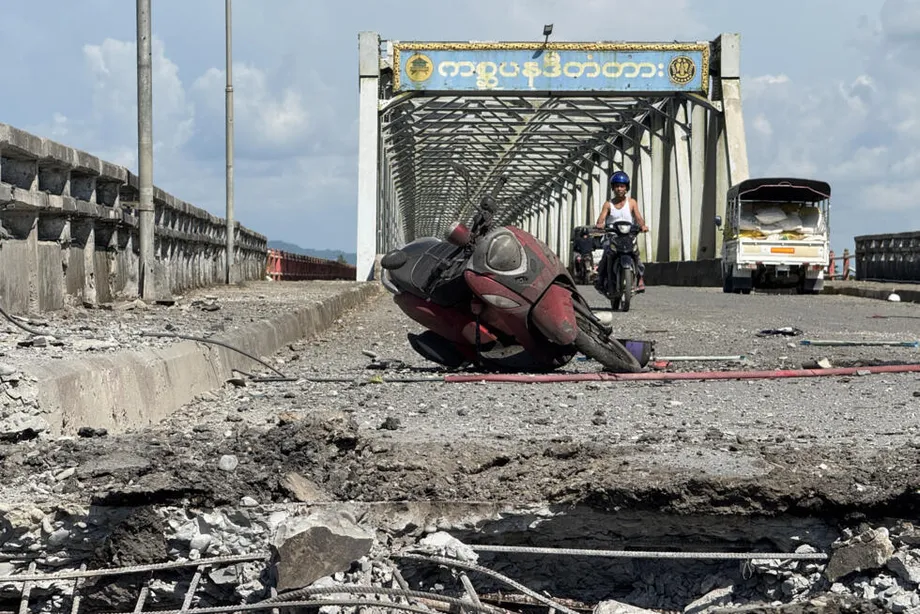
The IIMM also describes repeated strikes in which a second attack follows the first, apparently targeting first responders, people helping the wounded or civilians attempting to escape. Such attacks can extend the danger beyond the initial explosion and expose those providing assistance to further harm.
Investigators examined both the munitions used and how orders for airstrikes were issued. That work connects physical evidence from attack sites with the military organizations responsible. The official excerpts do not name the identified units or commanders, and they do not provide a complete count of aerial attacks during the reporting period.
Election criticism became a criminal matter
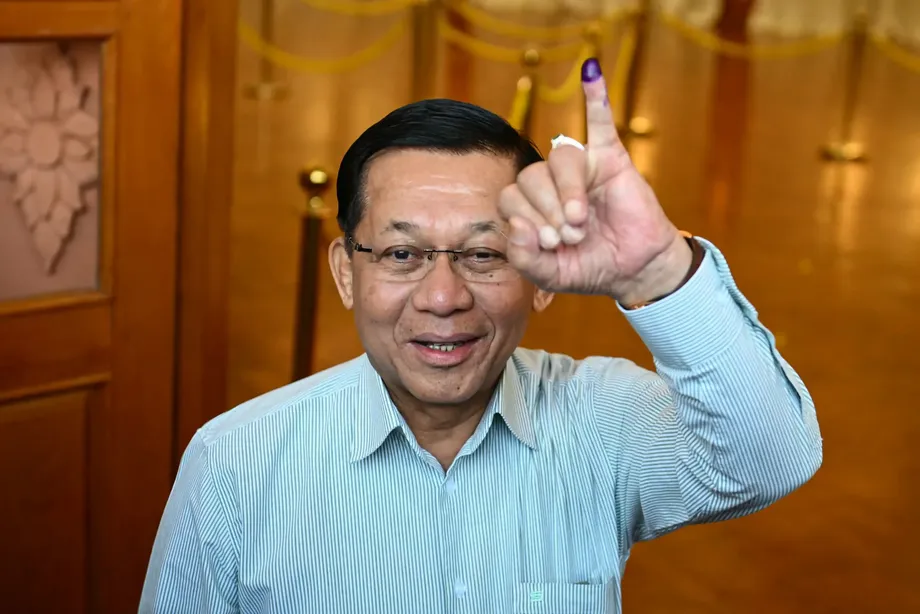
The increase in aerial violence occurred alongside repression surrounding the December 2025 and January 2026 elections. A military backed party won the vote, which Western governments and rights groups rejected as neither free nor fair. Min Aung Hlaing subsequently became president.
The IIMM is investigating detention cases connected to a law enacted in 2025 that criminalizes criticism of the election. Reported penalties reach 20 years in prison or death. Cases described in reporting include people punished for critical online comments or distributing leaflets opposing the vote.
The election therefore features in the investigation in two distinct ways: as the period around which aerial attacks intensified, and as the subject of a law used to arrest critics. The timing does not, by itself, establish the motive behind every strike or detention.
Investigators say attacks continued after voting concluded in January. October accounts of strikes in Sagaing, Rakhine and Karen State fall outside the annual report's July 2025 to June 2026 window. They should be treated as later reported incidents, not as events already assessed in that report.
Torture investigations extend beyond the military
The mechanism gathered extensive evidence of arbitrary detention, physical and sexual torture, and deaths in facilities controlled by the military. Its official report excerpts also identify allegations of reproductive violence against women and girls in detention. This refers to violence affecting reproductive health or autonomy; the excerpts do not specify the acts alleged in individual cases.
Most evidence concerns the military and allied militias, but investigators are also examining crimes allegedly committed by opposition armed groups. That includes allegations of sexual violence connected to the conflict.
In Rakhine State, the inquiry extends to members of the Arakan Army, which controls much of the state and is fighting the military. Reported allegations include rape and other sexual violence against Rohingya women, summary executions, recruitment of children and destruction of mosques.
The official excerpts describe expanded investigations into arbitrary detention, forced displacement and restrictions on humanitarian aid affecting Rohingya, Rakhine and other communities. They expressly include alleged perpetrators from the Arakan Army. Investigating multiple parties does not mean their conduct, scale of abuse or responsibility is identical. Each allegation requires its own evidence.
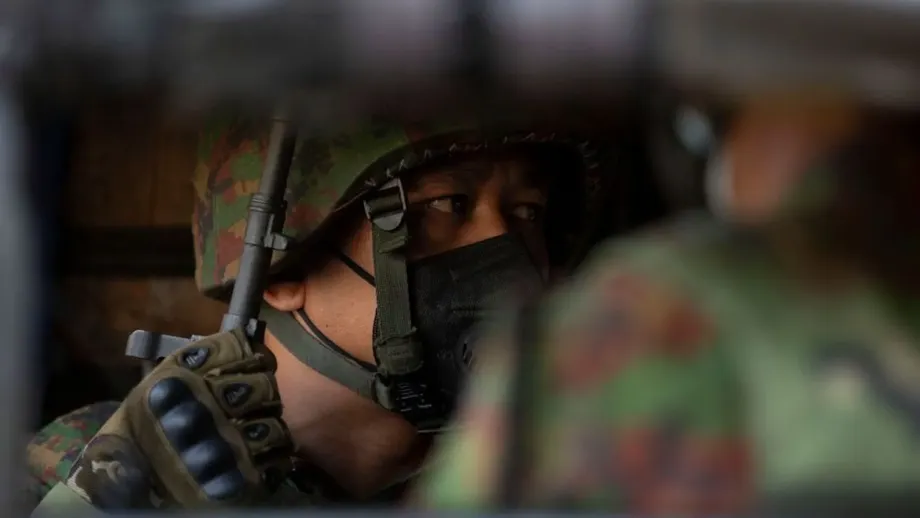
The military did not immediately respond to the annual investigation or separate allegations of August attacks in Rakhine. It has previously maintained that it attacks legitimate military targets and accused resistance forces of terrorism. Those statements do not resolve the investigators' findings concerning civilian targets.
Rakhine attacks expose people already displaced
The Arakan Army said military airstrikes across three Rakhine townships killed about 20 civilians and injured 22 between August 1 and 11. One attack reportedly involved up to eight aircraft and lasted about an hour. These figures are attributed to a party to the conflict and are not presented as independently established totals.
Later reports describe attacks on displacement camps in Ponnagyun Township in October. One account gives eight deaths and 13 injuries across two strikes: six people killed and 11 injured on Sunday, followed by two killed and two injured on Monday morning. Another also reports at least eight deaths, but its description identifies six deaths in the Sunday attack and one in a separate Y12 aircraft strike. That breakdown does not explain the full headline total.
Kyaw Win Tun, spokesperson for the Ponnagyun Youth Association, described the residents of the two camps:
Everyone there is a displaced civilian.
Rakhine writer and aid worker Wai Hun Aung said the camps were far from the active combat zone. The details of the attacks were not independently verified, and a government spokesperson did not immediately comment.
A September 28 attack near a market in neighboring Kyauktaw reportedly killed 50 people and wounded at least 58. A separate account gives the same toll for a Rakhine market attack without an exact date, so the figures should not be added together as evidence of two distinct incidents. Reports also describe a December attack on a hospital in Mrauk U that killed at least 30 people.
Sagaing and Karen reports describe further bombing
In Sagaing, reports of attacks on October 11 and 12 describe three rounds of bombing at the monastery compound in Seikkhun village, Shwebo Township, followed by 30 strikes on four villages in Wetlet Township. One account records at least five civilian deaths and 23 injuries across the two days.
The October monastery attacks were also described in an account giving six deaths and about 21 injuries. Both accounts agree that two people died and eight were injured at the monastery. The disagreement concerns the Wetlet casualties. Residents reported no fighting during the Wetlet attacks.
The monastery sheltered displaced civilians and older people. Buildings commemorating the Buddhist teacher Mahasi Sayadaw were reportedly destroyed, although accounts differ on the extent of damage across the compound. A separate August 21 strike on a monastery in Myaung Township reportedly killed 15 people.
In northern Kawkareik Township, Karen State, local sources and resistance fighters described three days of attacks from October 6 to 8 involving fighter jets, Y12 aircraft and armed drones. At least 50 bombs were reportedly dropped on the morning of October 8, while a 500 pound bomb struck Kwimaungtaing village on October 7.
More than 2,000 residents had reportedly been displaced since September 2025. Many villagers fled before the bombing intensified, making casualties and structural damage difficult to assess. These later accounts describe aircraft and civilian sites similar to those examined by the IIMM, but their details cannot automatically be treated as verified findings of its annual investigation.
New flight makes Rohingya return more difficult
The violence in Rakhine is also driving renewed movement into Bangladesh. UN figures cited in reporting put the number of Rohingya arrivals since the beginning of 2024 at more than 154,000. More than 1.2 million Rohingya live in camps in Cox's Bazar, following successive waves of persecution and displacement.
More than 720,000 fled the military campaign that began in August 2017. The more recent arrival figure is roughly one fifth of that earlier exodus, using the reported thresholds. The figures describe different periods and should not be treated as a precise measure of how many people remain displaced.
During a six day visit to Bangladesh, Koumjian met Rohingya refugees and discussed investigations into current crimes in Rakhine. The IIMM head described the scope of the inquiry:
The Mechanism is investigating allegations of very serious international crimes currently being committed in Rakhine State by perpetrators of various ethnicities, religions, and political affiliations.
He also said recent refugee testimony was crucial to advancing investigations. Continued attacks, forced displacement and restrictions on aid obstruct safe return, regardless of negotiations over repatriation.
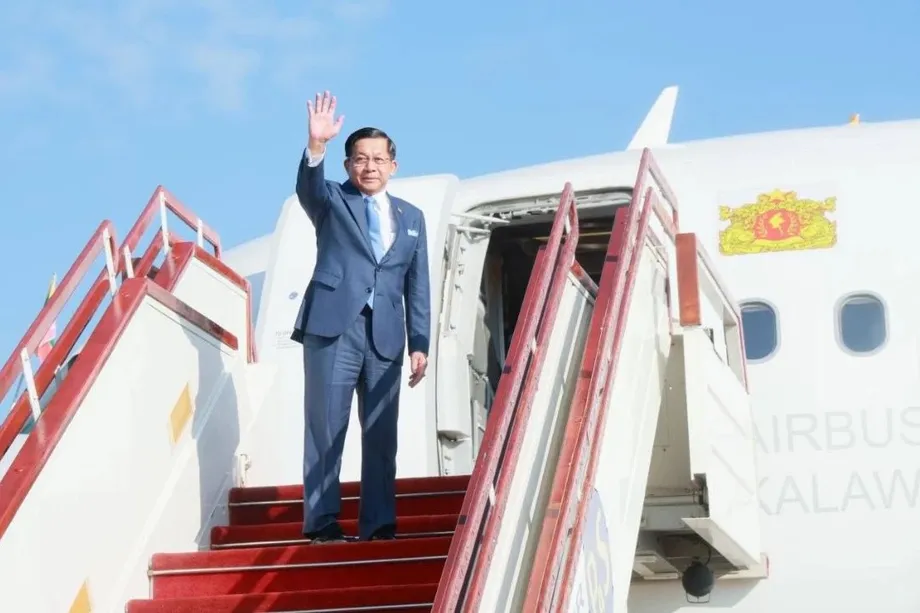
That problem was visible during Malaysia's return negotiations in October. Malaysia reported repatriating 10,493 Myanmar nationals during 2026, while Min Aung Hlaing said his administration would accept only people confirmed as Myanmar citizens. That condition could exclude many Rohingya, who have been denied citizenship by successive governments.
Different casualty figures measure different losses
The scale of Myanmar's war cannot be captured by a single tally. Broad estimates put deaths since the February 2021 coup at around 100,000, while the Assistance Association for Political Prisoners reports more than 8,000 civilians killed and more than 31,000 people arrested by security forces.
These are different measures, not necessarily contradictory counts. The broad war estimate and the organization's record of civilian deaths attributed to security forces cover different categories. They should not be added together.
A separate massacre dataset records at least 5,358 fatalities in 510 incidents attributed to military forces since March 14, 2021. It defines a massacre as an incident in which at least five people were killed. That threshold excludes attacks with fewer deaths, and the count may overlap with other civilian casualty records.
Reports also give different displacement estimates: more than 3.5 million people in one account and nearly 3.8 million in another citing the United Nations. The dates and coverage of those estimates are not aligned, so their difference cannot establish a measured increase of 300,000 people.
A short chronology separates the annual investigation from earlier crimes and later attacks:
- August 2017: A military campaign drove more than 720,000 Rohingya into Bangladesh.
- February 2021: The military overthrew the elected civilian government, triggering protests and armed resistance.
- July 2025 to June 2026: The period covered by the IIMM's eighth annual report.
- December 2025 to January 2026: Military organized elections took place as investigators recorded escalating attacks.
- January 2026: Public hearings in The Gambia's case against Myanmar cited evidence shared by the IIMM.
- August 11, 2026: The annual findings were published.
- October 2026: Further reports described strikes in Rakhine, Karen State and Sagaing.
Evidence is reaching courts, but verdicts are separate
Established by the UN Human Rights Council in 2018, the IIMM collects evidence of the gravest international crimes committed in Myanmar since 2011. Its work supports proceedings before the International Criminal Court (ICC), Argentine authorities and the International Court of Justice (ICJ).
These bodies have different functions. The ICC and national criminal courts examine individual criminal responsibility. The ICJ resolves disputes between states, including The Gambia's allegation that Myanmar breached the Genocide Convention in its treatment of the Rohingya during the 2016 and 2017 campaign.
The official report excerpts say the IIMM shared substantial evidence and analysis with teams representing both states, and that this material was cited extensively during public hearings in January 2026. That use demonstrates the evidence reaching legal proceedings, not a final judicial finding on the allegations.
Argentina opened proceedings in 2024 under universal jurisdiction, a principle allowing national courts to consider certain grave international crimes committed elsewhere. Separately, an Indonesian genocide complaint against Min Aung Hlaing was received by prosecutors on April 6, 2026. Receipt of a complaint is not the same as a prosecution or conviction.
The report excerpts do not name the military units identified in the airstrike investigation, announce charges arising from those findings or specify a next hearing date. The legal significance of the work lies in preserving evidence and connecting alleged crimes to responsible people, while courts retain the task of deciding cases.
Key Points
- The IIMM's August 2026 report covers July 2025 to June 2026 and identifies some military units and command structures responsible for airstrikes.
- Investigators say attacks intensified before the December and January elections and continued afterward.
- Investigations cover torture, sexual violence, election related detention and alleged crimes by opposition armed groups.
- Later reports describe further strikes on displacement camps, villages and monasteries, with some casualty accounts differing.
- More than 154,000 Rohingya reportedly entered Bangladesh since the beginning of 2024, while violence obstructs safe return.
- The mechanism preserves and shares evidence for legal proceedings; its findings are not criminal convictions.