A national data donation drive opens to more people
South Korea is expanding recruitment for a national biobank intended to bring together health and genetic information from one million people by 2032, with 660 billion won planned for investment through 2028. The government wants the resource to support medical artificial intelligence, new medicines and treatments tailored to individual patients.
Contents
- A national data donation drive opens to more people
- What changes for volunteers?
- What goes into the biobank?
- How the million-person target is divided
- Why collection and research access move at different speeds
- The dates behind the rollout
- Who can use the information?
- What medical AI would do with the data
- How participants could share in the benefits
- Key Points
An October 15 announcement widened participation beyond people receiving national or general health checkups. Citizens outside those screening programs can now join by completing designated examinations at recruitment institutions. The change includes people previously excluded from national screenings because of their age or employment status.
The announcement put enrollment at about 238,000 people as of October 14 and scheduled an initial research release covering about 120,000 people for November. A dated account from December 1, 2025, recorded about 110,000 people with clinical and genomic data and anticipated the first release in the fourth quarter of 2026. The October announcement's year is unspecified, leaving the relationship between those enrollment figures and release schedules unresolved.
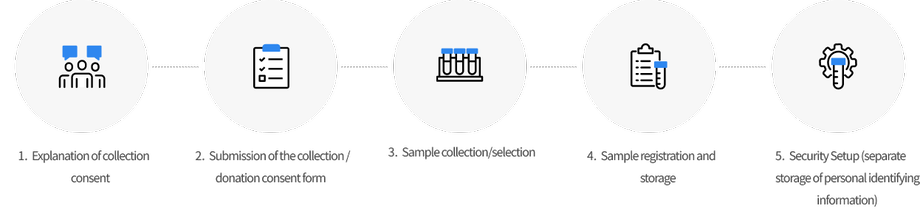
The common objective is more straightforward: collect biological samples with participants' consent, connect them with health records, and let approved researchers study the combined information inside a controlled computing environment.
What changes for volunteers?
The Ministry of Health and Welfare, Ministry of Science and ICT, Ministry of Trade, Industry and Energy, and Korea Disease Control and Prevention Agency jointly announced the wider eligibility rules. Recruitment had previously concentrated on people already attending health checkups, making it easier to obtain examination results during an existing visit.
People outside those programs now have a route to participate through examinations arranged at recruitment institutions. Participation remains voluntary and involves consent, sample collection and physical measurements. The October announcement identified 48 recruitment institutions nationwide and an average of 600 to 700 new participants each day.
Health Minister Jung Eun-kyeong and Ha Jung-woo, vice chair of the National AI Strategy Committee, joined about 40 people at a donation event at Yonsei University Sinchon Severance Hospital in Seoul on October 15. Korea Health Industry Development Institute head Ko Sang-baek and hospital officials were also among those attending.
The event combined a public appeal for donors with policy discussions about implementation, research access and the use of the data in medical AI. For volunteers, the practical change is access to enrollment without having to qualify for a routine screening first.
What goes into the biobank?
Project director Baek Long-min describes a resource built by connecting several types of information. The project's official organizational overview says it collects samples such as blood, urine and tissue, alongside clinical records, genomic data, information held by public institutions and health information generated by individuals, based on participants' consent.
A biobank stores physical material from the human body for research. A databank holds the associated digital information. Blood can yield DNA, which contains genetic instructions, and serum, the liquid remaining after blood clots. Researchers can study those materials alongside information about a person's illnesses and medical care.
The October announcement says donated blood and urine are preserved at the National Biobank of Korea, operated by the Korea Disease Control and Prevention Agency. Connecting samples with records gives researchers a way to examine how genetic differences relate to disease and treatment.
Precision medicine is the effort to choose prevention or treatment using a person's particular characteristics. Pharmacogenomics, one intended use of the project, studies how genetic differences affect responses to medicines, including whether a drug is likely to work or cause unwanted effects.
How the million-person target is divided
The government plans to collect information from 772,000 people by 2028 before reaching one million by 2032. The recruitment plan divides that first target into three groups:
- 585,000 general participants.
- 140,000 patients with severe diseases.
- 47,000 patients with rare diseases.
Those groups total 772,000. Patients with severe or rare diseases account for 187,000 places, or about 24% of the first recruitment target. General participants account for about 76%.
Including people with and without the targeted diseases gives researchers different groups to compare. They can examine genetic variations, clinical histories and biological measurements associated with particular conditions. The rare disease group also provides a dedicated collection for illnesses whose patients may be scattered across different hospitals.
The planned first release of roughly 120,000 records would equal about 12% of the eventual million-person target. Researchers would therefore begin working with a portion of the resource while recruitment and data preparation continue.
Why collection and research access move at different speeds
Enrollment is only the beginning of preparing data for research. Records must be checked, organized and standardized so that information collected at different institutions can be analyzed together. A measurement or diagnosis needs a consistent meaning across the dataset.
The October announcement says the first release would contain information collected through the end of the preceding year that had already been standardized and cleaned. It describes the research platform as completed the previous week, with quality checks and testing under way. Information collected through the end of the announcement year was scheduled for release the following year.
The December 2025 account describes an earlier operational timetable in more detail. Recruitment began in earnest in March 2025 after delays involving systems at 38 recruitment institutions and other factors. Initial expectations of collecting data from 190,000 to 200,000 people by the end of 2025 had been reduced to about 120,000.
At that stage, daily recruitment was put at 800 to 900 people. Baek estimated that reaching one million participants by 2032 required an average of 1,000 donors a day. That placed the stated daily pace at 80% to 90% of his benchmark, while data cleaning and standardization remained another substantial task.
The dates behind the rollout
The project combines a new integrated data effort with biological collections and institutions developed over many years. Its milestones show both the existing foundation and the work needed before researchers can use the new resource.
- 2001: The Korean Genome and Epidemiology Study began collecting population based human biological resources.
- 2008: The Korea Biobank Project launched to support national management of samples and biomedical research.
- March 2025: Recruitment for the integrated project began in earnest after operational delays.
- December 1, 2025: About 110,000 people were recorded as having contributed clinical and genomic data.
- 2026 planning schedule: Platform completion was expected in the third quarter, followed by an initial dataset in the fourth quarter.
- October 15 announcement, year unspecified: Eligibility expanded, with a November release announced for about 120,000 people.
- 2028 and 2032: Recruitment targets are 772,000 and one million people, respectively.
The Korea Biobank Network's institutional background page describes regional biobanks at 17 university hospitals and two collaborative institutions participating since 2013. It also cites Article 2, Subparagraph 11 of the Bioethics and Safety Act when defining human biological resources, including tissue, blood, DNA and proteins.
That established network provides experience in collecting, managing and distributing biological material. The integrated project adds the task of linking several types of information into a shared research resource.
Who can use the information?
Researchers at universities, medical institutions and companies will be able to apply for access by submitting a research plan. Approved users will analyze information inside a secure, closed platform, according to the October announcement.
Sensitive genomic and clinical information will remain within that environment. Only analysis results may be taken out. In practical terms, researchers would bring their research questions and analytical tools to the data rather than receive an unrestricted copy of participants' records.
The project is organized through BIKO, an office within the Korea Health Industry Development Institute. Its structure includes a secretariat, a databank and a biobank. The databank manages the integration and research use of digital information, while the biobank manages materials produced from samples and related information.
Specialist committees advise on data quality and security, ethical and legal issues, access and use, biological analysis, and international cooperation. Their responsibilities connect the scientific work with decisions about how sensitive information is handled and who may study it.
What medical AI would do with the data
The government wants the resource to support what it calls sovereign Korean medical AI: domestic capability to develop medical AI using data and research infrastructure under Korean control. The stated applications also include advanced medical devices, new medicines and the discovery of disease biomarkers.
A biomarker is a measurable biological feature that can help researchers identify or track a disease. By studying samples together with medical records, researchers may find genetic or other biological patterns associated with a condition or a response to treatment.
Ha Jung-woo, vice chair of the National AI Strategy Committee, connected the project with national ambitions in medicine and drug development:
I hope that based on AI innovation, South Korea's capabilities in precision medicine and new drug development will take another leap forward.
The December 2025 planning account also described an intention to establish an AI model development plan by the end of 2026. Possibilities included a large language model or AI agents to support research. A large language model processes and generates language; an AI agent can carry out a sequence of tasks using software tools. Both were being considered as research tools within the platform.
How participants could share in the benefits
Health Minister Jung Eun-kyeong described the biobank as a shared national resource at the October event:
The national integrated bio big data is a public asset completed through public participation.
The government's promise is that broad, safe research use will translate into public benefits through better medicines, devices and more personalized care. Companies are included among potential approved users, making the resource relevant to commercial development as well as research at hospitals and universities.
A more direct benefit was outlined for participants with rare diseases in the December 2025 plans. The project intended to provide treating physicians with reports for diagnostic claims that could support donors' care, beginning in 2026. This connects the collection of rare disease information with the treatment needs of the people contributing it.
The immediate operational work remains concrete: recruit volunteers, prepare consistent records, complete access checks and make the research platform usable. The million-person goal depends on those activities progressing together, so that donated samples and information become a resource researchers can actually study.
Key Points
- South Korea has widened biobank eligibility beyond people receiving routine health checkups.
- The project targets 772,000 participants by 2028 and one million by 2032, with 660 billion won planned through 2028.
- The first recruitment target includes 585,000 general participants, 140,000 patients with severe diseases and 47,000 with rare diseases.
- Approved university, hospital and company researchers will use a closed platform, with exports limited to analysis results.
- The October announcement schedules a November release, while a December 2025 account places initial access in late 2026; the October announcement's year is unspecified.
- Intended uses include medical AI, drug development, disease biomarkers and treatment tailored to individual patients.