A costly reckoning for lost rice fields
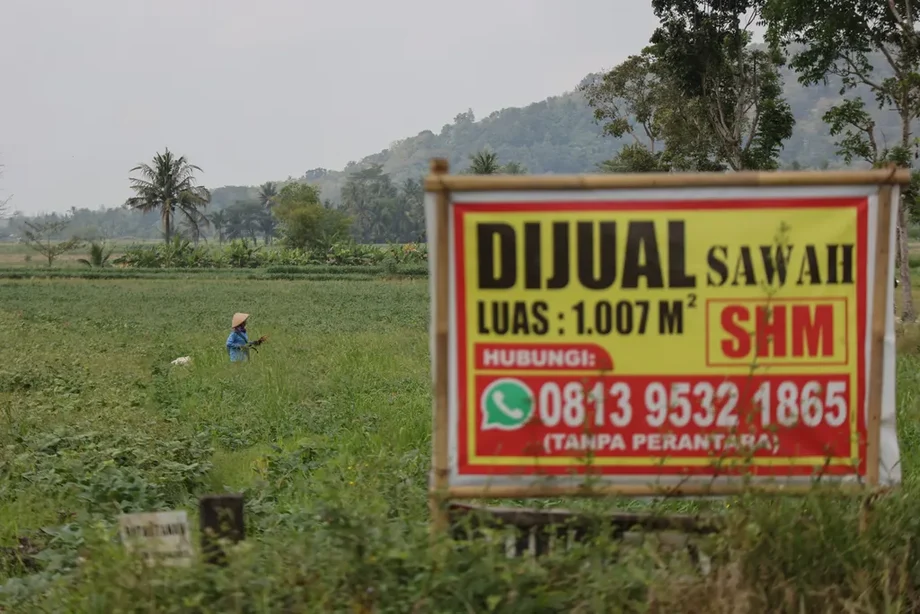
Indonesia's Agriculture Minister Andi Amran Sulaiman has proposed making those responsible for converting 554,615 hectares of rice fields into housing and industrial areas replace the land at three times its size or pay a penalty worth three times its assessed tax value. The proposal addresses conversions recorded between 2019 and 2025, turning years of agricultural land losses into a debate over who should pay to restore the country's capacity to grow rice.
Contents
- A costly reckoning for lost rice fields
- What the two penalty options would mean
- Why Nusron wants an audit first
- Replacement depends on water and productivity
- Protected farmland still has legal exceptions
- The 87 percent protection target
- Local maps remain central to enforcement
- How the policy developed
- Support for farmers alongside restrictions
- Key Points
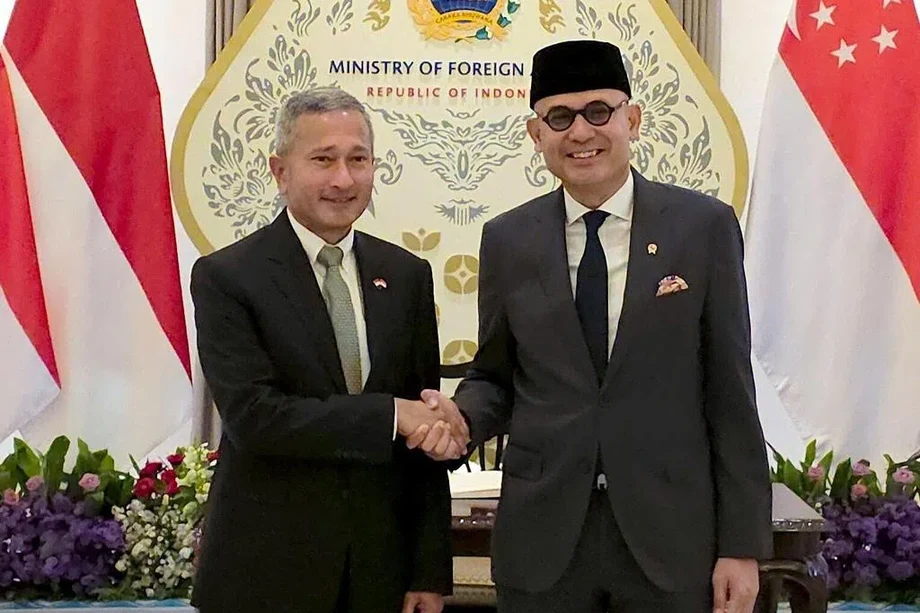
Amran presented the proposal at a limited coordination meeting at the Coordinating Ministry for Food in Jakarta on November 11, 2026. He estimated that the payment option could save the government as much as Rp 100 trillion, although he did not give a calculation explaining that estimate.
Agrarian Affairs and Spatial Planning Minister Nusron Wahid, who also heads the National Land Agency, called for a comprehensive audit before penalties are determined. He wants officials to establish which conversions had permits, what protection applied when the land changed use, and which kinds of rice fields were lost.
The ministry's figures put 144,255.1 hectares of the converted land in categories designated as protected rice fields or sustainable food farmland. That represents about 26 percent of the 554,615 hectares recorded as converted. Nusron's proposed audit would examine the timing of those protections alongside the conversion history.
The proposal therefore brings together two tasks: deciding how to address land already converted and strengthening the rules intended to keep remaining rice fields in production. For farmers, developers and local governments, the consequences depend on both the condition of the land and its legal status when construction began.
What the two penalty options would mean
Amran's first option would require those responsible for conversion to create new rice fields covering three times the area lost. Applied uniformly to the full 554,615 hectares, that would amount to 1,663,845 hectares of replacement fields. The eventual requirement would depend on the audit and the rules applied to each case.
His second option would require payment of three times the Nilai Jual Objek Pajak, known as NJOP, at the location concerned. NJOP is the assessed property value used for tax purposes. A penalty tied to that value would vary by location rather than impose the same charge for every hectare.
Amran pointed to Jakarta and Tangerang as places where rebuilding rice fields at the original location might no longer be practical. Housing, factories and other urban development can leave little room to recreate an agricultural area. He also raised the possibility of establishing replacement fields outside Java.
The cash option would give the government a way to seek compensation where physical replacement is difficult. No final decision, payment timetable or detailed explanation of how the proposed proceeds would be used was given. The Rp 100 trillion figure remains Amran's estimate of potential budget savings.
Why Nusron wants an audit first
Nusron asked officials to divide the converted land into cases with permits and cases without them. He also wants the audit to establish whether each local government had already designated the affected area as Lahan Pertanian Pangan Berkelanjutan, or LP2B, when conversion occurred.
LP2B is farmland formally set aside for continued food production. Its designation gives authorities a legal basis for protecting agricultural use, subject to the exceptions allowed by law. Checking when that status began would help officials identify the rules that applied to each conversion.
Nusron proposed a joint team led by the Coordinating Ministry for Food, with members from his ministry, the Agriculture Ministry and the Maritime Affairs and Fisheries Ministry. The team would examine the land's protection status, permit history and previous type of rice farming.
A field converted before local protection boundaries were settled presents a different administrative history from a protected field converted without permission. By sorting those histories first, the government would have a basis for assigning responsibility and calculating any replacement obligation.
Replacement depends on water and productivity
Nusron said existing replacement requirements distinguish between rice fields according to their water systems. Under the rules he described, fields served by technical irrigation must be replaced at three times their area, swamp rice fields at twice their area, and fields dependent on rainfall at the same area.
Technical irrigation uses an organised system of water delivery and control. Rainfed fields rely on rainfall, while swamp cultivation operates in wetland conditions. Those differences affect the work and infrastructure needed to keep rice growing.
Nusron also stressed productivity. He gave an example involving rice fields in Karawang yielding nine tonnes and replacement fields in South Sumatra yielding three tonnes. His calculation, three multiplied by three equals nine, explained why a larger area might be needed to replace the output of more productive land.
The practical issue is how much rice replacement fields can produce. Creating a hectare of new farmland does not automatically reproduce the harvest of a hectare with established irrigation and high yields. The audit would therefore need to consider the previous field's productivity as well as its size.
Law No. 41 of 2009 on the Protection of Sustainable Food Agricultural Land already provides for replacement land when protected farmland is converted under permitted exceptions. Its requirements include at least three times the area for irrigated land and at least the same area for land without irrigation. Nusron's account also identifies a separate requirement for swamp fields.
Protected farmland still has legal exceptions
Law No. 41 of 2009 generally prohibits the conversion of land designated as LP2B. It also allows limited conversion for the public interest, with replacement land required.
The law's explanation includes roads, public transport infrastructure, dams, irrigation, drinking water channels, drainage, sanitation, public safety facilities, nature reserves and electricity infrastructure among public interest uses. Those projects can require agricultural land even when the government is seeking to preserve food production.
Presidential Regulation No. 4 of 2026 also addresses rice fields that appear on protected land maps but have not yet been designated as LP2B. Article 17 requires a recommendation from the minister responsible for agrarian affairs and spatial planning before such land can be converted.
Those provisions make the audit's legal checks central to the penalty debate. Officials would need to establish whether a project qualified for an exception, whether the required approvals existed and whether replacement duties were met. A single penalty formula would have to operate alongside those existing requirements.
The 87 percent protection target
Indonesia's protection policy uses three related land categories. Lahan Baku Sawah, or LBS, is the government's baseline inventory of rice fields. Lahan Sawah Dilindungi, or LSD, identifies protected rice fields. LP2B designates land for sustained food farming through the planning system.
The government has put the LBS inventory at 7.38 million hectares. An 87 percent protection threshold applied to that total amounts to about 6.42 million hectares. That calculation closely matches the government's stated target of establishing 6.42 million hectares of LSD by June 2026.
Presidential Regulation No. 4 of 2026, signed and brought into force on February 4, 2026, requires regional governments with LBS to designate at least 87 percent of it as LSD. It replaced Presidential Regulation No. 59 of 2019 and placed leadership of the integrated conversion control team with the Coordinating Minister for Food.
Presidential Regulation No. 12 of 2025, covering the national development plan, also provides the basis for protecting LP2B at a minimum of 87 percent of LBS. Together, the measures connect national targets with the maps and planning decisions made by local authorities.
Nusron has said his ministry would temporarily treat all LBS as LP2B in areas whose spatial plans fall short of the minimum, until local governments establish clear boundaries. Regions below the threshold were instructed to revise their plans within six months.
Local maps remain central to enforcement
Only 194 regencies and cities had included LP2B in their regional spatial plans during the government's earlier push to accelerate designation. Those plans, known as RTRW, guide where farming, housing, industry and other activities may take place.
Nusron has urged regional governments to show LP2B, LBS and LSD in their RTRW documents. Putting the agricultural categories into the planning system gives officials a clearer basis for assessing development proposals before fields are built over.
Eight provinces had established LSD protections: Central Java, East Java, West Java, West Sumatra, Banten, Yogyakarta, Bali and West Nusa Tenggara. Nusron said conversion across those provinces totalled 5,618 hectares over five years.
He also cited an earlier annual conversion range of 80,000 to 120,000 hectares before LSD protections. The agrarian ministry separately gave a national estimate in 2022 of 100,000 to 150,000 hectares a year. The figures describe different periods and geographical coverage; the eight provinces recorded an average of about 1,124 hectares a year over the five years cited.
Expansion plans included verification and team formation in Aceh, North Sumatra, Riau, Jambi, South Sumatra, Bengkulu, Lampung, the Bangka Belitung Islands, the Riau Islands, West Kalimantan, South Kalimantan and South Sulawesi. The 2026 schedule targeted designation in 12 additional provinces by early March and another 17 by the end of June.
How the policy developed
President Prabowo Subianto directed Nusron to curb rice field conversion after a meeting at Merdeka Palace in Jakarta on January 28, 2026. Nusron, speaking as agrarian affairs minister and head of the National Land Agency, said the president had approved the steps discussed.
"In our discussion earlier, we outlined steps that required the President's consultation, and thankfully, he has given his blessing," Wahid said.
At that meeting, Nusron described approximately 554,000 hectares lost between 2019 and 2024. The more detailed ministry figure used in the penalty proposal is 554,615 hectares for 2019 through 2025.
- 2025: The government sought to accelerate LP2B designation and complete the process that year.
- January 28, 2026: Prabowo directed Nusron to restrain conversion after their Merdeka Palace meeting.
- February 4, 2026: Presidential Regulation No. 4 of 2026 took effect, introducing the LSD threshold and revised team leadership.
- March and June 2026: The government set staged targets for extending protected land designations.
- November 11, 2026: Amran proposed triple replacement or NJOP penalties, while Nusron requested an audit before sanctions were determined.
The sequence shows a policy extending from designation and mapping to possible financial liability for past conversions. Each stage depends on knowing which fields existed, which protections applied and what happened to the land.
Support for farmers alongside restrictions
Presidential Regulation No. 4 of 2026 also provides incentives for local governments and communities that keep rice fields in agricultural use, subject to the state's financial capacity. Local governments can receive agricultural infrastructure and funding support.
For communities, the measures include agricultural infrastructure, financial assistance, agricultural insurance, access to microcredit and relief from social security payment obligations. Other support includes faster land certification and help marketing rice or paddy.
Those measures address the continuing costs of farming while protection rules limit changes in land use. A mapped boundary can preserve a field for agriculture; irrigation, finance, insurance and access to buyers help farmers keep producing on it.
The penalty proposal puts responsibility for past losses beside those efforts to maintain remaining fields. Its eventual effect will depend on the audit, the legal treatment of individual conversions and whether replacement land can deliver the production that Indonesia has lost.
Key Points
- Amran proposed triple land replacement or penalties of three times assessed tax value for converted rice fields.
- The ministry recorded 554,615 hectares converted between 2019 and 2025.
- About 144,255.1 hectares, or 26 percent, fell within protected land categories.
- Nusron requested checks on permits, protection dates, field types and productivity before sanctions are set.
- Existing rules allow limited public interest conversions and require replacement land.
- An 87 percent threshold applied to 7.38 million hectares corresponds to about 6.42 million hectares of protection.