Following the money behind the haze
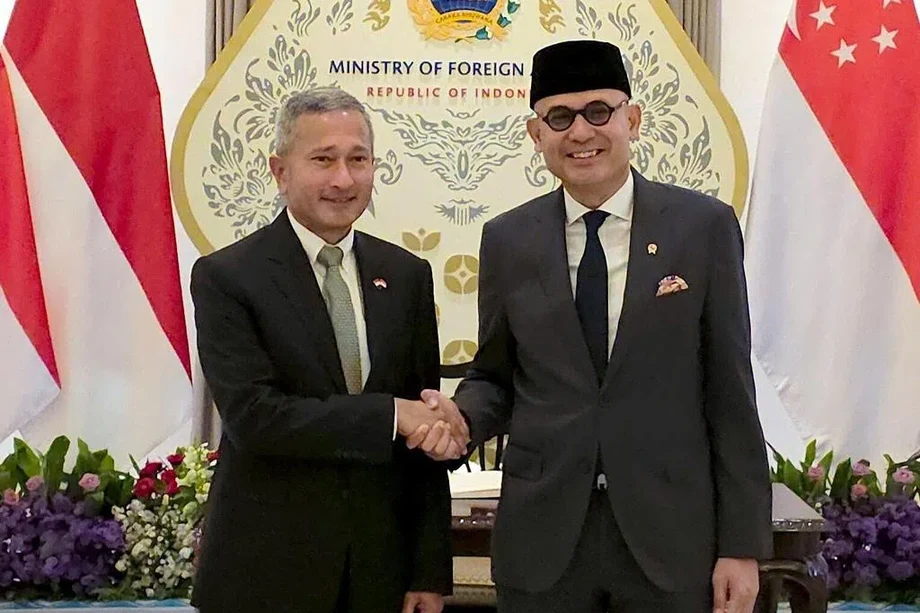
Singapore and Indonesia are preparing a joint task force to investigate companies linked to forest and land fires, combining company records, financial intelligence and evidence gathered across their borders. The agreement, reached by their foreign ministers in Jakarta on October 27, puts corporate responsibility at the centre of their response to smoke that has repeatedly pushed Singapore's air quality into unhealthy levels since September 4.
Contents
- Following the money behind the haze
- What the task force would do
- Two enforcement tracks in Singapore
- Indonesian communities breathe the smoke first
- Weather conditions and decisions to burn
- Singapore seeks wider investigative powers
- How the response has developed
- Hotlines to manage disagreements
- A wider relationship faces practical pressures
- Key Points
Indonesia says it has mobilised around 71,000 personnel on the ground and 51 aerial units to fight the fires. Hundreds of individuals and more than 50 corporations have been investigated or prosecuted, with some found guilty under Indonesian law, according to Indonesian Foreign Minister Arrmanatha Nasir.
Singapore is pursuing companies through its own investigations. Its National Environment Agency (NEA) has issued notices requiring preventive measures to 10 companies in Indonesia and requested documents and information from 10 companies based in Singapore under the Transboundary Haze Pollution Act.
Arrmanatha explained why the planned partnership would examine financial transactions as well as burning land:
Smoke can cross borders, so can money. That is why we must follow the money trail these companies have left behind.
The agreement has since moved into preparations inside Indonesia's government. A November 3 meeting brought together the foreign, forestry, environment and finance authorities to discuss the task force's responsibilities and operating arrangements. Singapore is also pursuing changes to its haze legislation, extending the response beyond firefighting to the business relationships and financing connected to burning.
What the task force would do
Singapore offered to share data on companies linked to the fires, an offer Arrmanatha welcomed. The proposed Joint Task Force on Strengthening Business Responsibilities would connect information sharing, financial intelligence and the collection of evidence across borders, with asset recovery where possible.
Financial intelligence means examining information about money movements to help identify possible wrongdoing. Asset recovery involves using legal procedures to recover money or property connected to unlawful activity. Arrmanatha presented that recovery as a possibility within the task force's work.
Company documents in Singapore could help investigators examining fires in Indonesia, while evidence gathered in Indonesia could support Singapore's inquiries into pollution reaching its territory. Bringing those strands together is the practical purpose of the arrangement.
Singapore Foreign Minister Vivian Balakrishnan said closer coordination would also warn businesses that the two countries were acting together. The intended deterrent is straightforward: companies should face a greater risk of investigation and enforcement if they profit from burning.
The ministers announced the initiative at a press conference lasting about 20 minutes, reading prepared statements without taking questions. No date was given for the task force to begin operating, and its detailed procedures were still being discussed at the November 3 coordination meeting.
Two enforcement tracks in Singapore
Singapore's action involves two distinct groups of companies. The NEA's preventive measures notices went to 10 companies in Indonesia linked to fires suspected of contributing to haze in Singapore. Its requests to 10 companies based in Singapore sought documents and information about their activities.
The document requests were the first such notices issued by the agency under the Transboundary Haze Pollution Act. The law provides Singapore with a framework for pursuing responsibility for haze pollution that reaches the country from fires elsewhere.
The NEA identified 10 Indonesian companies on October 16 and three additional Indonesian companies on October 19. The October 27 announcement described preventive measures notices to 10 Indonesian companies; the earlier identification of additional firms concerned the wider investigation.
Singapore's Ministry of Law also established a specialist panel comprising law firms, audit firms and investigative firms with experience conducting inquiries across borders. Their combined skills would help examine legal responsibility, financial records and corporate connections.
Balakrishnan said Singapore was prepared to use its legal and regulatory powers against responsible companies, including those based in Singapore, and consider a wider range of legal, regulatory and economic measures to prevent future violations.
Indonesian communities breathe the smoke first
Sumatra and Kalimantan were central to both ministers' descriptions of the human cost. Arrmanatha said Indonesians living near the fires were the first people exposed, while Balakrishnan agreed that Indonesian citizens bore the initial and greatest burden.
Arrmanatha described the affected communities directly:
The first victims of these fires are Indonesians. It is our farmers, our children and our families in Sumatra and Kalimantan who have to breathe the smoke first.
President Prabowo Subianto has made tackling the fires a national priority, Arrmanatha said. The response includes water bombing and weather modification, alongside the deployment of roughly 71,000 ground personnel and 51 aerial units across priority provinces. More resources were ready for deployment.
Water bombing drops water from aircraft onto fires. Weather modification attempts to influence weather conditions to support firefighting. Both sit alongside the work of personnel confronting fires on the ground.
Singapore and Malaysia have offered firefighting assistance. Arrmanatha said Indonesia appreciated neighbouring countries' support and that the relevant agencies would consider the offers against conditions in the affected areas.
Indonesia's enforcement effort is proceeding alongside emergency operations. Arrmanatha said hundreds of individuals and more than 50 corporations had been or were being investigated and prosecuted, with some already convicted. Those figures describe cases at different stages, from investigation through to court decisions.
Weather conditions and decisions to burn
El Niño has complicated Indonesia's firefighting response, Arrmanatha said. The climate pattern can bring drier conditions to parts of the region, making vegetation easier to ignite and fires harder to control.
Balakrishnan drew a direct line between natural weather conditions and human responsibility: El Niño is a natural phenomenon, while the fires involve human actions. He said both governments had a responsibility to protect their people.
Singapore's Minister for Sustainability and the Environment, Grace Fu, identified irresponsible land clearing, open burning and peatland drainage as drivers of the haze. Peat is soil made from partly decayed plant material that accumulates in wet conditions. Draining it makes it more vulnerable to burning, and fires can continue beneath the surface.
Fu addressed the issue during the second reading of proposed amendments to Singapore's Transboundary Haze Pollution Act on November 4, 2026. She described how commercial land clearing can bring benefits to companies while leaving people across Southeast Asia to bear the health and environmental costs.
Singapore had recently experienced its worst haze episode since 2015, with unhealthy air lasting for stretches over several weeks. Residents had to limit outdoor activities and adjust daily routines. Preventing burning at its source would address that disruption before smoke travels to neighbouring countries.
Singapore seeks wider investigative powers
The proposed amendments to Singapore's haze law would strengthen the collection and verification of information, improve tracing of corporate relationships and supply chains, and provide for financial penalties and other economic measures against responsible entities.
A supply chain is the network of businesses involved in producing and selling a product. Examining that network can help investigators understand how a company connected to burning land relates to buyers, business partners and financing elsewhere.
Singapore plans to expand scrutiny of those commercial and financial connections. The proposed approach would let investigators look beyond the company operating at the location of a fire and examine the wider business structure around it.
Fu also described cooperation with neighbouring governments as essential because each country's legal authority has territorial limits. Indonesia can investigate activities on its land, while Singapore can pursue relevant records and businesses within its reach. The joint task force is intended to connect that work.
The legislative changes remained proposals at the second reading described by Fu. Her remarks set out the intended direction of Singapore's enforcement policy while Indonesia continued developing the task force's operational arrangements.
How the response has developed
The October 27 agreement followed weeks of unhealthy air and growing enforcement activity. Indonesia's Foreign Ministry spokesman Vahd Nabyl Achmad Mulachela said on October 21 that communication with Singapore was continuing and that Indonesia was committed to tackling fires seriously to protect communities, the environment and relations with its neighbours.
The main steps have unfolded as follows:
- September 4 onward: Singapore experienced periods of unhealthy air quality linked to the haze.
- October 1: Arrmanatha Nasir became Indonesia's foreign minister, succeeding Sugiono.
- October 16: The NEA identified 10 Indonesian companies suspected of links to fires contributing to haze.
- October 19: The NEA identified three additional Indonesian companies.
- October 27: Arrmanatha and Balakrishnan agreed in Jakarta to establish the joint task force and strengthen direct communication.
- November 3: Indonesian ministers discussed the task force's scope and operating arrangements.
- November 4, 2026: Grace Fu discussed the partnership and proposed legislative changes during the second reading of amendments to Singapore's haze law.
The November 3 meeting was chaired by Arrmanatha and included Forestry Minister Raja Juli Antoni, Environment Minister Jumhur Hidayat and Finance Ministry representatives. Their participation reflects the task force's combination of environmental enforcement, corporate investigation and financial scrutiny.
Indonesia's Foreign Ministry said the discussions covered responsibilities in line with each ministry's authority. Arrmanatha also expressed hope that the partnership could eventually address other business responsibility issues, including cross border financial practices such as underinvoicing, where a transaction is recorded at less than its actual value.
Hotlines to manage disagreements
Singapore and Indonesia also agreed to establish hotlines at ministerial and senior official levels. These channels would give both governments a direct way to address bilateral disagreements, extending beyond the haze investigation.
The agreement followed controversy over comments by Indonesia's Government Communications Agency head, Syahganda Nainggolan. He defended Indonesia by saying its forests supplied oxygen to Singapore and Malaysia and described the fires as a natural phenomenon beyond human error.
Singapore Senior Minister K Shanmugam expressed disappointment at those remarks in an October 19 interview. He also welcomed Prabowo's efforts against the haze and said he did not believe Nainggolan's view was widely shared within Indonesia's government or public.
Arrmanatha said the relationship was mature enough for candid discussion. He called for disagreements to be resolved constructively, respectfully and openly, while respecting each country's domestic procedures, legal framework and circumstances.
The hotline arrangement creates a communication channel for that approach. The joint task force gives investigators a more specialised mechanism for exchanging information about companies and fires.
A wider relationship faces practical pressures
Energy supplies formed another sensitive part of the backdrop to Balakrishnan's visit. Indonesia was redirecting gas previously supplied to Singapore towards domestic electricity needs.
Djoko Siswanto, head of Indonesia's upstream oil and gas regulator SKK Migas, said 15 million standard cubic feet of gas per day was being redirected from Natuna to PLN Batam through the WNTS–Pulau Pemping–Batam pipeline. Singapore Prime Minister Lawrence Wong called on parties to honour their commercial contracts and said importers would take necessary steps to protect their contractual rights and interests.
Investment and broader cooperation remain substantial. Balakrishnan said Singapore had been Indonesia's largest source of foreign direct investment since 2014, describing that record as a sign of confidence in Indonesia's future.
The ministers agreed to build on a July leaders' retreat at which Wong and Prabowo witnessed the signing of 26 agreements covering areas including the economy, energy, defence, digital cooperation and the environment. The two countries are preparing to mark 60 years of diplomatic relations in 2027, when Singapore will also chair the Association of Southeast Asian Nations (ASEAN).
Balakrishnan framed cooperation as a shared interest: Singapore's success depends partly on a prosperous, stable and peaceful Indonesia. The haze task force puts that principle into a concrete test, connecting Indonesia's efforts to stop burning with Singapore's investigations into the companies and money associated with it.
Key Points
- Singapore and Indonesia agreed on October 27 to establish a joint task force investigating companies linked to forest and land fires.
- The proposed work includes sharing company data, tracing money, gathering evidence across borders and pursuing asset recovery where possible.
- Singapore sought information from 10 companies based there and issued preventive measures notices to 10 companies in Indonesia.
- Indonesia reported deploying around 71,000 ground personnel and 51 aerial units, alongside investigations or prosecutions involving hundreds of individuals and more than 50 corporations.
- Indonesian ministries discussed operating arrangements on November 3, while Singapore pursued amendments to strengthen its haze law.
- Both countries also agreed to ministerial and senior official hotlines to help manage bilateral disagreements.