A Five-Year Contract Put Workers' Pay Under the Main Operator's Control
A contract setting annual basic pay increases of about 3%, a winning bid worth 98.2% of the main company's estimated price and a subcontractor's profit margin of just 2% helped persuade South Korea's National Labor Relations Commission that a highway operator effectively controlled the wages of another company's workers.
Contents
- A Five-Year Contract Put Workers' Pay Under the Main Operator's Control
- How the Dispute Reached the National Commission
- What the Contract Said About Pay
- Why Writing the Bid Did Not Give Yido the Final Say
- A 2% Margin and Strict Staffing Rules Narrowed the Options
- Why the Regional Commission Focused on Wages
- What Employer Status Means for These Workers
- The Union Wants Wage Bargaining to Reach the Budget Holder
- Key Points
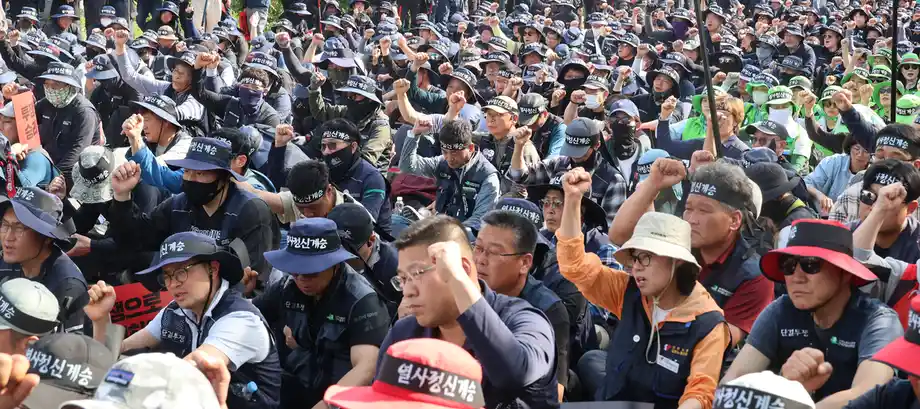
On September 23, the commission rejected Gyeonggi Expressway's request to review an order requiring it to announce a bargaining request from the Public Industry Hope Union. The union represents workers employed by Yido, the subcontractor operating the West Suwon-Osan-Pyeongtaek Expressway for Gyeonggi Expressway.
The decision is the commission's first recognition of a main company's employer status over subcontracted workers' wages since the revised Trade Union and Labor Relations Adjustment Act, widely called the Yellow Envelope Act, took effect in March. It brings pay into an area where earlier decisions had frequently concerned industrial safety and working conditions.
The central issue was practical: could workers negotiate a meaningful wage increase with Yido if the money available for their pay had already been set through its contract with Gyeonggi Expressway? Both the regional and national labor commissions concluded that the main operator exercised substantial control over that money.
For toll collectors and other employees covered by the contract, the decision means their union can pursue wage bargaining with the company that the commission found was controlling the financial limits behind their pay, even though Yido holds their employment contracts.
How the Dispute Reached the National Commission
The Public Industry Hope Union first requested bargaining with Gyeonggi Expressway on June 4. Its demands concerned wages, working hours and industrial safety, with a renewed request later listing welfare and the working environment as well.
Gyeonggi Expressway maintained that Yido independently determined its employees' working conditions and that the highway company therefore was not their employer under the labor law. It did not publish notice of the union's bargaining request, prompting the union to seek an order correcting that omission.
The case developed through the following steps:
- June 4: The union requested collective bargaining with Gyeonggi Expressway.
- June 30: The union applied to the Gyeonggi Regional Labor Relations Commission for an order requiring publication of the bargaining request.
- July 2: The union renewed its request, listing wages, working hours, welfare, the working environment and industrial safety.
- July: The regional commission accepted the union's application.
- September 23: The National Labor Relations Commission rejected Gyeonggi Expressway's review application, leaving the regional decision in place.
Publishing a bargaining request is a procedural step in the collective bargaining process. The dispute over that notice required the commissions to address the more fundamental question of whether Gyeonggi Expressway had employer responsibilities toward the union on wages.
What the Contract Said About Pay
Gyeonggi Expressway and Yido signed an operating contract running from September 1, 2022, to August 31, 2027. An attached cost schedule set out staffing and labor expenses by job and year, rather than simply stating a single price for operating the road.
The schedule identified positions including managers, team leaders, office managers, supervisors, toll collectors and cooks. It listed basic pay, allowances and provisions for retirement benefits, alongside the numbers of workers assigned to the different roles.
Yido's bid calculations also included health insurance, the national pension, industrial accident insurance, employment insurance and long term care insurance. The regional commission regarded this level of detail in an outsourcing contract as unusual.
Most importantly for the wage dispute, the annual basic pay totals incorporated increases of about 3% over the previous year. The budget and planned rate of growth were therefore written into the commercial arrangement before Yido and its employees began their annual wage negotiations.
A labor cost schedule translates staffing plans into money. Here, it connected particular jobs and staffing levels to annual pay budgets. The commissions treated that connection as evidence that Gyeonggi Expressway was shaping the wage framework within which Yido had to operate.
Why Writing the Bid Did Not Give Yido the Final Say
Gyeonggi Expressway argued that Yido had prepared its own business proposal and calculated the labor costs and pay increases itself. The national commission examined who could set the limits of that proposal and require changes to it.
Yido's final bid came to approximately 98.2% of Gyeonggi Expressway's estimated amount. That put it just 1.8% below the main operator's estimate. The commission found that the estimate functioned as an effective ceiling or benchmark for the bid, including its labor costs.
The bidding conditions gave Gyeonggi Expressway another form of control. If it instructed the selected bidder to revise its business proposal, the bidder had to comply without delay. The conditions did not restrict the subjects or scope of those revisions, so the commission considered labor costs and planned wage increases subject to that authority.
Accepting Yido's proposal without demanding changes also mattered to the commission's reasoning: it meant the proposed amount fell within the range Gyeonggi Expressway would accept. Taken together, the pricing benchmark and revision powers showed how the operator could control the result even when the subcontractor prepared the initial figures.
A 2% Margin and Strict Staffing Rules Narrowed the Options
Yido's room to adjust wages was further constrained by the contract's staffing rules. If a worker left, Yido had to notify Gyeonggi Expressway immediately. If the vacancy remained unfilled for 30 days, the operating fee was reduced by the corresponding labor cost.
Putting additional workers on the road did not increase the contract payment. Yido therefore faced a payment reduction when positions stayed vacant, while extra staffing brought no automatic increase in revenue under the agreement.
The national commission also pointed to Yido's profit margin of 2%. It viewed the arrangement as closer to managing personnel with costs reimbursed than to an independent business taking commercial risks and retaining the gains from its own management decisions.
The difference in financial flexibility was important. Gyeonggi Expressway's private investment project agreement with the government allowed operating expense categories to be transferred or combined, provided road maintenance and operation were not disrupted. Yido, by contrast, worked within the payment and staffing conditions of its operating contract.
The commission concluded that the decision on whether workers would receive wage increases, and how large those increases could be, was substantially governed by the operating fee and labor cost calculations set by Gyeonggi Expressway. A negotiation with Yido alone would therefore leave the union dealing with a company whose financial choices were tightly constrained.
Why the Regional Commission Focused on Wages
The Gyeonggi Regional Labor Relations Commission had a concrete reason to put wages at the center of the case. The union had already sought bargaining with Yido, its members' direct employer. Wage discussions had broken down because changes were said to require an amendment to Yido's contract with Gyeonggi Expressway.
The regional commission treated wages as the core bargaining subject and found sufficient control by Gyeonggi Expressway to require publication of the union's request. It considered that conclusion enough to resolve the application without separately examining every other proposed bargaining topic.
Gyeonggi Expressway's involvement extended beyond signing the operating contract. According to the regional commission's findings, the company had around 10 permanent employees and regularly received information from Yido on toll revenue and operating performance.
The operator also checked and adjusted budgets, including labor expense proposals, and was involved in adjusting operating payments in connection with service standards. Those findings helped explain how its authority worked during the contract, as well as when the original price was agreed.
What Employer Status Means for These Workers
Yido is the company that directly employs the workers. The commission's decision concerns Gyeonggi Expressway's responsibility to bargain over wages because of its actual influence over that part of their working conditions.
For a worker, the difference is straightforward. A wage discussion is more useful when the company controlling the budget must participate. The commission found that Gyeonggi Expressway had shaped both the amount available for labor and the planned increases, giving it a role beyond purchasing an operating service.
The decision extends recognition of a main company's bargaining responsibility into pay, following cases involving industrial safety and the working environment. Its reasoning rests on the specific contract, bid conditions, staffing rules and financial arrangements governing this highway.
The case's immediate result is an obligation to publish the bargaining request and engage with the union on the wage issue. The amount of any negotiated increase, a bargaining timetable and whether Gyeonggi Expressway will pursue a court challenge were not specified.
The Union Wants Wage Bargaining to Reach the Budget Holder
Jeong Tae-ho, chair of the Public Industry Hope Union, said the decision recognized a structure common in contracted service workplaces: a main company can determine working conditions and control workers through the amount it pays its contractor.
Jeong called for bargaining with main companies to extend into wages. He also urged Gyeonggi Expressway to accept the national commission's decision, stop delaying negotiations and begin bargaining involving the main company and subcontractor.
The commission's findings explain why the demand matters in this workplace. Yido's annual negotiations took place inside a financial plan agreed years earlier, while Gyeonggi Expressway retained authority over the contract and the operating budget. Requiring the operator to bargain brings that financial authority into the discussion over workers' pay.
The next practical step is moving from a dispute over who must participate to negotiations over wages. The September 23 decision leaves the regional commission's order standing and gives the union a basis to seek that participation from Gyeonggi Expressway.
Key Points
- The National Labor Relations Commission rejected Gyeonggi Expressway's review application on September 23, upholding an order to publish the union's bargaining request.
- The case is the commission's first recognition of a main company's employer status over subcontracted workers' wages since the revised union law took effect in March.
- The operating contract runs from September 1, 2022, to August 31, 2027, and includes annual basic pay increases of about 3%.
- Yido's final bid was approximately 98.2% of the operator's estimate, which the commission found acted as a ceiling or benchmark.
- A 2% profit margin and strict staffing payment rules helped support the finding that Yido had limited freedom to determine wages.
- The decision requires participation in the bargaining process on wages; a negotiated pay increase has yet to be specified.