December Walkout Threatens Rail Services Across South Korea
South Korea's railway workers have set 9 a.m. on December 10 as the start of an indefinite general strike, while Korea Railroad Corporation (KORAIL) says it plans to keep services running at 56.9% of normal levels in its existing railway division and 70% in the former SR division if a walkout takes place.
Contents
- December Walkout Threatens Rail Services Across South Korea
- A Large Majority Authorised Industrial Action
- Why Promotions Have Become a Central Demand
- Staff Shortages Put Leave and Safety in Focus
- Rallies and Workplace Action Precede the Deadline
- Why the SR Union's Decision Matters
- What KORAIL's Service Plan Means for Passengers
- Key Points
The Korean Railway Workers' Union announced the deadline at Seoul Station on November 11, demanding fairer promotions and more staff responsible for railway safety. The union said the strike would proceed unless its demands were met. No end date was announced.
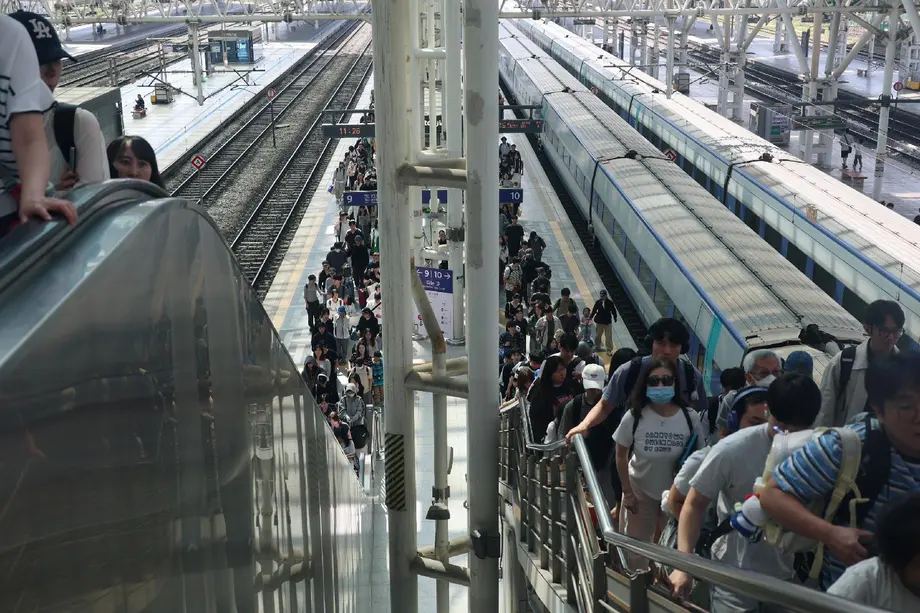
The dispute could affect KTX high speed trains, conventional rail services nationwide and subway services in the capital area. The potential disruption extends beyond travel between cities: commuters using affected metropolitan services could also face fewer trains.
A central uncertainty is whether the union representing workers at SR, the operator of SRT high speed trains, will join. SR was integrated into KORAIL in September, but its union remains separate and has not announced whether it will participate. During earlier KORAIL strikes, SRT services continued operating and helped carry passengers who could not use their usual trains.
A Large Majority Authorised Industrial Action
The strike warning follows a breakdown in wage and collective bargaining talks in October. The third main negotiating round took place on October 14. The following day, the union declared a labor dispute at an emergency delegates' assembly, moving the disagreement into a formal stage of industrial action.
The subsequent strike ballot drew 21,634 participants from 24,691 registered members, a turnout of 87.6%. Of those participating, 16,783 voted in favor of industrial action. That represented 77.58% of votes cast and 67.97% of the entire membership.
The distinction between those two percentages matters because approval required support from a majority of all registered members. Members who did not vote effectively counted against the proposal under that threshold. Support still exceeded half of the full membership by almost 18 percentage points.
A strike authorization gives union leaders permission from members to pursue industrial action. The union has made the December walkout conditional on whether its demands are resolved, leaving room for an agreement before the announced starting time.
Why Promotions Have Become a Central Demand
The union says KORAIL's promotion system favors employees at headquarters and managers, while workers carrying out railway duties on the ground are being passed over. Its demand is for a fairer route to advancement for those employees.
At the Seoul Station announcement, the union linked the promotion dispute directly to staffing and safety. It described its position in these terms:
The current promotion system is unfairly implemented while excluding field workers, and the shortage of personnel at railway sites directly leads to safety issues.
For employees, promotions can determine access to more senior positions and the direction of a career. The complaint is therefore about how opportunities are distributed across the company, alongside the broader wage negotiations.
The union has identified the groups it believes benefit from the existing arrangements, but the announcement did not set out a detailed replacement promotion formula. The demand presented publicly is to change a process that workers say excludes staff outside headquarters and management.
Staff Shortages Put Leave and Safety in Focus
Railway workers say inadequate staffing is already affecting daily operations. According to the union, employees can become overworked and cannot freely take annual leave or sick leave because too few people are available to cover duties.
The union says KORAIL itself recognises the need to recruit more staff, but government controls on staffing levels have prevented the shortage from being resolved. That places the dispute across two levels: negotiations with the employer and the rules governing how many people the public railway company can employ.
Hiring more workers would mean having more people available to carry out duties and cover absences. For staff seeking time off, the immediate issue is whether a colleague can take over their work without adding pressure elsewhere in the operation.
The safety concerns remain the union's stated assessment. Its announcement did not provide a staffing shortfall figure, a proposed recruitment total or a list of incidents linked to the shortage. Those missing details leave the size of the requested hiring programme unspecified, even as staffing becomes one of the main conditions for settling the dispute.
Rallies and Workplace Action Precede the Deadline
The union plans to build pressure before December 10 through rallies and changes to working practices. A mass rally is scheduled for November 14 at 2 p.m. outside Exit 12 of Seoul Station, followed by regional meetings and a campaign focused on safe railway operations.
The detailed schedule places the start of the two week safety campaign and regional nighttime rallies on November 23. The initial announcement described the campaign as running from Saturday until November 23, leaving different public descriptions of its timing. The December 10 strike deadline is consistent across the announcements.
The main steps in the dispute are:
- October 14: The third main round of wage and collective bargaining negotiations takes place.
- October 15: The union declares a labor dispute at an emergency delegates' assembly.
- Before the November 11 announcement: Members approve industrial action, with 16,783 voting in favor.
- November 11: The union announces an indefinite strike deadline at Seoul Station.
- November 14, 2 p.m.: A mass rally is scheduled outside Seoul Station's Exit 12.
- November 23: The detailed schedule sets the start of a two week safety campaign and regional nighttime rallies.
- December 10, 9 a.m.: The general strike is scheduled to begin unless the demands are met.
Planned workplace measures include wearing protest vests, displaying campaign materials, concentrating on safety procedures and refusing holiday work. The regional branches also plan overnight general meetings concerning the strike.
A work to rule campaign means employees closely follow operating rules rather than relying on extra flexibility to keep work moving. The union has presented the planned campaign as focused on safe operations. Refusing holiday work is another announced measure that could affect how the company covers duties before a full walkout.
Why the SR Union's Decision Matters
SR's September integration into KORAIL changes the setting for this dispute. Previously, SRT services continued running during KORAIL strikes, providing another high speed rail option for some passengers. A simultaneous strike by both groups of workers would reduce that alternative.
The company merger has not brought the two unions into a single bargaining process. The SR union is to negotiate wages separately for three years under arrangements involving KORAIL's newly established SR Integrated Business Management Division. It will retain its separate union status during that period.
The SR union's participation is therefore a decision of its own. A December strike by the Korean Railway Workers' Union would take place within a company that now includes the former SR operation, while employees in that operation continue to have separate representation and wage talks.
This arrangement explains why the possible disruption is broader than in earlier disputes, but also why the final extent of a walkout depends on more than the December 10 announcement. The availability of SRT trains will be an important part of how much alternative capacity passengers have.
What KORAIL's Service Plan Means for Passengers
KORAIL management says its strike plan would preserve 56.9% of usual train operations in the existing KORAIL division and 70% in the former SR division. These are planned service levels for a general strike, rather than a published timetable for individual routes.
Expressed as reductions, the figures mean 43.1% fewer services in the existing KORAIL division and 30% fewer in the former SR division compared with normal operations. The difference between the planned operating rates is 13.1 percentage points.
The percentages give passengers a sense of the scale of the proposed cuts, but they do not identify which departures would run. Travelers on KTX and conventional trains, along with commuters using affected capital area subway services, would need route and departure information to know how their own journeys would change.
Fewer trains would leave fewer departures available for journeys to work, family visits and travel between cities. Where services continue, passengers could have less choice over departure times. The effect would depend on the route, the eventual timetable and whether workers in the former SR operation also take part.
The immediate deadline remains December 10 at 9 a.m. Before then, the union plans its Seoul rally, regional meetings and workplace campaign. A settlement on promotions and safety staffing could avert the announced walkout; without one, KORAIL's reduced service plan would become central to keeping passengers moving.
Key Points
- The Korean Railway Workers' Union plans an indefinite general strike from 9 a.m. on December 10 unless its demands are met.
- The main demands are a fairer promotion system and more railway safety personnel.
- The strike ballot received 16,783 votes in favor, equal to 67.97% of all registered members.
- A rally is scheduled for November 14 at 2 p.m. outside Exit 12 of Seoul Station.
- KTX, conventional trains and capital area subway services could be affected.
- The SR union remains separate after the September integration and has not announced whether it will join.
- KORAIL plans to maintain 56.9% of normal operations in its existing division and 70% in the former SR division during a general strike.