Nuclear AI talks emerge ahead of a possible Shenzhen summit
Russia, China and the United States are discussing a possible commitment to keep decisions on using nuclear weapons under human control, as diplomats prepare for a proposed meeting of Vladimir Putin, Xi Jinping and Donald Trump in Shenzhen on November 18 and 19. The negotiations focus on restricting artificial intelligence in nuclear command systems, an area where officials are seeking agreement despite disputes over the summit's format and wider agenda.
Contents
- Nuclear AI talks emerge ahead of a possible Shenzhen summit
- What would keeping humans in control mean?
- Why warning systems are part of the debate
- Beijing and Washington disagree over how to meet
- AI safeguards face a different dispute from arsenal cuts
- Ukraine remains on the wider diplomatic agenda
- How preparations have unfolded
- A three power format draws concern in Asia
- Key Points
The possible gathering would take place alongside the Asia-Pacific Economic Cooperation summit in the Chinese city. Negotiating teams have spent several weeks discussing what the three presidents could address, with attention shifting toward nuclear safety measures and away from more divisive political issues.
The account of the AI proposals draws on unnamed sources who described weeks of working-level discussions, including talks about AI in critical weapons systems and a possible joint statement against nuclear war. One source described AI governance for nuclear weapons as an "easy deliverable" consistent with past policies.
A central proposal would reserve the final decision to use nuclear weapons for a person, rather than an autonomous AI system. Other ideas under discussion include protecting nuclear communications against cyberattacks, exchanging information about missile tests and reaffirming that a nuclear war cannot be won and must never be fought.
Heather Williams, a senior fellow at the Centre for Strategic and International Studies, said a joint statement affirming that a nuclear war could not be won and must never be fought was possible. She noted that the three countries had already agreed to that language as permanent members of the United Nations Security Council. Williams also identified an agreement on human control of nuclear weapons and nuclear command and control as a possible outcome.
The meeting remains conditional on agreement over its agenda and arrangements. Kremlin spokesman Dmitry Peskov said on November 8 that the summit would take place if the parties reached a consensus. The scope, legal form and enforcement arrangements for any AI commitment have not been announced.
Trump has publicly indicated that he expects to meet Xi and Putin during the APEC gathering. China's Foreign Ministry has confirmed communication with relevant parties about a possible meeting. No final agreement on the agenda has been officially announced.
What would keeping humans in control mean?
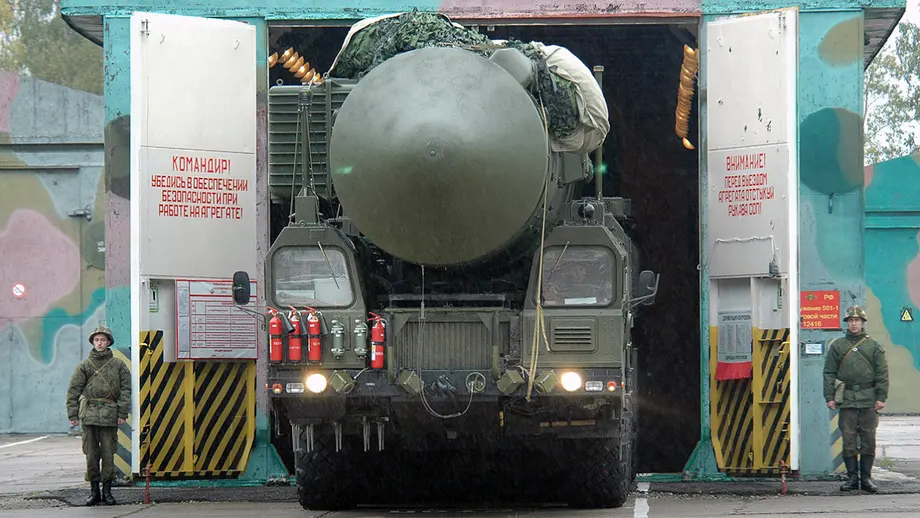
Nuclear command and control is the network of people, communications equipment and procedures through which a government assesses threats, issues orders and controls its nuclear weapons. AI can potentially assist with parts of that process without having permission to order an attack.
The discussions reportedly cover early warning systems, software used to identify targets and the process for deciding whether to launch. Early warning systems examine information from sensors for signs of an incoming attack. Targeting software helps assess what a weapon might strike.
A rule reserving launch authority for humans would set a boundary between software providing information and software making the final decision. For example, a computer could flag a possible missile launch for examination while a person retained authority over any response.
The proposed measures also address the possibility of unauthorized AI control over nuclear systems. That concern reaches beyond the final launch order: governments would need to consider how automated tools handle warnings, pass information through communications networks and present choices to decision makers.
Washington and Beijing have previously raised the need for human control over nuclear use. Moscow is described as more cautious about accepting formal international restrictions that could limit its military flexibility. Bringing Russia into a shared commitment is therefore a central part of the current diplomatic effort.
Why warning systems are part of the debate
AI can examine large amounts of sensor information quickly. In nuclear warning systems, that speed could help officials interpret a possible threat, but a mistaken assessment could also reach decision makers when they have little time to respond.
Two risks identified in discussion of the proposals are algorithmic errors and data poisoning. An algorithmic error occurs when software produces an incorrect result. Data poisoning involves deliberately corrupting information used to train or guide a system, potentially causing it to misidentify an event.
A false warning of a ballistic missile attack would be especially dangerous because it could put leaders under pressure to make an urgent decision. Human authority over launch is one proposed safeguard; protecting the information and communications that shape that decision is another.
The ideas being discussed therefore extend to limiting cyberattacks on nuclear command and communications systems. A commitment covering those networks would address the channels through which warnings and orders travel, alongside the question of who ultimately authorizes the use of a weapon.
Less likely proposals include a ban on cyber or AI-enabled attacks on nuclear command, control and communications systems. Williams said China was also interested in exploring limits on strategic competition or the deployment of nuclear weapons in space. Iran could feature as well, with Trump likely to seek a joint statement that Tehran must never acquire nuclear weapons.
Beijing and Washington disagree over how to meet
China reportedly wants a tightly prepared gathering in which each president reads a scripted statement and follows a pre-agreed agenda, leaving little room for open discussion. The Trump administration favors a freer exchange that would allow the leaders to respond directly to one another.
Beijing would reportedly prefer separate bilateral meetings if the three governments cannot agree on a scripted format. That choice matters for the negotiations: prepared statements would require much of the substantive agreement to be settled before the leaders entered the room, while open discussion would give them more room to negotiate.
The differing preferences over the format remain reported negotiating positions rather than an officially announced arrangement. An unnamed source described progress toward the trilateral talks as slow, with the leaders' packed calendars also posing a possible scheduling hurdle.
Peskov has described a process in which each government proposes subjects, some acceptable to one participant and unwelcome to another. His November 8 remarks made agreement on the agenda a condition for holding the summit.
U.S. Secretary of State Marco Rubio has said Trump hopes to hold the meeting to discuss nuclear weapons. Putin proposed the gathering during an October 9 telephone call with Trump, and the three sides subsequently gave tentative agreement to the idea.
AI safeguards face a different dispute from arsenal cuts
Trump wants to discuss nuclear arms control and disarmament. China has resisted a negotiation involving all three countries over their nuclear arsenals, arguing that its stockpile is much smaller than those of Russia and the United States and that Washington and Moscow should make substantial reductions first.
The New START treaty between the United States and Russia expired in February 2026. It had limited their deployed strategic nuclear weapons and provided a verification framework. Its expiration has added urgency to Washington's interest in a broader framework that could eventually include China.
Peskov addressed that obstacle on October 14. The Kremlin spokesman said China regarded its nuclear capabilities as incomparable with those of Russia and the United States, and that Moscow respected Beijing's position.
"Nuclear arsenals are not an appropriate topic to bring up," he said.
Rules governing AI would deal with how nuclear weapons are controlled, rather than how many weapons each country possesses. That narrower subject gives negotiators a possible area for agreement while the disagreement over reductions continues.
China reportedly favors discussing transparency and exchanges of information as possible alternatives to negotiations over stockpile cuts. Information about missile tests is among the measures under consideration. Sharing such information could help another government understand an observed launch and reduce uncertainty about its purpose.
One unnamed source said Beijing had offered nuclear-transparency discussions as a lighter alternative to full strategic-stability talks and appeared to see progress on nuclear issues as a way to stabilize relations with Washington. Williams described an agreement on missile-launch notification as the "lowest-hanging fruit" for a substantive trilateral outcome.
Russia's caution about formal restrictions creates a further negotiating challenge. Even if all three governments support the general idea of human authority, they would still have to agree on the activities covered and the obligations each would accept.
Ukraine remains on the wider diplomatic agenda
Preparations for the three leader meeting have reportedly pushed Russia's war against Ukraine and the denuclearization of the Korean Peninsula away from the priority agenda. Beijing is said to favor direct talks between Washington and Moscow on Ukraine, and dialogue between Washington and Pyongyang on Korean Peninsula security.
Peskov, however, has said that a settlement in Ukraine remains on the agenda of discussions at the highest level. He made that statement when asked how meetings in Abu Dhabi might affect possible bilateral contacts between Putin and Trump during the APEC gathering.
The distinction is between the proposed three leader session and the wider set of diplomatic conversations around it. Ukraine could receive limited attention in a tightly negotiated trilateral agenda while still featuring in a separate meeting between the Russian and U.S. presidents.
The leaders also appear to have different priorities. Putin reportedly proposed the meeting partly in pursuit of a Ukraine settlement favorable to Moscow. Trump has expressed greater interest in using the gathering to discuss nuclear weapons and disarmament. Those competing aims help explain why agreeing on the agenda has taken weeks.
How preparations have unfolded
The preparations have moved from a presidential proposal to negotiations over both substance and procedure. The reported sequence shows why an initial willingness to meet has not yet produced a settled program.
- October 9: Putin proposed a meeting with Trump and Xi during a telephone call with the U.S. president.
- October 14: Peskov said nuclear arsenals were unlikely to be discussed in a trilateral format, citing China's position.
- November 8: Peskov said Moscow, Washington and Beijing were exchanging agenda proposals and that the summit depended on consensus.
- November 10: Disagreements over scripted statements and open discussion became public.
- November 18 and 19: The proposed meeting would take place alongside the APEC summit in Shenzhen.
The latest focus on AI fits within that effort to identify a narrower subject acceptable to all three governments. Diplomats are also reportedly working on a declaration repeating the principle that a nuclear war cannot be won and must never be fought.
Such a declaration would state a shared political position. A more detailed AI commitment would need to specify the conduct expected of each country, including where human authority must remain and which automated activities would be restricted.
A three power format draws concern in Asia
Japan is reportedly concerned about the prospect of a platform informally described as the G3, bringing the United States, China and Russia together to discuss major security questions. The concern is that decisions affecting other countries could be shaped without their participation.
One unnamed source said Japan had specifically raised concerns about language evoking the three powers' wartime alliance against Japan, as Trump and Xi had used during Xi's state visit to Washington in September.
The proposed discussions on Korean Peninsula security make that issue concrete. Beijing's reported preference for leaving the subject to Washington and Pyongyang would give the three leader meeting a narrower agenda, while directing a major regional security issue into a different diplomatic channel.
For the three participating governments, the meeting could serve several purposes at once. China would host a prominent diplomatic gathering, Russia would gain a forum alongside the U.S. and Chinese presidents, and Trump would have an opportunity to pursue a nuclear security agreement.
The immediate task is more specific than creating a lasting three power institution: negotiators need to settle whether the leaders will meet, what they will discuss and whether they can accept common language on AI. The November 18 and 19 gathering is the next planned opportunity to turn those discussions into a public commitment.
Key Points
- Russia, China and the United States are discussing limits on AI in nuclear command systems, including keeping final launch decisions under human control.
- A possible Putin, Xi and Trump meeting is being prepared for November 18 and 19 in Shenzhen, subject to agreement on the agenda and format.
- China reportedly favors scripted statements and a pre-agreed agenda, while Washington wants a freer exchange among the leaders.
- Beijing resists talks on nuclear stockpile cuts involving all three countries and wants Russia and the United States to reduce their larger arsenals first.
- Possible measures include protections against unauthorized AI control, limits on cyberattacks against nuclear communications and exchanges of missile test information.
- Ukraine has reportedly slipped down the proposed trilateral agenda, while the Kremlin says it remains part of wider discussions at the highest level.
- Japan reportedly raised concerns about language evoking the three powers' wartime alliance against it.
- No final agenda, text or enforcement arrangements for an AI commitment have been announced.