Two chips bought for 874,700 yuan
Northwestern Polytechnical University, a Chinese institution placed on a US trade blacklist in 2001 over alleged missile proliferation activities and military research, bought two Nvidia H200 artificial intelligence chips for 874,700 yuan, about $123,000, according to a procurement record published on October 21.
Contents
- Two chips bought for 874,700 yuan
- Why this university faces separate restrictions
- How the university rented additional capacity
- Simulation contracts broaden the picture
- Other universities bought restricted processors
- Computing power can be sold by the hour
- The dates behind the purchases and controls
- China's import limits add another barrier
- Washington weighs tighter oversight
- Key Points
The purchase was for the university's management school. Its supplier was Shaanxi Bosuan Network Technology, a Chinese company, rather than Nvidia itself. The transaction puts a specific institution, supplier and price behind a wider problem for American export controls: restricted buyers can seek advanced computing power from companies already operating inside China.
The university, based in Xi'an, also awarded five contracts during the year to rent computing capacity using H200 and other Nvidia processors. Its cybersecurity school arranged access to servers for artificial intelligence training, while another institute sought computing services for structural and fluid dynamics simulations.
A review of 26 Chinese procurement and corporate records identified purchases or computing service arrangements involving several universities and research institutions. Some have close connections to China's military or defence industries.
The H200 is among Nvidia's most capable processors for training and running advanced AI systems. Washington began allowing some exports to approved Chinese customers in January 2026, subject to individual licensing decisions and security conditions. Northwestern Polytechnical remained subject to separate restrictions because of its place on the Entity List, the US Commerce Department's trade blacklist.
The central issue extends beyond the movement of physical chips across a border. Universities can buy processors from domestic suppliers or pay to use servers containing them, gaining computing capacity without owning the equipment.
Why this university faces separate restrictions
Northwestern Polytechnical belongs to the Seven Sons of National Defense, a group of Chinese universities with extensive defence research connections. Its work includes research related to military aircraft, missiles and satellites.
The US Commerce Department added the university to the Entity List in 2001 and tightened its restrictions in 2019. Applications to export controlled American technology to the institution are generally subject to a policy of denial, meaning permission would normally be refused.
The January H200 policy opened a limited licensing route for eligible Chinese customers. Restrictions attached to particular organisations continued to apply. The rules also require safeguards against blacklisted institutions and military users gaining remote access to chips exported under that policy.
Remote access means using a computer over a network rather than sitting beside it. For a university renting AI computing services, the valuable resource is the work the processors can perform, whether the machines are on campus or operated elsewhere.
How the university rented additional capacity
Northwestern Polytechnical's cybersecurity school awarded two contracts in January, each covering seven months of access to a server containing eight H200 chips. The contracts were worth 441,700 yuan and 441,000 yuan.
Together, those two agreements cost 882,700 yuan, slightly more than the 874,700 yuan paid for the management school's two chips. The rental agreements specified access to servers containing 16 H200 processors between them, compared with two processors bought outright. Rental access covers a defined period and service arrangement, while a purchase gives the buyer ownership of the hardware.
The cybersecurity contracts listed fine tuning AI models and reinforcement learning training as intended uses. Fine tuning means adapting an existing model with further training for a particular task. Reinforcement learning trains a system through feedback or rewards that guide it toward preferred results.
The university also rented access to servers containing eight A100 processors and eight A800 processors. Those models, too, face US restrictions on exports to China.
Simulation contracts broaden the picture
Another Northwestern Polytechnical institute awarded a 375,000 yuan contract in April for computing services requiring at least 24 A100 chips. Its stated purpose was structural and fluid dynamics simulation.
Structural simulations calculate how objects respond to forces, such as bending or vibration. Fluid dynamics simulations examine how liquids or gases move, including how air flows around an object. Both kinds of work can require large numbers of calculations.
The university's procurement activity therefore covered several different uses: ownership of H200 chips by a management school, rented servers for AI training at a cybersecurity school, and computing services for engineering simulations.
Several Chinese technology suppliers received the awards. Public procurement agencies in China are required to check that suppliers can fulfil orders before announcing winning bidders and signing contracts.
The origin of the processors, the locations of the rented servers and any export authorisations associated with the transactions were not disclosed in the reporting. Northwestern Polytechnical, Nvidia and the US Commerce Department's Bureau of Industry and Security did not respond to requests for comment. Contact details for Shaanxi Bosuan Network Technology could not be determined.
Other universities bought restricted processors
Shenzhen University bought three H100 processors for 769,800 yuan in September. The H100 is another advanced Nvidia AI processor restricted from export to China.
Wuhan University of Technology bought a server containing an H100 chip for 355,000 yuan in June. A separate purchase covered four A100 chips for 344,000 yuan, bringing the value of those two transactions to 699,000 yuan.
Beihang University, another member of the Seven Sons of National Defense, bought four A800 processors for 489,000 yuan in April. Beihang has close links to China's aerospace and defence industries and carries out research for military aviation and space programmes.
A January procurement award also named a supplier of six A100 chips worth 484,800 yuan for a public institution based in Shenzhen. The universities named in the procurement findings did not respond to requests for comment.
Computing power can be sold by the hour
The University of Chinese Academy of Sciences appeared in government procurement announcements in July and September naming suppliers selected to provide computing services using H800 and A800 chips. One announcement listed H800 access at 10 yuan per chip per hour.
That price describes a service rather than a hardware purchase. At the listed rate, using one chip for 100 hours would cost 1,000 yuan. Researchers can pay for a period of computing work instead of buying and maintaining a server themselves.
The arrangements illustrate why export enforcement reaches beyond the first sale. A processor may pass through a reseller, become part of a server and then supply computing services to customers who never take possession of it.
Earlier investigations identified restricted Nvidia processors inside servers made by Super Micro Computer, Dell and Gigabyte that Chinese institutions acquired through domestic resellers. An underground market has also drawn on overseas inventories and intermediaries in other countries.
For regulators, the practical task is to trace both equipment and access: who receives a chip, who operates the server containing it, and who can use its computing capacity. The January safeguards against remote access by restricted users address that final part of the chain.
The dates behind the purchases and controls
The university's purchases sit within restrictions developed over decades and procurement decisions spread across several months. The main dates are:
- 2001: The US Commerce Department added Northwestern Polytechnical University to the Entity List.
- 2019: Washington tightened restrictions on exports of controlled American technology to the university.
- January 2026: The Trump administration opened a limited licensing route for certain H200 exports to China. Northwestern Polytechnical's cybersecurity school awarded its two contracts for H200 server access that month.
- April 2026: A university institute contracted for services requiring at least 24 A100 chips. Beihang University bought four A800 processors.
- June to September 2026: Procurement records recorded purchases by Wuhan University of Technology and Shenzhen University, alongside computing service announcements for the University of Chinese Academy of Sciences.
- October 21, 2026: Northwestern Polytechnical published the record for its purchase of two H200 chips.
- November 18, 2026: Three Republican congressional committee chairmen requested a briefing with Nvidia chief executive Jensen Huang.
The January policy and the later university purchase concern two layers of American controls. One sets conditions for eligible exports to China; the other restricts dealings with named organisations such as Northwestern Polytechnical.
China's import limits add another barrier
Chinese buyers also face decisions by Beijing about which processors may enter the mainland. Earlier findings described approximately 600,000 H200 chips in a Hong Kong stockpile while China withheld approval for large shipments.
Some major Chinese internet companies had reportedly received about 10,000 chips each, while smaller quantities entered through intermediaries and indirect routes. Beijing has sought to limit dependence on American technology while supporting the development of domestic processors.
American export permission and Chinese import permission are separate requirements. A customer may secure approval from Washington while still waiting for Beijing to permit delivery. Institutions buying from suppliers inside China encounter a different part of the market, where processors or server access are already being offered locally.
Scrutiny has also extended to the companies approved to handle H200 chips. The Commerce Department approved approximately 24 Chinese companies to buy or handle the processors, including businesses with ownership or commercial connections to restricted firms, according to findings on approved H200 buyers.
The January rules require Chinese purchasers to screen their customers and maintain export compliance procedures. Those checks become especially consequential when a supplier serves universities, research institutes and other customers further along the chain.
Washington weighs tighter oversight
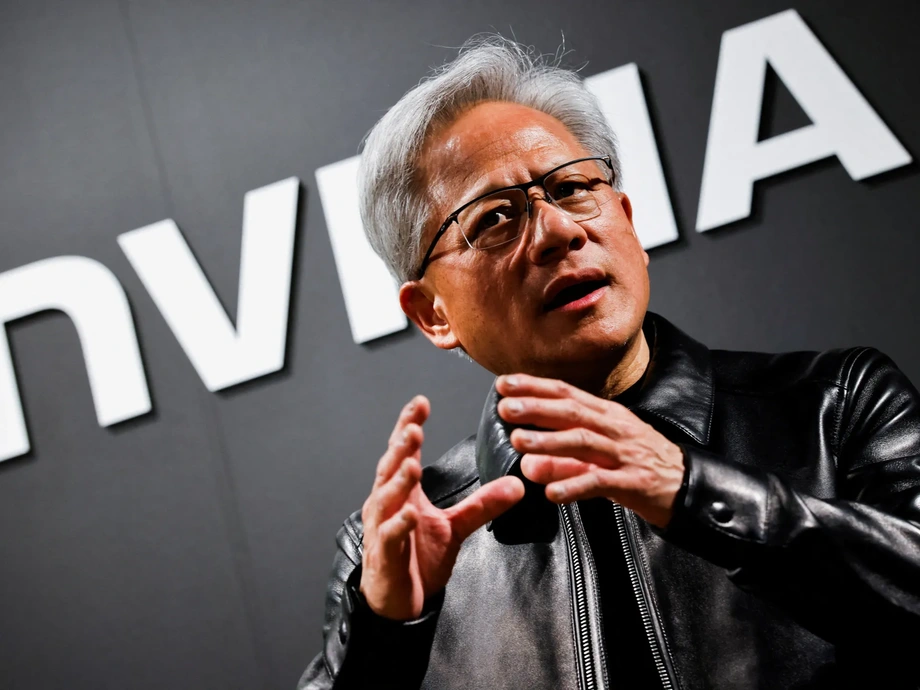
Nvidia chief executive Jensen Huang has argued that continued sales to China would preserve American technological leadership and keep Chinese customers using US technology. Some American lawmakers argue that access to powerful processors can help China develop AI systems for weapons design, intelligence analysis and military modernisation.
Democrats and Republicans have called for stronger controls, including chip tracking requirements and greater congressional oversight of exports. The university contracts bring rented computing services into that debate alongside direct hardware sales.
Congress is also considering a proposed chip sales limit that would keep China at least two generations behind America's most advanced AI processors for 18 months. The AI OVERWATCH Act has been included in the Senate's fiscal 2027 defence authorisation legislation, with negotiations continuing. Neither that measure nor the separate Chip Security Act has become law.
Three Republican congressional committee chairmen requested a November 18 briefing with Huang concerning reported contacts with a person alleged to have links to Chinese intelligence. That request adds a corporate security issue to the wider examination of Nvidia's business with China.
For universities and suppliers, tighter oversight could mean more checks on customers, server locations and access arrangements. For Washington, the procurement records present a concrete enforcement challenge: named institutions subject to restrictions are still finding ways to obtain advanced American computing capacity through domestic transactions.
Key Points
- Northwestern Polytechnical University bought two Nvidia H200 chips for 874,700 yuan through a Chinese supplier, according to an October 21 procurement record.
- The university has been on the US Entity List since 2001, with restrictions tightened in 2019.
- Five contracts gave it rented computing capacity using H200 and other Nvidia processors.
- Two H200 server contracts cost a combined 882,700 yuan and covered AI model training.
- Other procurement records identified restricted Nvidia chips or computing services at Shenzhen University, Wuhan University of Technology, Beihang University and the University of Chinese Academy of Sciences.
- Washington's limited H200 export policy retains separate restrictions on blacklisted organisations and safeguards against their remote access.
- Congress is considering tighter export oversight, while lawmakers have requested a November 18 briefing with Jensen Huang.