Washington talks put military communication back on the agenda
US and Chinese defence officials met in Washington on November 2 and 3, 2026, for the first formal session of a Crisis Communications and Prevention Working Group, seeking practical ways to prevent military incidents from growing into larger confrontations.
Contents
- Washington talks put military communication back on the agenda
- What the first working group discussed
- How the September summit led to this meeting
- A timeline of interrupted and renewed contact
- Why an existing hotline can still fail
- The balloon crisis exposed the political obstacle
- Taiwan gives the talks their sharpest urgency
- Diplomacy continues alongside military warnings
- From occasional conversations to reliable procedures
- Key Points
The Pentagon said the delegations agreed on the importance of improving communication to reduce risks and discussed additional channels for managing a crisis. The meeting followed a September 26 announcement by China's Foreign Ministry that the two governments would accelerate work on a memorandum of understanding covering crisis communication and prevention.
The immediate challenge is familiar: Washington and Beijing already have military communication arrangements, yet those channels have sometimes fallen silent precisely when tensions were highest. In February 2023, China declined a call from the US defence secretary after American forces shot down a Chinese balloon. During a confrontation at sea in 2009, officials eventually spoke about 24 hours after an unanswered call.
For military commanders, a reliable channel offers a way to explain an unexpected movement, clarify intentions or ask the other side to pull back before an encounter becomes a fight. The latest talks seek to make that contact more dependable amid continuing disagreement over Taiwan and military activity across the region.
What the first working group discussed
Cynthia "Xanthi" Carras, the principal director for China, Taiwan and Mongolia in the US defence policy office, represented Washington. China's delegation included Senior Colonel Wang Wei, deputy director of the Americas and Oceania Affairs Bureau in the People's Liberation Army's Office of International Military Cooperation.
The Pentagon described discussions about additional channels that would allow the two sides to communicate "expediently and effectively" and advance practical measures for reducing risks. Its statement also set out an intention to continue engagement.
The Pentagon said further discussions with the People's Liberation Army, or PLA, would cover key defence issues:
The Department of War will continue to advance discussions with the PLA on key defence issues in the coming months.
Washington released no details of specific operational agreements, response deadlines, the completion of the memorandum or the date of another meeting. Those details matter because a communication arrangement needs people authorised to answer, a clear route for urgent messages and a process that works during a political dispute.
How the September summit led to this meeting
Chinese President Xi Jinping visited Washington for talks with US President Donald Trump in September 2026. Xi called for regular dialogue between the two militaries and better mechanisms for crisis communication and prevention.
Xi also invoked the "Thucydides Trap", a term describing the idea that rivalry between an established power and a rising power can lead to war. His message was that such an outcome could be avoided.
China's Foreign Ministry announced on September 26 that the two countries had agreed to accelerate and conclude a memorandum of understanding on crisis communication and prevention. A memorandum of understanding records an agreed framework for cooperation; its practical value depends on the procedures the parties put into use.
Beijing issued that announcement separately from eight summit readouts covering subjects including trade, artificial intelligence, counternarcotics cooperation and international affairs. The military arrangement was absent from Washington's summit readouts and published deliverables from the Pentagon and US Indo-Pacific Command.
Chinese Defence Minister Dong Jun did not accompany Xi to Washington, and Beijing's delegation included no other senior military officials. The November working group brought defence officials together to discuss how to carry the September commitment into practice.
A timeline of interrupted and renewed contact
US and Chinese efforts to maintain military dialogue have moved through repeated suspensions, political agreements and more limited working contacts. The current initiative follows several attempts to rebuild communication after the rupture in 2022.
- August 2022: Beijing suspended important military communication channels after Nancy Pelosi, then speaker of the US House of Representatives, visited Taiwan.
- February 4, 2023: China declined a call from US Defence Secretary Lloyd Austin after US forces shot down a Chinese balloon.
- November 2023: Xi and then US President Joe Biden agreed in San Francisco to restore military communication.
- September 2024: Admiral Samuel Paparo held a video call with the head of China's Southern Theater Command. Defence policy coordination talks also took place in Beijing that month.
- April 2025: The two sides held Military Maritime Consultative Agreement discussions in Shanghai.
- October 2025: Pete Hegseth and Dong met in Kuala Lumpur and agreed to pursue military communication channels, followed by further discussion by phone.
- August 2026: Chinese General Yang Zhibin and Paparo met in Canada, the first such encounter between the commanders in two years.
- September to November 2026: The leaders' Washington summit and China's September 26 announcement were followed by the working group's November 2 and 3 meeting.
The sequence shows that contact had resumed at several levels before the new working group met. The continuing task is to turn periodic meetings and calls into a dependable system for urgent situations.
Why an existing hotline can still fail
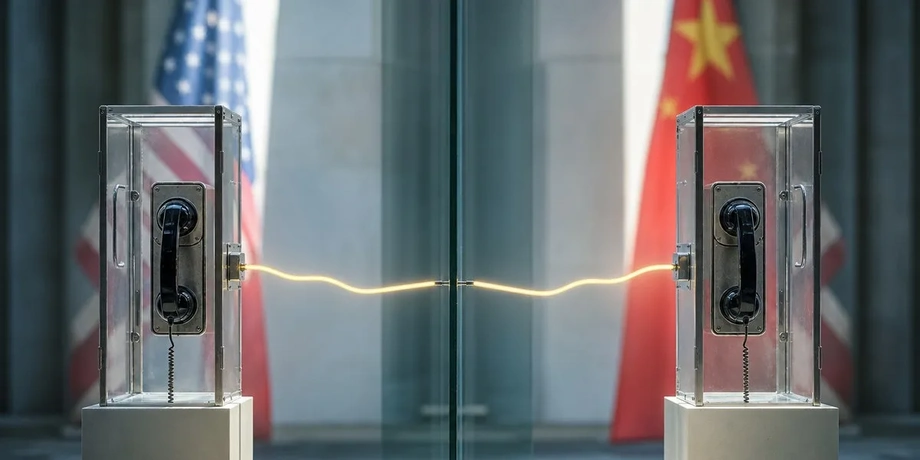
The military hotline established under a 2008 agreement operates through requests for a secure telephone call or video conference between senior officials. It is a process involving staff and approvals, rather than simply two commanders picking up matching phones.
The arrangement allows a response period of 48 hours, although officials can speak sooner. During an incident involving aircraft or ships, the circumstances can change long before that period ends.
Kristen Gunness, a senior policy analyst at the Rand Corporation, recalled an unanswered call during a March 2009 confrontation in the South China Sea. She was then advising the Pentagon's chief of naval operations, while Chinese vessels were surrounding a US surveillance ship and demanding that it leave.
Gunness described the attempt to establish contact:
No one answered. It just rang.
US and Chinese military officials spoke about 24 hours later. David Sedney, a former deputy assistant secretary of defence who negotiated the hotline arrangement, described a broader pattern: test calls and holiday greetings received answers, while sensitive requests were referred to senior leaders and could go without a substantive response.
The balloon crisis exposed the political obstacle
On February 4, 2023, an American F-22 shot down a Chinese balloon that had crossed the United States. Washington described it as a surveillance balloon; Beijing said it was a civilian balloon used for meteorological research.
Austin sought to speak with Chinese Defence Minister Wei Fenghe within hours of the shootdown. The Pentagon said China declined the call. China's Defence Ministry said Washington had "not created the proper atmosphere" for dialogue and accused the United States of violating international norms.
The episode exposed a basic disagreement over when military communication should take place. Washington sought a conversation to manage the immediate fallout. Beijing tied its willingness to talk to its objection to the American action.
Bonnie Glaser, managing director of Indo-Pacific studies at the German Marshall Fund, identified differing views of the purpose of hotlines as a central obstacle. Chinese decision making involves consultation through political leadership, while US commanders seek rapid exchanges to resolve dangerous encounters.
Ely Ratner, then assistant secretary of defence, raised the difficulty before the Senate Foreign Relations Committee. He said US officials were continuing to seek military contact, but the PLA was not answering. He also accused Beijing of opening and closing communication channels to signal approval or displeasure.
Taiwan gives the talks their sharpest urgency
Taiwan sits at the centre of the military rivalry. Beijing claims the island as part of China and has left open the use of force to bring it under its control. Taiwan governs itself. Washington opposes its seizure by force and has pledged to supply it with weapons, while not recognising it as an independent country.
Beijing's suspension of military communication after Pelosi's August 2022 visit demonstrated how a political dispute over Taiwan can affect the channels intended to manage military danger. Restoring those channels requires both governments to decide whether urgent communication should continue when relations deteriorate.
General Yang Zhibin, commander of China's Eastern Theater Command, and Admiral Samuel Paparo, commander of US Indo-Pacific Command, met in Canada in August 2026. Their responsibilities place them close to planning for possible military contingencies involving Taiwan.
At his October 2025 meeting with Hegseth, Dong called for stronger communication at the policy level to build trust and address doubts, according to China's Defence Ministry. He also urged Washington to act cautiously on Taiwan and explicitly oppose Taiwan independence.
For Taiwan and nearby countries, the practical concern is whether an encounter at sea or in the air can be contained. A rapid explanation of intentions could give decision makers more room to manage an incident before further forces become involved.
Diplomacy continues alongside military warnings
Hegseth's October 2025 meeting with Dong in Malaysia showed how Washington was combining military warnings with an effort to reopen dialogue. During the regional defence gathering, Hegseth urged Southeast Asian countries to strengthen their maritime capabilities against Chinese actions in the South China Sea. He also spoke positively about relations with Beijing.
In announcing the communication initiative in early November 2025, Hegseth described the purpose of the proposed channels and said further talks would settle the details.
Admiral Dong and I also agreed that we should set up military-to-military channels to deconflict and de-escalate any problems that arise.
In plain language, deconfliction means helping forces avoid interfering with or colliding with each other. De-escalation means reducing the intensity of a confrontation once it has begun.
Southeast Asia political analyst Bridget Welsh described the approach as crisis management, reflecting two tendencies in US policy: viewing China as a threat and viewing it as a potential partner. The November 2026 working group gives the communication effort a dedicated forum while the underlying security disputes continue.
From occasional conversations to reliable procedures
The September 2024 calls and policy talks, followed by maritime consultations in April 2025, provided opportunities to address military conduct. The Shanghai discussions focused on reducing incidents involving unsafe and unprofessional actions by PLA naval and air forces.
Kurt M. Campbell, chairman and cofounder of The Asia Group, wrote in October 2025 that China had resisted attempts to establish and record basic rules for military communication. His concern points to the practical work behind the latest initiative: agreeing how officials should respond when a message arrives during a confrontation.
US Representative Adam Smith of Washington state made the case for regular exchanges while leading a congressional delegation to Beijing in October 2025. He connected communication about military capabilities and intentions with the prevention of dangerous mistakes.
It is dangerous for us not to be having regular communications about our capabilities and intentions so we understand each other and so that misunderstandings and miscalculations don't lead to larger problems.
The November meeting creates a place to work on that problem. Its practical value will depend on whether the two militaries can reach authorised officials promptly during the next difficult encounter, including when political leaders are angry with one another.
Key Points
- US and Chinese defence officials held their first Crisis Communications and Prevention Working Group meeting in Washington on November 2 and 3, 2026.
- The Pentagon said they discussed practical communication measures and additional channels for managing crises.
- The meeting followed China's September 26 announcement of work on a crisis communication memorandum.
- Earlier arrangements suffered unanswered or declined calls, including during the 2009 maritime confrontation and the 2023 balloon crisis.
- Taiwan remains a central source of military tension, alongside concerns about encounters at sea and in the air.
- Further defence discussions are planned in the coming months, with operational details and the next meeting date still undisclosed.