Dhaka presses Beijing over 1.3 million displaced people
Bangladesh Prime Minister Tarique Rahman asked China on November 4, 2026, to help resolve the Rohingya crisis, citing the economic, social, demographic and environmental pressures of hosting around 1.3 million people displaced from Myanmar. China's visiting Communist Party official Liu Haixing said he would convey those concerns to President Xi Jinping.
Contents
- Dhaka presses Beijing over 1.3 million displaced people
- Why Bangladesh is turning to China again
- How the diplomatic effort developed
- What the refugee burden means for Bangladesh
- Trade and regional cooperation share the agenda
- Canals, ports and rivers connect diplomacy to daily life
- Political outreach extends beyond the government
- A broad relationship, with the refugee crisis still urgent
- Key Points
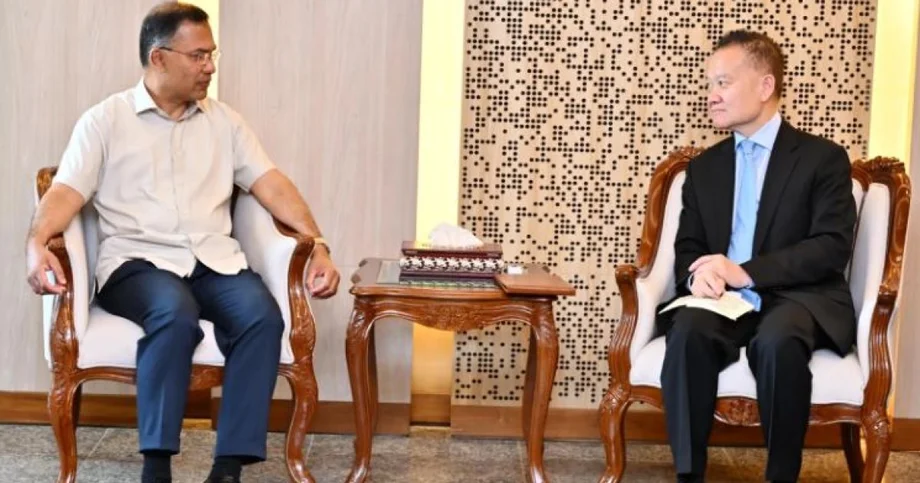
The meeting at the Prime Minister's Office at the Bangladesh Secretariat brought the refugee crisis into a wider discussion covering trade, infrastructure, agricultural waterways and political ties. Liu, minister of the International Department of the Communist Party of China Central Committee, also expressed support for Bangladesh joining the Regional Comprehensive Economic Partnership, known as RCEP.
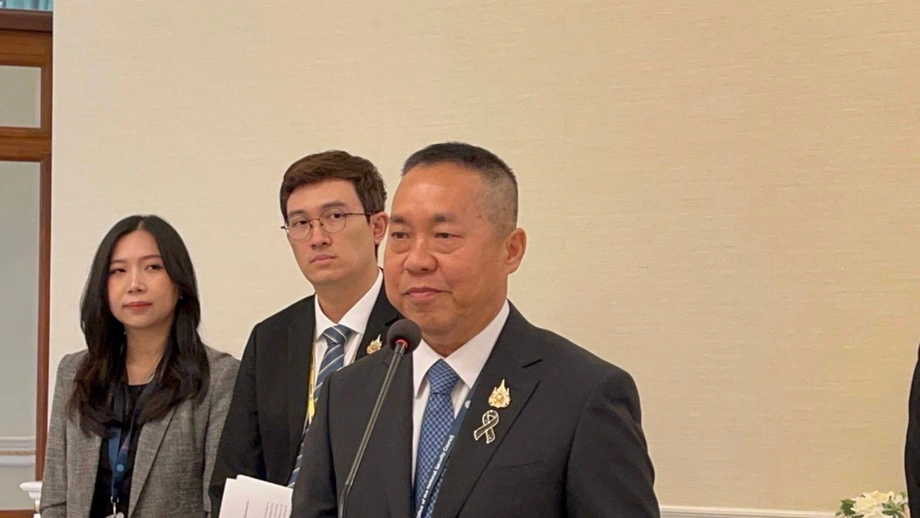
Deputy Press Secretary Shahadat Shadhin gave details of the talks. Rahman's central request was for a lasting solution to a crisis that has continued despite earlier Chinese involvement in efforts to arrange the return of Rohingya refugees to Myanmar.
China's immediate response was a promise to take Bangladesh's concerns to its president. No timetable for a refugee return, a new negotiation or a further meeting on the crisis was announced.
Why Bangladesh is turning to China again
China previously used its influence in Myanmar to broker a November 2017 agreement concerning the return of about 700,000 Rohingya who had fled persecution in August that year. Attempts to send refugees back subsequently stalled because they feared danger in Myanmar. The military takeover in 2021 deepened those concerns.
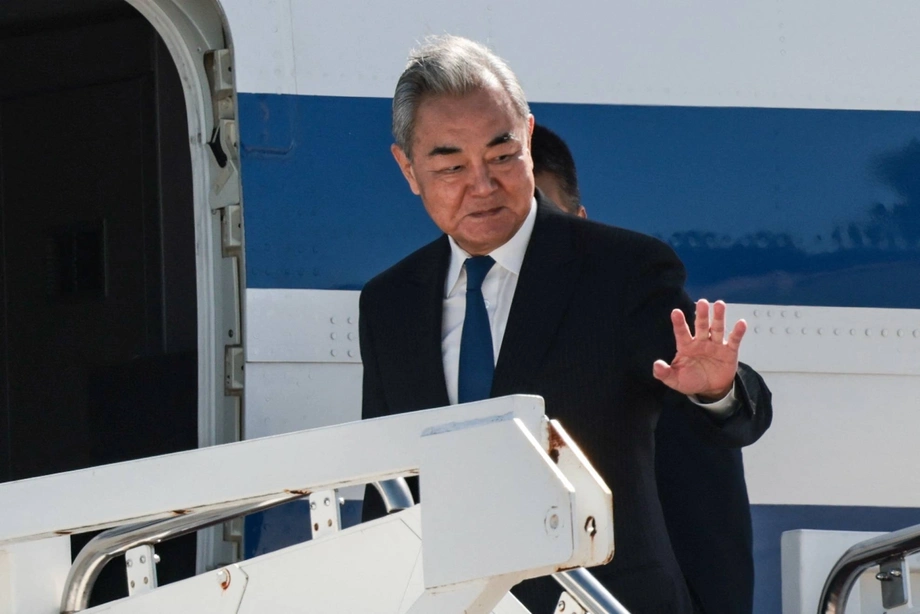
Bangladesh renewed its request for Chinese cooperation during Foreign Minister Wang Yi's visit in August 2022. Shahriar Alam, then Bangladesh's junior foreign minister, said China had pledged continued work on the crisis.
Rahman's latest appeal follows that established diplomatic route: asking Beijing to help turn discussions with Myanmar into a practical solution. For refugees, repatriation means returning to their country of origin. Their earlier refusal to return because of safety fears remains a central part of understanding why an agreement alone did not bring the crisis to an end.
Alam described Bangladesh's position during Wang's 2022 visit in these words:
Our foreign minister strongly reiterated that Chinese cooperation is needed. China has progressed on resolving the Rohingya issue and we need the situation to come to an end,
Rahman's November appeal shows that Bangladesh is still seeking Chinese help years after those earlier commitments. The pressure he described now concerns around 1.3 million displaced people, while the 2017 agreement concerned the roughly 700,000 who fled during that year's exodus.
How the diplomatic effort developed
Bangladesh's engagement with China on the Rohingya crisis has continued alongside broader efforts to strengthen their relationship. The main stages connect an unfinished refugee return process with renewed political and economic cooperation.
- August 2017: About 700,000 Rohingya fled persecution in Myanmar.
- November 2017: China brokered an agreement concerning their return to Myanmar.
- August 2022: Bangladesh sought further Chinese help during Foreign Minister Wang Yi's visit.
- June 2026: According to Liu, Xi met Rahman during the Bangladeshi leader's visit to China, and they announced plans for a China-Bangladesh community with a shared future.
- November 4, 2026: Rahman raised the Rohingya crisis with Liu in Dhaka, and Liu promised to brief Xi.
The June visit also produced a joint declaration on a new era of bilateral relations, Liu recalled at the November meeting. He said cooperation would expand in line with that declaration and that China's commitment to Bangladesh's development remained unchanged.
What the refugee burden means for Bangladesh
Rahman identified four connected areas of pressure: the economy, society, population patterns and the environment. His reference to demographic pressure concerned how the prolonged presence of a large displaced population affects the number and distribution of people living in an area.
Economic and social pressures concern the resources and services needed to support people over many years. Environmental pressure concerns the land, water and surrounding ecosystems on which refugees and nearby communities depend. Rahman presented these challenges together rather than treating the crisis solely as a matter of diplomacy.
The prime minister's request placed responsibility for a lasting solution beyond Bangladesh alone. The people involved were displaced from Myanmar, while Bangladesh continues to host them. China was approached as a country that has already played a negotiating role with Myanmar.
Trade and regional cooperation share the agenda
Liu expressed China's support for Bangladesh's inclusion in RCEP, a regional trade agreement intended to make commerce among participating economies easier through shared rules and lower barriers. For Bangladesh, joining such an arrangement would concern access to markets and the conditions under which businesses trade across borders.
The two sides also discussed the Bangladesh-China-Myanmar Economic Corridor. An economic corridor links places through transport, trade and related investment. Its inclusion in the talks put Myanmar on the agenda in two different ways: as the country from which the Rohingya were displaced and as a participant in a proposed economic connection.
Liu offered a measure of the relationship's commercial growth at a separate political seminar in Dhaka. He said bilateral trade had risen from US$15 million to more than US$23 billion over five decades. Using those figures, trade grew to more than 1,500 times its earlier value.
Bangladesh's dependence on Chinese industrial supplies also featured in the relationship described during Wang's 2022 visit. At that time, the garment industry, responsible for more than 80 percent of foreign currency earned from exports, relied heavily on Chinese raw materials. China also agreed then to expand duty free access from 97 percent to 98 percent of Bangladeshi products and services.
Canals, ports and rivers connect diplomacy to daily life
Rahman told Liu that his government had taken up an initiative to excavate 20,000 kilometres of canals. He said the programme would benefit farmers and communities, preserve biodiversity and help maintain environmental balance.
The prime minister linked the initiative to an earlier canal excavation programme launched after former president Ziaur Rahman's visit to China. He said that programme had become popular and contributed to agricultural development. He also credited Ziaur Rahman's tenure with laying the foundation of the bilateral relationship.
At the separate seminar, Liu cited progress on the Mongla Port Industrial Park and the comprehensive treatment and restoration of the Teesta River. Those projects connected his broader assurances of Chinese development support to named locations and activities.
Farmers, port businesses and communities living near rivers are among the people whose livelihoods are tied to such work. Rahman described the intended benefits of canal excavation, while Liu presented the port and river projects as continuing areas of cooperation.
Political outreach extends beyond the government
Liu invited a Bangladesh Nationalist Party delegation led by its secretary general to visit China. Both sides called for stronger communication and cooperation between the BNP and the Communist Party of China.
The meeting included BNP standing committee member Nazrul Islam Khan, acting secretary general Ruhul Kabir Rizvi, vice chairman and retired air vice marshal Altaf Hossain Chowdhury, and State Minister for Foreign Affairs Shama Obaed Islam. The Chinese delegation included embassy Chargé d'Affaires Liu Yuyin and Peng Xiubin, director general of the CPC International Department's Bureau of Southeast and South Asian Affairs.
China's outreach also extended to other political groups. The Chinese Embassy hosted a seminar at InterContinental Dhaka attended by BNP, Jamaat-e-Islami and National Citizen Party representatives, alongside government officials and figures from business and academia.
Liu, speaking as the visiting CPC International Department minister, used his keynote address to call for continued cooperation:
We must stand together through thick and thin and jointly build a path of friendship,
The gathering also marked the inauguration of the Bangladesh-China Centre for Party and State Governance Studies. Liu said the centre could support exchanges among political parties, young people, business communities, media organisations and research groups.
A broad relationship, with the refugee crisis still urgent
Liu said at the seminar that polls showed 90 percent of Bangladeshis held a favourable opinion of China. He also described a personal connection, saying his father had served as China's ambassador to Bangladesh 46 years earlier.
His public remarks and the meeting with Rahman presented several channels for maintaining the relationship: national leaders, political parties, trade, infrastructure and exchanges between citizens. Liu conveyed Xi's greetings to Rahman, who reciprocated with greetings for Xi and Premier Li Qiang.
For Bangladesh, those channels provide repeated opportunities to press its request over the Rohingya crisis. The November meeting paired that request with discussions of commercial access, waterways and development projects. Its immediate result on the refugee issue was Liu's undertaking to carry Rahman's concerns to Xi.
Key Points
- Rahman sought China's help on November 4, 2026, citing pressure from hosting around 1.3 million Rohingya.
- Liu Haixing said he would convey Bangladesh's concerns to President Xi Jinping.
- China previously brokered a refugee return agreement in November 2017, and Bangladesh sought further help in August 2022.
- Liu supported Bangladesh joining RCEP and discussed the Bangladesh-China-Myanmar Economic Corridor.
- Rahman outlined an initiative to excavate 20,000 kilometres of canals.
- Liu invited a BNP delegation to China and joined a wider political gathering in Dhaka.