Production stops as workers face November deadline
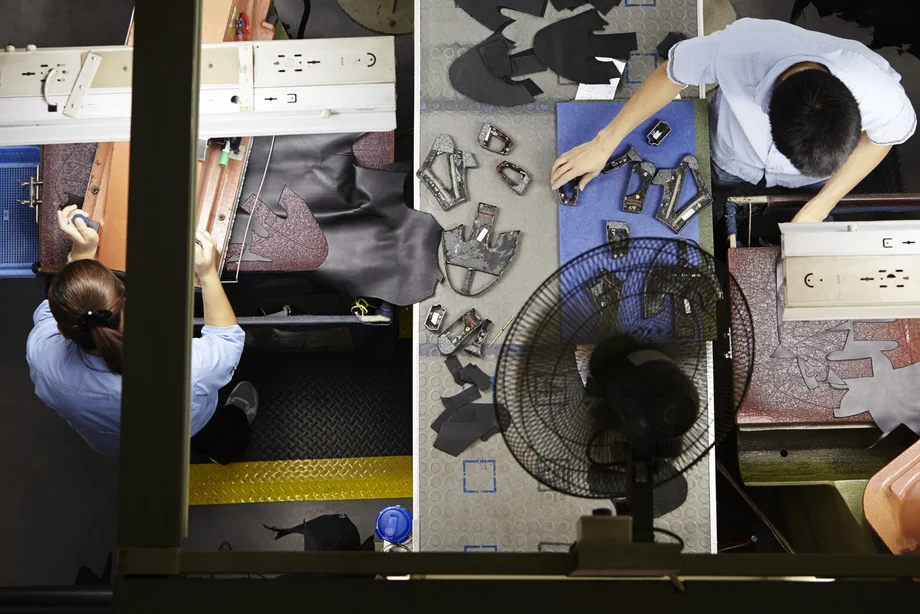
ECCO stopped production at its Bau Bang factory in southern Vietnam at 2 p.m. on November 2, 2026, affecting 1,611 workers as the Danish footwear company reduces its global manufacturing network. Most employment contracts are scheduled to end by November 30, with November wages and promised support payments due no later than that date.
Contents
- Production stops as workers face November deadline
- What closes now, and what continues?
- How the factory reached this point
- What ECCO has promised employees
- Insurance records and payment checks
- Nearby employers offer recruitment options
- Why thousands of vacancies may still mean a difficult search
- A wider reduction in ECCO's operations
- Key Points
The closure follows an October 30 decision by ECCO Sko A/S, the sole owner of ECCO Vietnam, to dissolve the Vietnamese subsidiary. Petr Milan, the subsidiary's general director and legal representative, communicated the decision in a notice to employees.
The factory is in Bau Bang Industrial Park, an area formerly in Binh Duong Province and now administered as part of Ho Chi Minh City. Its workforce includes 259 people hired through outside service providers, about 16% of everyone affected.
ECCO attributes the shutdown to several years of falling demand and excess production capacity. The company is also closing a factory in Portugal with about 650 workers and cutting approximately 400 positions in global and regional functions.
What closes now, and what continues?
Truong Van Phong, deputy head of the Ho Chi Minh City Export Processing and Industrial Zones Authority, known as HEPZA, said the Danish parent company had decided to dissolve ECCO Vietnam. Production has stopped, while administrative work will continue until the company completes the required closure procedures.
A small number of employees will stay for several months to help finish that work. Their tasks include handling wages, benefits, insurance records and other matters connected with the shutdown. They will receive information about their continued employment arrangements.
Most other employees will have their contracts terminated on November 30, or earlier if their existing contracts expire before then. The company's announced wage arrangement provides for November pay through November 30 even while employees are not required to attend the factory.
How the factory reached this point
ECCO's Bau Bang operation began producing footwear in April 2020, around six months after construction started. The site covers 120,000 square metres, equivalent to 12 hectares, and had an annual production capacity of 8.1 million footwear products and components.
The factory's construction cost was put at VND861 billion, approximately US$34 million, while its registered investment capital was reported as US$38.18 million. Construction cost describes spending on building the facility; registered capital describes the investment recorded for the project.
The key dates show how a factory established in 2020 moved into closure proceedings in 2026:
- October 2019: Construction began at Bau Bang Industrial Park.
- April 2020: The factory started operating.
- October 30, 2026: ECCO Vietnam's owner issued the dissolution decision.
- November 2, 2026: Production stopped at 2 p.m., and authorities met company and union representatives.
- November 30, 2026: Most employment contracts are due to end, with November wages and support payments due by that date.
The factory's stated capacity covered both footwear and parts. Its actual output before closure was not disclosed. Capacity means how much a plant can produce, rather than how much it necessarily makes or sells.
What ECCO has promised employees
ECCO Vietnam has committed to settling outstanding wages, paying for unused annual leave and meeting other amounts owed under employment rules. October salaries had already been paid when the November arrangements were announced.
The company also promised a goodwill payment separate from statutory severance: half a month's contractual base salary for each year of service. Under the announced calculation, a service period shorter than 12 months is rounded up to a full year.
Base salary is the contractual amount used for this calculation. An employee's total monthly income can also include allowances, overtime or other payments, so the additional support will depend on the salary figure in the contract and the employee's length of service.
Workers will also receive a proportional 13th-month salary, an annual payment calculated according to the time they actually worked during the calendar year up to their contract termination date. The company's notice includes employees on maternity leave in this arrangement, following its existing payment rules.
Employees retained to help with dissolution will receive an additional payment equal to 50% of one day's base salary for each day worked. That payment is to accompany the salary for the month in which the work takes place.
HEPZA said November wages and support payments would be paid no later than November 30. Individual entitlements will vary with service, salary and employment arrangements, including whether a worker was employed directly or through a service provider.
Insurance records and payment checks
ECCO Vietnam has pledged to confirm employees' social insurance contribution records and return relevant documents. Phong said the company had no outstanding social insurance premiums.
Those records document contributions made during employment and are needed when workers seek benefits or move to another employer. Completing them is part of the practical work that continues after production stops.
HEPZA, the Ho Chi Minh City Labor Federation and local authorities met company management and union representatives on November 2. They instructed the company to meet its commitments on employee benefits and help workers connect with other businesses.
Phung Thai Quang, deputy chairman of the city labor federation, said he had directed industrial zone and company unions to review employee lists and support people losing their jobs. The city's Trade Union Labor Consultation and Support Center will compare ECCO's announced policies with legal requirements and monitor their implementation.
Nearby employers offer recruitment options
Local authorities are arranging recruitment by businesses near the factory, including opportunities for employers to meet affected workers at ECCO's premises. Phong said nearby companies began approaching the factory on the afternoon of November 2.
HEPZA initially identified at least eight companies interested in taking on around 1,611 workers; another recruitment account identified at least 12 businesses. The figures describe employer interest during the response to the closure. The number of ECCO employees who have accepted new jobs has not been announced.
The recruitment figures also contain a numerical discrepancy. HEPZA was cited as giving projected demand of 6,530 workers, while the individual requirements listed for 12 companies add up to 5,630, a difference of 900 positions.
The largest stated requirement was Ampacs International's 2,000 positions, followed by Paihong Vietnam with 1,000 and Cycletech Vietnam with 700. Together, those three account for 3,700 of the 5,630 positions in the detailed list.
Other businesses listed included Diamond Vietnam and Waytex International Vietnam, each seeking 300 workers; Hailex Vietnam Technology, also seeking 300; and several employers seeking between 100 and 200 people. HEPZA said it was coordinating with unions and other authorities to arrange recruitment with simplified procedures.
Why thousands of vacancies may still mean a difficult search
Ho Chi Minh City's employment figures show a tighter market in the sectors closest to ECCO's workforce. In October, the garment, textile and footwear industries had 1,306 vacancies and 2,473 applicants, according to the Ho Chi Minh City Employment Service Center.
That amounted to about 1.9 applicants for every vacancy, or 1,167 more applicants than openings. Those figures describe the center's recruitment activity in the three sectors before the November factory shutdown.
The nearby employers' recruitment list covers a broader group of businesses. Workers seeking another footwear job may therefore face different options from those willing and able to move into another type of manufacturing.
For an individual employee, the next step is a specific job offer with suitable duties, pay and working arrangements. The authorities' plan to bring recruiters to the factory gives workers a place to meet potential employers while their existing employment is being wound down.
A wider reduction in ECCO's operations
ECCO, founded in Denmark in 1963, is concentrating production at fewer existing facilities as it seeks to reduce costs. Its explanation centers on demand falling over several years while the group retained more manufacturing capacity than it needed.
Excess capacity means a company has factories and equipment capable of making more products than customers are buying. Even when output falls, plants still carry costs such as maintenance, management and facilities. Consolidating production places more of the remaining work in fewer locations.
ECCO's sales declines extended across its sales channels and were most pronounced in its own direct sales to consumers. That part of the business sells to shoppers through company operations rather than through independent retailers.
The Portugal closure affects a factory employing about 650 people, alongside approximately 400 additional position losses in global and regional functions. Taken together with the 1,611 people affected in Vietnam, the announced measures involve roughly 2,660 workers and positions across manufacturing and other operations.
The restructuring plan also refers to expanding activities at ECCO's Danish headquarters and selected existing factories. For Bau Bang employees, however, the immediate timetable is local and concrete: most contracts end in November, payments are due by November 30, and a smaller group stays temporarily to complete the closure.
Key Points
- ECCO stopped production at its Bau Bang factory at 2 p.m. on November 2, 2026.
- The closure affects 1,611 workers, including 259 hired through outside service providers.
- Most contracts are scheduled to end by November 30, with some employees staying temporarily for dissolution work.
- ECCO has promised wages, unused leave payments, applicable severance, additional service payments and a proportional 13th-month salary.
- HEPZA said the company had no outstanding social insurance premiums and would be monitored on worker benefits.
- Twelve nearby employers listed demand totaling 5,630 workers, while a headline recruitment estimate gave 6,530.
- The Vietnam shutdown forms part of a restructuring that also includes a Portugal factory closure and about 400 other position losses.