Twenty Fighters and a Wider Regional Security Debate
Bangladesh is pursuing the purchase of 20 Chinese J-10CE fighter jets under a package estimated at US$2.2 billion, or about Tk 27,060 crore, with implementation expected during the 2025–26 and 2026–27 fiscal years. Proposed training support from Pakistan has brought the plan into a wider debate about military cooperation near India's eastern border.
Contents
The government's initiative was announced on October 8 in a post published by an administrator on the verified Facebook page of Asif Mahmud Sajib Bhuiyan, adviser to Bangladesh's Ministry of Local Government, Rural Development and Cooperatives. The post presented the purchase as a step toward modernising the Bangladesh Air Force and strengthening national air defence.
The proposed package reaches beyond the aircraft themselves. Cost estimates include pilot and technical training, equipment, transport and other expenses, while payments are expected to continue through the 2035–36 fiscal year. Bangladesh is considering either direct procurement or an agreement between its government and China.
India's security concerns centre on where the fighters might operate, who would train their crews and how information collected by Bangladeshi radar might move through Chinese military technology. Jessore Airbase, identified as a possible training location for Pakistani personnel, is approximately 40 kilometres from the Indian border.
The acquisition remains a government initiative, with the procurement route, final contract terms, delivery dates, training arrangements and eventual aircraft deployments still to be confirmed publicly. The expected implementation period covers two fiscal years rather than a single announced delivery date.
What Bangladesh Would Buy
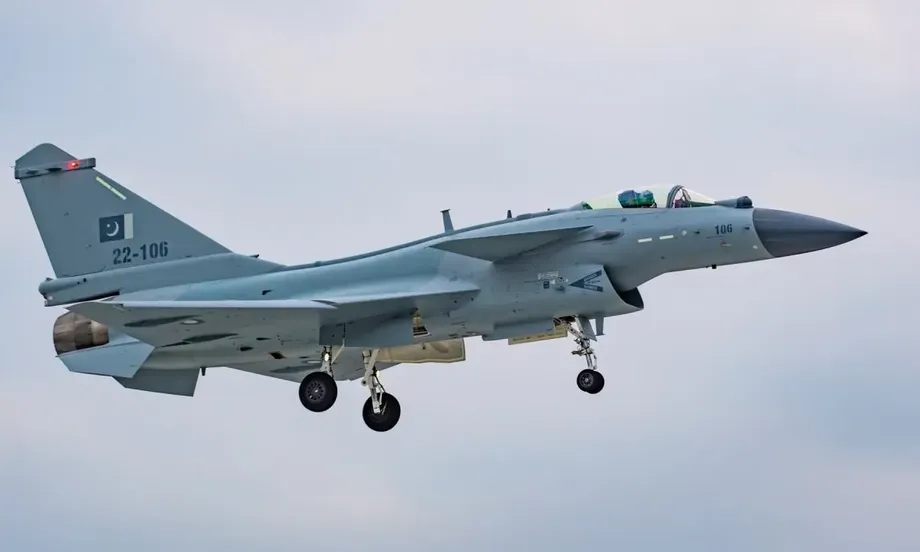
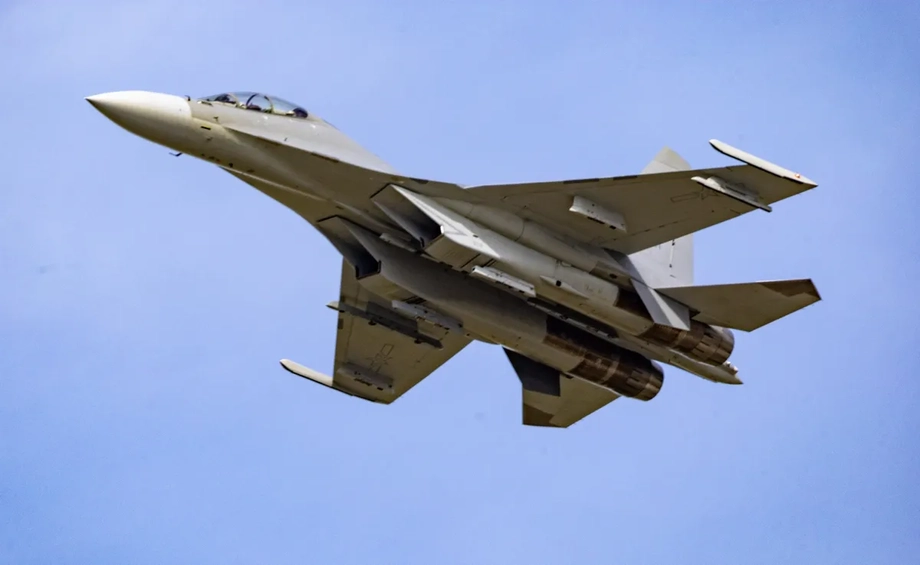
The J-10CE is the export version of China's J-10C. It is a multirole fighter, meaning it is designed to perform different tasks, including fighting other aircraft and attacking targets on the ground. Bangladesh's proposed purchase would bring 20 of these aircraft into its air force.
The aircraft is described in the purchase reporting as belonging to the 4.5 generation category. That term generally refers to advanced fighters with modern radar, electronic systems and weapons integration. For readers, the practical point is that the purchase involves a broader combat capability whose operation depends on trained people, maintenance and supporting equipment.
Pakistan has operated aircraft from this Chinese fighter family since 2022, giving its air force experience relevant to Bangladesh's proposed acquisition. That experience helps explain why Pakistan features in the training plans alongside China, the supplier.
The aircraft also attracted attention during the India–Pakistan conflict in May. Pakistan claimed that its J-10CE fighters brought down several Indian Rafale jets. Independent verification of that claim was unavailable. Bangladesh's stated reason for pursuing the aircraft is the modernisation of its own air force and air defence.
How the $2.2 Billion Estimate Breaks Down
Bangladesh's preliminary calculations put the price of each fighter at US$60 million. For 20 aircraft, that produces an aircraft purchase cost of US$1.2 billion, equivalent to approximately Tk 14,760 crore in the estimates.
Training at home and abroad, equipment purchases and transportation would add another US$820 million, or around Tk 10,086 crore. Insurance, value added tax, agency commissions, construction work and other expenses would take the estimated package to US$2.2 billion.
The aircraft themselves therefore account for about 55 percent of the proposed total, calculated from US$1.2 billion divided by US$2.2 billion. Training, equipment and transport represent about 37 percent. The remaining expenses account for roughly 8 percent, or US$180 million.
Bangladesh would consequently be funding much more than 20 airframes. Pilots need instruction, ground crews need equipment and technical knowledge, and bases need facilities to support operations. The proposed payment schedule spreads the financial commitment over ten years, through fiscal year 2035–36, extending well beyond the expected procurement implementation period.
How the Purchase Plan Has Developed
Chief Adviser Muhammad Yunus discussed buying the aircraft during a visit to China in March. China was described as responding positively to the proposal. An administrative process followed, with an 11 member committee drawn from several ministries and chaired by Bangladesh's air force chief tasked with finalising the purchase.
The sequence places the October announcement within a process that had already been developing for several months:
- March 2025: Yunus discussed the proposed fighter purchase during his visit to China.
- April 2025: An 11 member committee chaired by the air force chief was formed to finalise the purchase.
- May 2025: Pakistan's use of the Chinese fighter during fighting with India brought renewed attention to the aircraft.
- October 8: A post on adviser Asif Mahmud Sajib Bhuiyan's verified Facebook page announced the initiative to acquire 20 fighters.
- December: Officers from Bangladesh, China and Pakistan are expected to meet in Dhaka for a joint exchange programme.
- Fiscal years 2025–26 and 2026–27: The proposed period for implementing the purchase.
- Fiscal year 2035–36: The expected endpoint of the payment schedule.
The committee's work and the proposed agreement with China concern the acquisition itself. The December exchange concerns military cooperation and training, a related part of preparing Bangladesh to operate the aircraft.
Pakistan's Proposed Training Role
Pakistan's planned contribution extends beyond teaching pilots to fly. The cooperation described also covers radar controllers, who track aircraft and help direct air operations, and ground crews, who maintain aircraft and prepare them for missions.
A delegation of five members led by Pakistan Air Vice Marshal Aurangzeb Ahmed visited Dhaka, surveyed airbases and other facilities, and prepared a plan covering technical training and simulator exchanges. Simulators allow personnel to practise flight procedures and responses to emergencies without putting an aircraft into the air.
Jessore Airbase has been identified as a possible location for Pakistani trainers. Its proximity to India makes the proposed presence especially sensitive from New Delhi's perspective. The eventual location, size and duration of a training mission would determine how that cooperation takes shape on the ground.
Bangladesh would need several groups of personnel to work together as the fighters enter service. A pilot relies on radar controllers for an understanding of surrounding air traffic and possible threats, while technicians keep the aircraft's engines, sensors and other systems functioning. Training across these roles would help build the operating structure around the new fleet.
Why Radar Data Matters
Chinese communications technology is another focus of Indian concern. Bangladesh's technical teams and data link systems are described as working with the Chinese air force. The security worry is that closer technical cooperation could create routes through which information gathered by Bangladeshi radar reaches Chinese military networks during a crisis.
A tactical data link is a digital connection that allows military aircraft and command centres to exchange information. Instead of every pilot relying solely on what their own radar detects, connected units can share information about aircraft positions and potential targets. A ground controller and a fighter pilot can then work from a more similar picture of events.
The account of the proposed cooperation also identifies a Chinese broadband link called XS-3, described as connecting fighters, bombers and drones. Its possible use by Bangladesh is presented as an assessment, without confirmation of a deployment or an agreement governing access to Bangladeshi radar information.
For India, the concern is particularly relevant to a period of heightened tension with China along the Line of Actual Control, their disputed frontier. Information about aircraft movements could matter far from the radar that first detected them. The equipment installed, the networks connected and the rules governing information sharing would determine how such a system operates.
Why the Siliguri Corridor Draws Attention
The Siliguri Corridor is a narrow strip of Indian territory, approximately 20 to 22 kilometres wide at its narrowest, that connects India's northeastern states with the rest of the country. Its geography makes military developments in nearby Bangladesh especially sensitive for Indian security planners.
Lalmonirhat and Kurmitola have been identified as airbases whose possible use by fighters capable of striking over long distances could concern India. A deployment there would be a separate decision from purchasing the aircraft. For assessing military reach, the base location, weapons carried and mission arrangements all matter.
India's concern also sits alongside the history of armed groups in its northeastern states. Weapons and communications equipment have previously reached such groups through Bangladesh. The security debate therefore brings together several issues: access near the border, military cooperation involving China and Pakistan, and the protection of a narrow transport connection to the northeast.
Bangladesh, meanwhile, has publicly framed the acquisition around its own air defence needs. The same purchase can serve that national objective while drawing close scrutiny from a neighbour because of the location of bases and the involvement of other regional militaries.
The next practical developments are the planned December exchanges and decisions needed to turn the procurement initiative into a contract and operating capability. The estimated cost and proposed fleet size give the plan a concrete shape; the eventual training, basing and communications arrangements will determine much of its regional significance.
Key Points
- Bangladesh is pursuing 20 Chinese J-10CE fighters in a package estimated at US$2.2 billion, or about Tk 27,060 crore.
- The aircraft are estimated to cost US$1.2 billion, with training, equipment, transport and other expenses making up the balance.
- Implementation is expected during fiscal years 2025–26 and 2026–27, with payments continuing through 2035–36.
- Pakistan is expected to support training for pilots, radar controllers and ground crews; Jessore is a possible training location.
- Indian concerns focus on border proximity, possible radar information sharing and the Siliguri Corridor.
- Final contract terms, delivery dates, deployments and data sharing arrangements await public confirmation.