Military warning comes amid fresh border violence
Pakistan's military says it can intercept drones launched from Afghanistan and impose a heavy military cost on the Taliban authorities, as renewed fighting along the border brings further reports of civilian deaths. Lieutenant General Ahmed Sharif Chaudhry, director general of Inter-Services Public Relations, said in an interview on October 30, 2026, that Pakistan was ahead of both the Afghan Taliban and India in operational readiness.
Contents
- Military warning comes amid fresh border violence
- What Pakistan says it can do against drones
- How remote warfare is changing the military's planning
- The militant sanctuary dispute behind the threats
- India allegations widen the confrontation
- A timeline of escalation
- Civilians face danger on both sides
- Talks continue without a settlement
- Engagement paired with a threat of force
- Key Points
Two days later, Taliban police in Afghanistan's eastern Paktika province said Pakistani rocket fire had killed a young man and wounded two other civilians. The police command said homes in Sordagh village, Shkin district, were struck at about 3 p.m. on November 1 and that several houses were damaged. Pakistani officials had not commented on that incident.
Chaudhry's remarks connect three parts of Pakistan's security position: confidence in its ability to counter drones, accusations that militants receive sanctuary and support in Afghanistan, and a warning that Islamabad will respond militarily when it considers those threats intolerable. He also called for continued engagement with Kabul rather than Afghanistan's isolation.
The Taliban authorities reject Pakistan's allegation that Afghan territory serves as a base for attacks against its neighbour. Negotiations involving regional powers have yet to resolve that central dispute, while exchanges of fire continue around communities on both sides of the frontier.
Pakistan's information ministry has described the Taliban administration's failure to address terrorism as the principal obstacle to normal relations. For residents near the border, the immediate consequences include deaths, injuries and damage to homes, even as the two governments dispute who is responsible for the violence.
What Pakistan says it can do against drones
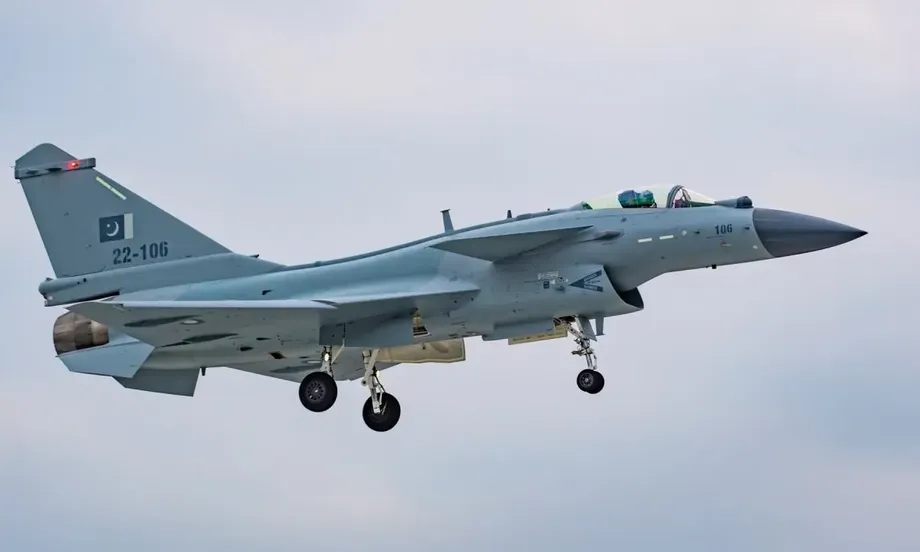
Chaudhry based his confidence partly on Pakistan's experience during the May 2025 conflict with India. He said Pakistani forces had brought down dozens of sophisticated Indian drones sent across the eastern border and had improved their readiness since then.
The military spokesperson said Pakistan regarded possible Taliban drone attacks as part of a wider set of military threats. Asked whether Pakistan could counter such aircraft, he gave a direct warning:
Whatever they want to send, they can; they may try. We have the capability to take them on,
Chaudhry also said the Taliban authorities lacked the capacity to absorb the retaliation Pakistan could deliver. His argument combines interception, stopping incoming aircraft, with deterrence, trying to discourage an attack by threatening a costly response.
Chaudhry claimed Afghanistan had neither a domestic drone industry nor the relevant technology and that its equipment came from outside sponsors, particularly India. Those allegations form part of Pakistan's broader accusation that India supports armed actors operating against it. No Indian response to the latest remarks was given.
How remote warfare is changing the military's planning
Pakistan's army is adapting to drones, cyber operations and weapons that can strike over long distances, according to Chaudhry. He described these developments as changes in both conventional combat and non-contact warfare, meaning attacks carried out without opposing forces meeting directly on a battlefield.
Drones are one example of that shift: an operator can direct an aircraft toward a target from a distance. Cyber operations instead involve computer systems and networks. Chaudhry said the spread of such capabilities among armed groups required countries to reconsider their security arrangements.
The spokesperson cited the Afghan Taliban and the Houthis as examples of actors outside conventional national armed forces possessing capabilities for remote attacks. His concern was that states must now prepare for threats that once required resources more commonly associated with regular armies.
Chaudhry was also asked whether Pakistan used artificial intelligence to identify targets in Afghanistan. He declined to describe specific applications of AI, quantum technology or cyber capabilities, while saying the army was adopting technologies it considered necessary for modern warfare.
The military spokesperson described the army's approach in these words:
We are using all sorts of technologies. We are a technology-savvy army,
Artificial intelligence can help computer systems identify patterns in large amounts of information. Chaudhry did not explain what role it plays in Pakistan's targeting decisions, leaving the methods and human oversight of any such process undisclosed.
The militant sanctuary dispute behind the threats
Pakistan's central demand remains action against the Tehreek-i-Taliban Pakistan, or TTP, a banned group fighting the Pakistani state. The Afghan Taliban, which governs Afghanistan, and the TTP are separate organisations. Islamabad accuses the authorities in Kabul of sheltering TTP leaders and allowing fighters to organise attacks across the border.
Chaudhry named TTP chief Noor Wali Mehsud, Balochistan Liberation Army commander Bashir Zeb and Gul Bahadur as militant figures sheltered in Afghanistan. He said armed formations entered Pakistan from Afghan territory and received weapons, instructions and logistical support there.
The spokesperson also alleged that Afghan citizens and personnel belonging to the Taliban administration had been found among groups involved in attacks against Pakistan. Pakistani security officials estimated that up to 70 per cent of militants infiltrating Pakistan in the category authorities call Fitna al-Khawarij were of Afghan origin. That estimate concerns the infiltrators identified by those officials, rather than a count of every militant operating in Pakistan.
Islamabad had already set out its demand for verifiable action against militants on October 24. Pakistan's information ministry called for Kabul to stop the TTP, BLA and their affiliates from using Afghan territory to plan, prepare or launch attacks. Taliban spokesperson Zabihullah Mujahid rejected the accusations and said Afghanistan had neither the interest nor the capacity to create insecurity in Pakistan.
India allegations widen the confrontation
Chaudhry accused India of being the main sponsor of terrorism directed at Pakistan and described the TTP and BLA as its proxies. A proxy is a group alleged to act with support from another power in pursuit of that power's aims. He placed the Afghan Taliban administration within the same alleged network.
Chaudhry also named the East Turkestan Islamic Movement, Islamic Movement of Uzbekistan, Jaish al-Adl, Al Qaeda and Islamic State Khorasan Province among the groups he said were present in Afghanistan. He said United Nations reports and intelligence assessments from the United States and other countries reflected the presence of militant organisations there.
Pakistan's information ministry had previously identified specific assessments behind its position: the UN Security Council sanctions monitoring team's 16th report, S/2025/796, issued in 2025, and the US Lead Inspector General's Operation Enduring Sentinel report covering January through March 2026. The ministry attributed an estimate of 4,000 to 6,000 TTP fighters in Afghanistan to the US assessment.
Pakistani officials have also alleged that weapons left behind by US and NATO forces reached militant groups. Chaudhry's account therefore describes an alleged support system involving sanctuary, arms, movement and outside sponsorship, rather than a dispute confined to drone technology.
The Taliban authorities, meanwhile, have accused Pakistan of hosting or coordinating former Afghan government figures and other opponents of their rule. Chaudhry rejected that allegation and accused Kabul of relying on militias, mercenaries and other armed groups to pursue its objectives.
A timeline of escalation
Pakistan and Afghanistan have moved through repeated rounds of accusations, military action and unsuccessful talks. The latest interview followed fighting in September and October and came just before another reported civilian death in Paktika.
- May 2025: Pakistan and India fought a conflict during which Chaudhry says Pakistani forces intercepted dozens of sophisticated Indian drones.
- September 2026: Pakistan carried out airstrikes in the border region following attacks in Khyber Pakhtunkhwa. It also said it intercepted drones crossing the border and conducted further retaliatory strikes.
- October 10, 2026: Pakistan's military said 12 TTP members and Afghan Taliban personnel were killed during an attempted infiltration in Kurram. One Pakistani soldier also died.
- October 24, 2026: Pakistan renewed its demand for verifiable action against militant groups operating from Afghanistan.
- October 30, 2026: Chaudhry discussed drone threats, military technology and militant sanctuaries in his interview.
- November 1, 2026: Taliban authorities reported one civilian killed and two wounded in Paktika, while further clashes were reported near Torkham.
The October fighting in Kurram illustrated how closely Pakistan links militant infiltration to the conduct of Taliban border forces. Its military alleged that Afghan posts fired to support the attempted crossing. Kabul continues to reject Islamabad's wider claims of support for attacks.
Civilians face danger on both sides
Paktika's reported casualties are part of a wider pattern of harm along the frontier. Taliban authorities said two children were killed during an earlier clash near Torkham, the crossing between Pakistan and Afghanistan's Nangarhar province.
On the Pakistani side, firing at Angoor Adda in Lower South Waziristan reportedly killed one local resident and injured five members of a family. District authorities later said firing from Afghan positions continued and that Pakistani forces responded by targeting border posts, mortar positions and defensive points.
Lower South Waziristan's deputy district commissioner said no Pakistani casualties had been reported in that later exchange. The military's public relations office had not commented on that particular incident when the district account emerged.
The United Nations Assistance Mission in Afghanistan documented more than 1,700 civilian deaths and injuries from violence across the border in Afghanistan between October 2025 and September 2026. Pakistani authorities, meanwhile, said terrorism they attributed to Afghan territory killed 1,327 Pakistanis and injured 2,484 during 2026, a combined 3,811 people.
The UN mission's figure covers civilian harm inside Afghanistan over a specified 12 month period. Pakistan's figures cover deaths and injuries it attributes to terrorism originating across the border during 2026. Each describes a different part of the human cost driving the confrontation.
Talks continue without a settlement
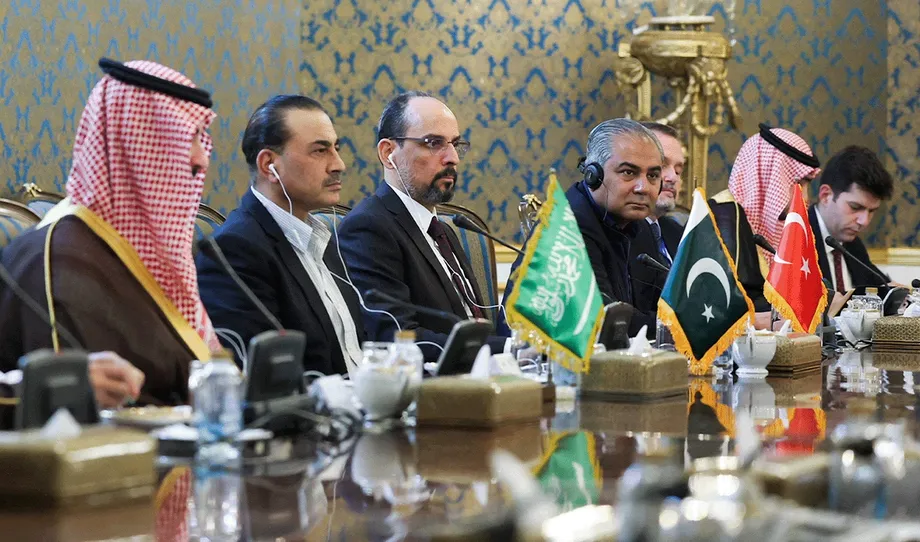
Qatar and Turkiye facilitated several rounds of talks, with China later involved, but the negotiations have produced no breakthrough. Russia has offered to help arrange a settlement if both sides request it. Saudi Arabia has also been involved in mediation efforts.
US Secretary of State Marco Rubio said Washington had heard Pakistan's concerns about terrorism it attributes to Afghanistan and was ready to play a productive role if an opportunity arose. No date for a new negotiating round or agreement was announced.
Pakistan's demand is for action it can verify against militant shelters and support networks. Kabul rejects the accusation that it allows attacks against neighbouring countries and objects to Pakistani military operations inside Afghanistan. That leaves the negotiations dealing with both armed groups and the conduct of the two sides' own forces.
Engagement paired with a threat of force
Chaudhry said Pakistan did not want Afghanistan isolated and had no interest in deciding how Afghans should govern themselves. Instead, he urged regional countries and the wider international community to press the Taliban authorities to behave like a state and prevent attacks originating from territory they control.
The military spokesperson expressed Pakistan's demand directly:
We only ask you that don't support terrorism inside Pakistan. Stop harbouring the terrorist leaders,
Chaudhry also called for an end to drug cultivation and production, describing terrorism and drugs as Afghanistan's main exports. His remarks extended Pakistan's appeal beyond its own security concerns to threats he said affected the wider region.
Pakistan's position pairs continued diplomatic engagement with the threat of military retaliation. Chaudhry said Islamabad had both the capability and a strategy to impose a cost for attacks. Along the border, further exchanges of fire are already putting that approach alongside the immediate need to protect civilians and reach an agreement that stops the fighting.
Key Points
- Pakistan's military says it is prepared to intercept Taliban drones and respond to threats originating in Afghanistan.
- Chaudhry cited Pakistan's claimed interception of dozens of Indian drones during the May 2025 conflict.
- Islamabad accuses Kabul of sheltering the TTP and other militants; the Taliban authorities reject the allegation.
- Taliban police said Pakistani rocket fire killed one civilian and wounded two in Paktika on November 1. Pakistan had not commented.
- The UN mission documented more than 1,700 civilian deaths and injuries in Afghanistan from border violence between October 2025 and September 2026.
- Regional mediation has produced no settlement, and no date for another negotiating round was announced.