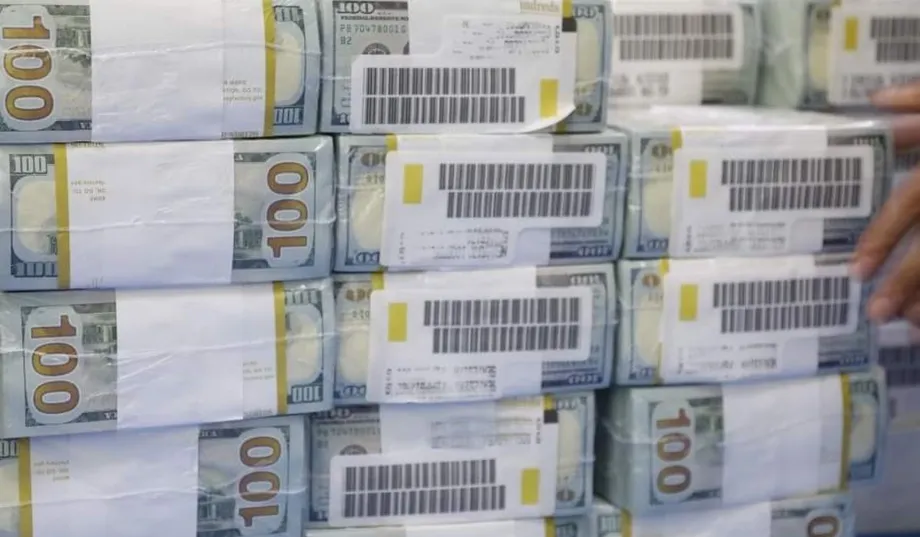
A $721.9 Million Trail Through an $8 Billion Aid System
Only $721.9 million of the $8 billion paid into Afghanistan's humanitarian response since August 2021 can be followed through public records beyond the first recipient organization, according to the Kabul Institute. Its Afghanistan Aid Tracker, presented on October 22, 2026, puts that publicly traceable share at 9%.
Contents
- A $721.9 Million Trail Through an $8 Billion Aid System
- Where the Public Record Ends
- What Confidential Payments Reveal
- How the Tracker Was Built
- Funding Has Fallen as Needs Persist
- The Earlier Warning Signs
- Why Physical Cash Became So Important
- Oversight Under Taliban Restrictions
- What Better Accountability Would Require
- Key Points
The Afghan led research organization also identified $1.42 billion across 316 payments whose recipients were recorded as confidential. Researchers found no public, machine readable source of spending data for individual programs that would let users systematically follow the money through to its final use.
The findings arrive as humanitarian funding contracts sharply. Researchers at the launch put assistance at about $3.2 billion in 2022 and around $600 million in 2026, while describing a response increasingly concentrated on food, basic health services, nutrition and vaccinations.
The tracker measures how far an outsider can follow funding using published records. For most of the money, that trail ends with the first organization receiving it. Spending records, delivery logs and information about families receiving assistance can exist elsewhere within the aid system, beyond what the public can search.
The Kabul Institute's launch announcement introduced the report, Who Gets the Aid Money in Afghanistan, alongside a platform intended to let users search donors, agencies and individual payments. Its data run through September 30, 2026.
For Afghans seeking to understand assistance intended for their communities, the central finding is a gap between knowing that a donor paid an organization and being able to follow what happened next.
Where the Public Record Ends
A donor can pay a large international organization, which then funds a local organization to deliver assistance. Following that chain requires records that connect each transfer to the next recipient.
Development consultant Layma Murtaza explained at the launch that major international organizations often act as intermediaries. Countries such as the United States, Germany and Britain provide money to the United Nations or other large organizations, which pass part of it to local partners responsible for reaching families.
The tracker found that public records allow $721.9 million to be followed to a second organization. The remaining roughly $7.28 billion becomes publicly untraceable at the first recipient stage. Tracking money further would require connected information about subsequent transfers, program spending and delivery.
Naweed Kawusi, a Kabul Institute researcher involved in presenting the tracker, described the result:
The public data shows you that only 9% of the $8 billion, which is equivalent to $721.9 million, can be traced past the first recipient.
Murtaza said records may exist for registering families, making cash transfers and logging deliveries, even while the movement of funding between organizations remains difficult for outsiders to see. Public access is therefore uneven across different stages of the same aid operation.
What Confidential Payments Reveal
The $1.42 billion recorded against confidential recipients represents about 17.8% of the $8 billion total. Across 316 payments, that is a substantial part of the response for which the public cannot identify the recipient from those entries.
Confidentiality can serve practical protection needs. Former Afghan diplomat Omar Samad cited security concerns, sensitive funding arrangements, sanctions and political restrictions as obstacles to fuller disclosure in Afghanistan.
The confidential recipient figure and the 91% that becomes untraceable after the first recipient describe different features of the records. Researchers did not publish an overlap calculation, so readers cannot add the two percentages together.
The institute's broader search also found no public program spending dataset in a machine readable format. Such a dataset would organize information into fields a computer can compare, allowing users to connect payments, recipients and activities across many records rather than inspect documents individually.
How the Tracker Was Built
The Kabul Institute draws on more than 21 online sources and separates money pledged, committed and paid. Kawusi said the platform uses published figures rather than estimates.
A pledge is an announced intention to provide funding. A commitment is a firmer undertaking to fund an activity or organization. A payment records money actually transferred. Keeping those categories apart helps readers distinguish promises from funding that has entered the aid system.
The $8 billion headline figure concerns paid humanitarian assistance since August 2021. Users can search individual donors, agencies and payments and follow each entry as far as the published information allows.
Shoaib Alami, the institute's head of partnerships, said researchers shared findings with relevant agencies and authorities before publication and sought confirmation. Those exchanges helped refine the methodology and address discrepancies between public records.
The launch announcement promised a press kit containing the data behind each figure, further breakdowns by donor, agency and recipient, and a live demonstration of the tracker. The institute plans to extend the project to assistance provided before 2021, although it gave no date for that expansion.
Funding Has Fallen as Needs Persist
Researcher Iqbal Mohib put humanitarian assistance at approximately $3.2 billion in 2022 and $600 million in 2026. The latter figure is about 19% of the former, consistent with Samad's description of a decline of around 80% from the 2022 peak. The tracker contains data through September 30, so its 2026 snapshot precedes the end of the year.
Mohib said assistance now concentrates on keeping people alive rather than supporting broader development or reducing poverty. He described the change in direct terms:
We're not achieving any development here. We're really working towards survival of the population.
Samad said development aid had nearly stopped and Taliban authorities relied mainly on domestic revenue. Mohib said funding cuts had affected food assistance, health services, nutrition and vaccinations, with hundreds of health facilities closing in recent years as money dried up.
For families, that makes funding decisions concrete: whether a clinic remains open, a child receives a vaccination or a household receives food. The tracker enters this debate at a time when both the amount of assistance and the ability to examine its journey matter to communities depending on it.
The Earlier Warning Signs
The Center for Strategic and International Studies examined many of these pressures in its June 13, 2024, analysis, The Future of Assistance. Authors Daniel F. Runde, Annie Pforzheimer, Thomas Bryja and Caroline Smutny described a country dependent on humanitarian support while donors grew less willing to sustain it.
The analysis said the 2024 Humanitarian Needs Response Plan sought $3.1 billion and was only 15.9% funded as of May 9 that year. It also recorded how the previous year's appeal had been reduced from $4.6 billion to $3.2 billion amid funding shortages.
Afghanistan entered the crisis with a deep reliance on foreign assistance. Before the former republic collapsed, aid was equivalent to about 40% of gross domestic product, a measure of the economy's annual output, according to the analysis. It financed more than half the government's $6 billion annual budget.
The key dates show how the funding and accountability problems developed:
- August 2021: The Taliban returned to power, marking the start of the tracker's current coverage.
- 2022: Humanitarian assistance reached about $3.2 billion, according to figures presented at the tracker launch.
- May 9, 2024: The humanitarian response plan for that year was 15.9% funded, according to the CSIS analysis.
- September 30, 2026: The cutoff for the tracker's published data.
- October 22, 2026: The Kabul Institute presented its report and tracker at an online event.
Why Physical Cash Became So Important
The CSIS analysis described a financial system disrupted by sanctions, frozen reserves and Afghanistan's isolation from international banking after the Taliban takeover. Humanitarian organizations consequently relied heavily on physical shipments of US dollars to finance their work.
By June 2024, those UN coordinated shipments had totaled more than $2.9 billion since the takeover, with weekly deliveries of about $40 million, according to the analysis. Agencies used the funds to pay salaries and buy food and supplies, including imports.
Physical cash created a complicated and costly route from donor to delivery. The analysis identified currency conversion, air transport, security, banking fees and administrative expenses among the costs. It also described agencies exchanging dollars for afghanis to conduct local operations.
The $2.9 billion cash shipment figure describes a financing channel discussed in 2024; the tracker's $8 billion covers paid humanitarian assistance across a longer period. The cash shipments belong within the wider story of how assistance was financed, rather than forming a further amount to add to the tracker's total.
Oversight Under Taliban Restrictions
Samad described Afghanistan as an unusually difficult setting for humanitarian transparency because of sanctions, political constraints, security risks and the need to protect identities. Agencies must negotiate those conditions while trying to deliver services.
The 2024 CSIS analysis also detailed how Taliban restrictions on women's work, education and movement obstructed humanitarian operations and raised delivery costs. Women and girls faced extensive needs while restrictions on female staff made reaching them harder.
Interference with assistance adds another oversight concern. The analysis cited the US Special Inspector General for Afghanistan Reconstruction's January 2024 reporting on Taliban aid interference, including reports of recipient taxation reaching 60% to 100%. These were reported instances discussed in that earlier assessment; the analysis called for stronger independent monitoring and more transparent accounting.
Samad said diminished transparency weakens public trust and makes securing further aid harder. His proposed accountability framework links three practical questions: who received the money, what was delivered and how spending affected people's lives.
What Better Accountability Would Require
Samad set out three standards for humanitarian accountability: following money from donors through implementing partners, publishing information about spending and delivery, and independently measuring results.
Those standards cover different stages. A payment record identifies a transfer. A spending record explains what an organization purchased or funded. Independent assessment examines whether the service reached people and what changed for them.
Murtaza said better technology would need common reporting rules, quality checks and verification procedures to improve tracking effectively. Agencies would need to publish information in compatible forms and check that their records connect accurately across organizations.
Samad called for more communication and coordination among donors, UN agencies, aid organizations and Taliban authorities, while recognizing the constraints humanitarian workers face. He framed access to information as a public entitlement:
In any humanitarian response, the public has a right to know where the money goes.
The Kabul Institute's immediate contribution is a searchable account of what public records reveal and where disclosure ends. Its planned expansion to assistance before 2021 would extend that examination to an earlier period of Afghanistan's dependence on foreign funding.
Key Points
- The Kabul Institute tracked $8 billion in paid humanitarian assistance since August 2021.
- Public records allow $721.9 million, or 9%, to be followed beyond the first recipient organization.
- Another finding identifies $1.42 billion across 316 payments with confidential recipients.
- Researchers found no public, machine readable dataset of spending for individual programs.
- The tracker contains data through September 30, 2026, and was presented on October 22.
- Researchers described shrinking funding and a growing focus on food, basic healthcare, nutrition and vaccinations.
- Proposals for better accountability include common reporting rules, verified records and independent measurement of results.