Millions of returns, with pressure extending beyond the border
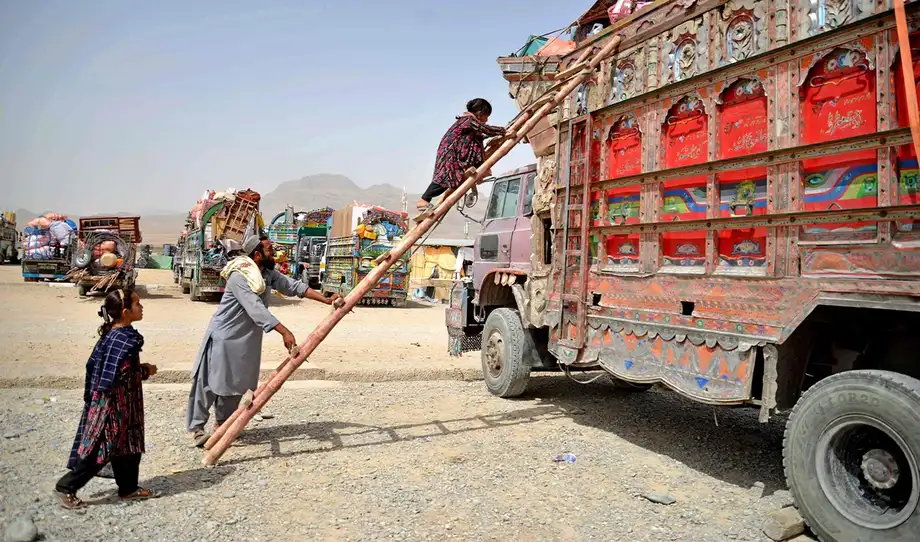
Pakistan has recorded 2,807,250 Afghan nationals returning to Afghanistan since its removal campaign began in 2023, according to figures released by Punjab's Home Department. Punjab accounted for 143,474 of those departures, while authorities in the province registered cases against 803 people accused of renting property to Afghans without valid documents.
Contents
- Millions of returns, with pressure extending beyond the border
- What the 2.8 million figure counts
- How Punjab moves detainees to Afghanistan
- Landlords and students face consequences too
- Security policy meets warnings about personal danger
- A US court pauses another route to removal
- Why permission to stay in Pakistan matters
- How the campaign and court action developed
- Key Points
The figures, publicised in early November, show a campaign that reaches into homes, markets and classrooms. Punjab authorities say they have conducted more than 400,000 search operations and operate 39 holding centres where detained Afghans are registered before being transferred to the Torkham border crossing.
The national total includes different kinds of departure. Although Pakistani announcements describe the campaign in terms of deportation and repatriation, United Nations migration and refugee agencies also count people who leave without a formal deportation order. Many of those departing say fear of arrest drove their decision.
The announcement comes as a US court temporarily blocks proposed removals of detained Afghans to Afghanistan or through Pakistan. For Afghans facing removal from the United States, Pakistan's continuing campaign creates a second concern: whether arrival there could be followed by transfer to Taliban rule.
Pakistani officials present the campaign as enforcement of immigration rules and a response to security threats. UN human rights experts have urged Pakistan to stop deporting people who face persecution, torture or other serious abuses in Afghanistan.
What the 2.8 million figure counts
Punjab's Home Department gave the national total as 2,807,250 and the provincial total as 143,474. Its Foreign Nationals Security Wing coordinates and monitors the campaign across Punjab.
A joint update by the International Organization for Migration and the UN refugee agency, UNHCR, counted about 2.74 million returns from Pakistan between September 2023 and October 17, 2026. That update recorded 3,883 returns during the week ending October 17.
The agencies' breakdown helps explain how people are leaving. Among returns recorded since April 2025, 13% involved deportation. The others left without a formal deportation order, with most citing fear of arrest. Deportation means the authorities formally remove a person; someone who crosses the border before receiving such an order falls into a different category, even when pressure from enforcement shapes the decision.
The government's 2.8 million figure therefore describes a broader movement than formal expulsions alone. For families, departure can follow detention, a warning about immigration papers, concern about losing accommodation or fear that arrest is imminent.
Punjab accounts for about 5.1% of the national total, calculated from 143,474 departures out of 2,807,250. Most returns recorded under the campaign have consequently taken place outside the province.
How Punjab moves detainees to Afghanistan
Punjab authorities say their operations follow the federal government's policy requiring Afghan nationals to hold valid visas to remain in Pakistan. The Home Department described the rule in its statement:
Under the clear policy of the Government of Pakistan, the stay of all Afghan nationals without a valid visa is illegal.
Afghans detained without valid immigration documents are taken to holding centres. The department says these facilities provide temporary accommodation and registration before repatriation, with detainees handed to Afghan authorities at Torkham after legal formalities are completed.
Punjab's 39 functioning centres held 153 Afghan nationals at the time of the announcement. That works out to roughly four people per centre, although the department gave a combined total rather than a count for each facility.
The campaign initially targeted undocumented migrants. It later expanded to include Afghans who had held government issued registration cards and previously received protection from deportation. A registration card records a person's status under an earlier arrangement; the government's current policy requires a valid visa.
For affected families, the practical issue is which documents authorities now accept. People who previously relied on registration cards can face removal as the government changes the conditions for remaining in the country.
Landlords and students face consequences too
Punjab's enforcement reaches Pakistanis who provide housing as well as the Afghans living in it. Authorities registered 803 cases against property owners accused of renting to Afghans without valid documentation. Landlords in Lahore and other cities have been warned to verify tenants' immigration status and comply with police registration requirements.
A registered case begins a legal process; the figures describe accusations rather than convictions. For tenants, the pressure on property owners can make finding or keeping accommodation more difficult while they try to resolve their status.
The Home Department says more than 400,000 searches have taken place in residential areas and markets. It has also asked residents to report illegal stays, forged identity documents or suspicious activity through emergency helpline 15, promising confidentiality for informants.
Afghan medical students have faced a different form of pressure. The Lahore High Court barred medical colleges from expelling them after the medical regulator ordered them to return home. The intervention brought the campaign into the education system, where removal can interrupt a course of study as well as displace a household.
Punjab's cumulative departures have risen more slowly in recent months. The province recorded 140,468 deportations in August, compared with 143,474 in the latest announcement. The increase of 3,006 over roughly three months amounts to about 2.1% of the August total.
Security policy meets warnings about personal danger
Pakistan launched the campaign in 2023 after a rise in deadly militant attacks, including suicide bombings that Islamabad blamed partly on Afghan nationals. Officials and religious leaders have also linked attacks to militant networks based in Afghanistan.
Pakistan says it has hosted Afghan refugees for more than four decades, at times sheltering millions, and cannot continue carrying that burden without international support. The removals have become another source of friction with Afghanistan's Taliban government amid worsening relations and repeated border clashes.
UN agencies and rights groups have urged protection for people whose circumstances make return particularly dangerous. They include women, rights activists and Afghans awaiting resettlement in Western countries. UN human rights experts have called for an end to deportations where people face persecution, torture or other serious violations.
Savitri Arvey, director of policy, refugee and immigrant rights at Human Rights First, warned about the dangers facing Afghans sent back to their homeland:
face grave, systematic dangers
Arvey identified arbitrary detention, executions, public flogging and retaliatory violence among those risks. For people with relatives who served alongside US forces, or with religious identities or public activities that expose them to retaliation, the destination of a deportation can determine their personal safety.
The central policy conflict is concrete: Pakistan is enforcing permission to remain, while protection advocates are asking authorities to consider what will happen to particular people after they cross the border.
A US court pauses another route to removal
US District Judge Valerie Caproni in New York temporarily blocked planned deportations of detained Afghans to Afghanistan or through Pakistan. Court documents described preparations for flights from Louisiana to Pakistan, where those removed could then face onward transfer to Afghanistan.
Immigrant rights groups said more than 80 detained Afghans contacted advocates after receiving notice that they could be deported through Pakistan. Those affected included women, religious minorities and people with family members who served in the US military.
The US government told the court on Tuesday that Immigration and Customs Enforcement had no chartered or commercial flights scheduled to deport Afghans to either Afghanistan or Pakistan before the end of that week. Caproni's order requires officials to keep that commitment and expires on Saturday.
Shawn VanDiver, president of AfghanEvac, an organisation supporting Afghan immigrants, described the temporary protection:
Today is a good day. But I want to be honest with you, this is a reprieve, not a resolution. We haven't stopped this fight forever. This is just a pause.
The court action follows the proposed US deportation flight described in late October, when detained Afghans were being told they might be sent to Pakistan. Relatives of former American military partners were among those receiving such notices.
Why permission to stay in Pakistan matters
Pakistan has served as a waiting place for Afghans pursuing American immigration pathways since the Taliban returned to power in August 2021. Some arrived with temporary visas while seeking refugee admission, Special Immigrant Visas, humanitarian parole or family reunification. Each route has different requirements, but all can involve waiting for an American decision.
AfghanEvac says an understanding reached by US and Pakistani officials in autumn 2023 was intended to protect a documented group awaiting US processing. Washington would process their cases, while Pakistan would refrain from harassment. The organisation says the arrangement stopped functioning after US refugee processing halted in January 2025.
People already waiting in Pakistan have faced harassment, detention and removal to Afghanistan. For an Afghan sent there from US detention, permission to enter would be only the first issue. Permission to remain while an immigration case is considered would also matter.
Pakistan's latest statement did not address the proposed US transfers. Whether Islamabad has agreed to receive those deportees, and what protections any arrangement would contain, has not been made public.
Afghanistan's foreign ministry also objected to other governments making arrangements over Afghan citizens. Deputy spokesperson Zia Ahmad Takal stated:
third-party countries should not engage in dealings concerning the fate of another nation's citizens.
How the campaign and court action developed
The Pakistani campaign and the proposed US transfers began at different times, but they now intersect over the same destination. The main dates show how immigration enforcement in one country can affect the safety of people removed by another.
- September 2023: The period covered by Punjab's cumulative return figures begins.
- Autumn 2023: According to AfghanEvac, Washington and Islamabad reach an understanding concerning Afghans awaiting US immigration processing.
- January 2025: US refugee processing halts, after which AfghanEvac says the protection arrangement stops functioning.
- August 2026: Punjab's recorded deportations stand at 140,468.
- October 17, 2026: The IOM and UNHCR reporting period closes with about 2.74 million returns from Pakistan since September 2023.
- Late October 2026: Detained Afghans in the United States receive warnings about possible deportation through Pakistan.
- Early November 2026: Punjab announces 143,474 provincial departures and 2,807,250 nationally, while a temporary US court order pauses removals to Afghanistan or Pakistan.
The next stated legal deadline is Saturday, when Caproni's temporary order expires. In Punjab, authorities say searches, arrests and transfers through holding centres are continuing under federal immigration policy.
Key Points
- Punjab's Home Department says 2,807,250 Afghans have returned from Pakistan under the campaign, including 143,474 from Punjab.
- UN agencies count both deportations and departures without formal removal orders; fear of arrest is a major reason people give for leaving.
- Punjab has conducted more than 400,000 searches and registered cases against 803 people accused of renting to Afghans without valid documents.
- The province's 39 holding centres housed 153 Afghan nationals awaiting repatriation at the time of the announcement.
- UN human rights experts have urged Pakistan to stop deporting people who face persecution, torture or other serious abuses.
- A temporary US court order blocks removals of detained Afghans to Afghanistan or through Pakistan until Saturday.