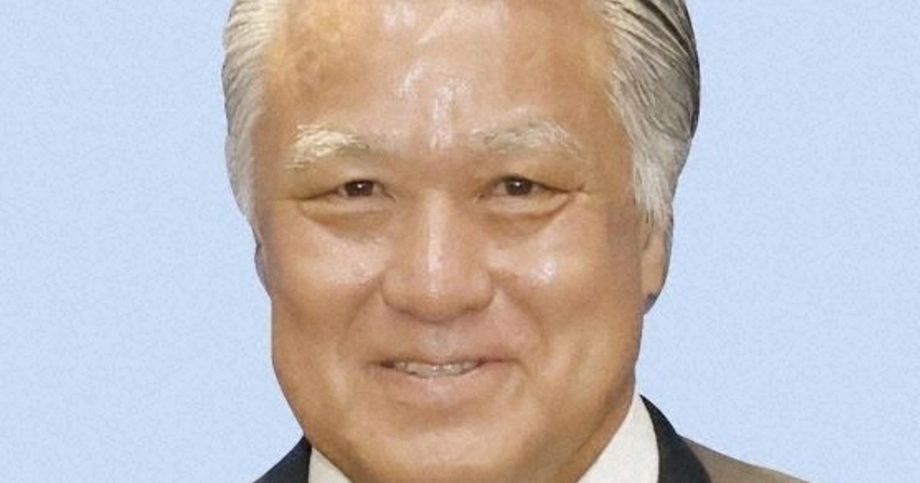
Japan backs a challenger for football's top job
Kozo Tashima, the Japan Football Association's honorary president, plans to challenge Gianni Infantino for the FIFA presidency in an election scheduled for March 18, 2027, in Rabat, Morocco. All 14 members of the JFA board backed the former Japan midfielder, giving him a united base at home before a November 18 deadline to secure nominations.
Contents
- Japan backs a challenger for football's top job
- What Tashima wants FIFA to change
- How the election process works
- Why Japan broke with the AFC leadership
- The withdrawn plan for private investment
- World Cup decisions sharpen the dispute
- Infantino's term limit faces scrutiny
- From Japan midfielder to international administrator
- The dates shaping the campaign
- Key Points
Tashima, 68, announced his intention after a JFA board meeting in Tokyo on Thursday, November 5. He would become the first Japanese candidate for the presidency of football's world governing body, which has 211 member associations.
The contest brings together several disputes over Infantino's leadership: a withdrawn proposal to bring private investors into FIFA's commercial operations, controversial disciplinary decisions involving World Cup players, and a split within Asian football over whether to support the incumbent.
Tashima, who led the JFA from 2016 to 2024 and has served on FIFA's ruling council since 2015, presented his decision as a matter of sporting values rather than personal ambition.
"It's not about winning or losing. What matters is sharing with the world the integrity that Japan's football has built over the years," Tashima told reporters.
His immediate task is to turn Japan's backing into a valid international candidacy. He needs formal support from at least five national associations and must pass an eligibility check before he can appear on the ballot. The JFA's unanimous decision gives him a starting point, while the remaining nominations will show how far dissatisfaction with Infantino translates into support for an opponent.
What Tashima wants FIFA to change
Tashima has put integrity, sound management and high moral standards at the centre of his challenge. His argument is that football's commercial interests must remain subject to the values and rules of the sport.
The former JFA president described an uncontested continuation of Infantino's leadership as the outcome he most wanted to prevent. Speaking about FIFA's capacity to address problems within its own organisation, Tashima said:
I feel this is a test of whether FIFA has the ability to cleanse itself.
For national associations, a contested election would provide a choice between retaining the current leadership and supporting someone who has publicly challenged its decisions. Tashima's candidacy would also bring those disagreements into a formal campaign, where federations must decide whom to nominate and elect.
His statements so far focus on principles and specific controversies. He has not set out a detailed programme covering FIFA's finances, disciplinary procedures or the organisation of future tournaments. Those practical proposals would give voters a clearer picture of how his presidency would differ from Infantino's.
How the election process works
FIFA's presidential contest has two stages before voting: candidates must gather the required nominations by November 18, then undergo an eligibility assessment by a panel of three people appointed by FIFA. A panel decision can subsequently be challenged at the Court of Arbitration for Sport, the tribunal that hears international sporting disputes.
The five required nominations represent about 2.4 percent of FIFA's 211 member associations. That relatively small entry requirement allows a challenger to reach the ballot without first assembling a majority. Winning support across the wider membership is a much larger task.
UEFA, Europe's football confederation, has 55 member associations, while the Asian Football Confederation has 46. Together, those figures total 101, fewer than half of FIFA's 211 members. Each national association votes independently, so a confederation president's endorsement does not automatically determine every member's vote.
For Tashima, this means that discussions with European officials and opposition within Asia could help build a campaign, but he would still need relationships beyond those two regions. Infantino retains substantial support in Asia, Africa and South America.
Why Japan broke with the AFC leadership
Japan's decision follows a change in the AFC's position toward Infantino. The Asian body criticised FIFA's leadership in August, after the dispute over private investment in tournament revenues. At an extraordinary AFC congress in Tokyo on October 23, AFC president Salman bin Ibrahim Al Khalifa publicly backed Infantino's reelection.
Tashima subsequently told Salman that he could not support the incumbent. JFA president Tsuneyasu Miyamoto said on November 5 that Japan had not formally endorsed Infantino, clarifying the association's position after previously describing cooperation with the AFC as its basic approach.
The disagreement also reached Japan's own leadership. Takeshi Okada, who coached Japan at the 1998 and 2010 World Cups, resigned as JFA vice president on October 24. The association announced his departure on October 28. His decision was tied to concerns about FIFA's handling of World Cup issues and the politics surrounding support for Infantino.
Jordan has also challenged the idea of a united Asian position. Its football association president, Prince Ali bin Al Hussein, opposed the endorsement and said Jordan would decide its own vote. The AFC rejected his accusations about the conduct of its congress.
Japan's nomination therefore turns an internal disagreement into a direct electoral challenge. Rather than simply withholding support, the JFA is backing an alternative candidate with experience inside FIFA's highest decision making body.
The withdrawn plan for private investment
Infantino's proposed FIFA Forward Enterprise project became a major source of opposition in July. The plan involved creating a commercial entity and selling stakes connected to the exploitation of FIFA competitions, including the World Cup, to private investors.
The proposal involved billions of dollars and future tournament profits. In practical terms, investors would put money into the business in exchange for a financial interest tied to football's commercial income. Such an arrangement would make decisions about future revenues central to the relationship between FIFA and its investors.
Tashima opposed the proposal. Resistance also came from football leaders in Europe, Asia and North America, as well as FIFA staff. Infantino withdrew it within days of the backlash.
The withdrawal ended that proposal but left a political dispute about how major decisions were being developed and presented. By October, UEFA was publicly calling for changes in FIFA's senior leadership, while the AFC leadership had moved back toward supporting Infantino. Tashima's challenge emerges from that divided response.
World Cup decisions sharpen the dispute
Tashima has also questioned FIFA's decision to lift a suspension involving United States forward Folarin Balogun at the 2026 World Cup. He linked his concern to intervention by U.S. President Donald Trump.
A suspension normally prevents a player from taking part in specified matches after a disciplinary offence. Decisions to cancel or change one can affect team selection and the balance of a competition. Tashima's objection places the independence of football's disciplinary process at the centre of his campaign.
FIFA has faced wider scrutiny over disciplinary decisions involving Portugal's Cristiano Ronaldo and Congo goalkeeper Lionel Mpasi. Balogun's case is the one Tashima has specifically highlighted alongside the role of political intervention.
The Japanese official also raised U.S. travel restrictions affecting Iran's World Cup team. For a participating national side, permission to enter the host country is a basic requirement for competing. His concerns connect the treatment of players on the pitch with the treatment of teams seeking access to the tournament.
Tashima's criticism puts concrete questions before FIFA's voters: how the governing body applies its rules, how it responds to powerful political figures, and how it protects participation by its member associations. Those issues give substance to his broader appeal for integrity.
Infantino's term limit faces scrutiny
Infantino first became FIFA president in 2016, completing the unfinished mandate of Sepp Blatter. A victory in March would keep him in office until 2031, bringing his total time as president to about 15 years.
FIFA's statutes limit presidents to three full terms and 12 years. Legal advice given to FIFA in 2022 treated Infantino's initial period from 2016 to 2019 as the completion of Blatter's mandate rather than a full term of his own.
Under that interpretation, the first three years are excluded from the term limit calculation. Infantino can therefore seek another mandate even though his total tenure would extend beyond 12 calendar years. The difference between time actually spent in office and the counting of full terms explains why another candidacy is possible.
UEFA has been seeking a challenger ahead of the nomination deadline. Tashima met European football officials in Tokyo in October, but UEFA has not formally confirmed an endorsement of him.
European dissatisfaction was already public in September, when UEFA president Aleksander Ceferin criticised Infantino's leadership. Ceferin, whose organisation has led efforts to find an opponent, said:
Football has no need for emperors.
From Japan midfielder to international administrator
Tashima's experience spans playing, coaching, development work and administration. Born in southern Kumamoto, he captained his school team to Japan's national high school championship and later played for the senior national team while attending university.
Japan had no professional football league during his early playing years. He initially aimed to become a physical education teacher, joined an amateur club after graduating and later retired from playing to study coaching at the German Sport University Cologne.
Tashima has described the experience in Germany as a major change in his understanding of football. Recalling the training methods he encountered, he said:
Even back in 1980, the training in Germany was hugely scientific and systematic.
After returning to Japan, he coached at university level before joining the JFA. His work included development programmes and coaching national youth teams. He later served on the AFC executive committee and FIFA Council, before becoming JFA president in 2016.
His eight years leading the Japanese association included a difficult decision shortly before the 2018 World Cup: dismissing national team coach Vahid Halilhodzic with two months to go. Akira Nishino took over, and Japan reached the last 16 before losing to Belgium.
Tashima has used that episode to explain his view of a president's responsibility. Recalling suggestions that he could avoid blame because he had not appointed Halilhodzic, he said:
But as president, all the responsibility lay with me.
The dates shaping the campaign
Tashima's announcement follows several months in which opposition to FIFA's leadership developed into resignations, competing endorsements and preparations for an election. The immediate timetable now centres on securing nominations before the November deadline.
- July 2026: Infantino's private investment proposal faces opposition and is withdrawn within days.
- August 2026: The AFC joins criticism of FIFA's leadership.
- October 23, 2026: AFC president Salman backs Infantino at the extraordinary congress in Tokyo.
- October 24, 2026: Takeshi Okada resigns as JFA vice president. His departure is announced on October 28.
- November 5, 2026: Tashima announces his intention to run, with unanimous backing from the JFA board.
- November 18, 2026: Deadline for presidential candidacies, including the required national association support.
- March 18, 2027: Presidential voting is scheduled in Rabat, Morocco.
The next concrete measure of Tashima's campaign will be whether he secures the necessary nominations and clears the eligibility process. Japan has supplied a candidate and a united endorsement; the election will require him to persuade national associations with different priorities and existing ties to the incumbent.
Key Points
- Kozo Tashima plans to challenge Gianni Infantino for the FIFA presidency in March 2027.
- All 14 JFA board members backed the former association president.
- Candidates need support from five national associations by November 18 and must pass an eligibility check.
- Tashima has criticised FIFA's withdrawn investment proposal, the handling of Balogun's suspension and travel restrictions affecting Iran's team.
- Japan's decision exposes disagreement within Asia after the AFC president endorsed Infantino.
- UEFA has sought a challenger but has not formally confirmed support for Tashima.
- Infantino's eligibility for another term rests on excluding his initial 2016 to 2019 mandate from the full term calculation.