A record boccia campaign caps Hong Kong's week in Japan
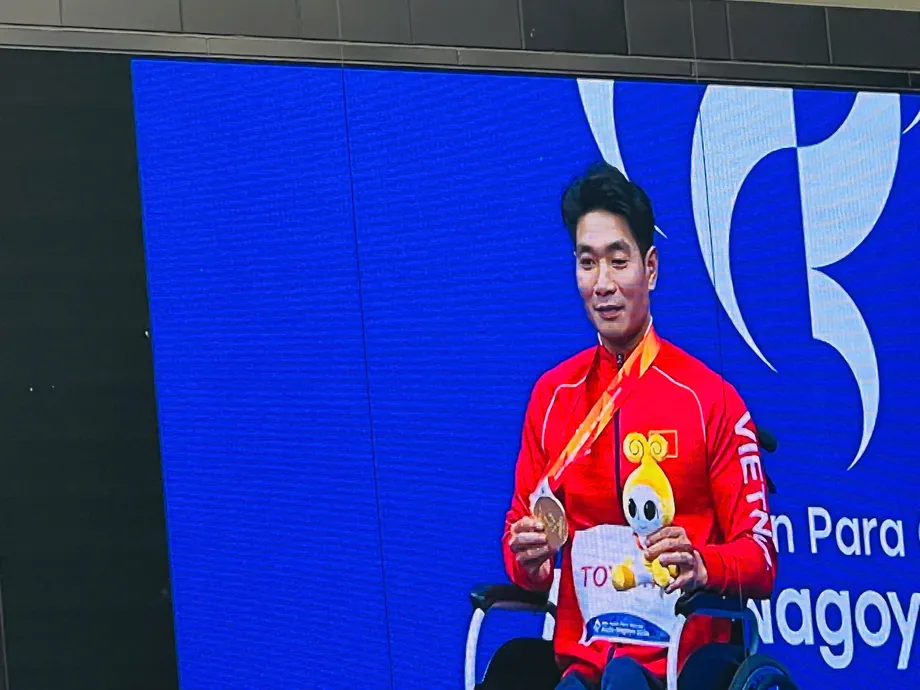
Hong Kong finished the fifth Asian Para Games in Aichi-Nagoya, Japan, on October 24, 2026, with 41 medals and HK$5,562,500 in cash awards announced for its medallists. The delegation's three gold, 14 silver and 24 bronze medals included its best Asian Para Games performance in boccia, where the team collected two gold, three silver and three bronze.
Contents
- A record boccia campaign caps Hong Kong's week in Japan
- Leung and Cheung finish with a commanding victory
- Two bronze medals complete boccia's best result
- Fencers contribute silver, bronze and the closing flag bearer
- How the HK$5,562,500 award will reach medallists
- Training support expanded before the Games
- From the opening ceremony to the final medals
- The flag passes to Doha
- Key Points
Leung Yuk-wing and Cheung Yuen delivered Hong Kong's third gold across all sports by beating mainland Chinese opponents 9-0 in the mixed pairs BC4 boccia final. Their victory helped drive a final day that brought the delegation five medals: one gold, one silver and three bronze.
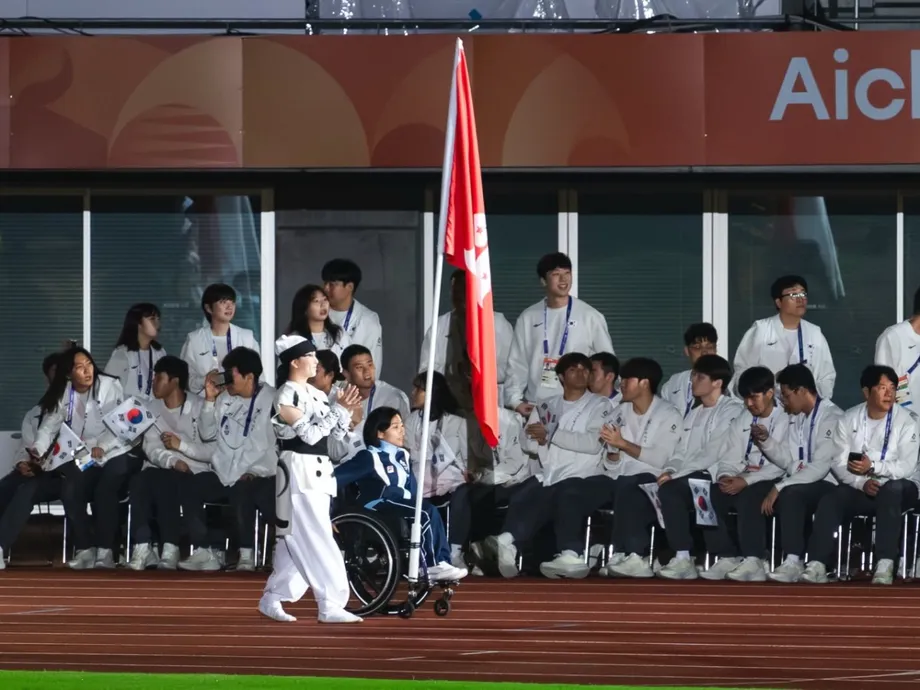
Para fencer Tong Nga-ting carried the Hong Kong regional flag during Saturday evening's closing ceremony. She took that role after contributing to a fencing campaign that produced eight medals, improving on the team's result at the previous Games.
Hong Kong sent 80 athletes to compete across 10 sports during the week. Boccia and fencing each contributed eight medals, together accounting for 16 of the delegation's 41 podium finishes, or about 39 percent. Boccia also supplied two of Hong Kong's three gold medals.
Leung and Cheung finish with a commanding victory
Leung and Cheung won all four ends of their BC4 final, building a 9-0 score against the mainland pair. An end is a round of play in boccia, a precision sport in which athletes aim balls toward a target ball. Points depend on how close their balls finish to that target.
BC4 is a competition classification. Para sports use classifications to group athletes according to how their eligible impairments affect the activities needed for a particular sport. In boccia, the BC1, BC2, BC3 and BC4 labels identify different competitive groups.
Leung Yuk-wing, a member of the winning pair, described their performance and his view of their opponents after the final:
Cheung and I played to our usual standards in this competition. Maybe the opponents saw that and were a bit nervous,
He added:
So we built on this momentum.
Leung and Cheung said they hoped to qualify for the Los Angeles 2028 Paralympics and win gold there. Their next stated ambition therefore reaches beyond the continental title they secured in Japan, toward a place at the next global Paralympic competition.
Two bronze medals complete boccia's best result
John Loung, Yeung Hiu-lam and Chan Pak-lun added bronze in the mixed BC1/BC2 team event, defeating South Korea 7-5. Indonesia won gold and Thailand took silver in that competition.
Chan Ho-yan and Tse Tak-wah secured Hong Kong's other boccia bronze on the final day. They beat Thailand's Ladamanee Kla-Han and Withun Chanthakhat 3-2 in mixed pairs BC3. Japan won that event, with Singapore finishing second.
Those results gave Hong Kong three boccia medals on the closing day alone. Added to the squad's earlier results, they brought its final total to two gold, three silver and three bronze, the city's best result in the sport at an Asian Para Games.
The margins show the different routes to the podium. Leung and Cheung finished their final nine points clear, while the BC1/BC2 team won its bronze contest by two points and the BC3 pair by one. Hong Kong's last day combined a decisive championship victory with two much closer medal matches.
Fencers contribute silver, bronze and the closing flag bearer
Hong Kong's women won silver in the team sabre event. Tong then joined the mixed team that claimed bronze, giving the fencing squad two more medals on the final day.
The fencing team finished with three silver and five bronze medals, eight in total, surpassing its medal return at the previous Asian Para Games. Sabre is one of fencing's three weapons, alongside foil and epee. The results cited here came from team competitions, where athletes contribute to a shared result.
Tong's selection as closing ceremony flag bearer placed a competitor from that successful squad at the head of Hong Kong's flag procession. The ceremony followed the completion of the delegation's sporting programme and brought athletes together after a week spent competing across different venues and sports.
Secretary for Culture, Sports and Tourism Rosanna Law congratulated the athletes behind the final day's five medals. She thanked competitors, coaches, medical teams and support personnel, describing the achievements as belonging to the whole team.
How the HK$5,562,500 award will reach medallists
The Hong Kong Jockey Club announced HK$5,562,500 for medallists through its Jockey Club Athlete Incentive Awards Scheme. The awards recognise the delegation's results across the Games.
The club announced a new cycle of the scheme in August, with implementation by the Hong Kong Sports Institute. The Asian Para Games was the second major event covered under that cycle.
The announced amount is a combined award total. Individual payments, the payment date and a breakdown by medal or event were not given. Team and pairs events featured prominently in Hong Kong's results, meaning that a single medal event could involve several athletes.
The incentive scheme rewards competition results, while government support described by Chief Executive John Lee covers training and athlete development. For competitors, those represent different forms of financial support: recognition after a podium finish and assistance with the work needed to reach major events.
Training support expanded before the Games
Hong Kong increased direct financial support for elite athletes with disabilities from April 1, 2025. It also introduced a Senior Squad funding tier alongside the existing elite tiers, adding another level to the athlete development structure.
Lee highlighted those changes in his congratulations on October 24. He said the Hong Kong Sports Institute provides professional coaching, accessible training venues and equipment, and support in sports science and sports medicine for elite athletes with disabilities.
Sports science helps athletes and coaches understand performance, training loads and recovery. Sports medicine focuses on health, injury prevention and treatment. Alongside accessible facilities, those services support the daily preparation behind performances such as Hong Kong's final day victories.
Chief Executive John Lee praised the delegation's competitors and the response their performances had earned:
Their outstanding performance has earned the admiration and pride of the entire Hong Kong community.
Lee said the government would continue working with the China Hong Kong Paralympic Committee, the Hong Kong Sports Institute and sports associations to develop talent. He also thanked coaches, medical teams and support personnel for their contributions.
From the opening ceremony to the final medals
Aichi-Nagoya's week of competition followed Japan's first Asian Para Games opening on October 18. That ceremony brought together a record 45 countries and regions, with about 3,000 athletes expected across the Games.
Hong Kong's closing total emerged from that wider continental competition. Its final day was especially productive: five medals represented about 12 percent of its eventual 41, and the BC4 victory supplied the last of its three golds.
- April 1, 2025: Hong Kong increased direct funding for elite athletes with disabilities and introduced the Senior Squad tier.
- August 2026: The Jockey Club announced a new cycle of its Athlete Incentive Awards Scheme.
- October 18, 2026: The Aichi-Nagoya Asian Para Games opened in Japan.
- October 24, 2026: Hong Kong added five medals, finished with 41 and took part in the closing ceremony.
The flag passes to Doha
Aichi-Nagoya organisers handed the Asian Paralympic Committee flag to representatives from Doha, Qatar, during the closing ceremony. The handover marked the transfer of hosting responsibilities to the city designated to stage the sixth edition.
For Hong Kong, the ceremony closed a campaign distinguished by boccia's record medal total and fencing's improvement on the previous Games. Leung and Cheung also set out a personal target beyond the celebrations: qualifying for Los Angeles in 2028 and pursuing Paralympic gold.
Key Points
- Hong Kong finished the fifth Asian Para Games with three gold, 14 silver and 24 bronze medals, 41 in total.
- The delegation included 80 athletes competing across 10 sports.
- Leung Yuk-wing and Cheung Yuen won mixed pairs BC4 boccia gold with a 9-0 victory.
- Boccia produced Hong Kong's best result in the sport at the Games: two gold, three silver and three bronze medals.
- The fencing team won three silver and five bronze medals. Tong Nga-ting carried Hong Kong's flag at the closing ceremony.
- The Jockey Club announced HK$5,562,500 in awards for medallists.
- Aichi-Nagoya handed hosting responsibilities to Doha for the sixth edition.