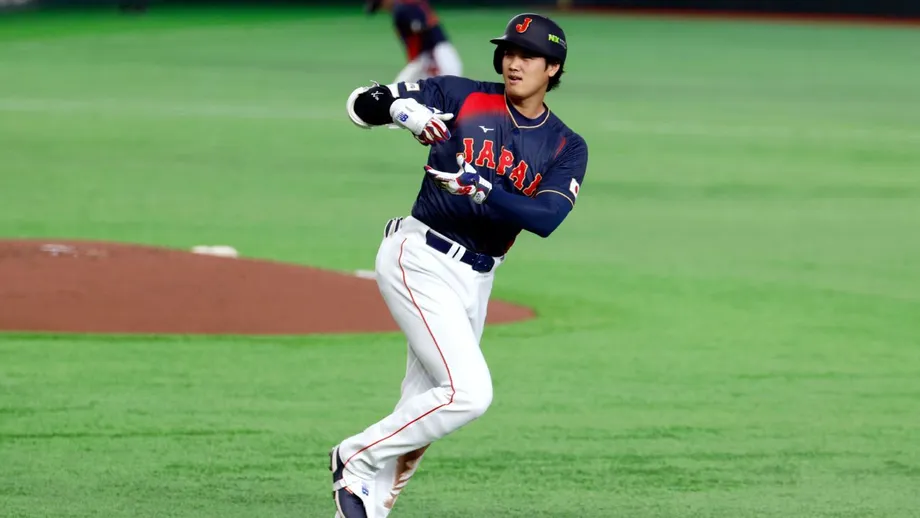
A historic second inning powers Japan in Tokyo
Shohei Ohtani drove in five runs in a single inning as Japan opened its World Baseball Classic title defense with a 13-0 victory over Taiwan at Tokyo Dome on March 6, 2026. Japan scored 10 times in the second inning, the most runs in one inning in tournament history, before the game ended after seven innings under the mercy rule.
Contents
- A historic second inning powers Japan in Tokyo
- Ohtani turns an early warning into four runs
- Fifteen batters keep the inning moving
- Genda and the supporting hitters add their share
- Five pitchers preserve the shutout
- Taiwan's biggest threat lands foul
- Why the game stopped after seven innings
- A new celebration accompanies the title defense
- The Pool C picture after the rout
- Key Points
Ohtani finished with three hits in four at bats, including a double on the game's first pitch, a grand slam and a single that brought home another run. His five runs batted in during the second inning also set a World Baseball Classic record. The crowd of 42,314 watched Japan collect 13 hits while five Japanese pitchers held Taiwan to one.
Japan's national team confirmed the result, the seven inning finish and Ohtani's grand slam in its official game record. Yoshinobu Yamamoto was credited with the win, while Taiwan starter Hao-Chun Cheng took the loss. Taiwan competes in the tournament under the name Chinese Taipei.
The victory put Japan at 1-0 in Pool C as it pursues a record fourth World Baseball Classic championship. Taiwan fell to 0-2 after losing to Australia the previous day, leaving it with little room to recover from a difficult start.
Ohtani turns an early warning into four runs
Ohtani immediately gave Taiwan a warning. Batting first for Japan, which was designated the visiting team despite playing in Tokyo, he drove the opening pitch down the right field line for a double. The ball left his bat at 117.1 mph, a measure known as exit velocity.
Japan failed to bring him home in the first inning. Cheng escaped that threat, keeping the game scoreless, but faced an even more dangerous situation when Ohtani returned to the plate in the second.
Munetaka Murakami had walked, Shugo Maki had singled and Sosuke Genda had been hit by a pitch, filling all three bases. After catcher Kenya Wakatsuki fouled out, Ohtani came up with one out and a chance to give Japan its first lead.
Cheng threw a curveball low and outside on a count of two balls and one strike. Ohtani sent it into the right field stands, a drive measured at 102.4 mph off the bat that traveled 368 feet. A grand slam brings home the batter and all three runners, turning a scoreless game into a 4-0 Japanese lead with one swing.
Ohtani, Japan's designated hitter and a Los Angeles Dodgers star, explained afterward that putting his team ahead had been his priority.
I knew it was going to leave the park right after I hit it. It's important to score first, so I really wanted to drive in at least a run.
Fifteen batters keep the inning moving
Japan's second inning continued long after Ohtani crossed home plate. Fifteen batters came to the plate during a half inning that lasted 28 minutes, with Japan combining walks and hits to keep putting runners on base.
Masataka Yoshida doubled home Seiya Suzuki for a 5-0 lead. Murakami then reached on an infield single that scored Yoshida, before Genda singled to center to bring home Kazuma Okamoto and Murakami. Wakatsuki added a single that scored Maki.
Ohtani returned to bat for the second time in the inning and singled to right, bringing Genda home for Japan's 10th run. His grand slam and single accounted for five of those runs, half of Japan's record total for the inning.
Ohtani said the team's approach after taking the lead helped sustain the attack.
That was the inning that really decided the game. After scoring the first few runs, we kept our focus and worked some walks, so I think we managed the game well from there.
Genda and the supporting hitters add their share
Genda finished with three hits in three at bats and four runs batted in, giving Japan another major contributor alongside Ohtani. Together, the two players drove in nine of Japan's 13 runs.
Japan added its final three runs in the third inning. Suzuki and Yoshida singled before Okamoto hit another single to center, scoring Suzuki. Later in the inning, Genda brought home Yoshida and Murakami with a single to make it 13-0.
Ohtani and Genda combined for six of Japan's 13 hits, while Yoshida contributed two. Japan finished with 18 total bases, a statistic that counts one base for a single, two for a double, three for a triple and four for a home run.
Ohtani had a chance to complete a cycle, the rare achievement of hitting a single, double, triple and home run in the same game. Needing only a triple when he batted in the fourth, he instead lined out on a leaping catch by Taiwan first baseman Nien-Ting Wu. Teruaki Sato replaced him as a pinch hitter in the seventh.
Five pitchers preserve the shutout
Yamamoto, the Dodgers pitcher who was named the previous season's World Series Most Valuable Player, kept Taiwan without a hit during his start. The detailed pitching line records two and two thirds innings, three walks and 53 pitches before he left with the bases loaded in the third.
Taiwan's opportunity developed through a Japanese fielding error and walks. Shoma Fujihira entered with two outs and struck out An-Ko Lin, ending the inning without allowing a run.
Hiroya Miyagi followed, then Koki Kitayama and Ryuhei Soya, with Wakatsuki catching. Japan held Taiwan without a hit through five innings. Yu Chang finally broke through with a single to lead off the sixth against Kitayama, Taiwan's only hit of the night.
Soya retired all three batters he faced in the seventh. Shao-Hung Chiang fouled out to the catcher, Chen-Wei Chen flew out to left and Tsung-Che Cheng struck out swinging to end the game.
Taiwan's biggest threat lands foul
Stuart Fairchild came closest to changing Taiwan's score in the fifth inning. With two runners aboard, he drove a ball toward the left field stands that briefly appeared capable of producing a three run home run.
The ball was ruled foul, and that decision stood after review. Miyagi finished the inning without conceding a run, preserving both Japan's shutout and its large lead.
Taiwan had chances to put runners on base through walks even while struggling to get hits. Japan's pitchers repeatedly ended those threats, most sharply when Fujihira entered with the bases full in the third. For Taiwan, the foul ball and the stranded runners were the closest moments to breaking through.
Why the game stopped after seven innings
Japan's 13 run lead brought the tournament's mercy rule into effect after the seventh inning. Under the tournament rules, first-round games end when one team leads by at least 10 runs after a complete inning from the seventh inning onward, or by at least 15 runs after a complete inning from the fifth inning onward, rather than continuing through the usual nine.
Japan did not score after the third inning, but Taiwan remained scoreless through its turn to bat in the seventh. The final strikeout therefore ended the contest two innings earlier than a standard game.
The decisive stages came in a short stretch:
- March 5: Taiwan lost its opening game to Australia.
- March 6, first inning: Ohtani doubled on the first pitch, but Japan did not score.
- Second inning: Japan sent 15 batters to the plate and scored a tournament record 10 runs.
- Third inning: Okamoto and Genda drove in three more runs for a 13-0 lead.
- Sixth inning: Yu Chang collected Taiwan's only hit.
- Seventh inning: Japan completed the shutout and the mercy rule ended the game.
A new celebration accompanies the title defense
Ohtani marked his home run with a gesture imitating the whisking of matcha, the powdered Japanese green tea. Pitcher Kitayama devised the celebration, following the pepper grinder gesture introduced by Lars Nootbaar during Japan's 2023 championship campaign.
Ohtani said the celebration also formed part of an effort to bring younger and more senior players closer together. He had chosen the more introverted Kitayama to help lighten the atmosphere within the team.
Speaking about Kitayama's contribution, Ohtani said he intended to keep using the gesture.
Kitayama really put a lot of thought into coming up with that idea, so I'll keep doing my best to continue making that gesture.
Tokyo Dome's audience included musician Bad Bunny and actor Timothée Chalamet, alongside a large contingent supporting Taiwan. Japan's opening performance gave the packed stadium both a historic inning and an emphatic start to its championship defense.
The Pool C picture after the rout
Australia beat the Czech Republic 5-1 earlier on Friday, following its victory over Taiwan on Thursday. Taiwan's second consecutive defeat increased the pressure on its remaining pool games, while Japan began with a win and a substantial scoring margin.
Japan's next game was listed against South Korea on Sunday. Its immediate task was to carry the production beyond Ohtani and Genda, and the pitching that limited Taiwan to one hit, into its next pool contest.
The opening win put Japan's strengths on display in concrete terms: Ohtani supplied the biggest swing, several teammates extended the attack, and five pitchers completed the shutout. Ten runs in one inning decided this game, while the remaining innings showed how Japan protected that advantage.
Key Points
- Japan beat Taiwan 13-0 at Tokyo Dome on March 6, 2026, in its World Baseball Classic opener.
- Ohtani went 3-for-4 with a grand slam and five runs batted in.
- Japan's 10 runs and Ohtani's five RBIs in the second inning set tournament records for a single inning.
- Genda added three hits and four RBIs.
- Five Japanese pitchers held Taiwan to one hit, a sixth inning single by Yu Chang.
- The game ended after seven innings under the mercy rule.
- Japan moved to 1-0 in Pool C, while Taiwan fell to 0-2.