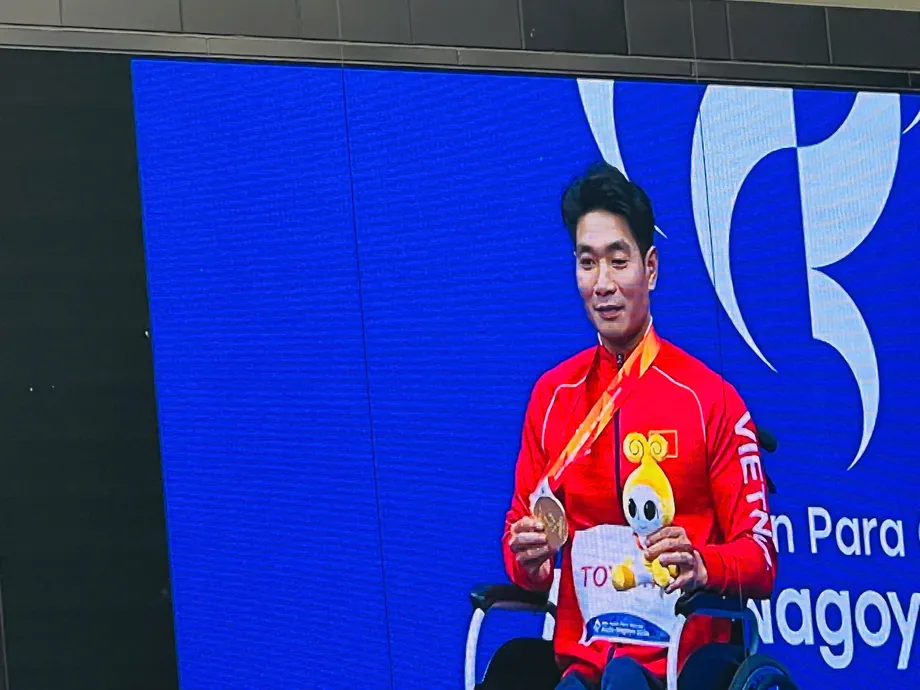
Vietnam Takes Gold and Silver in the Same Final
Đỗ Thanh Hải won Vietnam's first gold medal at the fifth Asian Para Games in Aichi-Nagoya, Japan, on October 21, 2026, leading teammate Lê Tiến Đạt home in the men's 100m breaststroke SB5 final. Hải finished in 1 minute 33.91 seconds, with Đạt taking silver in 1:36.63 and Iran's Ali Rashidabadi winning bronze in 1:47.78.
Contents
- Vietnam Takes Gold and Silver in the Same Final
- A Familiar Rivalry With a Different Winner
- What the Times Say About Hải's Progress
- The Training Behind the Gold
- Recognition for the Swimmers and Their Team
- Four Medals, With More Swimmers Close to the Podium
- October 22 Brings New Medal Opportunities
- A Small Delegation in a Large Competition
- Key Points
The result gave Vietnam two of its first four medals at the Games and reversed the order of the Vietnamese swimmers at the previous edition in Hangzhou. Hải finished 2.72 seconds ahead of Đạt, who in turn was 11.15 seconds clear of the bronze medalist.
Vietnam's Government News, in its October 21 announcement, confirmed the finishing times and the country's first swimming medals of the competition. The evening announcement also recorded an earlier silver for Lê Văn Công in men's 49kg powerlifting and a javelin bronze for Nguyễn Thị Ngọc Thúy.
Vietnam stood provisionally 18th in the medal table with one gold, two silvers and one bronze. Swimming had supplied half of that total in a single race, giving the delegation its first champion on the third official day of competition.
A Familiar Rivalry With a Different Winner
Hải and Đạt had already shared the top two places in this event at the previous Asian Para Games. In Hangzhou, Đạt won in 1:34.04 and Hải took silver in 1:35.11. The previous edition carried the Hangzhou 2022 name but was held in 2023, which explains the two years associated with that competition.
Hải's winning time in Japan was 1.20 seconds faster than his silver medal performance in Hangzhou. Đạt's time was 2.59 seconds slower than his previous winning swim. Vietnam retained both leading positions, while the faster performance within its own team came from a different swimmer.
The comparison gives a precise measure of Hải's progress. His 1:33.91 was also 0.13 seconds quicker than the time that won Đạt gold at the previous Games. For two swimmers who have repeatedly competed together at major events, a small change on the clock was enough to change the medal order.
Đạt said the Vietnamese swimming team had worked hard in training and that he and Hải were pleased to contribute medals to the national para sports delegation. His silver continued Vietnam's success in an event in which both men have remained competitive across successive continental Games.
What the Times Say About Hải's Progress
Hải arrived in Japan with experience from the Paris 2024 Paralympics, where he reached the men's 100m breaststroke SB5 final and finished fifth in 1:35.61. His Asian Para Games victory came in a time 1.70 seconds faster.
Đạt finished fourth in the same event in Paris, his first appearance at a Paralympic Games. Their results in France put both swimmers close to the Paralympic podium before they returned to continental competition and occupied the first two places in Japan.
The venue's results board listed the world record for the event at 1:24.65 and the Asian record at 1:28.80. Hải's winning swim was 9.26 seconds outside the world mark and 5.11 seconds outside the Asian mark. Those figures show the next performance targets beyond winning this final.
SB5 is a classification used in para swimming for breaststroke. Classification groups athletes according to how their impairments affect swimming, helping organise competition around sporting ability. The letters and number form part of the event name because swimmers compete within the relevant class, rather than against every athlete entered in the pool.
The Training Behind the Gold
Hải, born in 1990, became paralysed in both legs after a severe fever when he was three. His swimming development has depended heavily on building strength in his upper body, with weight training, work on the pull-up bar and other conditioning exercises supporting his time in the water.
His career now includes three Paralympic appearances: Rio in 2016, Tokyo in 2021 and Paris in 2024. Tokyo retained its 2020 event name when the Games took place the following year. Across those appearances and regional competitions, Hải has accumulated experience that stretches well beyond this first gold for Vietnam in Japan.
Nguyễn Đăng Viễn, Hải's coach, described a swimmer whose training habits have been central to his results. In an English translation of his comments, he said:
Thanh Hải is a diligent student, has talent and always follows the training plan. Therefore, today's success is not a coincidence.
Hải is aiming to qualify for the 2028 Paralympics in the United States. His next immediate assignment in Japan, however, was another race: the men's 100m backstroke S6 on October 22. Moving from breaststroke to backstroke meant preparing for a different stroke soon after his medal winning performance.
Recognition for the Swimmers and Their Team
Minister of Culture, Sports and Tourism Lâm Thị Phương Thanh congratulated the Vietnamese delegation after the gold and silver in the pool. She praised Hải, Đạt and the swimming team for their perseverance, determination and sustained training.
The minister also urged athletes, coaches and delegation members to protect their health, maintain their fitness and compete with confidence through the remaining days. That message had an immediate practical focus, with further swimming and athletics events scheduled for October 22 and the Games due to close on October 24.
Nguyễn Trọng Hổ, the head of Vietnam's delegation and deputy director of the Vietnam Sports Administration, said Herbalife would award Hải a bonus of 50 million Vietnamese đồng, approximately US$1,900, for his gold medal. The announcement described an award to be made; no payment date was given.
Lý Đại Nghĩa, director of the Ho Chi Minh City Training and Competition Center, also congratulated the coaches and the two swimmers, who represent the city. He praised their contribution to Vietnam's medal total at the continental competition.
Four Medals, With More Swimmers Close to the Podium
Vietnam's first four medals came from three sports. Hải and Đạt supplied the swimming gold and silver, Công took silver in powerlifting, and Thúy earned bronze in athletics through the javelin.
Công, 42, won his medal in the men's 49kg category on October 19. A previous Paralympic gold, silver and bronze medalist, he added another continental medal before the swimming team delivered Vietnam's first victory of these Games.
Other Vietnamese swimmers finished just outside the medals. Vi Thị Hằng placed fourth in the women's 50m butterfly S7 in 41.17 seconds, missing bronze by 0.37 seconds. She later finished fourth in the women's 50m freestyle S8 final.
Trịnh Thị Bích Như also placed fourth, in the women's 100m breaststroke SB5, while Võ Thanh Tùng finished fifth in the men's 100m breaststroke SB4. Hằng's butterfly result was the closest quantified near miss, with less than four tenths of a second separating her from a medal.
Those finishes show why the delegation's medal count could still change through several swimmers rather than Hải and Đạt alone. Vietnam had athletes reaching finals across different strokes and classifications, although the breaststroke SB5 pairing produced its strongest result.
October 22 Brings New Medal Opportunities
Hải was scheduled to return for the men's 100m backstroke S6 on October 22. Hồ Văn Đao had two events that day: the men's 100m breaststroke SB7 and the men's 100m backstroke S8. The programme required swimmers entered in multiple events to manage recovery between races.
Vietnam also had several athletics finalists. Nguyễn Viết Đại was entered in the men's javelin F33/F34, while Trương Bích Vân and Nguyễn Thị Hải were due to compete in the women's shot put F55/F56/F57.
Thúy, already a javelin bronze medalist, was scheduled for the women's discus F54 final. Trần Thị Thúy Hằng was entered in the women's shot put F42/F43 final, and Nguyễn Ngọc Hiệp was due to race in the men's 400m T11 heats, seeking a place in the final.
The letters in athletics classifications identify the type of event: T is used for track events and F for field events such as throwing. The numbers refer to classifications within the sport. Some of Vietnam's scheduled throwing finals combined more than one classification, as shown in their event names.
The delegation's sequence of competition and upcoming dates was:
- October 18: The fifth Asian Para Games opened in Aichi-Nagoya.
- October 19: Lê Văn Công won silver in men's 49kg powerlifting.
- October 21: Đỗ Thanh Hải and Lê Tiến Đạt won gold and silver in men's 100m breaststroke SB5.
- October 22: Further swimming races and athletics events were scheduled for Vietnam.
- October 24: The Games were scheduled to close.
A Small Delegation in a Large Competition
Vietnam sent 21 athletes to compete in five sports: athletics, swimming, powerlifting, table tennis and badminton. Its delegation numbered 36, including six coaches, six officials, one doctor and one guide athlete alongside the competitors.
The Games brought together around 4,000 athletes and officials from 45 National Paralympic Committees. The figure includes support personnel as well as athletes, reflecting the wider teams needed to organise participation across many sports and impairment classifications.
China led the medal table with 107 gold, 62 silver and 57 bronze medals, a total of 226. Japan had 29 gold medals and Uzbekistan 28 in the detailed standings accompanying Vietnam's October 22 programme. A contemporary standings update placed Uzbekistan second and Japan third; their precise order at that moment was therefore unresolved.
Thailand led Southeast Asian delegations with 14 gold, 19 silver and 29 bronze medals, or 62 medals in total. Vietnam's immediate focus was adding to its four medals through the swimmers and athletics competitors still due to compete before October 24.
For Hải, the clearest change was personal and measurable: a continental silver had become gold, and his winning time was faster than both his previous Asian Para Games performance and his Paris Paralympic final. For Vietnam, the same race delivered a first champion and a second swimmer on the podium.
Key Points
- Đỗ Thanh Hải won Vietnam's first gold at the 2026 Asian Para Games in 1:33.91.
- Lê Tiến Đạt took silver in 1:36.63, reversing their medal order from Hangzhou.
- Hải swam 1.70 seconds faster than in his Paris 2024 Paralympic final.
- Vietnam had four medals: one gold, two silvers and one bronze.
- Further swimming and athletics events were scheduled for October 22, before the Games closed on October 24.