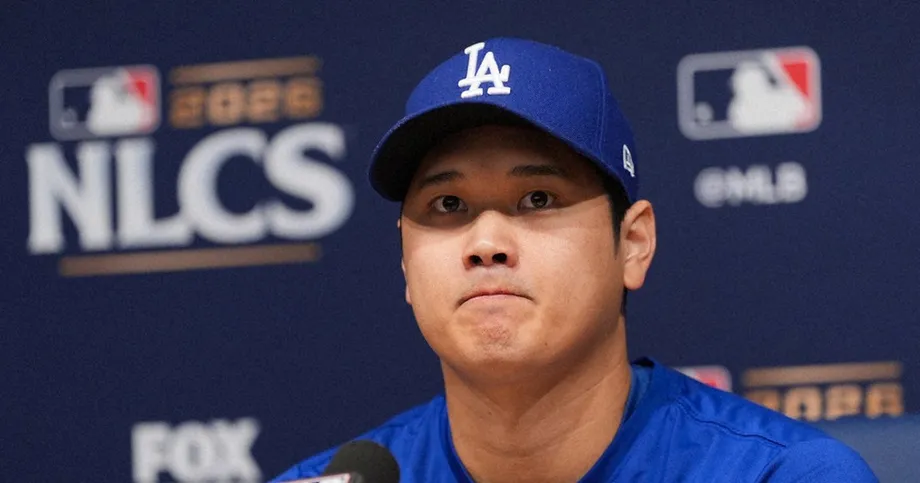
Roberts backs Ohtani with Dodgers trailing Milwaukee
Shohei Ohtani will start Game 3 of the National League Championship Series at Dodger Stadium on Wednesday, October 14, despite a career record stretch of 110 plate appearances without a home run. The Los Angeles Dodgers trail the Milwaukee Brewers 2-0 in the series, and manager Dave Roberts said Ohtani will bat somewhere between second and sixth.
Contents
- Roberts backs Ohtani with Dodgers trailing Milwaukee
- A slump that stretches beyond October
- Symptoms have eased, but the health picture is incomplete
- What the Dodgers see in his swing
- The batting order depends on more than Gasser
- Brewers remain careful, even without hard contact
- Milwaukee remembers a very different Ohtani
- Rest was considered, not a permanent removal
- What remains unresolved before Game 3
- Key Points
The decision followed a conversation before Tuesday's workout in which Ohtani said he had identified a mechanical adjustment and felt healthy enough to contribute. Dodgers hitting coaches supported his assessment, according to Roberts. His exact position in the batting order had not been settled, with Milwaukee preparing to start left handed pitcher Robert Gasser.
Roberts, the Dodgers manager, said Ohtani's confidence in his ability to play helped settle the immediate decision.
He was adamant that he can help us. He's well enough to help us win a baseball game. So that's all I needed to hear.
Ohtani enters the game with three singles in 20 postseason at bats, a .150 batting average, seven strikeouts and three walks. He has one stolen base but no home runs, extra base hits or runs batted in. Wednesday's game is scheduled for 8 p.m. Eastern and 5 p.m. Pacific. A loss would leave Los Angeles needing four consecutive victories to win the series.
A slump that stretches beyond October
The postseason numbers are part of a longer decline. Since August 18, Ohtani has gone 14 for 90, a .156 average, and driven in one run. His last home run came that day at Coors Field against the Colorado Rockies. The subsequent 110 plate appearances without a homer exceed his previous career record of 104 across the 2022 and 2023 seasons.
Different statistical windows show how sustained the difficulties have been. Over his final 88 regular season plate appearances, Ohtani batted .160 with a .284 on base percentage. Across his last 35 regular season and postseason games, he is hitting .197 with a .629 OPS. OPS combines on base percentage and slugging percentage, measuring a hitter's ability to reach base and hit for power.
Since returning from the injured list, Ohtani is 8 for 41, approximately .195, with one double and 15 strikeouts. He has produced only one extra base hit over a stretch of 78 plate appearances. In Game 2 against Milwaukee, he went hitless in four at bats with two strikeouts, his first game this postseason without reaching base.
Symptoms have eased, but the health picture is incomplete
Ohtani has been dealing with right biceps and left knee problems that have lingered since at least June. The Dodgers disclosed that he received a lubricant injection in his left knee during the All-Star break. Ohtani separately revealed biceps pain during the season, including discomfort as he began and completed his swing.
The injuries eventually led to an injured list stay in early September and limited him to hitting rather than his usual combination of batting and pitching. He returned for the final five regular season games, leaving a short window to prepare for October.
- Since at least June: Right biceps and left knee symptoms persisted.
- All-Star break: The Dodgers said Ohtani received a lubricant injection in his left knee.
- August 18: Ohtani hit his most recent home run at Coors Field.
- Early September: Los Angeles placed him on the injured list.
- Final five regular season games: Ohtani returned before the postseason.
- October 13: Roberts confirmed he would start Wednesday's Game 3.
Speaking through interpreter Will Ireton on Tuesday, Ohtani said the time away had reduced his symptoms. He did not describe a complete recovery or directly connect his remaining discomfort to his swing problems.
Ohtani, the Dodgers star, rejected injuries as an explanation for his results.
The symptoms shouldn't be the reason why I can't hit, and even if the injuries happen by accident, I take full responsibility.
What the Dodgers see in his swing
Roberts said Ohtani's hitting coaches agreed that he had found a mechanical adjustment worth pursuing. During batting practice, the manager had seen him making cleaner contact, keeping his head still and maintaining a more stable position against the ground.
Ohtani took batting practice on the field for four consecutive days heading into Game 3. That represents a change from his regular season routine, when he did so only a handful of times and generally preferred the controlled setting of an indoor batting cage.
For a hitter, swing mechanics include the timing and coordination of the legs, torso, head and hands. Roberts' observations point to changes in that coordination, rather than a claim that the injuries have disappeared. Better contact during practice also does not establish that the adjustment will work against postseason pitching.
Ohtani described the work as a continuing process of trying different movements and sensations. His account leaves two issues distinct: reducing pain and finding a swing he can repeat. The Dodgers are encouraged by his progress, but the game results have yet to follow.
The batting order depends on more than Gasser
Roberts plans to consider both Gasser and the pitcher Milwaukee could use when the Dodgers lineup comes around a second time. Gasser is expected to serve as an opener, a starting pitcher used for an initial portion of the game before another pitcher takes over. That makes the batting order a decision about several possible matchups, rather than just the first inning.
Ohtani began the Division Series against Atlanta batting second. Starting with Game 3 of that series, he appeared fifth and fourth, including a move to fifth against left handed starter Chris Sale. Those placements marked his first starts below third in the batting order since joining the Dodgers.
Roberts said he was weighing which hitters should bat immediately before and after Ohtani to make the lineup function best. Moving him lower does not remove him from the offense, but it changes the situations in which he is likely to hit. Wednesday's range of second through sixth leaves the manager room to account for Milwaukee's pitching plan.
Brewers remain careful, even without hard contact
Opposing pitchers have continued to treat Ohtani cautiously. Through Monday, 40.7% of the pitches he had seen this postseason were in the strike zone. That was the sixth lowest rate among 26 hitters who had seen at least 100 pitches.
Patience has supplied some of his useful contributions. He walked and scored in both Division Series Game 4 and NLCS Game 1 without swinging during those plate appearances. The contrast matters because his contact has produced little power: only five of his 13 postseason batted balls qualified as hard hit, meaning they left the bat at 95 mph or faster. All five came in the Division Series.
His hardest batted ball against Milwaukee was an 86.2 mph flyout against Aaron Ashby in Game 2. Ohtani also showed bunt on the first pitch he faced from JoJo Romero in that game. Roberts interpreted the attempt as a willingness to find another way to reach base and help the team.
Milwaukee remembers a very different Ohtani
The Brewers have a specific reason to remain wary. In last year's NLCS, Ohtani hit .357 with three home runs as the Dodgers swept Milwaukee and earned the series MVP award. All three homers came in the Game 4 clincher, when he also pitched six scoreless innings and struck out 10.
Brewers manager Pat Murphy recalled that performance while explaining why the current slump would not erase his team's respect for Ohtani.
We remember vividly at this time last year that he maybe had the best baseball game ever played the day he pitched against us and hit a home run every time up, it seemed like. You can't forget that, his capabilities, whatever.
Murphy also said Milwaukee still had to challenge him. Remembering Ohtani's ceiling does not mean avoiding every confrontation, especially while he is struggling to time pitches and generate hard contact.
The difference extends across the postseason. Last October, Ohtani hit eight home runs in 84 plate appearances, with a .405 on base percentage and a 1.096 OPS, while pitching at least once in every series. His current postseason OPS is .411. Those figures describe a sharp change in production, although they do not isolate how much comes from injury, mechanics or pitching.
Rest was considered, not a permanent removal
Roberts said his conversation with Ohtani concerned possible time off, rather than benching him as a judgment on his ability. He compared the decision with the Dodgers' handling of first baseman Freddie Freeman, who played through a severe ankle injury during the 2024 postseason.
Freeman missed three games before playing in all five World Series games and winning the World Series MVP award. Reports differ on the precise Division Series game he missed, identifying either Game 3 or Game 4. They agree that he also sat out NLCS Games 4 and 6.
The comparison explains the option Roberts was considering: allow an injured hitter time to recover, then reassess. It does not establish that Ohtani needs the same treatment or would respond in the same way. His assurance that he felt ready, together with the coaches' assessment of his swing work, persuaded Roberts to keep him in Wednesday's lineup.
What remains unresolved before Game 3
The Dodgers have not given a detailed account of the current severity of Ohtani's injuries. President of baseball operations Andrew Friedman previously said Ohtani had communicated throughout the injury problems but had not always accurately conveyed how he was feeling. That leaves some uncertainty around a decision resting partly on the player's assessment of his own readiness.
There is also no confirmation yet that the mechanical adjustment will restore his production. The next concrete test is Game 3, when Los Angeles needs to narrow the series deficit and Ohtani must face Milwaukee's changing pitching matchups.
Dodgers outfielder Teoscar Hernández said after Game 2 that the team needed Ohtani's help and still believed he could deliver. Roberts has made the immediate choice: Ohtani will get that opportunity, with his exact batting position still to be determined.
Key Points
- Ohtani will start NLCS Game 3 on Wednesday, October 14, at Dodger Stadium.
- The Dodgers trail Milwaukee 2-0 and expect Ohtani to bat between second and sixth.
- He is 3 for 20 this postseason and has gone 110 plate appearances without a home run.
- Ohtani says his biceps and knee symptoms have eased; the extent of the remaining injuries is unclear.
- Roberts and the hitting coaches see promise in a mechanical adjustment.
- Milwaukee plans to start left handed opener Robert Gasser.