Record participation and a route to Los Angeles
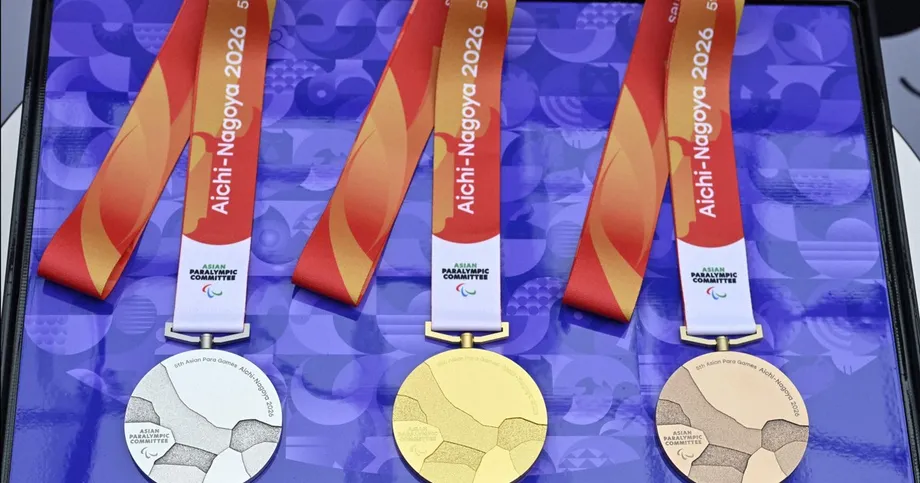
The Aichi-Nagoya 2026 Asian Para Games opened on October 18 at Paloma Mizuho Stadium in Nagoya, bringing together a record 45 countries and regions for Japan's first staging of the event. About 3,000 athletes are expected, within delegations totaling around 4,000 athletes and officials.
Contents
- Record participation and a route to Los Angeles
- A ceremony rooted in Aichi
- A week spread across two prefectures
- Japan's team spans 64 years in age
- Oda and Kamiji chase titles with a bigger prize
- Returning sports and defending champions
- Asia's medal contenders extend well beyond the hosts
- Finding new athletes for the next Paralympics
- Accessibility and attendance shape the Games' public impact
- A first hosting with roots in Oita
- Key Points
The Japanese Paralympic Committee's official competition overview lists 18 sports and 502 events between October 18 and 24. Most competition takes place in Aichi Prefecture, with cycling extending the Games into neighboring Shizuoka.
Japan has entered 282 athletes across every sport. Its team combines 17 gold medalists from the Paris 2024 Paralympics with 120 athletes making their Asian Para Games debut. The hosts are pursuing medals while preparing a new generation for the Los Angeles 2028 Paralympics.
Some results will have an immediate bearing on that next global competition. The men's and women's wheelchair tennis singles champions will qualify directly for Los Angeles, while shooting also includes qualifying opportunities. For those athletes, a successful week in Japan can secure more than a continental title.
A ceremony rooted in Aichi
Emperor Naruhito declared the Games open at the stadium, also known as Nagoya City Mizuho Park Athletic Stadium. Crown Prince Fumihito, the Games' honorary president, and Crown Princess Kiko attended the ceremony, which began at 6 p.m.
Wheelchair rugby player Katsuya Hashimoto and sprinter Moe Nakagawa carried Japan's flag. Wheelchair tennis player Tokito Oda and track and field athlete Kaede Maegawa took the athletes' oath. Afghanistan led the parade of delegations, which proceeded in alphabetical order, with host Japan entering last.
China's flag bearers were Li Yujie and Yan Panpan. Delegations from Hong Kong, Macao, Chinese Taipei, South Korea, Palestine, Yemen, Qatar and Saudi Arabia also joined the parade, reflecting the geographic reach of the gathering.
The torch relay had begun on October 10 in Okazaki before traveling through other cities in Aichi. Former wheelchair basketball player Katsumi Miyake, former track and field athlete Maya Nakanishi and Para alpine skier Momoka Muraoka were the final torchbearers.
The cauldron connected the ceremony to the host region's pottery traditions. It was made using clay from Seto, Tokoname and Sanshu, three pottery producing areas in Aichi. Flames rose as the final bearers lit wood and straw assembled in the cauldron.
A week spread across two prefectures
Nagoya is the Games' main center, but spectators and teams will travel to several cities. The official venue list places wheelchair tennis at Higashiyama Park Tennis Center, wheelchair basketball at Aichi International Arena and swimming at Rainbow Pool in the Nagoya City sports complex.
Elsewhere in Aichi, wheelchair rugby takes place at Wing Arena Kariya, table tennis at Sky Hall Toyota and badminton at Ichinomiya City Gymnasium. Okazaki hosts archery and sitting volleyball, while Toyohashi hosts goalball.
Shizuoka's role is concentrated in cycling. Track races take place at Izu Velodrome, while road competition uses the five kilometer circuit at the Cycle Sports Center. The Games therefore extend beyond the prefecture named in their title.
Competition began before the opening ceremony, giving some Japanese teams an early start. The main dates are:
- October 4: The preceding Asian Games concluded.
- October 10: The Para Games torch relay began in Okazaki.
- October 16: Japan won both its men's and women's wheelchair basketball preliminary matches.
- October 17: Japan's men's goalball team beat Qatar, and its women's team beat Thailand.
- October 18: The opening ceremony took place in Nagoya.
- October 19: The main competition schedule began.
- October 24: The Games conclude with the closing ceremony.
Japan's team spans 64 years in age
Japan's 282 athletes include competitors aged from 14 to 78, a span of 64 years. Table tennis player Kimie Bessho, 78, is the oldest member, while swimmer Mayu Togo, a middle school student in Oita, is the youngest. Swimmer Ryuga Yamada is also 14 and is Japan's youngest male representative at an Asian Para Games.
Bessho has competed at four Paralympics. Another table tennis player, Setsu Kadota, is 75, while six members of the sitting volleyball team are in their 50s or 60s. At the younger end, Japan has 25 teenage athletes, including 10 swimmers aged between 14 and 19.
The 120 athletes appearing at their first Asian Para Games account for about 42.6 percent of Japan's team. Some already have experience at the highest level: Hashimoto, one of Japan's flag bearers, won wheelchair rugby gold at Paris 2024 before making his debut at this continental event.
Japan's full delegation totals 451 people, including the athletes and those supporting them. Fifteen athletes live in Aichi, giving the host prefecture a direct connection to competition across several sports.
The team also includes javelin throwing brothers Yuta and Kenta Wako. Yuta developed Leber hereditary optic neuropathy, a condition that damages vision, at 20. Kenta developed the same condition in 2024 and began the sport with the goal of representing Japan alongside his older brother.
Oda and Kamiji chase titles with a bigger prize
Tokito Oda and Yui Kamiji enter as the men's and women's wheelchair tennis world No. 1 players. Both won singles gold at the previous Asian Para Games in Hangzhou and then repeated that success at the Paris 2024 Paralympics.
The International Paralympic Committee's Hangzhou Games retrospective records how Oda defeated fellow Japanese player Takashi Sanada 6-3, 7-5 in that men's final, securing his first Paralympic appearance. Kamiji's victory earned a place at her fourth Paralympics, following her singles silver at Tokyo 2020, held in 2021.
Aichi provides a home setting for Oda, who comes from Ichinomiya and lives in Nagoya. This time, the same combination of continental gold and direct Paralympic qualification is available, with Los Angeles the destination.
Japan has leading contenders beyond tennis. Swimmer Naohide Yamaguchi holds the world record in the men's 100 meter breaststroke for athletes with intellectual impairments. Paris gold medalists including swimmer Keiichi Kimura and badminton player Daiki Kajiwara also bring experience of winning on the global stage.
Returning sports and defending champions
Wheelchair rugby returns to the Asian Para Games program for the first time in three editions. Japan arrives as the Paris 2024 Paralympic champion, while giving opportunities to players with relatively little international experience. The tournament offers those players a chance to develop in meaningful competition.
Japan's men's wheelchair basketball team is defending a title won by just two points in Hangzhou. The International Paralympic Committee records a 47-45 victory over South Korea, with Koki Maruyama scoring in the closing minutes as Japan completed a comeback in the final quarter.
China won the women's wheelchair basketball title in Hangzhou by beating Japan in the final. Both Japanese teams have already opened their current campaigns with preliminary victories, giving the hosts an encouraging start before the ceremony.
Other defending champions bring formidable records. Iran won the previous men's sitting volleyball tournament without losing a match, beating Kazakhstan in straight sets in the final. Captain Davoud Alipourian highlighted the contribution of younger players to that success.
Boccia presents another strong regional contest. The sport involves placing balls as close as possible to a target ball. Thailand won three of the eight individual gold medals in Hangzhou through Witsanu Huadpradit, Akkadej Choochuenklin and Pornchok Larpyen. Japan's challengers include Hiromi Endo, a world championship silver medalist in the women's BC1 category, one of the sport's competition classifications.
Asia's medal contenders extend well beyond the hosts
China's swimmer Yuyan Jiang is among the most accomplished athletes entering the Games. In Hangzhou, she won seven gold medals and one bronze, reaching the podium in all eight of her events. She was also the most successful athlete at Paris 2024 and will lead China's challenge in Aichi-Nagoya.
The previous Games produced world records as well as medals. India's Sumit Antil threw 73.29 meters in the men's F64 javelin, while China's Yujiao Tan lifted 141 kilograms in women's Para powerlifting in the category for athletes weighing up to 67 kilograms.
Smaller delegations also made breakthroughs. Kyrgyzstan's Khaiitkhon Khusan Kyzy became her country's first Asian Para Games gold medalist by defeating Japan's Shizuka Hangai in the women's judo final in the J1 category for athletes weighing up to 48 kilograms. Yemen, Nepal and Kyrgyzstan all won their first medals at those Games.
Singapore has sent 20 athletes to compete across nine sports: archery, athletics, badminton, boccia, road cycling, judo, swimming, shooting and table tennis. Sprinter James Ang is its flag bearer, while Singapore National Paralympic Council vice president Low See Lien heads the delegation.
The gathering follows an Asian Games at which China led the medal standings with 341 medals, including 169 golds. Japan achieved its best result at that event with 269 medals, including 83 golds. Japan's Para athletes now pursue their own results, with expectations of exceeding the country's 198 medals from the 2018 Jakarta Asian Para Games.
Finding new athletes for the next Paralympics
Japan's team includes 31 athletes identified through the Japan Rising Star Project, known as J-STAR. The national initiative began in the 2017 fiscal year to find and develop people with the potential to compete internationally.
Only six of those 31 athletes have competed at a Paralympics. The group therefore gives Japan a substantial pool of competitors seeking experience before Los Angeles. Eight are teenagers and 15 are in their 20s, although the project's representatives range into their 50s.
At the previous Asian Para Games, 18 athletes from the project won 15 medals, including five golds. The current group of 31 is 13 larger, an increase of about 72 percent. Those figures show how much more widely the program is represented in the national team this time.
The youngest swimmers and the J-STAR athletes face the same immediate task: performing against international opposition. Japan's decision to enter all 18 sports gives those developing competitors opportunities alongside established champions, rather than limiting the delegation to its most familiar medal contenders.
Accessibility and attendance shape the Games' public impact
Asian Paralympic Committee president Majid Rashed used the opening ceremony to describe sport's ability to connect people across differences.
Sport brings people together when the world can sometimes pull them apart. Here, our differences do not divide us.
Organizers want the Games to build awareness of people with disabilities after the Tokyo Paralympics in 2021. Aichi Governor Hideaki Omura, who chairs the organizing committee, described changing people's attitudes and behavior toward a society that respects diversity as the event's central goal.
The ceremony included practical measures to make performances easier to follow. Audio explanations and captions were streamed to smartphones, while large screens displayed captions and sign language. These services gave spectators different ways to access the same event.
Attendance was uneven. Empty seats were visible during the roughly two hour ceremony, including blocks where most seats were unoccupied. Organizers had announced on October 16 that opening ceremony ticket sales were at roughly 60 to 80 percent. Ticket sales for wheelchair tennis, swimming, wheelchair rugby, badminton and shooting had exceeded 90 percent.
Final attendance figures were not given. The sales figures nevertheless show strong demand for several sports, creating opportunities for spectators to encounter athletes and competitions they may rarely see in person.
A first hosting with roots in Oita
Aichi-Nagoya is the fifth Asian Para Games since the event began in its current form in Guangzhou, China, in 2010. Japan is hosting for the first time, but the movement's earlier history has a direct Japanese connection.
The predecessor, the Far East and South Pacific Games for the Disabled, began in Oita Prefecture in 1975. It was held nine times before the competition was reorganized into the Asian Para Games.
More than half a century after that first gathering in Oita, Japan is welcoming a record number of delegations to its successor. The week combines title defenses, opportunities for emerging athletes and direct routes to Los Angeles, with competition continuing through October 24.
Key Points
- The Games opened in Nagoya on October 18 and run through October 24, 2026.
- A record 45 countries and regions are participating, with about 3,000 athletes among around 4,000 athletes and officials.
- The official program lists 18 sports and 502 events in Aichi and Shizuoka prefectures.
- Japan has entered 282 athletes, including 120 Asian Para Games debutants and 17 Paris 2024 gold medalists.
- The men's and women's wheelchair tennis singles champions will qualify directly for Los Angeles 2028.
- Wheelchair rugby returns, while Japan defends its men's wheelchair basketball title.
- Accessibility services and strong ticket demand for several sports accompany the hosts' goal of changing attitudes toward disability.