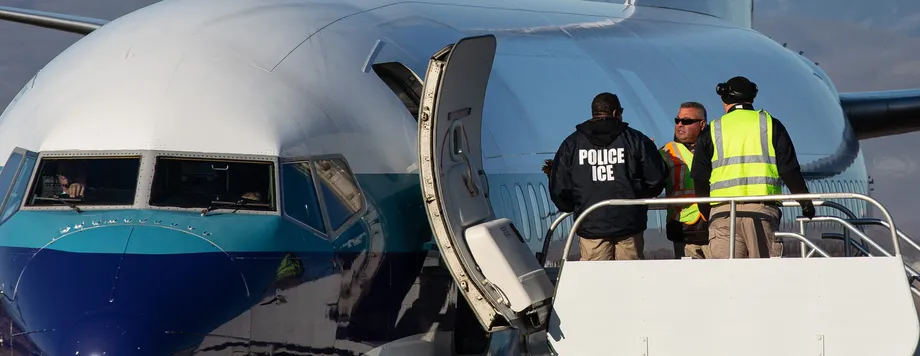
A proposed flight raises fears for Afghan families
Afghans in US immigration detention are being told they could be deported to Pakistan on a flight expected in the coming weeks, including relatives of people who worked with American forces before the Taliban took Kabul in August 2021. The plans, described on October 26, 2026, have not been publicly announced.
Contents
- A proposed flight raises fears for Afghan families
- Why Pakistan is a precarious destination
- How the protection arrangement worked
- The policy changes that left people exposed
- Islamabad also became a processing hub
- A Connecticut family faced detention twice
- Officials and advocates dispute the enforcement approach
- A death in custody sharpened concern
- What protection would require
- Key Points
A federal government official familiar with the preparations, along with lawyers and advocacy organizations hearing from detained clients, described the proposed removals. AfghanEvac, an organization supporting Afghans who assisted US troops, said relatives of former military partners were among those immigration officers had told to prepare for the flight.
The number of people involved, the departure date and the terms under which Pakistan would receive them have not been disclosed. For families whose safety depended on their connection to the United States, the destination brings another concern: Afghans already waiting in Pakistan for American immigration processing have faced harassment, detention and deportation to Afghanistan.
AfghanEvac traces that danger to the breakdown of an arrangement under which Washington would process a defined group of Afghan immigration applicants while Islamabad would refrain from harassing them. The organization says the arrangement stopped functioning after US refugee processing halted in January 2025.
The proposed flight would connect two groups caught in changing immigration policies: Afghans detained inside the United States and Afghans stranded in Pakistan while trying to reach it. Their circumstances differ, but both face uncertainty over where they can live safely while their cases are resolved.
Why Pakistan is a precarious destination
Pakistan became a major waiting place for Afghans seeking US protection after the American withdrawal in 2021. Many arrived with temporary visas, limited savings and pending immigration cases rather than a lasting right to remain.
In its Pakistan policy explainer, AfghanEvac says tens of thousands relocated there after being told that US refugee processing required them to be outside Afghanistan. Pakistan was accessible, while other countries imposed stricter entry requirements.
The organization describes several groups living in this uncertain position: people referred to the US Refugee Admissions Program, applicants for Special Immigrant Visas, people seeking humanitarian parole and families pursuing reunification. Each pathway has different rules, but applicants often shared the same practical problem: they needed time for an American decision without having secure permission to stay in Pakistan.
AfghanEvac says renewed Pakistani enforcement has exposed people with US connections to detention and removal to Taliban controlled Afghanistan. For a person deported from the United States to Pakistan, the immediate concern would therefore extend beyond arrival to permission to remain and protection against another removal.
How the protection arrangement worked
US and Pakistani officials reached a practical understanding in fall 2023, following sustained diplomatic engagement and pressure from members of Congress, former ambassadors and military leaders, according to AfghanEvac. The organization describes reciprocal commitments covering a documented population awaiting US immigration processing.
Washington committed to processing those cases. Pakistan committed to refraining from harassment while that work continued. The population included refugee referrals, Special Immigrant Visa applicants and humanitarian parole seekers.
US Embassy letters were issued to individuals on the list. AfghanEvac says Pakistani authorities honored those letters while the arrangement functioned, arrests declined and deportations slowed. Expanded processing capacity, including a Resettlement Support Center, helped make the commitment workable by allowing cases to move forward.
The protection depended heavily on continued cooperation between the two governments. AfghanEvac says many beneficiaries still lacked durable legal status in Pakistan, leaving their ability to remain tied to an understanding that could weaken when processing stopped.
The policy changes that left people exposed
AfghanEvac identifies January 2025 as the point when the arrangement collapsed. It says the Trump administration's halt to refugee processing ended the American activity underpinning the agreement, followed almost immediately by renewed Pakistani harassment, detention and deportations of Afghans with US connections.
Housing decisions had already increased pressure on some families. During 2023 and 2024, the US Coordinator for Afghan Relocation Efforts, known as CARE, moved Afghans overland into Pakistan and placed them in housing supported by the US government while their cases were processed.
Some residents had sold possessions and exhausted savings in expectation of moving onward to the United States. In November 2024, CARE began removing certain residents whose cases were considered stalled or no longer eligible for housing support. AfghanEvac says those decisions concerned housing authority rather than immigration eligibility, and that some affected people later received approval or authorization to proceed.
The sequence shows how decisions about processing and accommodation changed the conditions in which families were waiting:
- August 2021: The Taliban took Kabul, and many Afghans seeking US protection subsequently relocated to Pakistan.
- October 1, 2022: Enduring Welcome replaced Operation Allies Welcome and expanded access to relocation support for certain refugee referrals inside Afghanistan.
- Fall 2023: Washington and Islamabad reached an understanding linking US processing with Pakistani restraint.
- November 2024: CARE began removing some residents from supported housing in Pakistan.
- January 2025: US refugee processing halted, and AfghanEvac says the protection arrangement collapsed.
- October 26, 2026: Plans for a possible deportation flight from the United States to Pakistan emerged.
Islamabad also became a processing hub
After January 2025, the State Department designated Islamabad as the primary processing post for most Afghan visa categories because US consular services were unavailable in Afghanistan, according to AfghanEvac. The organization says the decision was made without prior coordination with Pakistan.
The designation covered most family and other immigrant and nonimmigrant visa categories. Afghan Special Immigrant Visas followed a separate legal and operational framework and were excluded from that designation.
Families could consequently need to remain in Pakistan to pursue a visa while also facing enforcement there. AfghanEvac says this concentrated demand in Islamabad at a time when processing capacity was shrinking. Refugee admissions and visa processing are different routes, but delays in either can leave applicants paying for accommodation and trying to maintain permission to stay.
A Connecticut family faced detention twice
Inside the United States, the cases of a former Afghan interpreter identified as Zia and his son Rihan show how immigration enforcement has affected families with American military ties. Their lawyers say the family entered legally in 2024 through humanitarian parole after Taliban threats.
Humanitarian parole allows a person to enter and remain temporarily for specified reasons. It is different from permanent residence, commonly called a green card, and families may pursue another immigration status while their temporary permission remains valid.
Zia was arrested outside a federal building in Hartford after attending an appointment connected to his green card application. Government lawyers said an FBI tip identified him as a national security risk, although the court filings described in his case provided no supporting evidence or explanation. He spent nearly three months in detention before his release in October.
Immigration officers arrested Rihan on April 6. He was identified as 19 in the account of his arrest; former ICE chief of staff Jason Houser described him as 18 in a later discussion of the case. A judge initially blocked his transfer from Connecticut, but he was subsequently moved to a correctional facility in Massachusetts.
Houser said officers initially asserted that Rihan's parole had expired, then corrected government records to show it remained valid through October 2026. He said a federal judge ordered Rihan's release after more than two weeks. The family's asylum case remained pending, and Rihan had also applied for a green card.
Officials and advocates dispute the enforcement approach
AfghanEvac president Shawn VanDiver described the arrests of Zia and Rihan as repeated action against the same family and part of a wider pattern affecting Afghan immigrants.
"This is not an isolated incident. It is the second time this family has been targeted," VanDiver said.
Connecticut Senator Richard Blumenthal, a Democrat working with the family, also condemned Rihan's arrest and called for his release. School and local officials voiced concern about the disruption to a student whose family was pursuing immigration decisions after supporting American troops.
The Department of Homeland Security defended its handling of Rihan's case. A department spokesperson said his claims would receive a hearing and legal protections.
"All his claims will be heard, and he will receive full due process," the spokesperson said.
DHS also argued that vetting of Afghans admitted during the Biden administration had been inadequate. The department alleged shortcomings in criminal background checks, social media screening and the comparison of information across records.
Houser, who served as ICE chief of staff from 2022 to 2023, argues that enforcement should assess each person's circumstances and any specific threat. He has called for reviewing Afghan parolees and asylum applicants, verifying wartime service and releasing those who pose no individual threat.
A death in custody sharpened concern
Mohammad Nazeer Paktiawal, a former partner of US Special Forces and father of six, died less than 24 hours after immigration officers arrested him at his Richardson, Texas, home on March 13, according to Houser. His surname was also rendered as Paktyawal in coverage of the case.
The 41 year old had been evacuated to the United States in 2021 and had a pending asylum application. His death certificate cited an allergic reaction to an unidentified substance that caused anaphylaxis and worsened his asthma, Houser said. Anaphylaxis is a severe allergic reaction that can rapidly interfere with breathing and circulation.
Relatives said officers refused an inhaler his wife tried to provide. The government cited arrests in 2025 involving theft and food stamp fraud as grounds for detention. Paktiawal had not been convicted of either allegation.
His family was seeking the full autopsy and an explanation of what happened in custody. His death has added urgency to advocates' demands for scrutiny of detention conditions and decisions involving Afghans who worked with US forces.
What protection would require
The proposed Pakistan flight comes amid a broader expansion of enforcement affecting Afghans. The administration announced plans to end temporary protections for roughly 11,700 Afghans and directed ICE to target hundreds with pending removal orders after an Afghan national fatally shot a National Guard service member in Washington in November.
Temporary Protected Status, humanitarian parole, asylum and permanent residence are separate legal categories. Temporary Protected Status allows eligible people from a designated country to live and work in the United States for a limited period. Asylum is protection sought by people who fear persecution. A person's entry permission, pending application and removal proceedings can therefore involve different decisions and deadlines.
For Afghans facing transfer to Pakistan, practical protection would involve permission to remain there, access to any continuing immigration process and safeguards against removal to Afghanistan. AfghanEvac is calling for an immediate halt to Pakistani arrests, detention and deportations of people documented as being in US immigration pathways.
The organization also wants US Embassy letters or equivalent documents recognized as grounds for temporary protection, alongside renewed diplomacy and lawful processing. Those requests seek to restore the kind of arrangement that previously gave families time to wait for decisions.
Houser has separately urged Congress to obtain an accounting of Afghan detentions and removals. Together, the demands focus on the decisions that determine families' daily lives: whether they remain detained, where they can lawfully stay and whether a pending protection claim can move forward.
Key Points
- Afghans in US detention have been notified of possible deportation to Pakistan, including relatives of former US military partners.
- The proposed flight has not been publicly announced, and its passenger count and departure date are undisclosed.
- AfghanEvac says a US and Pakistani protection arrangement collapsed after refugee processing halted in January 2025.
- Afghans awaiting US decisions in Pakistan have faced renewed harassment, detention and deportation to Afghanistan.
- The detention of Zia and his son Rihan, and Paktiawal's death in custody, have increased calls for individual case reviews and oversight.
- Advocates are seeking temporary protection in Pakistan, resumed processing and a congressional accounting of Afghan detentions and removals.