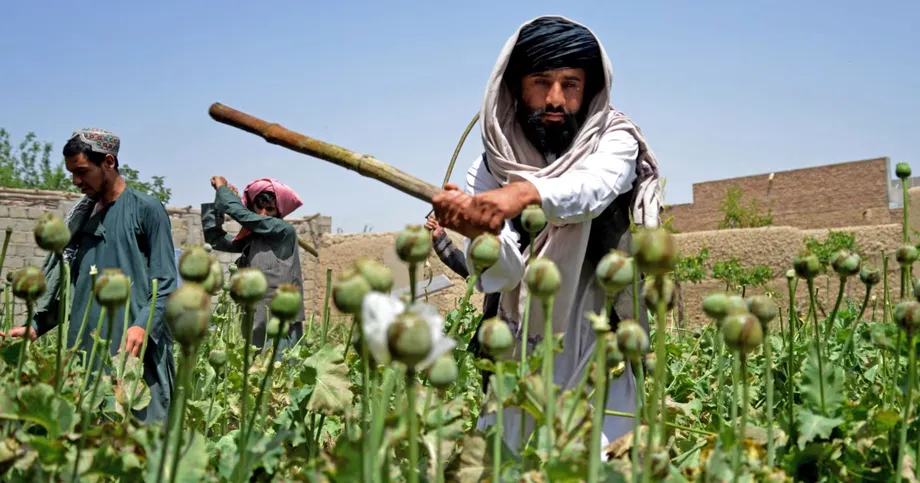
A smaller Afghan crop, an expanding border economy
Afghanistan had an estimated 10,200 hectares planted with opium poppy in 2025, down from 232,000 hectares in 2022, according to the United Nations Office on Drugs and Crime (UNODC). Across the border in Pakistan, satellite assessments have identified more than 9,000 hectares in Balochistan alone, according to David Mansfield, a British researcher who studies Afghanistan's illicit drug economy.
Contents
- A smaller Afghan crop, an expanding border economy
- What Afghanistan's official figures show
- Why Balochistan has become a centre of cultivation
- Afghan investment meets farmers under pressure
- Pakistan's eradication claims face scrutiny
- Iran's fields show investment in larger plots
- Afghan farmers are testing the ban again
- What the regional market is signalling
- Drug revenue and insecurity reinforce each other
- Key Points
The figures describe different years and survey areas, but they capture a major change: the Taliban's April 2022 narcotics ban has sharply reduced cultivation inside Afghanistan while farmers, investment and expertise have moved into neighbouring Pakistan and Iran. Satellite imagery from 2026 and accounts from farmers suggest that parts of the border region are becoming centres of commercial poppy farming.
Mansfield identifies Pakistan's Balochistan and Iran's Sistan-Baluchistan as areas where insecurity, weak enforcement and the search for income have encouraged expansion. Afghan farmers are leasing land, installing irrigation and sharing profits with local owners. Some fields are devoted entirely to poppies rather than a mixture of crops.
Opium is the substance collected from poppy seed capsules and processed into heroin. Changes in where the plant grows therefore affect much more than farming: they influence trafficking routes, the income of armed groups and the supply of drugs reaching distant markets.
The immediate concern is the 2027 growing season. Mansfield says investment and planting decisions during 2026 point towards further expansion in Pakistan and Iran, alongside a possible rebound in Afghanistan. The total area cultivated in Pakistan and Iran remains uncertain because comprehensive national surveys are lacking.
What Afghanistan's official figures show
UNODC's November 2025 assessment puts Afghanistan's opium production at 296 tons, a decline of 32 percent from 2024. Cultivated land fell from 12,800 hectares to 10,200 hectares, a reduction of about 20 percent.
Compared with the 232,000 hectares recorded in 2022, the 2025 area was approximately 96 percent smaller. The ban has therefore brought a substantial contraction, even though cultivation continues in several provinces.
Farmers' income from opium sales dropped faster than the cultivated area. UNODC estimates that revenue fell 48 percent, from $260 million in 2024 to $134 million in 2025. Its dry opium price measure declined 27 percent, from $780 to $570, while remaining five times the average before the ban.
Afghan households have had limited ways to replace that income. UNODC says many farmers switched to cereals and other crops, but drought and low rainfall left more than 40 percent of farmland barren. Approximately four million Afghans returning from neighbouring countries added to competition for work and resources, while humanitarian aid declined.
The main developments span several years:
- April 2022: The Taliban imposed its ban on poppy cultivation.
- 2023: Official eradication figures in two countries near Afghanistan rose to 13,200 hectares, from 5,868 hectares in 2022.
- 2025: Afghanistan's cultivated area fell to 10,200 hectares, while Balochistan authorities announced a large eradication campaign.
- 2026: Satellite assessments and farmer accounts indicated expanding cultivation in parts of Pakistan and Iran, with some recovery inside Afghanistan.
- 2027: Mansfield expects planting decisions and investment made during 2026 to bring a risk of further expansion.
Why Balochistan has become a centre of cultivation
Balochistan, Pakistan's largest and poorest province, combines access to Afghanistan with an agricultural economy under pressure. Drought, flash floods and insecurity have damaged traditional farming, while an insurgency involving Baluch separatists and other militants has intensified.
Satellite analysis by the British company Alcis places much of the identified poppy cultivation in Loralai and Killa Abdullah. Mansfield says assessments found more than 9,000 hectares across the province, and that many farmers doubled the land they cultivated during 2026.
An October 2026 Observer Research Foundation paper by Ayjaz Wani cites official records showing Balochistan's cultivation rising from 27 hectares in 2020 to 380 hectares in 2023, roughly fourteen times as much. Those earlier administrative figures cover a different period from the later satellite assessment.
Wani also identifies Gulistan, in Killa Abdullah district near Afghanistan's Spin Boldak, as a place where opium was openly traded. Its location connects agricultural production with established routes across the border.
Afghan investment meets farmers under pressure
Lala Jan Kakar, a farmer in Balochistan, resisted planting poppies for years. Insecurity, drought and flash floods eventually undermined his fruit farming. He says poppies now attract stronger demand and bring more income than fruit.
Afghan growers arriving from Kandahar and Helmand bring both money and practical knowledge, according to Kakar. They invest millions of Pakistani rupees in wells powered by solar energy and negotiate arrangements that divide profits with landowners.
Some Afghan investors also offer substantial payments for land and advance payments linked to the expected harvest, according to a provincial official familiar with the arrangements. For a farmer facing debt or a failed orchard, money before harvest can be especially persuasive.
Growers describe poppies as offering a quicker financial return than conventional crops, with the possibility of two harvests a year in some areas. Access to buyers strengthens that attraction. Farmers still need water, but investors able to finance wells can make cultivation possible where local owners lack the money.
The movement across the border carries an entire business model: financing, cultivation skills, irrigation equipment and connections to purchasers. That helps explain why expansion can proceed quickly once landowners agree to participate.
Pakistan's eradication claims face scrutiny
Balochistan Chief Minister Sarfraz Bugti told the provincial assembly that authorities destroyed poppies on 36,109 jeribs during the first eight months of 2025. A jerib is a local measure of land. He did not give the total area identified as cultivated during that period.
Bugti's earlier figures were much smaller. Authorities identified 628 jeribs in 2022 and destroyed 328; in 2024, they identified 1,275 jeribs and destroyed 715. His statements acknowledged a sharp increase in cultivation while promising action against it.
Officials also described enforcement beyond the immediate border districts. They identified approximately 4,500 jeribs in Loralai, Bori and Mekhtar and warned about 800 landowners. In Kohlu, authorities announced 55 arrests, including 53 Afghans; in Duki, they announced 75 arrests, including 62 Afghans.
An October 1, 2025 provincial order prohibited the transport and sale of poppy seeds under Section 144. The government also promised legislation to punish people who supplied land for cultivation and allow confiscation of that land. The announcement described a proposed measure rather than a completed law.
Pakistan's national position has been that cultivation is absent or that discovered crops have been eradicated. In Killa Abdullah, chief administrative officer Monawar Hussain said cultivation had declined following an eradication campaign the previous year. Mansfield says Alcis imagery from 2026 showed no clear evidence of that eradication.
Abdul Qahar Wadan, a former National Assembly member representing Killa Abdullah, alleged that senior military officials and local figures aligned with the government backed cultivation and collected commissions. Hussain rejected the allegation. An anonymous farmer also alleged that payments reached officials through influential intermediaries. Pakistan's Interior Ministry and the provincial government did not respond to requests for comment on the recent findings.
Iran's fields show investment in larger plots
Iran is experiencing a similar movement of Afghan growers, who use family connections and local contacts to work as tenants or sharecroppers. Sharecropping means cultivating someone else's land in return for an agreed share of the crop or its proceeds.
Sistan-Baluchistan remains Iran's main reported opium producing region. Cultivation has also been reported in Razavi Khorasan in the east, Kermanshah and Lorestan in the west, and Fars in the south.
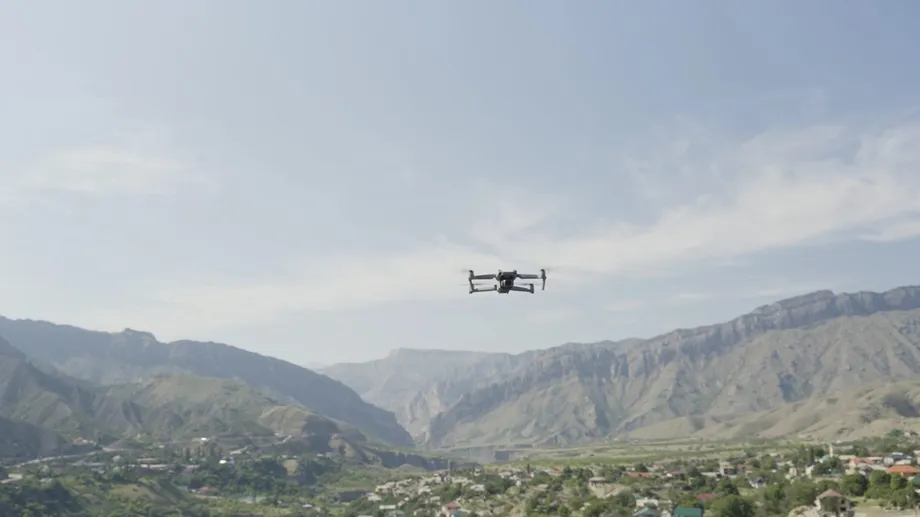
Satellite imagery from 2026 appears to show extensive poppy fields in parts of Sistan-Baluchistan, including large plots devoted exclusively to the crop. Some farms appear to have drip irrigation, which delivers water through pipes close to plant roots.
Mansfield interprets that investment as a sign that farmers planting in late 2025 expected a low risk of crop destruction. Installing irrigation costs money before a harvest produces any revenue, making confidence in completing the season an important part of the decision.
Iranian authorities have faced competing pressures from the war with the United States and Israel that began in late February 2026. Mansfield's assessment is that the conflict, economic distress and an intensifying insurgency in Sistan-Baluchistan have left more room for cultivation. Baluch communities in the province have also faced longstanding discrimination and violence by the authorities.
The agricultural change extends beyond geography. Mansfield describes a move from mixed farming towards large plots devoted entirely to poppies. That concentrates land, investment and household income in a single illicit crop.
Afghan farmers are testing the ban again
Badakhshan, in northeastern Afghanistan, is estimated to account for around half of the country's opium output. Mansfield says cultivation remained widespread there in 2026 on both land dependent on rainfall and land supplied by irrigation.
Farmers in Badakhshan and Helmand have protested and resisted eradication as drought, debt and economic hardship have deepened. Taliban enforcement has sometimes been forceful, bringing the authorities into conflict with rural communities.
In southwestern Afghanistan, Mansfield says cultivation almost doubled between 2025 and 2026, although the area remained limited. Farmers planted in remote locations, concealed poppies within wheat fields and used the protection of walls around household compounds.
A Taliban directive requiring a court order before authorities search homes for poppies or opium has become an important part of this calculation. Mansfield warns that farmers may interpret the restriction as a sign of greater tolerance and extend planting beyond enclosed compounds during the next season.
The Taliban Interior Ministry's counter narcotics directorate presents the reduction in cultivation as a major achievement and says satellite imagery confirms widespread eradication. In comments included in the UNODC survey, it also challenged parts of the agency's yield and income calculations and identified increased cultivation in neighbouring countries as a reason for falling opium prices.
What the regional market is signalling
UNODC's Afghanistan Opium Survey 2025 describes indications that production is moving beyond Afghanistan. Official eradication in two nearby countries rose from 5,868 hectares in 2022 to 13,200 hectares in 2023, an increase of about 125 percent. The survey does not name those countries in that discussion.
Eradication statistics measure the crop authorities say they destroyed. Estimating total cultivation also requires measuring fields that survived or escaped detection. UNODC continues to describe Pakistan's production as marginal while acknowledging scarce data and indications of displacement around Afghanistan.
The agency also points to falling opium prices and opiate seizures despite reduced Afghan production and fairly steady demand. It identifies possible supply from elsewhere as one explanation and calls for stronger monitoring across the region.
Consumers in Europe were nevertheless encountering tighter heroin supplies. By 2024, the price adjusted for purity had doubled from 2022 levels in most European markets with available data. Adjusting for purity means comparing the cost of the actual heroin in a sample, rather than the full weight of a mixture containing other substances.
Myanmar provides another measure of the changing geography. Wani's paper lists 53,100 hectares under opium poppy there in 2025, up 17 percent from 45,200 hectares in 2024. Myanmar's cultivated area was more than five times Afghanistan's 10,200 hectares that year.
Drug revenue and insecurity reinforce each other
Armed groups in the border region can earn money by taxing production, charging for passage or controlling trading routes. Mansfield says they compete for revenue from drugs alongside people smuggling and trade in fuel, minerals and other goods.
Violence can weaken crop enforcement, while drug income gives armed actors another source of funds. Wani's paper examines alleged links between narcotics networks, militant organisations and Pakistani security agencies. Its argument focuses on financing and enforcement failures; the local allegations of official protection remain disputed.
Synthetic drugs present a parallel challenge. UNODC says seizures in and around Afghanistan were about 50 percent more frequent by the end of 2024 than in the third quarter of 2023, with methamphetamine a particular concern. Production can operate without the fields and growing seasons required for poppies, making agricultural enforcement only one part of the response.
UNODC recommends regional monitoring, timely information sharing and cooperation among border authorities, police and development agencies. Its approach also includes alternative livelihoods, prevention and treatment, addressing both the farmers supplying illicit markets and the people harmed by drug use.
Georgette Gagnon, deputy special representative of the UN secretary general for Afghanistan and officer in charge of the UN Assistance Mission in Afghanistan, described the need for a response extending beyond one country:
Afghanistan's drug problem is not confined to its borders. The dynamics of supply, demand and trafficking involve both Afghan and international actors.
Gagnon identified the Doha Process Counternarcotics Working Group as a platform for cooperation between Taliban authorities and the international community. For farmers making their next planting decisions, the concrete issue is whether legal crops, reliable buyers and other work can provide enough income to compete with poppy cultivation.
Key Points
- UNODC estimated Afghanistan's poppy cultivation at 10,200 hectares in 2025, approximately 96 percent below 2022.
- Mansfield says satellite assessments identified more than 9,000 hectares in Pakistan's Balochistan, with expansion continuing during 2026.
- Afghan growers are bringing investment, irrigation and cultivation expertise to farms in Pakistan and Iran.
- Balochistan authorities announced extensive eradication, while local officials disputed allegations of protection and corruption.
- Iran's Sistan-Baluchistan and Afghanistan's Badakhshan remain important areas of cultivation.
- Further expansion in 2027 could increase heroin supply and revenue for armed groups, making regional monitoring and alternative incomes central to the response.