Cash assistance, school meals and energy support in crisis package
The Asian Development Bank approved $17.42 million for Bhutan on 23 October 2026 to help protect vulnerable families from rising food and energy costs. The financing supports a government response that includes monthly assistance of up to 10,000 ngultrum ($104) for women in eligible large families, rural energy subsidies, expanded school meals and the planned purchase of 45 electric buses.
Contents
- Cash assistance, school meals and energy support in crisis package
- How the funding fits Bhutan's wider response
- Why higher fuel prices reach beyond the petrol pump
- Growth is projected to slow before recovering
- Who is intended to receive household assistance?
- Tax exemptions target food and other necessities
- Local public works aim to keep people earning
- Fuel reserves and electric buses address different needs
- Delivery will determine how much relief families feel
- Key Points
In its Bhutan financing announcement, ADB said the package would support the country's $267.88 million Anti-Crisis Action Plan. Bhutan's Ministry of Finance is the executing agency, responsible for overseeing a programme intended to preserve essential services while higher import costs put pressure on household budgets and government finances.
The bank links those pressures to the Middle East conflict, which has increased fuel and commodity costs and disrupted trade and tourism. Bhutan depends on imported food and fuel, leaving families and businesses exposed to price increases originating far beyond its borders.
ADB President Masato Kanda described how that pressure reaches households, particularly those with the least money to spare:
In Bhutan, every family feels the consequences of rising fuel prices, but it is the poorest households who are most impacted.
The programme combines several forms of relief because the squeeze reaches people through different channels. Cash assistance adds to household income, energy subsidies reduce a recurring expense, and school meals help protect children's access to nutritious food. Public works are intended to sustain employment and local services at the same time.
The measures are planned under the approved financing programme. Payment schedules, detailed eligibility rules, beneficiary numbers and dates for completing the public works or delivering the buses have not been announced.
How the funding fits Bhutan's wider response
ADB's $17.42 million package consists of a $13.45 million grant from the Asian Development Fund and a $3.97 million loan from the bank's ordinary capital resources. About 77% of the package is therefore grant funding, calculated from the two amounts. A grant does not require repayment, while a loan creates a repayment obligation.
The Asian Development Fund receives contributions from multiple donors and supports countries with substantial development needs. Its grant contribution accounts for most of the newly approved assistance, reducing the share Bhutan will need to repay.
ADB's contribution represents approximately 6.5% of the government's $267.88 million Anti-Crisis Action Plan. The wider plan is therefore much larger than this financing package, with spending intended to address household welfare, employment, public services and energy security.
The financing mechanism is called the Enhancing Resilience with Countercyclical Expenditures Program. In simple terms, countercyclical spending means a government uses public expenditure to soften an economic slowdown. Here, the aim is to keep assistance and services operating while imported essentials become more expensive and economic growth loses speed.
Why higher fuel prices reach beyond the petrol pump
Bhutan's dependence on imports means international price increases can quickly become domestic expenses. More expensive fuel raises the cost of moving goods and operating businesses. Food imports can also become dearer, putting pressure on families that must buy necessities regardless of changes in their income.
Tourism faces another route of disruption. Interruptions to aviation and weaker travel demand affect a sector that brings foreign currency into Bhutan and supports employment in services. When travel activity weakens, businesses serving visitors can face lower income while still paying higher operating costs.
Bhutan also has limited domestic revenue sources, according to ADB. That constrains the government's room to absorb higher costs while continuing to fund public services and household assistance.
Kanda, explaining the link between import prices and the government's response, said:
Higher import costs work their way through the economy, stretching household budgets and public finances. Bhutan is responding with measures that reach into everyday life, from school meals to assistance with household bills. ADB is helping the government preserve the services people depend on.
Growth is projected to slow before recovering
ADB expects Bhutan's economic growth to slow from 8.5% in 2025 to 6.5% in 2026, before reaching 7.2% in 2027. The projected slowdown amounts to 2 percentage points between 2025 and 2026. The following year's expected recovery would regain 0.7 percentage points.
Economic growth measures the increase in a country's production of goods and services. Bhutan's economy is projected to keep expanding, but at a slower pace during 2026. Families can still face financial difficulty during such an expansion if food and energy prices rise faster than the money they have available.
The dates and projections frame the programme:
- 2025: ADB places Bhutan's economic growth at 8.5%.
- 23 October 2026: ADB announced approval of the $17.42 million financing package.
- 2026: The bank projects growth of 6.5% amid pressure from higher import costs and disruption to economic activity.
- 2027: ADB forecasts growth recovering to 7.2%.
ADB also identifies rising unemployment and poverty as concerns associated with the disruption. The package therefore addresses both sides of household finances: the cost of necessities and opportunities to earn income.
Who is intended to receive household assistance?
Women in eligible large families are to receive monthly assistance of up to 10,000 ngultrum, equivalent to about $104 in ADB's announcement. The maximum amount gives a measure of the intended support, while the eligibility requirement makes the programme targeted rather than universal.
Rural households are also intended to receive help with energy bills. Cash assistance and bill subsidies serve different purposes: the former gives recipients money to meet expenses, while the latter reduces the cost of a particular service.
Schools are another route for support. Expanded feeding programmes are intended to ensure that children continue receiving nutritious meals as food becomes more expensive. Providing meals at school helps meet a child's daily needs while reducing part of the food burden on the household.
The reach of these measures will depend on which families qualify and how reliably support arrives. For the Ministry of Finance, delivery involves turning the approved spending programme into payments, reduced bills and meals that households can actually use.
Tax exemptions target food and other necessities
Bhutan plans to expand tax exemptions on butter, rice, refined oil and salt. The programme also includes wheelchairs and sanitary napkins, extending the affordability measures to mobility and menstrual health needs.
Tax exemptions work differently from cash payments. They remove a tax charge from selected goods, with the aim of making those goods more affordable. Whether shoppers experience the intended relief depends on how the lower tax cost is reflected in retail prices.
Import prices and transport expenses still matter to the final amount a customer pays. A reduction in tax can soften those costs, while the scale of relief at the shop counter depends on the combined movement of taxes, purchase prices and distribution expenses.
The programme brings targeted household assistance together with relief on selected products. Eligible recipients would receive direct support, while buyers of the exempted goods could benefit through prices. Tracking both delivery and retail costs will help show how much relief reaches families.
Local public works aim to keep people earning
Small public works in Bhutan's districts and subdistricts are intended to maintain employment and the delivery of essential services. Community contracts are expected to be low in value, keeping this part of the programme focused on limited local works.
The supported contracts exclude projects requiring land acquisition or environmental clearance. That places a practical boundary around the work eligible for support and separates this employment component from major construction schemes.
Public works connect wages with local service needs. People employed on the projects can earn income while communities receive work intended to sustain services and connectivity. This offers another form of support alongside payments and subsidies, particularly where weaker business activity reduces earning opportunities.
Fuel reserves and electric buses address different needs
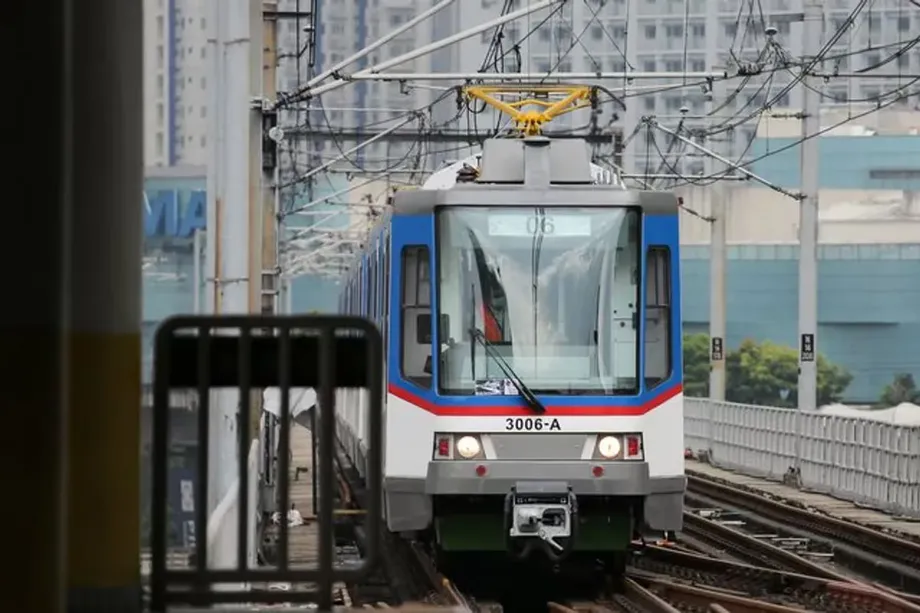
Bhutan also plans to replenish fuel storage facilities and procure 45 electric buses for urban and interdistrict services. These measures address two different parts of its energy exposure: keeping fuel available now and using electricity for more public transport.
Replenishing storage supports continuity of supply during disruption. Electric buses could reduce the conventional fuel needed for the services they operate, with their eventual contribution depending on procurement, deployment and operating conditions.
The planned buses also connect the energy programme with everyday travel. Urban and interdistrict services carry people between homes, jobs and essential services, making transport part of the same effort to keep economic life functioning during a period of higher costs.
Delivery will determine how much relief families feel
Bhutan's programme brings immediate household needs together with employment, local services and transport. Its central practical challenge is coordination: assistance must reach eligible women, energy support must appear in household bills, schools must receive the resources to provide meals, and community contracts must translate into paid work.
The different measures also work on different schedules. A household payment can help with current expenses once delivered. Tax exemptions operate through the prices of selected purchases. Fuel replenishment and bus procurement require separate administrative and purchasing steps.
ADB describes the financing as part of its wider response to the economic effects of the Middle East conflict across Asia and the Pacific. In Bhutan, the immediate purpose is concrete: preserve essential services and help families meet basic costs while growth slows. The grant funding supplies most of ADB's contribution, while the larger government plan provides the framework for the response.
Key Points
- ADB approved $17.42 million for Bhutan on 23 October 2026, comprising a $13.45 million grant and a $3.97 million loan.
- The package supports approximately 6.5% of Bhutan's $267.88 million Anti-Crisis Action Plan.
- Planned relief includes monthly assistance of up to 10,000 ngultrum for women in eligible large families, rural energy subsidies and expanded school meals.
- Tax exemptions cover selected foods, wheelchairs and sanitary napkins, while local public works aim to sustain jobs and services.
- Energy measures include replenishing fuel storage and procuring 45 electric buses.
- ADB projects growth slowing to 6.5% in 2026 before recovering to 7.2% in 2027.