A new attempt to settle who benefits from mining
Bhutan's revised Mines and Minerals Bill has reached the Cabinet ahead of a National Assembly winter session scheduled for November 12 to December 28, 2026, reopening a debate that stalled in June 2021 over ownership, management and the sharing of mining profits.
Contents
- A new attempt to settle who benefits from mining
- How the bill reached another winter session
- State ownership and the right to operate
- Why the legal framework matters
- What production and tax figures reveal
- Stronger penalties meet limits on inspection
- Restoration and a clearer local share
- Farm costs and engineering delays compete for attention
- What else is on the legislative agenda
- Key Points
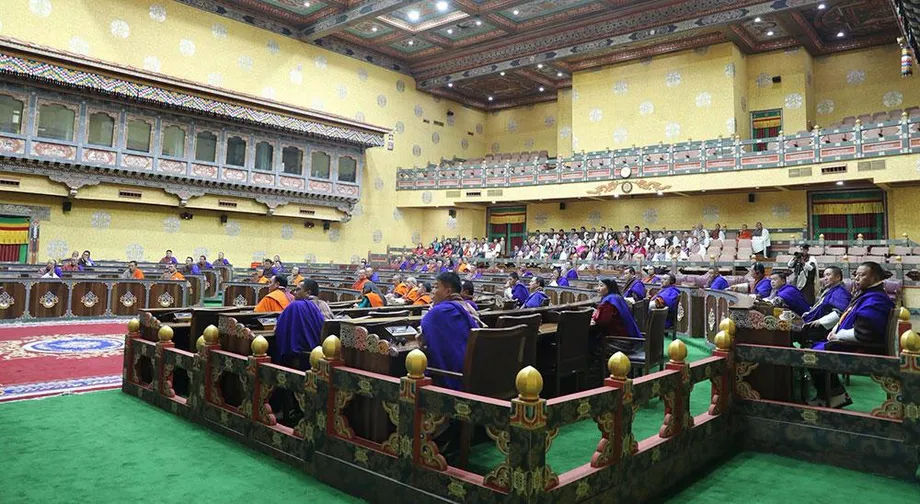
The Department of Geology and Mines has revised provisions on strategic minerals as part of a proposed overhaul of the Mines and Minerals Management Act 1995. That law will be 31 years old when lawmakers meet. National Assembly Deputy Speaker Sangay Khandu said the mining legislation is among three new measures tentatively expected during the session, although the agenda has not been finalised.
The stakes extend from national revenue to dust, water and jobs around individual mines. Mining corporate income tax reached Nu 1.2714 billion in 2025, while the government is considering stronger penalties, more domestic processing and new ways for communities to receive a share of the benefits.
Bhutan also has a measurable place in global manufacturing. The United States Geological Survey's Bhutan minerals overview ranks the country seventh in ferrosilicon production in 2024, accounting for an estimated 2.1 percent of world output. Ferrosilicon, an alloy of iron and silicon, is used in steelmaking.
Mineral commodities contributed 2.0 percent of Bhutan's gross domestic product in 2024, according to the agency. The central decision for Parliament is how to turn resources owned by the state into public income and local benefits while setting workable conditions for operators and protecting the land.
How the bill reached another winter session
The earlier dispute lasted through six Joint Committee meetings without agreement between the National Assembly and National Council. In June 2021, the Speaker deferred the bill after committee chairperson Kinley Wangchuk reported that members had failed to reach consensus.
Regulation continued under the 1995 Act while the government developed new rules and, later, a revised bill. The main steps were:
- 2020: The earlier Mines and Minerals Bill proposed a new framework for licensing, regulation and the allocation of mineral resources.
- June 2021: Parliament deferred the bill after the two houses failed to resolve their differences.
- 2022: The Ministry of Economic Affairs issued the Mines and Minerals Management Regulations.
- June 15, 2024: Energy and Natural Resources Minister Gem Tshering outlined plans to review rules and consider participation by both public and private entities.
- March 2025: An IGF Mining Policy Framework Assessment identified weaknesses in clearances, monitoring, community consultation and benefit distribution.
- 2026: The Department of Geology and Mines submitted the revised bill to the Cabinet ahead of the planned winter debate.
The department says its redraft follows the Mineral Development Policy 2017 and draws on the Mineral Exploration Guidelines 2023 and the 2022 regulations. The government also links the legislation to its 10X Economic Roadmap and Diamond Strategy.
State ownership and the right to operate
The Department of Geology and Mines' 2020 draft bill stated that rights over mineral resources belong to the state. It also proposed allocating proven mineral reserves through competitive bidding or to a state enterprise, with separate government decisions for strategic minerals and reserves.
Ownership and operation are different parts of the debate. The state can own a deposit while authorising a company to extract and sell its minerals under a lease. The disputed choices concern who receives that permission, what they pay and how the resulting income reaches citizens.
The National Council's position drew on Article 1.12 of the Constitution, concerning state ownership of mineral resources, and Article 9.7, concerning poverty and the concentration of wealth. Other provisions cited in the debate address fair competition and restrictions on monopolies.
The Council supported its case for state enterprises with historical commercial figures. It cited a dolomite export price of Nu 520 per metric ton declared by private company JMCL in 2019, compared with Nu 1,150 after the mines were assigned to State Mining Corporation Limited in 2020. It also cited profit after tax of Nu 802 per metric ton for SMCL in 2019/20, against Nu 398 for Druk Satair Corporation Limited in 2018.
Those figures explain why the allocation of mining rights became politically contentious: the Council argued that state operation could capture more value for Bhutan. The government is now considering a framework involving both public and private participants.
Why the legal framework matters
The 1995 Act leaves important matters unclear or to rules and regulations, creating pressure for decisions that require stronger parliamentary backing. Regulations can be revised by the executive within its legal powers; changing an Act requires the parliamentary process.
The earlier draft shows how widely mining reform can reach. It proposed repealing the 1995 mining law and specified provisions of the Local Government Act 2009, the Forest and Nature Conservation Act 1995 and the Water Act 2011. It also proposed an autonomous Mining Regulatory Authority, with responsibilities covering inspections, lease enforcement, reclamation and revenue collection.
The 2021 deferment has left a procedural dispute as well. Article 13(8) of the Constitution provides for a bill to be submitted to the Druk Gyalpo for a joint sitting when the originating house refuses amendments or objections from the other house. Parliament instead deferred the mining bill under Section 59(A) of its Legislative Rules of Procedure. The constitutional basis for that choice remains an issue in the debate.
The full provisions of the revised 2026 bill, including the final treatment of strategic minerals and the proposed regulatory structure, have not been detailed publicly in the announcements described so far. Parliament's eventual text will determine how much of the earlier design survives.
What production and tax figures reveal
Bhutan's mining corporate income tax rose from Nu 1.1486 billion in 2023 to Nu 1.2714 billion in 2025, after falling to Nu 1.1003 billion in 2024. The increase between 2024 and 2025 was about 15.6 percent. Royalties and mineral rents provide other public receipts.
Production moved in different directions across commodities. The US Geological Survey recorded 151,495 metric tons of ferrosilicon in 2024, up from 127,293 in 2023, an increase of about 19 percent. Gypsum output fell from 1,098,565 metric tons to 513,477 over the same period, a decline of about 53 percent.
Crushed dolomite production also fell, from 2,937,930 metric tons in 2023 to 2,760,377 in 2024. These figures, from a production table using information available through January 15, 2026, show why the government faces different commercial conditions across the sector.
The proposed legislation would address mineral beneficiation, meaning processing that raises the useful mineral content or commercial value of material. It would also cover the use of low grade and rejected ore, recovery of other minerals found alongside the main deposit, and critical minerals and strategic mining assets.
Minister Gem Tshering, who heads the Ministry of Energy and Natural Resources, linked mining development to environmental requirements during the June 2024 parliamentary discussion:
It has to align with environmental policy.
The government is also reviewing taxation to encourage processing within Bhutan. For businesses, that could change the calculation between exporting raw material and investing in equipment and skills to produce something more valuable at home.
Stronger penalties meet limits on inspection
The proposed bill would introduce progressive penalties, allowing tougher action when an operator repeatedly breaks the rules. Some existing fixed fines are as low as Nu 5,000, an amount the ministry considers too small to discourage violations.
The Department of Geology and Mines supervises operations through seven regional offices. Standard mines receive inspections twice a year under the 2022 regulations, including unannounced checks, while sites with large production volumes or environmental sensitivity receive inspections quarterly or more frequently.
Inspectors compare operations with approved feasibility studies and reconcile production using weighbridge records and transport permits. The department is beginning to use satellite imagery and drones to help monitor scattered sites, as limited staff, transport and technical capacity make continuous field coverage difficult.
The department says no major offences or severe regulatory violations were recorded nationwide over the past three years. Common problems include poorly arranged mining benches, inadequate dust control and improper handling of overburden, the soil and rock removed to reach a mineral deposit.
Boundary encroachment and excavation presented as ordinary land development remain concerns. Some remote quarries and dredging sites lack calibrated weighbridges, leaving officials to verify quantities manually. Annual training seeks to address another weakness: operators without enough qualified personnel to carry out approved mine plans.
Restoration and a clearer local share
Mine operators must secure environmental and other clearances, appoint a certified manager and prepare a Mine Closure and Reclamation Plan before extraction begins. They must also provide an Environmental Restoration Bond, money held as security for repairing the site.
Closure requirements include removing infrastructure, stabilising excavated slopes, replacing topsoil and restoring vegetation. The bond is refunded only after monitoring confirms that the site is stable and vegetation has survived. During operations, safeguards include sediment ponds, stream buffers, road watering and covered mineral transport.
The March 2025 IGF assessment identified fragmented clearances, weak monitoring and inadequate community consultation and benefit distribution. A 2016 study involving Bhutan's Anti-Corruption Commission, the Royal Institute of Management and France's Audencia Business School had also identified governance and oversight weaknesses.
The revised framework could provide community benefits through Community Development Funds and Local Content policies. Such policies can direct opportunities towards local workers, suppliers and businesses. The earlier draft already assigned its proposed regulatory board responsibility for approving the use of a Community Development Fund.
Transparency over access to mining rights is another unresolved concern. The department and ministry declined requests for a list of mine and quarry owners, while the department said the limit of two mining leases does not apply to SMCL. The choice of allocation rules therefore sits alongside the question of how openly those rules and their beneficiaries are recorded.
Farm costs and engineering delays compete for attention
Members of Parliament brought nearly 225 constituency issues to a plenary meeting, including farm roads and water supplies. The issues were filtered and forwarded to ministries, with two concerns from Pemagatshel Dzongkhag Tshogdu receiving committee attention.
The first concerns inconsistent contributions towards agricultural inputs. A local government leader said an earlier arrangement split costs equally between farmers and government. Later arrangements included government contributions of 70 percent or 60 percent, yet some farmers reportedly ended up paying 70 percent themselves.
The practical difference is substantial. A farmer paying 70 percent contributes more than twice as much as one paying 30 percent for an item with the same price. Pemagatshel's district council wants a clear, consistent system, either a fixed contribution ratio or free distribution.
Government studies found that farmers sometimes took less care of items supplied free, with millions of distributed fruit trees reportedly dying through inadequate care. The policy choice therefore combines affordability with responsibility for keeping public investments alive and productive.
The second concern involves Regional Engineering Clusters and delays to local development. The Ministry of Infrastructure and Transport's seven Regional Offices for Infrastructure Development have filled 83 of 156 approved positions, about 53 percent. Some offices have six or seven engineers, mostly recent graduates, against a typical requirement of more than 15.
Ministry officials previously reported a 92 percent effective delivery rate in the last financial year, including 233 design services, scrutiny of 641 private drawings and 23 project support cases. The Good Governance Committee's assessment will determine whether these staffing and cost sharing concerns require formal Assembly debate.
What else is on the legislative agenda
Finance Minister Lekey Dorji is expected to present the Pay Revision Bill. As a money bill, it must be passed during the same session. Sangay Khandu also identified an Organisation of the Petroleum Exporting Countries agreement among the tentative new measures, intended to address petroleum matters and cooperation with member countries.
The Assembly is also due to consider the third reading of the Jabmi (Amendment) Bill and the Tobacco Control (Amendment) Bill 2026, received from the National Council. It plans to finalise the BIMSTEC Convention on Mutual Legal Assistance in Criminal Matters and the Insolvency and Rehabilitation Bill of Bhutan.
The mining bill will therefore enter a session with several competing demands. Its central task remains specific: replacing an ageing legal framework with clear decisions on mining access, public revenue, environmental obligations and the benefits reaching communities.
Key Points
- The revised mining bill has been submitted to the Cabinet and is tentatively expected during the November 12 to December 28, 2026 Assembly session.
- The earlier bill was deferred in June 2021 after disagreement over ownership, management and profit sharing.
- Mining corporate income tax reached Nu 1.2714 billion in 2025.
- Proposed changes include stronger penalties, domestic processing provisions and possible community benefit mechanisms.
- Inspection capacity, ownership transparency and environmental restoration remain central to the reform debate.
- Lawmakers are also considering farm input contributions, engineering staff shortages and several other legislative measures.