Prison terms of 15 to 25 years or life
Uzbekistan has introduced prison sentences of 15 to 25 years or life imprisonment for certain sexual crimes against children younger than 14, alongside new protections for children during investigations and trials. President Shavkat Mirziyoyev signed the legislation, according to presidential administration head Saida Mirziyoyeva.
Contents
- Prison terms of 15 to 25 years or life
- Four years brought 445 criminal cases
- A reform planned before the kindergarten case
- The investigation that intensified public pressure
- What changes when a child gives evidence?
- Legal help extends to children who witness abuse
- Schools and care institutions face wider duties
- How authorities classify allegations matters
- Life imprisonment follows a debate over execution
- Key Points
The child protection law, published on the presidential website, changes the penalties in Part Four of Criminal Code Articles 118 and 119. Those provisions cover rape and other specified sexual assaults involving force, threats or exploitation of a child's helplessness. The legislation records adoption by the Legislative Chamber on September 30, 2026, and Senate approval on October 2.
The amendments also remove limitation periods for specified offenses under Articles 118 and 119. A limitation period is a legal deadline after which prosecution or enforcement of a sentence can become unavailable. Changes to Articles 64 and 69 address both stages, extending the opportunity to pursue accountability when abuse comes to light much later.
Children affected by violence will receive procedural protections, including video recording of questioning and access to lawyers paid for by the state. The package also addresses violence by relatives, employment in institutions caring for children, and suspended sentences and early release for intentional crimes that cause a child's death.
The legislation therefore changes several parts of a child's encounter with the justice system: how an allegation is investigated, who helps the child, how evidence is recorded and what punishment a court can impose. Its commencement date was not specified in the published passage, so the date when the amendments take effect remains a detail requiring confirmation.
Four years brought 445 criminal cases
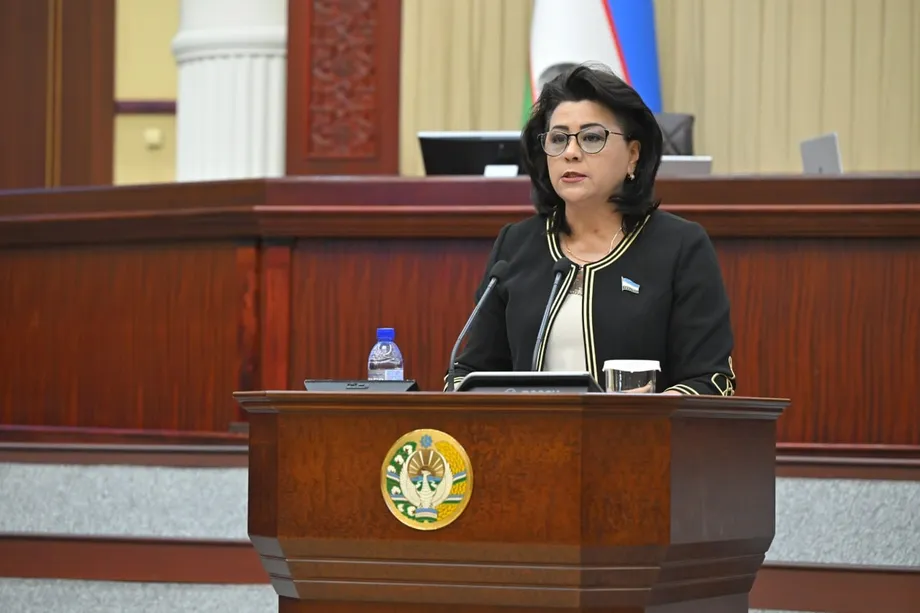
Gulruh Agzamova, chair of the Legislative Chamber committee responsible for democratic institutions and civil society development, told lawmakers on September 29 that authorities opened 445 criminal cases concerning rape of children younger than 14 between 2022 and 2025.
The annual figures were 85 cases in 2022, 108 in 2023, 129 in 2024 and 123 in 2025. The 2025 figure was 38 cases higher than in 2022, an increase of about 45 percent, although it was six below the 2024 total. The figures count criminal cases opened; court outcomes and the number of individual children affected are separate measures.
Agzamova also described the difficulty children can face in telling an adult about violence. Speaking during the parliamentary debate, she said:
Some are afraid, some are ashamed, some do not understand, and some believe that no one will listen to them.
Her remarks connect two parts of the legislation that might otherwise seem separate. Removing legal deadlines gives authorities more time to pursue specified crimes. Providing legal help and changing questioning procedures gives children support during the process of describing what happened.
A reform planned before the kindergarten case
The instruction to prepare tougher penalties preceded the September investigation in Namangan that intensified public debate. Presidential Decree PF-22, dated February 16, 2026, called for amendments allowing punishment up to life imprisonment for sexual crimes against children younger than 14 as part of implementing the Uzbekistan 2030 strategy.
The preparation deadline was April 1. Lawmakers accepted the bill at its first reading on September 29, almost six months after that deadline. The main steps were:
- February 16, 2026: Decree PF-22 set the task of preparing stronger penalties.
- April 1: The deadline set for preparing the changes.
- September 12: Authorities opened the Uchqo'rg'on kindergarten investigation.
- September 29: The Legislative Chamber approved the bill at its first reading.
- September 30: The bill passed its second reading and was adopted by the chamber.
- October 2: The Senate approved the legislation.
The law's introduction also places the amendments within Uzbekistan's strategy to protect children from all forms of violence for 2026 to 2030. It records the country's participation in the Bogota Call to Action and membership in the Global Alliance to End Violence Against Children.
The investigation that intensified public pressure
Authorities opened a criminal case on September 12 over alleged sexual violence against a girl aged five attending a state kindergarten in Uchqo'rg'on district, Namangan region. According to the children's ombudsman, a kindergarten employee aged 52 was detained as a suspect and placed in custody.
The investigation was opened under Part Four of Article 118, the provision concerning rape of a child younger than 14. The girl's mother said the suspected abuse might have happened repeatedly and described her daughter becoming frightened even when passing the kindergarten. The allegations remain under investigation, with guilt to be determined by a court.
The Ministry of Preschool and School Education established a special working group and announced checks of employees at state kindergartens. The children's ombudsman called for a review of internal supervision and the arrangements used to keep children safe.
Saida Mirziyoyeva responded publicly on September 27, calling for stronger accountability both for perpetrators and for people whose negligence allowed harm. The case brought attention to the responsibilities of institutions entrusted with children, alongside the debate about maximum prison sentences.
What changes when a child gives evidence?
The Criminal Procedure Code amendments require video recording when a child victim or witness is questioned in cases involving violence against minors. A recording preserves the child's account and is intended to reduce the risk of repeated questioning causing further psychological distress.
Sexual violence cases also receive a specific rule for a confrontation between a child victim and a suspect, accused person or defendant. A confrontation is a procedural meeting used to address differences between accounts. Under the amendment to Article 123, it requires a decision by an inquiry officer, investigator or prosecutor, or an order from a court.
The procedure therefore places responsibility for authorizing such an encounter with identified officials. For a child who fears the accused person, the decision about bringing them together becomes a formal part of managing the case.
Legal help extends to children who witness abuse
The amendments to Criminal Procedure Code Articles 55 and 66 provide for lawyers paid for by the state for child victims and child witnesses in sexual violence cases. Including witnesses matters because a child who saw abuse may also need help understanding questioning, legal documents and their rights during proceedings.
A lawyer's role is different from that of an investigator. The investigator gathers evidence, while the lawyer assists the child in navigating the legal process and protecting their interests. State funding makes that assistance available without requiring the family to pay for it.
The law also addresses situations in which a parent, adoptive parent, guardian, custodian or another relative is accused of harming the child. In those cases, a representative of the guardianship authority must participate in procedural actions before trial and during court proceedings.
Article 121 specifically requires the responsible inquiry officer, investigator, prosecutor or court to secure that representative's participation when questioning a child victim or witness in the relevant family violence cases. The changes give someone outside the family a defined role when the allegation concerns a person ordinarily expected to protect the child.
Schools and care institutions face wider duties
The legislative package creates an additional legal basis for terminating the employment contract of an employee who commits violence against a child. The change concerns the response of education and care institutions when violence occurs within a relationship of trust and responsibility.
Administrative provisions also address failures to carry out child upbringing duties, violence during education and upbringing, failure to provide information about detected violations, and failure to implement decisions of commissions on children's issues. Other changes concern protecting children from information harmful to their health. The announced package also strengthens responsibility for sexual harassment and violations of marriage age rules.
These measures reach beyond punishment for the person accused of the most serious offense. They assign responsibilities to adults and organizations that supervise children, receive warnings or must act on decisions intended to protect them.
How authorities classify allegations matters
Uzbekistan's Liberal Democratic Party presented figures showing 56 submissions to law enforcement concerning sexual harassment of minors in 2023, 129 in 2024 and 141 in 2025. Another 44 were recorded in the first half of 2026.
The party also said that, over the previous three years, 44 incidents involving conduct that might contain elements of a crime had been concealed and processed as administrative offenses. Those 44 incidents form a separate figure from the 44 submissions recorded during the first half of 2026.
The legal category assigned to an allegation determines which investigation and punishment rules apply. Administrative proceedings generally address violations under the Administrative Liability Code. Criminal proceedings address offenses under the Criminal Code, including the serious sexual crimes covered by the new sentencing provisions. The parliamentary discussion included proposals to draw that boundary more precisely.
A separate investigation in Tashkent's Almazar district concerns a teenage girl who reportedly lived with a man in a religious marriage. Law enforcement officials are checking allegations that he used physical force and committed sexual acts that injured her. The matter adds to the child protection concerns facing investigators, alongside those arising in educational institutions.
Life imprisonment follows a debate over execution
The Uchqo'rg'on case also prompted demands to restore the death penalty. Saida Mirziyoyeva expressed support for execution for such crimes, and Alisher Qodirov, leader of the Milliy Tiklanish party, also backed its return. The adopted sentencing provisions instead allow imprisonment for 15 to 25 years or life.
Bobur Bekmurodov, a Liberal Democratic Party lawmaker, opposed restoring execution. He cited the constitutional prohibition and argued that imposing the same maximum punishment for rape and murder could reduce the incentive for an offender to leave a child witness alive. Article 25 of Uzbekistan's Constitution prohibits the death penalty.
The new law separately bars suspended sentences and conditional early release for people who commit intentional crimes causing a child's death. A suspended sentence allows a person to avoid serving a prison term under specified conditions; conditional early release allows release before the full term has been served.
Senate chair Tanzila Norboeva used the October 2 debate to call for continuous scrutiny of how child protection laws work. She said:
The main requirement is that the legal protection of children must actually work in practice.
The Senate also identified concerns about institutions' use of a special register of people prohibited from working with children. Together, the register, employee checks, reporting duties and legal assistance provisions place practical responsibilities on institutions before and during a criminal case, while the sentencing changes govern punishment after conviction.
Key Points
- Certain sexual crimes against children younger than 14 now carry sentences of 15 to 25 years or life imprisonment under the signed legislation.
- Specified offenses under Criminal Code Articles 118 and 119 are removed from limitation periods.
- Questioning of child victims and witnesses in violence cases must be recorded on video.
- Child victims and witnesses in sexual violence cases are entitled to legal assistance paid for by the state.
- The amendments add safeguards when a relative is accused and create grounds to dismiss employees who commit violence against children.
- Lawmakers cited 445 criminal cases opened concerning rape of children younger than 14 between 2022 and 2025.
- The Senate approved the law on October 2, 2026, following Legislative Chamber adoption on September 30.