A new city and a larger ambition for Kashkadarya
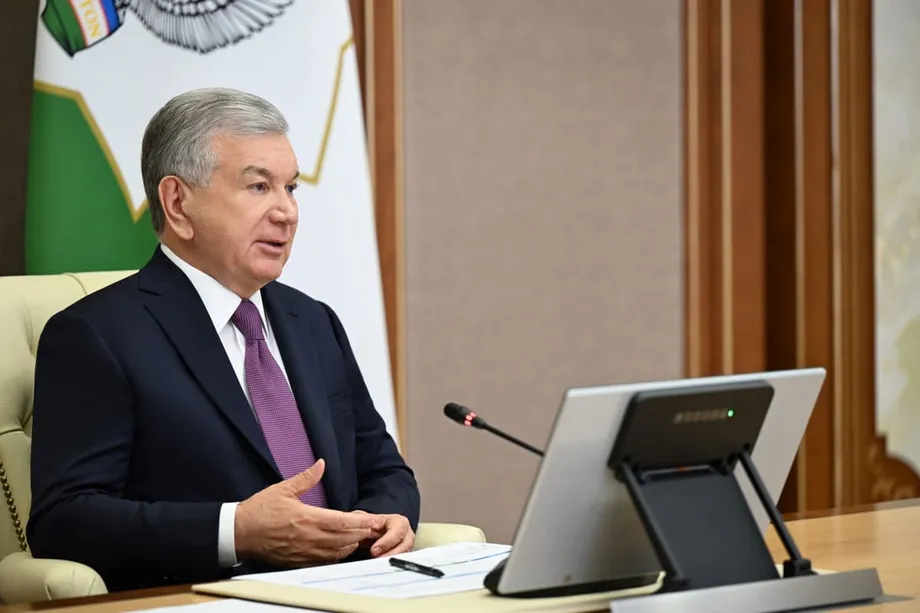
Uzbekistan plans to build New Karshi in Kashkadarya Region for an initial population of 500,000, with President Shavkat Mirziyoyev directing officials to prepare for eventual growth to one million residents. The proposed city would bring housing, government offices, businesses and major event venues to a site southeast of the existing regional capital.
Contents
- A new city and a larger ambition for Kashkadarya
- Where New Karshi would take shape
- Government offices and international venues
- Electric transport, with a metro as an option
- New Nasaf would develop in four stages
- Funding and the planning timetable
- Tourism plans extend into six villages
- School results lead to wider teaching plans
- Green spaces beyond the new developments
- Key Points
The presidential press service described a preliminary master plan covering 5,200 hectares between the A-378 highway linking Samarkand and Guzar and the 4R-79 road toward Shakhrisabz. Mirziyoyev's initial announcement at a meeting on regional development described 5,000 hectares at the junction of Karshi city, Kokdala district and Karshi district.
The population figures describe two planning horizons: 500,000 residents in the preliminary plan and capacity for one million over time. That longer ambition would double the population envisaged at the outset, making transport routes, public services and space for expansion central decisions from the beginning.
A separate project, the 235 hectare New Nasaf complex beside the Karshi Main Canal, would add a promenade, tourism facilities and recreation areas. The two developments sit within a wider regional programme covering village tourism, schools, robotics and new green spaces.
Mirziyoyev linked the housing plans to population growth and rising demand for modern homes in Kashkadarya. Alongside apartment buildings, the proposed districts would contain shopping and business centres. The plans therefore concern both where people would live and where they would work, obtain government services and spend their leisure time.
Where New Karshi would take shape
The selected site consists mainly of unused desert and pastureland described as having low soil productivity. Its position between two established roads gives planners a starting point for connections with Karshi and surrounding districts.
At 5,200 hectares, the proposed city would cover 52 square kilometres. A master plan sets out how such an area should be organised, including the location of housing, roads, workplaces, public facilities and open space. Those decisions guide the more detailed designs needed before individual buildings and infrastructure can be constructed.
Foreign design and architecture companies are to be involved in preparing the plans. The stated priorities include safety, comfort, accessibility, affordability and the use of smart city principles. In everyday terms, smart city planning means using connected systems and information to help manage services such as transport and utilities.
The initial announcement also called for green construction principles in the new areas. For residents, the practical value of those commitments would depend on the eventual designs for buildings, streets, public transport and planted spaces.
Government offices and international venues
Kashkadarya's regional administration, known as the hokimiyat, and other government institutions are expected to move to New Karshi. This would give the proposed city an administrative role alongside its residential and commercial functions.
Government offices would create a regular destination for employees and people seeking public services. Their location therefore matters to residents across the region, including those who would continue living in existing towns and villages.
Plans also include a congress hall, concert venues and hotels intended to host large international forums comparable to events held in Samarkand and Bukhara. These facilities would give New Karshi a role in business travel and tourism as well as regional administration.
The wider development meeting included a call from Mirziyoyev to simplify requirements for business loans. That instruction accompanied the construction and tourism proposals, which envisage opportunities for accommodation providers, shops, restaurants and other businesses.
Electric transport, with a metro as an option
Mirziyoyev instructed officials to provide electric public transport connecting New Karshi with the airport and railway station. He also called for convenient links between the proposed city and surrounding areas.
An above ground metro was raised as an option if necessary. Electric public transport is therefore a stated planning priority, while the choice of a metro remains conditional. The proposals leave the detailed transport network to further planning.
The airport and railway connections would serve several groups: people travelling for work, residents making longer journeys, visitors attending forums and tourists staying in the planned hotels. Placing those links within the city plan would allow planners to consider how passengers reach their final destinations after arriving at a station or airport.
The expansion target also gives transport planning a longer horizon. A network serving 500,000 people would need room to handle greater demand if New Karshi eventually reached one million residents. Routes, interchanges and access to government offices would all affect how easily people could move around.
New Nasaf would develop in four stages
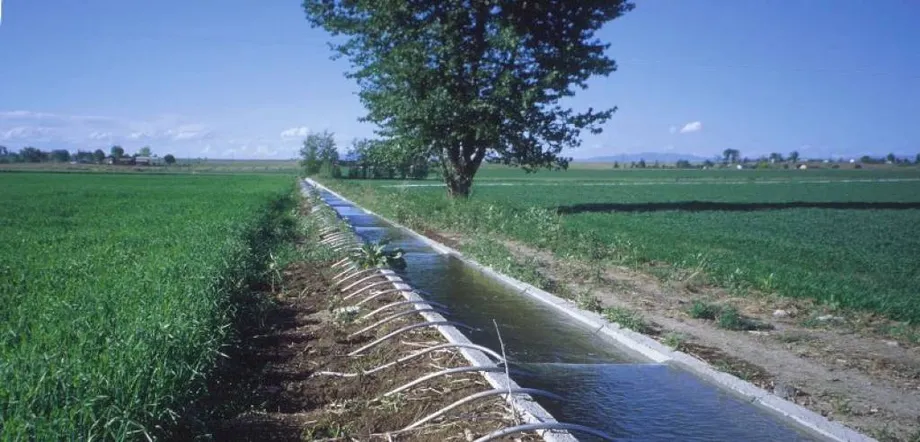
The New Nasaf tourism complex is planned along the Karshi Main Canal in Karshi district. Its 235 hectare site would include a promenade extending for three kilometres, creating a separate destination for recreation and tourism.
The project would be built in four stages. The first would cover 30 hectares and contain a crafts village and tourism zone. That opening stage represents about 13 percent of the allocated land, leaving most of the site for subsequent development.
The wider complex is expected to contain hotels, restaurants, shops, a museum, a water park, playgrounds and an artificial lake for boating. Together, these facilities would serve both visitors staying in the area and families seeking places to spend a day.
The crafts village would give artisans a place within the tourism development, while the museum and recreation facilities would broaden the range of activities. The canal project is distinct from the much larger New Karshi city, although both are being planned as parts of the region's development programme.
Funding and the planning timetable
Mirziyoyev announced an initial allocation of 20 billion soums for preparing the plans. This is planning funding; the total construction budget, housing prices, financing arrangements and completion dates have not been announced.
The initial meeting announcement set a two month deadline to develop a master plan using advanced urban planning solutions. Other descriptions of the same instruction said preparation of the plans should begin within two months. The timetable therefore has two published formulations, one concerning completion and the other the start of planning work.
The sequence of announcements and instructions is:
- At the regional development meeting, Mirziyoyev announced New Karshi for 500,000 residents and the 235 hectare New Nasaf complex, with an initial planning allocation of 20 billion soums.
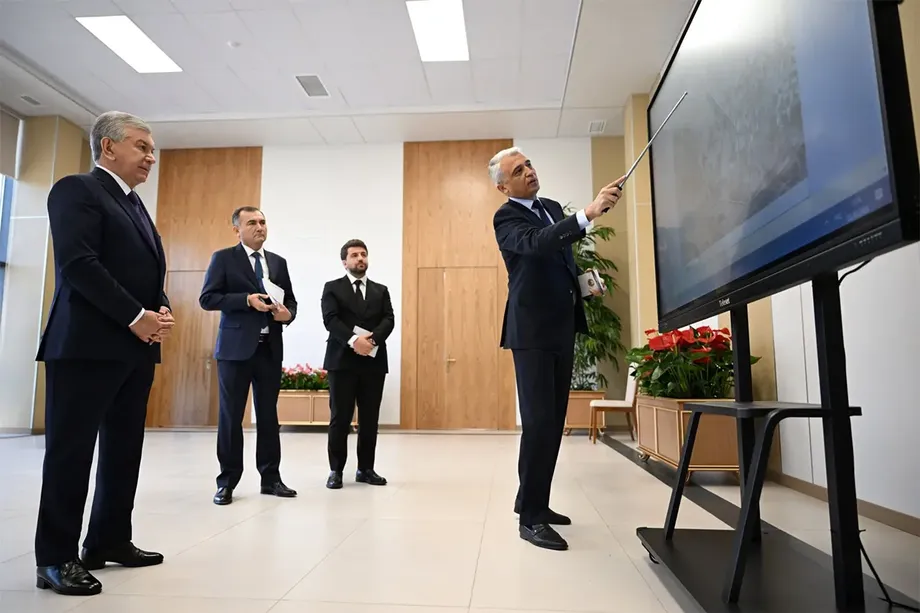
- At a project review dated 22 October 2026, he examined the preliminary city plan and called for capacity to accommodate one million people over time.
- The canal complex is scheduled for four stages, beginning with a crafts village and tourism area covering 30 hectares.
- Separate village tourism instructions set a one month planning period and a 1 March start for projects worth $50 million.
The year attached to the 1 March target was not specified in the regional meeting account. The same applies to education and resort commitments described as starting the following year, so those relative deadlines cannot be assigned a calendar year with certainty.
Tourism plans extend into six villages
Mirziyoyev said Kashkadarya had the potential to attract six million tourists a year. At the time of the regional meeting, officials put arrivals since the start of the year at 2.5 million, including 500,000 visits to Gelon village.
Gelon's figure was equivalent to one fifth of the regional total cited at the meeting. The six million figure was presented as annual potential, while 2.5 million covered only the elapsed part of the year.
The first stage of a ski resort in Gelon, being developed in cooperation with Tatarstan, was planned to open the following year. Officials were also asked to examine turning Taragay in Chiroqchi district, Bashir in Kitob district and Tatar in Yakkabog district into centres for tourism based on local culture and village life.
Sayyod and Suvtushar villages in Shakhrisabz district were identified as places where mountain rivers could support rafting and sports tourism. These proposals would give the region a range of visitor activities beyond the hotels, forums and canal attractions planned around Karshi.
Officials were instructed to prepare plans for the six villages within one month and launch projects worth $50 million from 1 March. Annual spring food festivals were also proposed: Lola va kabob in Guzar and Chiyal yaxna in Kokdala.
School results lead to wider teaching plans
The regional meeting also highlighted student achievements as a reason to expand educational opportunities beyond the best performing schools. Karshi's Presidential School ranked first nationally with a 98 percent result in Cambridge examinations.
Students at the Abdulla Oripov creative school won the Zakovat knowledge tournament. Murodjon Khalimov, an 11th grade student from Koson, achieved the maximum SAT score of 1,600. The SAT is a standardised examination used in university admissions, particularly in the United States.
Mirziyoyev said talented young people across the region could achieve strong results if given opportunities to study the exact sciences in foreign languages. Mathematics and other subjects built around precise measurement and calculation fall within that description.
Starting the following year, one school in every district is to begin teaching these subjects in a foreign language. The proposal would extend access across the districts rather than concentrate the programme in Karshi alone.
Uzbek students' success in a world robotics competition also prompted plans for a robotics club in every district by the end of the year. Each club is to receive equipment, giving students places to practise building and programming machines.
A regional school robotics championship would be held every March. The announced prizes are 30 million soums for first place, 20 million for second and 10 million for third, a combined prize fund of 60 million soums for the top three positions.
Green spaces beyond the new developments
Kashkadarya is also to develop a regional approach to planting saplings and increasing green areas. The instruction extends beyond the boundaries of New Karshi and New Nasaf to existing neighbourhoods.
An annual Greenest Mahalla competition would take place before Navruz, the spring holiday. A mahalla is a local neighbourhood community, making the competition a way to organise improvements at the level where residents live.
Winning communities would receive valuable prizes, including electric cars. This initiative adds a neighbourhood element to a programme otherwise dominated by large construction, tourism and education projects.
The regional and district governors presented reports at the conclusion of the development meeting, which also included discussion with community representatives. Turning the announced projects into usable homes, transport services, visitor facilities and equipped classrooms now depends on the detailed plans and implementation work assigned to those authorities.
Key Points
- New Karshi's preliminary plan provides for 500,000 residents, with instructions to allow eventual growth to one million.
- The selected city site covers 5,200 hectares between the A-378 and 4R-79 roads, compared with 5,000 hectares in the initial announcement.
- Regional government offices, hotels, concert venues and a congress hall are planned for the city.
- Electric public transport would link the airport and railway station; an above ground metro is a conditional option.
- New Nasaf would cover 235 hectares beside the Karshi Main Canal and develop in four stages, starting with 30 hectares.
- An initial 20 billion soums was announced for planning, while the full construction budget and completion dates remain unspecified.
- The wider programme includes $50 million in village tourism projects, teaching science subjects in foreign languages, district robotics clubs and a neighbourhood greening competition.