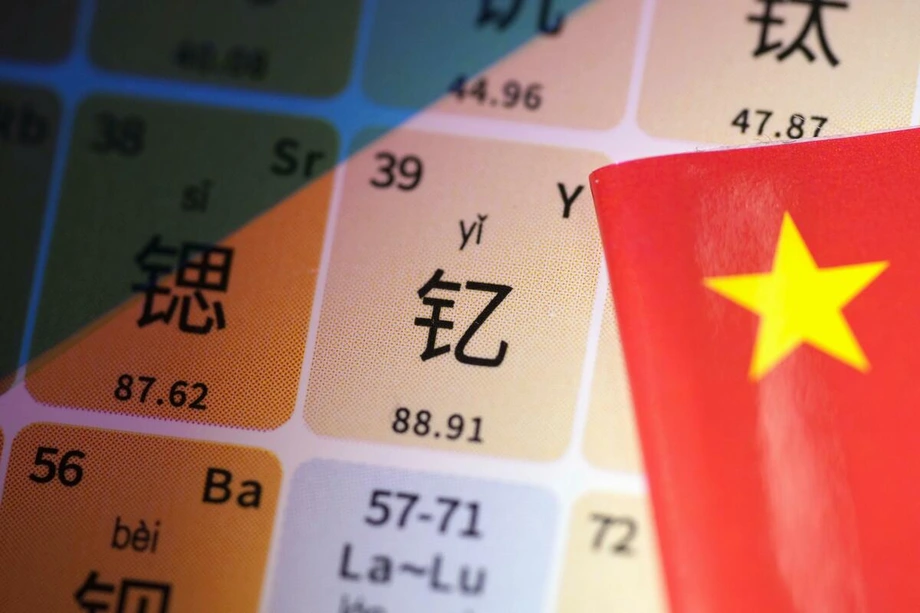
Just 18 tons reach Japan in nine months
China shipped just 18 tons of yttrium oxide to Japan between January and September 2026, down from 887 tons in the same period of 2025, according to figures from China's General Administration of Customs. The 98% decline has tightened access to a material used in semiconductor manufacturing equipment, jet engines and some medical equipment, leaving Japanese manufacturers increasingly dependent on stored supplies.
Contents
- Just 18 tons reach Japan in nine months
- The numbers show an unusually sharp squeeze
- Why a little known material matters to factories
- Tokyo disputes the warning over dwindling stocks
- How the dispute developed
- Earlier magnet delays show how disruption spreads
- Inventory has kept production moving, with limits
- Why Washington is asking for more exports to Japan
- Factories face a replenishment problem
- Key Points
The fall was far steeper than the decline in China's exports worldwide. Global shipments of yttrium oxide, a major traded form of the rare earth element yttrium, dropped 26% to 934 tons over the same nine months. Exports to Germany and South Korea increased, while shipments to the United States almost doubled from a depressed level in 2025.
Japan's difficulties come nearly a year after Prime Minister Sanae Takaichi's November 7, 2025, remarks about a possible conflict involving Taiwan angered Beijing. China strengthened controls on exports of goods with both civilian and military uses to Japan from January 2026, including rare earth materials.
A major Japanese electronic parts manufacturer said it was maintaining production with stockpiles but finding procurement increasingly difficult. Chief Cabinet Secretary Minoru Kihara has rejected a claim that Japan is about to run out of yttrium. The immediate picture is therefore one of factories drawing on inventory while trying to secure replacement supplies.
The numbers show an unusually sharp squeeze
Japan received 869 fewer tons of yttrium oxide from China in the first nine months of 2026 than a year earlier. Its remaining shipments amounted to roughly 2% of the previous year's volume. That is a much larger contraction than the 26% reduction across China's export destinations combined.
Japan accounted for about 1.9% of China's global shipments during the period, calculated from its 18 tons out of the worldwide total of 934 tons. The increase in deliveries to Germany and South Korea shows that access to Chinese supplies has developed differently across markets.
American purchases also rose, although the comparison starts from 2025, when a trade dispute between Washington and Beijing sharply reduced shipments. Exports to the United States remained below earlier levels despite almost doubling. For Japanese buyers, the central problem is securing material while some other destinations are receiving more.
Why a little known material matters to factories
Yttrium belongs to the group of elements called rare earths. Its value comes from the properties it gives specialized materials rather than from public familiarity with its name. China holds most of the global market for its production and refining, leaving buyers exposed when Chinese deliveries slow.
Jet engines use coatings containing yttrium to help protect components against extreme heat. Semiconductor equipment uses yttrium compounds in coatings inside plasma etching chambers. Plasma etching removes selected material from a surface to create the tiny patterns needed to make chips.
A shortage can therefore travel through several businesses. A company making coated components needs the material, an equipment manufacturer needs those components, and a chip factory needs reliable equipment. Delays near the beginning of that chain can reach customers who never purchase yttrium themselves.
Yttrium is one of seven rare earths covered by Chinese export controls. The wider dependence extends beyond this particular element: estimates published in July 2025 put China's share of global rare earth mining at about 70% and its share of refining at about 90%. Refining turns mined material into forms that manufacturers can use.
Tokyo disputes the warning over dwindling stocks
Concern sharpened on October 20, when a warning emerged that Japan's yttrium inventories might last only a few more months. Kihara, Japan's chief cabinet secretary and the government's principal spokesperson, rejected that assessment at a press conference on October 22.
Kihara addressed the suggestion that national supplies were nearing exhaustion:
There is no truth (to the view) that our country will run out of yttrium.
Japan's total usable inventory and how long it could sustain current demand have not been publicly quantified in the accounts of the dispute. Individual manufacturers can also face different circumstances, depending on their stocks, suppliers and the material their products require.
The electronic parts manufacturer describing tighter procurement was still operating with inventory. Its situation explains the immediate commercial pressure: companies need new deliveries to replenish what production consumes, even while existing stocks keep factories running.
How the dispute developed
China's restrictions unfolded in stages. Broad rare earth controls introduced during the trade confrontation with the United States in 2025 were followed by stronger measures affecting Japan after Takaichi's Taiwan remarks.
- April 2025: China began restricting exports of seven rare earths, including terbium and dysprosium, during its tariff dispute with the United States.
- July 2025: Japanese manufacturers described magnet procurement problems, customs delays and efforts to maintain production through inventory and alternative suppliers.
- November 7, 2025: Takaichi made the Taiwan contingency remarks that triggered objections from Beijing.
- January 2026: China strengthened controls on exports to Japan of goods with civilian and military uses, including rare earths.
- October 20 to 22, 2026: A warning about dwindling Japanese yttrium stocks was followed by Kihara's public denial.
- November 4, 2026: Details of the 98% decline in shipments to Japan became public, shortly before the first anniversary of Takaichi's remarks.
Beijing says its restrictions are intended to prevent Japan's remilitarization. China's Foreign Ministry has also maintained that its position on preserving global supply chain stability has not changed. Japanese companies, meanwhile, are preparing for the possibility that procurement difficulties will continue.
Earlier magnet delays show how disruption spreads
Japanese businesses had already experienced the effects of rare earth controls before the latest yttrium figures. By July 2025, companies were describing difficulties obtaining magnets and delays in customs inspections, including for materials outside the seven controlled categories.
Nakashita Shoichi, president of Osaka motor manufacturer FEW, said the company mainly used magnets without rare earths and had avoided production stoppages. Some products nevertheless required magnets that were becoming difficult to obtain:
We are in a situation where we are not receiving magnets containing rare earths used in some products.
Noriko Sawatari, president of Tokyo magnet products company Mag Ever, described uncertainty over permission requirements for neodymium magnets. Dysprosium and terbium are rare earths used in some magnets, but her concern extended to products without those controlled materials:
There seems to be confusion on the ground, and sometimes permission is required even for neodymium magnets that do not contain regulated dysprosium and terbium.
Those experiences show why manufacturers pay attention to customs procedures as well as the wording of export rules. A shipment held for inspection can interrupt a purchasing schedule even when a company expects the product to be eligible for export.
Inventory has kept production moving, with limits
Suzuki extended a suspension of Swift production from the 6th to the 12th during the disruption described in July 2025 because of parts shortages. It became the first Japanese automaker publicly identified as having halted production because of rare earth export restrictions.
Honda, Nissan and Subaru said at that time that they had experienced no production impact, while monitoring suppliers and considering responses. The differences reflected how shortages reached particular companies and products rather than every factory at once.
Battery manufacturer FDK also faced delays at its Chinese subsidiary, Baotou Fuji Electrochemical, which produces rare earth products. Production continued through the use of inventory and efforts to diversify suppliers. Motor magnet manufacturer Protenal, formerly Hitachi Metals, held raw material stocks and worked with trading companies to secure procurement routes.
These earlier responses help explain the current reliance on yttrium inventories. Stored material gives a manufacturer time to arrange another shipment or supplier. Prolonged restrictions increase the importance of replenishment, especially when several businesses are seeking replacement supplies at the same time.
Why Washington is asking for more exports to Japan
The United States has urged China to increase yttrium exports to Japan as well as to American buyers. Japanese components feed into American manufacturing, including defense supply chains, making Japan's access to the material a concern beyond its own borders.
Tokyo had already sought American help over yttrium in October as officials and trading executives warned that shortages could emerge as early as the end of 2026. Japan approached Washington and major American companies to seek intervention.
Prices illustrate the pressure outside China. Figures from commodity pricing agency Argus cited in that October coverage put yttrium oxide at $1,150 per kilogram outside China, compared with $9 inside China. The external price was roughly 128 times the domestic price and had risen 179 times over two years.
That gap adds a cost problem to the supply problem. A manufacturer able to locate replacement material may still face a much higher purchasing bill. American requests for more exports to Japan reflect the practical need to keep Japanese suppliers operating for customers in both countries.
Factories face a replenishment problem
Japan and the United States were already discussing stronger cooperation on critical materials and semiconductors in 2025. The latest shipment figures make that effort more urgent: the challenge is to keep specialized industrial materials moving through production networks that cross national borders.
Japanese companies have responded through stockpiles, closer coordination with trading companies and attempts to diversify suppliers. The effectiveness of those measures depends on the material required and the supply routes available to each business. China's large role in both rare earth mining and refining makes replacing Chinese deliveries a demanding task.
The next practical developments will be whether manufacturers can replenish inventories and whether China's shipments to Japan recover. For now, the customs figures show a severe reduction in deliveries, companies describe growing procurement pressure, and Tokyo rejects the claim that national supplies are about to be exhausted.
Key Points
- China exported 18 tons of yttrium oxide to Japan in January through September 2026, down 98% from 887 tons a year earlier.
- China's worldwide exports fell 26% to 934 tons, while shipments to Germany and South Korea increased.
- Yttrium is used in semiconductor manufacturing equipment, jet engines and some medical equipment.
- Japan's government rejected a warning that the country was about to run out, while a manufacturer described reliance on inventory and harder procurement.
- China strengthened controls affecting Japan after Takaichi's November 7, 2025, Taiwan remarks.
- Washington has asked Beijing to increase exports to both Japan and the United States.