Beijing acknowledges discussions two weeks before APEC
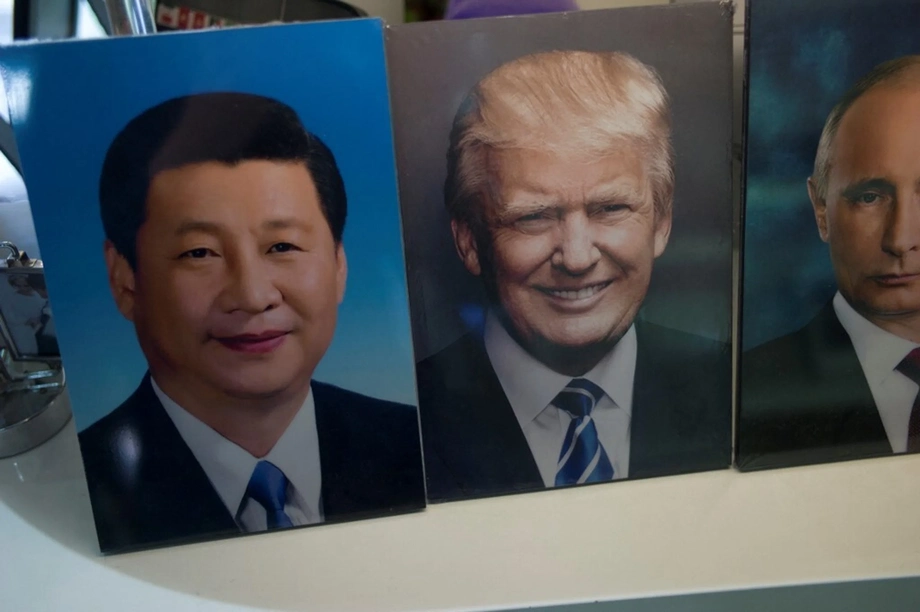
China confirmed on November 4, 2026, that it was communicating with the United States and Russia about a possible meeting between Xi Jinping, Donald Trump and Vladimir Putin, bringing a disputed diplomatic proposal closer to public view two weeks before leaders gather in Shenzhen.
Contents
- Beijing acknowledges discussions two weeks before APEC
- What changed in China's position?
- How the proposal developed
- Trump and Putin have different priorities
- Why Kyiv objects to being left out
- Europe seeks a place in security decisions
- Abu Dhabi offers a different negotiating table
- What Shenzhen could offer each leader
- Key Points
The proposed meeting could take place alongside the Asia-Pacific Economic Cooperation summit on November 18 and 19. Its prospects have exposed competing priorities: Trump wants to discuss nuclear weapons, Moscow wants negotiations over the war in Ukraine, and Kyiv insists that its future cannot be negotiated without Ukrainian participation.
Chinese Foreign Ministry spokesperson Mao Ning acknowledged the contacts at a regular briefing in Beijing after previously declining to provide information about the proposal.
"China is maintaining communication with relevant parties regarding a potential meeting among Chinese, Russian and US leaders," Mao said.
Beijing has not announced a final agreement to hold the meeting, its format or its agenda. Those decisions matter because a discussion about nuclear weapons would involve different demands from negotiations over Ukrainian territory and security.
The diplomatic calendar is already crowded. Separate negotiations involving Ukraine, the United States and Russia are scheduled for November 10 and 11 in Abu Dhabi, a week before the APEC gathering begins. European governments are also seeking a role in discussions about security arrangements after the war.
What changed in China's position?
Mao's November 4 statement was Beijing's first public acknowledgment of discussions about the proposed meeting of the three leaders. On October 19, when asked whether China had agreed to host it, she said she had no information to share.
China had subsequently discussed contact concerning a possible bilateral meeting between Xi and Putin. The latest statement explicitly addressed a gathering that would also include Trump.
US, Chinese and Russian officials had reportedly been discussing the proposal privately for about two weeks by November 3, with Washington and Moscow pressing Beijing to host. US Secretary of State Marco Rubio had also said discussions were taking place.
Russia described preparations more confidently. Kremlin spokesperson Dmitry Peskov said on November 3 that work was underway. His account followed earlier statements by presidential aide Yuri Ushakov that China was working on arrangements and could include the meeting in the APEC programme if conditions were favourable.
The shift follows the competing summit proposals outlined in October, when Moscow was promoting both talks involving Ukraine and a separate gathering without Kyiv. China's acknowledgment now gives the second proposal a clearer public footing, while the question of Ukrainian participation remains central.
How the proposal developed
Putin reportedly proposed the meeting during an October 9 telephone call with Trump. The US president subsequently expressed willingness to participate, while the Kremlin initially stopped short of confirming that Russia had initiated the idea.
The public statements and planned meetings trace a month of negotiations over who would attend and what they would discuss:
- October 9: Putin reportedly suggested a meeting with Trump and Xi during a telephone conversation with the US president.
- October 19: Trump publicly expressed willingness to attend. China's Foreign Ministry said it had no information to share about the proposal.
- October 21: Ushakov said China was working to organise the meeting and might add it to the APEC programme if conditions were favourable.
- October 25: Ushakov said Moscow, Beijing and Washington were ready in principle and that preparations had begun.
- October 29: German President Frank-Walter Steinmeier urged Xi in Beijing to use his influence over Moscow to help end the war.
- November 1: Steinmeier said Xi had appeared surprised by the proposed summit and had denied preparations for a meeting focused on Ukraine.
- November 4: Mao publicly confirmed communication about a possible meeting of the three leaders.
- November 10 and 11: Ukraine, US and Russian negotiators are scheduled to meet in Abu Dhabi.
- November 18 and 19: APEC leaders are scheduled to gather in Shenzhen, the possible venue for the leaders' meeting.
Moscow's description of preparations on October 21 and October 25 was more definite than Beijing's public position at the time. Mao's latest remarks bring the accounts closer together, although China continues to describe diplomatic communication rather than announce a confirmed summit.
Trump and Putin have different priorities
Trump has presented nuclear weapons as his main reason for wanting the meeting. Putin reportedly wants to use the format to pursue an agreement ending the war on terms favourable to Russia.
The US president explained his preferred subject when discussing the proposal outside the White House in October.
We would have it to talk about nuclear weapons and denuclearization.
Nuclear arms control means agreements that limit weapons or the ways countries develop and deploy them. Denuclearization is a broader ambition to remove nuclear weapons. Turning either goal into negotiations requires agreement on which weapons would be covered and how countries would check compliance.
China has resisted the nuclear negotiations Washington wants. Its Foreign Ministry has argued that China's nuclear forces are much smaller than those of the United States and Russia, making negotiations among the three inappropriate at this stage. Peskov has also acknowledged Beijing's lack of interest in the nuclear agenda described by Trump.
The proposed summit therefore brings together leaders whose stated objectives overlap only partly. Washington is highlighting nuclear weapons, Moscow is seeking movement on Ukraine, and Beijing is weighing whether to host a format that could place both subjects on the table.
Why Kyiv objects to being left out
Ukraine's objection concerns who would negotiate decisions affecting its territory, sovereignty and security. President Volodymyr Zelensky has repeatedly insisted that Ukraine must be represented in talks about its future.
Ukrainian Foreign Minister Andrii Sybiha drew a direct contrast between negotiations that include Kyiv and a summit involving China instead.
"A trilateral meeting between the leaders of Ukraine, the US and Russia could help end the war faster. A trilateral meeting between the leaders of Russia, China and the US would have the opposite effect: It would encourage Putin to continue this war," Sybiha said.
Sybiha also rejected Moscow's claim to a privileged role in deciding international affairs.
"Russia is not a global power; it is a global problem," he said.
Zelensky warned in October that the proposed gathering could become a platform for redistributing influence. He invoked the 1945 Yalta Conference, where US, Soviet and British leaders discussed Europe's future as World War II approached its end.
"We really don't want this to turn into 'Yalta 2, 3, 4', with a redistribution of influence," Zelensky said.
For Kyiv, the practical concern is that Washington, Moscow and Beijing could agree on positions before Ukraine has a chance to negotiate them. Zelensky said Russia wanted the meeting more than anyone and warned against giving Moscow another major diplomatic advantage.
Europe seeks a place in security decisions
Steinmeier's account of his October 29 discussion with Xi added another complication. Speaking on November 1, the German president said the Chinese leader had appeared surprised when he raised the possibility of a summit about Ukraine.
Steinmeier described Xi's position in an interview after their meeting in Beijing.
"From his perspective, there is absolutely no preparation underway for a Ukraine summit involving the US, Russia, and China," Steinmeier said.
Xi also described the war as a European conflict and said Europeans would need to take part in negotiations, according to Steinmeier. That account concerns a summit focused on Ukraine, while Mao's later statement addressed a possible leaders' meeting without specifying its subjects.
European participation has concrete consequences. The planned negotiations concern security guarantees and Europe's role in Ukraine after the war. A security guarantee is a promise to help protect a country against future attack; its value depends on what assistance governments commit to provide.
US officials are expected to meet representatives of France, Germany, the United Kingdom, the European Union and NATO in Brussels before the Abu Dhabi negotiations. Those discussions would address security guarantees and European responsibilities.
Abu Dhabi offers a different negotiating table
The November 10 and 11 talks in Abu Dhabi would include Ukraine alongside the United States and Russia. US special envoy Steve Witkoff said Washington would mediate the discussions among officials.
The expected subjects include security arrangements after the war, reducing tensions, humanitarian efforts and further steps toward peace. These negotiations would bring the countries directly involved in the war into the same process, with the United States acting as mediator.
The two proposed formats could produce very different conversations. Abu Dhabi is intended to address practical questions with Ukrainian participation. Shenzhen could bring together three nuclear powers whose interests extend beyond Ukraine and whose preferred agendas remain unsettled.
The timing places the Abu Dhabi talks first. Their outcome could shape the diplomatic setting in which Trump, Putin and Xi arrive at APEC, although no agreement has been announced connecting the two meetings.
What Shenzhen could offer each leader
Xi is due to host leaders and representatives from APEC's 21 member economies in Shenzhen. Holding an additional meeting there would allow Trump and Putin to meet him during an already scheduled international gathering.
For Putin, a meeting with the US and Chinese presidents would provide a prominent diplomatic platform as Russia seeks to escape isolation following its invasion of Ukraine. For Xi, hosting could offer a role in bringing Washington and Moscow together.
Trump and Xi also have an active bilateral agenda. They have met twice in 2026, most recently during Xi's September visit to the White House, and are expected to meet again at the G20 summit in Miami in December.
The two leaders have pledged to extend the trade truce agreed in October 2025 and explore tariff cuts on US$30 billion of goods on each side. Those discussions give Washington and Beijing another set of interests to manage alongside nuclear weapons and the war in Ukraine.
Trump last met Putin in person in Alaska in August 2025. Xi and Putin have met dozens of times, most recently during the Russian leader's visit to Beijing in May. A joint meeting would bring those separate relationships into one room, with the unresolved agenda determining whether the conversation centres on arms control, Ukraine or a broader negotiation.
Key Points
- China confirmed on November 4 that it was communicating with the United States and Russia about a possible meeting of their leaders.
- The proposed venue is the APEC summit in Shenzhen on November 18 and 19. No final agreement, format or agenda has been announced.
- Trump has highlighted nuclear weapons, while Moscow reportedly seeks negotiations over an end to the Ukraine war on terms favourable to Russia.
- Ukraine insists on participating in decisions about its future. European governments also want a role in security negotiations.
- Separate talks involving Ukraine, the United States and Russia are scheduled for November 10 and 11 in Abu Dhabi.