DNA reveals a history linking two regions
A study of 25 Rohingya people living in a refugee camp in Cox's Bazar, Bangladesh, has traced the community's main genetic ancestry to eastern South Asia while identifying a distinct contribution from populations in Myanmar. Researchers estimate that the last major mixing of South and Southeast Asian ancestry occurred between 701 and 974 years ago.
Contents
- DNA reveals a history linking two regions
- How the researchers assembled the comparison
- What the ancestry percentages mean
- Shared DNA adds another layer of evidence
- When did the ancestral populations mix?
- Language follows a similar regional pattern
- A population history with substantial connections
- Possible adaptation signals need further investigation
- Why the findings matter for a displaced community
- Key Points
Published on 17 November 2026 in Scientific Reports, the genomic study, titled The mosaic genetic ancestry of Rohingya, provides the first detailed dataset covering genetic variation across the Rohingya genome. Its findings connect the community closely with neighbouring Bangladeshi populations, while showing a different history of contact with Myanmar.
One statistical model estimated approximately 59% Kol-related ancestry, used as a reference for North Indian ancestry, and 41% ancestry linked to Burmese reference populations. Among neighbouring Bangladeshi Muslims, the corresponding estimates were 69% and 31%. The Burmese contribution was therefore about 10 percentage points higher among the Rohingya.
The research brings together evidence from ancestry models, shared stretches of DNA, population history and language. Together, these describe a community with a predominantly South Asian foundation whose genetic history was shaped by centuries of interaction in Arakan, the coastal region now largely within Myanmar's Rakhine State.
How the researchers assembled the comparison
The international team of 12 scientists was jointly led by Professor Gyaneshwer Chaubey of Banaras Hindu University and Gazi Nurun Nahar Sultana of the University of Dhaka. Geneticists and linguists from institutions in India, Bangladesh and Europe contributed to the work.
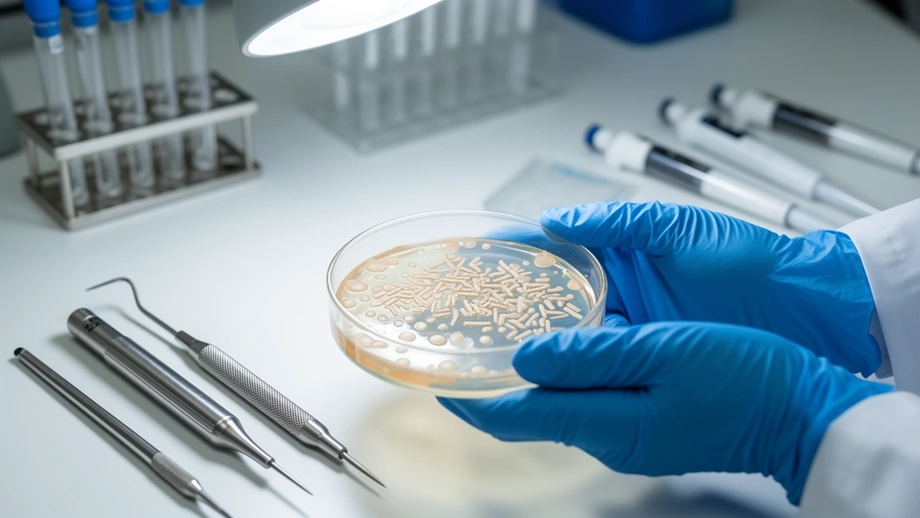
Sultana's team collected blood samples after receiving permission from Bangladesh's Ministry of Disaster Management and Relief. Alongside the 25 Rohingya participants, researchers sampled 27 Bangladeshi Muslims, nine Bangladeshi Hindus and nine members of the Bawm community. That produced 70 newly sampled participants, whose data were compared with 2,217 reference samples from across Eurasia.
A genome is the full set of genetic instructions carried in a person's DNA. By comparing variation across many parts of it, researchers can examine relationships between populations and estimate how their ancestors interacted. The study's Rohingya findings come from this small camp sample, making broader sampling a useful next step.
An initial analysis placed the Rohingya in a tight genetic cluster closest to Bangladeshi populations, with a shift toward East and Southeast Asian groups. One Rohingya participant and one Bangladeshi Hindu participant lay outside their main population clusters and were excluded from later analyses of shared DNA stretches.
What the ancestry percentages mean
The 59% and 41% estimates came from a model called SOURCEFIND. Researchers used the Kol population as a proxy, or comparison stand in, for North Indian ancestry and Burmese samples as a proxy for East Eurasian ancestry. The percentages describe how well those reference sources account for the genetic patterns observed.
Present populations carry their own histories of migration and mixing. Labels such as Kol-related and Burmese-sourced therefore describe statistical relationships to the chosen reference groups. They help reconstruct ancestry across generations, while the study's wider comparisons place the Rohingya's closest regional connections in eastern South Asia.
The higher Burmese contribution appeared consistently across repeated tests. In 90.8% of 400 individual model runs, the estimated Burmese proportion was significantly higher among the Rohingya than among Bangladeshi Muslims. Other methods examining shared genetic variation pointed in the same direction.
Shared DNA adds another layer of evidence
The researchers also compared haplotypes, stretches of DNA containing variants that tend to be inherited together. These can preserve traces of shared ancestry that are harder to see when looking at individual genetic variants alone.
In one analysis, Rohingya participants shared an average of about 383 DNA chunks with Burmese reference samples, compared with about 358 among Bangladeshi Muslims. The difference was statistically significant, meaning the tests found strong evidence of a population difference beyond the variation expected by chance.
A further method examined DNA segments inherited from shared ancestors. The Rohingya shared a greater total length of these segments with Burmese reference samples than the Bangladeshi Muslim comparison group did. Longer shared stretches generally point toward more recent common ancestry because inherited segments become broken into smaller pieces over successive generations.
These results give the ancestry estimates a second foundation: both the overall pattern of genetic variation and the structure of inherited DNA segments indicate stronger connections with Myanmar among the Rohingya sample.
When did the ancestral populations mix?
Using software called ALDER, the researchers estimated the last major admixture event among the Rohingya at 701 to 974 years ago. Admixture is the genetic mixing that occurs when people from populations with different ancestry have children together.
The comparison populations had an older estimated mixing period. For Bangladeshi groups speaking Indo-European languages, the study placed South and Southeast Asian admixture between 1,440 and 1,720 years ago. The Rohingya estimate therefore points to a later episode of contact within the same broad geographic corridor.
The researchers interpret the Rohingya timing as reflecting interaction with surrounding communities after their ancestors settled in Arakan. The date of their first settlement remains unresolved. Trade, migration and travel along the Arakan coast, the Bay of Bengal and the Andaman Sea offer historical settings for such contact, although the study leaves the precise routes and events open.
Language follows a similar regional pattern
Rohingya belongs to the Eastern Indo-Aryan branch of the Indo-European language family and is closely related to the Chittagonian dialect of Bengali. That relationship fits the study's finding of a strong eastern South Asian genetic foundation.
Professor George van Driem, a linguist at the University of Bern and a member of the research team, described how the linguistic and genetic findings fit together:
The story of the Rohingya is like a mosaic; the dominant layer is from Eastern South Asia, and their language belongs to the same family. A Myanmar-related component was added after they settled in Arakan.
The comparison brings two kinds of history into the same picture. Language connects the Rohingya with eastern South Asia, while genetic evidence records additional contact with neighbouring populations, including communities speaking Tibeto-Burman languages.
A population history with substantial connections
The team examined runs of homozygosity, stretches of DNA in which the copies inherited from a person's mother and father are identical. The number and length of these stretches can help researchers investigate past population size and patterns of marriage within communities.
The Rohingya showed a relatively low burden of these identical stretches compared with isolated neighbouring groups. The authors interpreted this as evidence of a historically large effective population size and a history involving substantial genetic exchange, broadly resembling patterns among Bangladeshi and Indian caste populations.
Effective population size is a genetic measure of how many people contributed to a population's inherited diversity over time. It differs from a census count. Here, it helps describe the community's ancestral history, while the samples themselves came from people living under the very different circumstances of displacement.
Possible adaptation signals need further investigation
The study also searched for genetic regions that differed strongly between the Rohingya and comparison populations. Using Population Branch Statistics, with French and Han reference genomes incorporated into its modelling, the team identified candidate regions including BAG3, ITPR3, SNAP91, COL27A1 and PLCB1.
BAG3, ITPR3 and SNAP91 received particular attention because of their known roles in cellular stress responses, calcium signalling, autophagy and vesicle transport. Autophagy is a cell's internal recycling system. Vesicles are small packages that move substances within cells, including substances involved in communication between nerve cells.
These biological processes can matter when bodies face infection, temperature changes or metabolic stress. The researchers identified the regions as possible targets of natural selection, the process through which inherited traits become more common when they help survival or reproduction. Further functional testing is needed to determine whether particular variants helped the Rohingya adapt to local conditions and how those variants affect health.
Why the findings matter for a displaced community
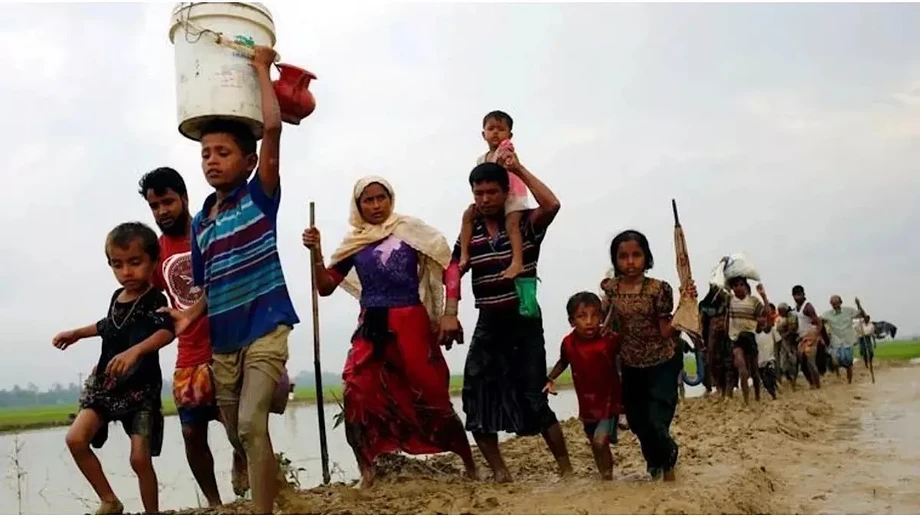
The Rohingya are a predominantly Muslim community historically concentrated in Myanmar's Rakhine State. Myanmar's 1982 citizenship law effectively excluded most Rohingya from citizenship, and a military crackdown in 2017 forced hundreds of thousands to flee to Bangladesh.
Section 3 of the Burma Citizenship Law, Pyithu Hluttaw Law No. 4 of 1982, lists national groups and sets a settlement criterion dating to before 1823. Its English translation states:
Nationals such as the Kachin, Kayah, Karen, Chin, Burman, Mon, Rakhine or Shan and ethnic groups as have settled in any of the territories included within the State as their permanent home from a period prior to 1185 B.E., 1823 A.D. are Burma citizens.
Section 4 gives the Council of State authority to determine whether an ethnic group is national: "The Council of State may decide whether any ethnic group is national or not." Sections 42–44 set out naturalized-citizenship eligibility, including residence before 4 January 1948 and requirements concerning age, language, character and mental fitness.
The research adds a biological history to a community whose origins and belonging have been politically contested. Its central finding joins two regional connections in one account: a dominant eastern South Asian ancestry and centuries of genetic exchange with populations in Myanmar.
The main dates span both ancestral history and modern displacement:
- 1,440 to 1,720 years ago: estimated South and Southeast Asian admixture among the Bangladeshi Indo-European comparison populations.
- 701 to 974 years ago: estimated last major admixture event among the Rohingya.
- 1982: Myanmar's citizenship law effectively excluded most Rohingya.
- 2017: a military crackdown drove hundreds of thousands into Bangladesh.
- 17 November 2026: Scientific Reports published The mosaic genetic ancestry of Rohingya.
For future research, the study supplies a starting dataset for a population that has received little genomic attention. Wider sampling and laboratory work could refine the ancestry models and investigate the candidate genetic regions. No timetable for that follow up was given.
Key Points
- The study analysed 25 Rohingya participants alongside 45 people from neighbouring communities and 2,217 Eurasian reference samples.
- Rohingya ancestry was predominantly South Asian, with a stronger Myanmar connection than among neighbouring Bangladeshi Muslims.
- One model estimated 59% Kol-related and 41% Burmese-sourced ancestry, compared with 69% and 31% among Bangladeshi Muslims.
- The last major ancestral mixing was dated to 701 to 974 years ago; the first settlement date remains unresolved.
- Language and genetics both point to eastern South Asian connections alongside a distinct history in Arakan.
- Possible genetic adaptation signals require further investigation.