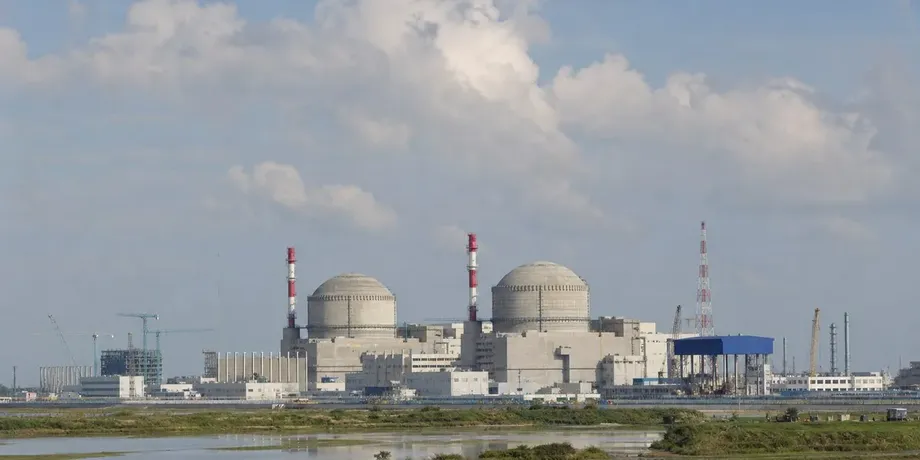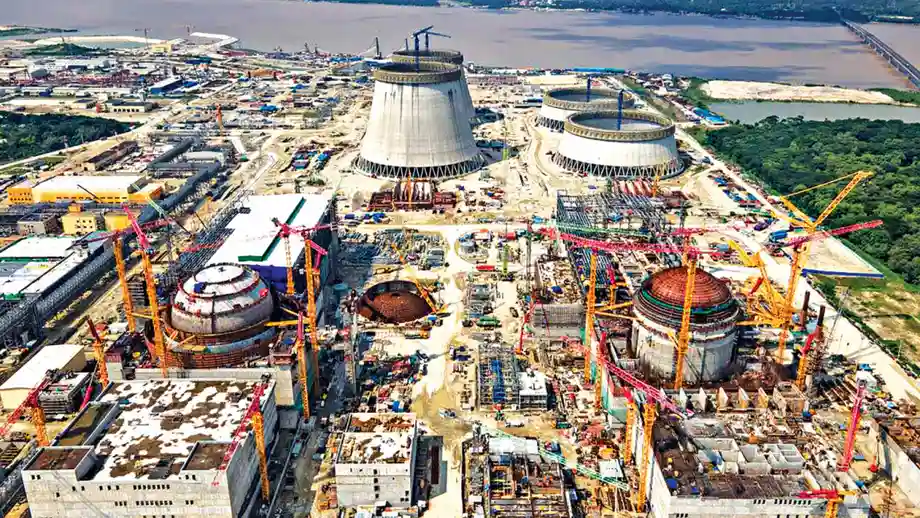
First electricity flows from Bangladesh's nuclear plant
Bangladesh's Rooppur Nuclear Power Plant began supplying 350 megawatts (MW) to the national grid on Tuesday, November 17, 2026, opening a new testing phase for the country's first nuclear power project. The connection brings electricity from the first reactor to consumers while engineers check how the plant and the national transmission network work together.
Contents
- First electricity flows from Bangladesh's nuclear plant
- What engineers are testing
- A planned pause before the next connection
- What households can expect during the trial
- How Rooppur reached the grid
- Regulatory approval controls each next step
- January output target and eventual handover
- Russia's role and the rising taka cost
- Key Points
The Power Division put the start at 3:15pm, while the Bangladesh Atomic Energy Commission and the grid operator recorded 3:16pm. Science and Technology Minister Faqir Mahbub Anam attended the connection at the plant in Ishwardi, Pabna, about 160 kilometres from Dhaka.
The milestone makes Bangladesh the 33rd country to generate nuclear electricity. Commercial operation remains a later stage: the agreement with the Russian contractor provides for a 10-month trial before the first unit begins commercial supply at full capacity.
Rooppur has two units, each designed to generate 1,200MW, giving the project a combined capacity of 2,400MW. Tuesday's initial 350MW supply was about 29% of the first unit's rated electrical capacity, or roughly one seventh of the planned total for both units.
What engineers are testing
Engineers connected the first unit through a process called grid synchronisation. This means matching the generator's electrical output with the grid, including its voltage and frequency. Frequency is the rhythm at which alternating current changes direction. A generator joining a large electricity network must operate in step with it.
The first connection allows teams to examine the turbine, generator and systems that coordinate the plant with the grid. Inside the plant, a controlled nuclear reaction produces heat, which is used to make steam. The steam turns a turbine connected to the electricity generator.
Rooppur project deputy director Dr Khalequzzaman said Tuesday's supply formed part of the synchronisation test, with progress dependent on the results of the technical checks. Project director Kabir Hossain explained before the connection that engineers would examine whether the grid could receive the electricity properly.
The initial output was higher than the 240MW to 300MW anticipated before the test. Power Grid Bangladesh PLC recorded production of 350MW at 3:45pm, 29 minutes after its recorded connection time. Minister Anam later said testing had reached 360MW before output was brought down to around 300MW and held steady.
A planned pause before the next connection
The Bangladesh Atomic Energy Commission set out an initial schedule of eight to 10 hours of electricity supply. During that period, engineers would monitor equipment performance, stability and coordination with the grid.
The unit would then be disconnected for further technical work. After a break of around 28 hours, the plan calls for another connection lasting four to six hours to complete additional technical and operational checks.
Those pauses are part of the commissioning programme, the sequence of tests used to bring a new power station into service. Engineers need to examine how equipment behaves at different output levels and how its control systems respond before moving to the next stage.
Over the coming months, testing will cover the reactor, turbine, generator, other key equipment and automated control systems. Temporary shutdowns and changes in electricity output are expected during that work.
What households can expect during the trial
Electricity generated during testing will enter the national network and be supplied to consumers. However, the trial schedule includes interruptions, so the plant's contribution will vary rather than provide a continuous, steady supply.
Power Grid Company of Bangladesh, the national grid operator, is responsible for taking measures to maintain stability as Rooppur's output changes. Electricity supply and demand must stay closely balanced across the network, including when a large generator increases output or disconnects.
Bangladesh's transmission system still relies on conventional operation and estimates of demand rather than a fully smart grid. That makes close monitoring particularly important during the first connections and may require several rounds of testing.
Shafiqul Islam, a professor in the Department of Nuclear Engineering at the University of Dhaka, said synchronisation required intensive checks. He said the initial work could be completed in two days if everything went well, while any fault would require the process to be repeated. He urged that quality standards be maintained to avoid future disruptions.
How Rooppur reached the grid
Tuesday's connection followed fuel delivery, the start of a controlled nuclear reaction and regulatory approval of physical test results. The progression moved the project from preparing the reactor to testing electricity production with the national network.
A planned September start for the nuclear reaction was delayed after a fault was found during safety valve testing. The fault was repaired before regulatory permission was obtained to proceed.
- 2015: Bangladesh agreed with Russia on financial and technical assistance for the Rooppur project.
- October 2023: The first nuclear fuel shipment reached the project, preparing the way for later reactor operation.
- October 11, 2026: Unit 1 achieved its first controlled, sustained nuclear chain reaction at 3:34pm.
- October 29, 2026: The Bangladesh Atomic Energy Regulatory Authority approved the physical test results.
- November 17, 2026: The first unit supplied electricity to the national grid for the first time.
The October reactor milestone is known as first criticality. In simple terms, the nuclear reaction had become capable of sustaining itself under control, allowing the reactor to produce heat for the subsequent testing programme.
Regulatory approval controls each next step
The Bangladesh Atomic Energy Regulatory Authority, known as BAERA, must approve the next phase of trial operation after the current technical tests produce satisfactory results and the scheduled work is completed. The Bangladesh Atomic Energy Commission implements the project under the Ministry of Science and Technology; BAERA is the regulator that authorises progress.
The grid connection takes Rooppur into the commissioning phase described by project officials as stage C. Successful completion would allow it to move toward stage D, the final stage of that sequence. The immediate task is to demonstrate that the plant's equipment and its connection to the grid perform as required.
BAERA had directed that the initial supply take place in the presence of the Bangladesh Power Development Board and the grid operator. Test results are to be submitted to the regulator before further authorised operation.
No firm commercial start date has been announced. The formal plan sets a 10-month trial period under the contractor agreement. NPCBL managing director Md. Zahedul Hasan had earlier estimated seven to eight months of testing after grid connection, with each next step depending on the preceding results.
January output target and eventual handover
Minister Anam said the government would try to raise supply to between 1,100MW and 1,200MW by January 2027. That would bring the first unit close to, or up to, its rated capacity during the testing programme.
The target concerns an increase in output through successive tests. Commercial supply also requires completion of the trial programme, regulatory approvals and an electricity purchase agreement with the Bangladesh Power Development Board.
After successful completion of the process, the Russian contractor is due to provisionally hand over the first unit to the Bangladesh Atomic Energy Commission. Nuclear Power Plant Company Bangladesh Limited, or NPCBL, would then take over as the designated operating organisation following a government gazette notification.
The institutional steps assign different responsibilities: the commission implements the project, the contractor completes the agreed work, the regulator authorises operation and NPCBL is the company designated to run the station.
Russia's role and the rising taka cost
Russia is providing financial and technical assistance, with Atomstroyexport building the two units and Russia's state nuclear corporation Rosatom providing technical support for operation. The project has an estimated value of about $12.65 billion, backed by major Russian loans.
The current project cost in Bangladeshi currency is put at 138,686 crore taka, equivalent to about 1.387 trillion taka. The rise in the dollar exchange rate has added approximately 26,000 crore taka, or 260 billion taka, to the cost measured in local currency.
The contractor agreement limits scope for increasing the contracted project cost when the schedule is extended. A weaker taka nevertheless means that Bangladesh needs more local currency to meet costs denominated in dollars.
The project deadline, originally December 2025, has been extended twice to June 2028. That is an extension of two and a half years. Progress also slowed amid political instability and international conditions after the first fuel delivery.
Rooppur is intended to help meet Bangladesh's growing electricity demand and strengthen energy security. Tuesday's connection begins the practical task of integrating that new source into the national system, with equipment performance, grid coordination and regulatory decisions determining the pace of further supply.
Key Points
- Rooppur Unit 1 began trial supply of 350MW to Bangladesh's national grid on November 17, 2026.
- The initial plan calls for eight to 10 hours of supply, a break of about 28 hours, then another four to six hours of connection.
- Consumers will receive electricity generated during testing, while output and availability will vary.
- BAERA approval is required before the next phase of trial operation.
- The contractor agreement provides for a 10-month trial before commercial supply at full capacity.
- The minister aims for 1,100MW to 1,200MW by January 2027 as testing progresses.
- The two units have a combined planned capacity of 2,400MW, and the project deadline is June 2028.