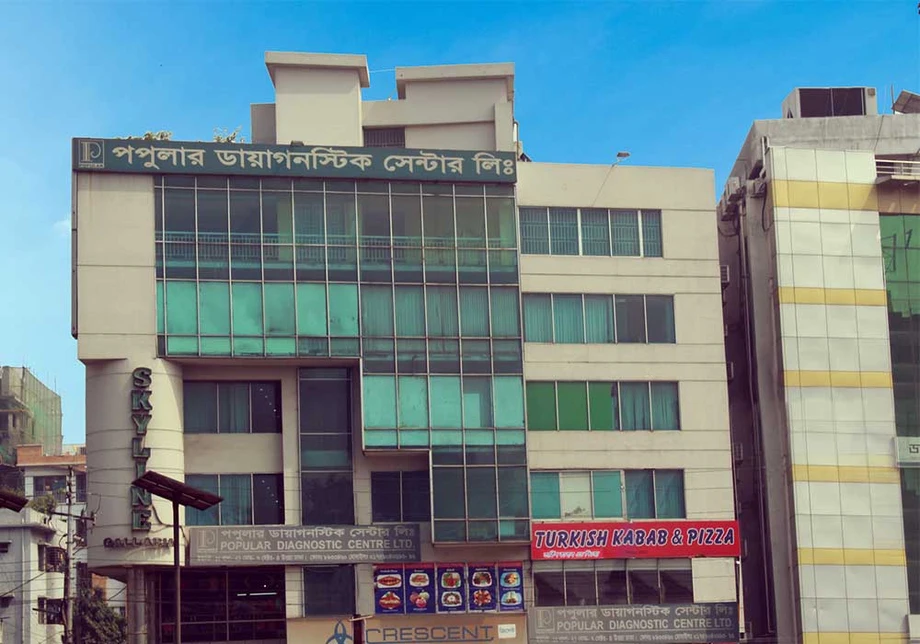
A hidden payment behind the test bill
Doctors referring patients to major diagnostic centres in Bangladesh may receive an estimated Tk1,861 crore, or Tk18.61 billion, in commissions each year, according to Bangladesh Health Watch (BHW). The payments reportedly range from 20% to 50% of diagnostic test fees, giving some doctors a financial reason to direct patients to particular businesses.
Contents
- A hidden payment behind the test bill
- How referral payments reach patients
- Eleven tests and a journey of 60 kilometres
- A cheaper public option was available in Dhaka
- A practice documented across several periods
- Missing staff narrow the public alternative
- Equipment spending without working services
- Patients face payments and slow complaints
- Reform proposals target the incentives
- Key Points
The estimate appears in BHW's biennial report for 2025 to 2026, Challenging Corruption: Strengthening Governance in Bangladesh's Health Sector, launched on November 15 at the International Mother Language Institute in Dhaka. Its findings connect referral payments with absent doctors, unused public equipment, inflated purchasing prices and slow disciplinary proceedings.
For patients, the concern is immediate: a recommendation that appears to be based entirely on medical need may also earn money for the person making it. Families can face extra travel, repeated tests and private laboratory bills while cheaper public services go unused or lack the staff to function.
BHW's annual commission figure is an estimate covering major diagnostic providers and awaits independent verification. The report also leaves the dates of many documented irregularities unspecified, so its findings bring together evidence from different periods rather than a single inspection of current conditions.
The 191 pages contain 11 chapters contributed by 17 researchers. BHW convener Dr Ahmed Mushtaque Raza Chowdhury and icddr,b emeritus scientist Dr Shams El Arifeen edited the document, which was prepared with support from the Swedish Embassy and the Swedish International Development Cooperation Agency.
How referral payments reach patients
A referral commission is a payment for sending someone to a particular laboratory, clinic or hospital. At the rates cited by BHW, a diagnostic bill of Tk1,000 could generate Tk200 to Tk500 for the referring doctor. The patient's payment must then cover both the testing service and the referral payment.
Lakshmipur provides a detailed picture of how the practice can extend beyond doctors. Pharmacist Md Zakir Hossain described village patients first seeking help at medicine shops, then being directed to private facilities offering the highest commissions, sometimes reaching half of treatment costs.
Didar, a private hospital manager identified by that name, said half the bills paid by patients arriving through pharmacy referrals went to pharmacy owners. He said this arrangement limited the hospital's ability to charge those patients less.
Abdur Rahman Tuhin, owner of Matrichaya Hospital in Raipur, said ambulance drivers, drivers of auto rickshaws powered by compressed natural gas and even patients' relatives also received commissions. Managers at five private hospitals in the district described pressure from pharmacy owners, brokers and some doctors to order unnecessary tests.
These accounts describe a chain in which several people can earn from a patient's movement between facilities. A family may trust the pharmacist, driver or relative helping it find treatment without knowing that a referral payment is involved.
Eleven tests and a journey of 60 kilometres
A father identified under the pseudonym Shipon Kuri described taking his son, aged five, to a medicine shop in Bashikpur Bazar, Lakshmipur Sadar, after the child developed an apparent allergy. The pharmacist referred the boy to a private hospital in Noakhali, about 60 kilometres from home.
The hospital doctor ordered 11 tests costing approximately Tk10,000. The father said he spent the day completing the tests, returned home at night and received a prescription for two allergy medicines. He later heard from another villager that the pharmacy owner had received half the testing payment.
Fatema Akhter, another parent, described paying for three tests for her child after a fever. She said a doctor subsequently referred the child to a paediatrician at another diagnostic centre, where the same tests were ordered again.
For these families, the expense included more than laboratory charges. Travelling between towns and repeating appointments consumed time as well as money. Their accounts also show how difficult it can be for patients to understand why tests are ordered or repeated when the recommendation comes from someone they rely on for care.
A cheaper public option was available in Dhaka
A documented case from July 2008 shows a different route into private testing: directing a patient away from a public laboratory that could perform the required investigations. Mofizul Islam, aged 75, was admitted to Dhaka Medical College Hospital (DMCH) with abdominal pain and advised to obtain four tests privately.
A diagnostic centre representative offered a discounted price of Tk1,000, down from Tk1,660. Mofizul's son, Osman Gani, challenged the explanation that the hospital laboratory was unavailable. A passing laboratory technologist confirmed that all four tests could be performed there. Mofizul eventually paid Tk420 at the public laboratory and was diagnosed with kidney problems.
The private offer was therefore Tk580 more than the public bill, even after the discount. Hospital accounts at the time said laboratories at DMCH and the adjoining Dhaka Medical College could perform 90% of tests around the clock, yet about half of patients were being sent to private centres. Referrals from seven medicine wards were estimated to cost the hospital nearly Tk100,000 in daily revenue.
Dr Kazi Shafiqul Halim, then a clinical pathologist at DMCH, defended the laboratory's work:
Tests are very reliable here because qualified doctors and technologists carry out those.
DMCH director Brig Gen Abdus Shahid Khan said some tests still required outside facilities. He said ward managers had been instructed to obtain the responsible doctor's signature when referring patients for tests unavailable at the hospital.
A practice documented across several periods
Evidence cited over the years describes both payments for individual tests and arrangements intended to secure a continuing flow of patients. In 2008, allegations included advance payments of Tk20,000 to Tk100,000 to doctors and benefits such as air conditioners for personal use.
A commission schedule dated May 2005 listed payments of 50% for pathology tests, 40% for enzyme linked immunosorbent assays and 20% for several imaging and tissue examinations. It also listed fixed payments, including Tk1,350 for an MRI referral and Tk1,200 for a CT scan referral.
- May 2005: A diagnostic centre's commission schedule set out referral payments by test.
- July 2008: The DMCH case documented a Tk1,000 private testing offer for investigations completed publicly for Tk420.
- 2021: Recruitment of 2,839 health workers was cancelled, an episode cited in BHW's examination of staffing governance.
- May 2025: The period covered by BHW's medical council complaint figures ended.
- November 15: BHW launched its biennial report for 2025 to 2026 in Dhaka.
Missing staff narrow the public alternative
Nearly 40% of doctors were absent during unannounced inspections cited by BHW. Subsequent research recorded absenteeism exceeding 70% at some remote health centres. The report also described doctors receiving salaries and allowances without performing their duties.
Lakshmipur Civil Surgeon Dr Ahmed Kabir linked referrals partly to shortages of doctors and laboratory technicians in government hospitals. He also described middlemen directing patients towards private facilities where hospital security was inadequate.
Professor JM Farooqui, president of the civic organisation Sushasoner Jonno Nagorik in Lakshmipur, described patients turning to private care because public facilities could not provide the services they needed. Local accounts described only two or three basic blood and urine tests being available across the district hospital and four upazila health complexes.
BHW identified political influence and weaknesses in paper records affecting recruitment, transfers and promotions across a workforce exceeding 180,000. Decisions based on connections rather than service needs can leave facilities without the right staff. Its proposed response combines digital personnel management with special incentives for workers serving remote areas.
Equipment spending without working services
BHW cited Tk459 crore in procurement losses at the Central Medical Stores Depot (CMSD), drawing on investigations into public purchasing. Some supplies were obtained at prices reaching 18 times their fair market value. Separately, medical equipment worth Tk283 crore was lying unused.
Those findings describe two costly failures. Paying inflated prices uses public money that could purchase other supplies. Buying equipment without the planning, maintenance or personnel needed to operate it leaves patients without the intended service even after the money has been spent.
BHW recommended publishing all public procurement information and tracking equipment from purchase through installation, maintenance and actual use. This would make responsibility extend beyond signing a contract and accepting delivery.
Shireen Parvin Huq, a founding member of Naripokkho and former head of the Women Affairs Reform Commission, raised concerns at the launch about tender information being leaked to favour particular businesses despite electronic tendering. She also expressed frustration over continued dependence on international organisations for vaccine purchasing.
Patients face payments and slow complaints
BHW described unofficial charges for hospital beds, surgery dates and discharge papers, alongside referrals to private clinics. In one case, a ward attendant took Tk5,000 from an elderly patient with a promise to arrange surgery, although the ward had no surgical facilities. The employee was transferred rather than disciplined.
The Bangladesh Medical and Dental Council (BMDC) received 172 complaints between 2010 and May 2025. BHW said 79 remained pending and 29 had resulted in disciplinary action. The pending cases represented about 46% of all complaints received during that period.
Regulatory independence was another concern. Approximately 70 of the BMDC's roughly 90 members were affiliated with the government, and the government heard appeals against council decisions. None of the six regulatory bodies reviewed had effective representation for patients or the general public.
Medical education expanded during the period under review: the number of colleges rose from 62 in 2010 to 118 in the 2022 to 2023 academic year, an increase of 56, or about 90%. BHW said quality controls and oversight had not improved alongside that growth.
BHW proposed a legal framework for medical negligence complaints, including compensation provisions, an independent appeals process and patient representation on regulatory bodies. It also recommended preventing ministers, secretaries and members of parliament from heading those bodies.
Reform proposals target the incentives
BHW's central proposal on referrals is a legal ban on doctors accepting commissions from diagnostic centres and other healthcare institutions for sending patients. It also wants mandatory disclosure of doctors' financial relationships with pharmaceutical and medical equipment companies.
A conflict of interest arises when a doctor's opportunity to earn money competes with the duty to recommend care in the patient's interests. Disclosure would make financial ties visible, while a commission ban would target payment for the referral itself. BHW also proposed legal protection for people who expose corruption.
Dr Shams El Arifeen, the report's coeditor and an emeritus scientist at icddr,b, linked corruption to excessive decision making power without accountability, unmanaged financial interests and poorly coordinated oversight. At the launch, he called for ethical practice to become routine:
Enforcement alone is not enough; integrity must become the institutional norm,
Health State Minister MA Muhit said corruption also included influencing policies to benefit particular groups. He argued that punishment had to be accompanied by changes in how healthcare institutions work:
Punishing individuals alone cannot resolve the crisis; structural reforms across the system are essential,
Swedish Ambassador Nicolas Weeks similarly stressed the need for strong institutions alongside funding and technical assistance. For patients, the proposed changes address a connected problem: affordable public care requires staff and working equipment, while trustworthy private referrals require transparent financial relationships and effective complaints procedures.
Key Points
- BHW estimated annual referral commissions at major diagnostic providers could reach Tk1,861 crore, or Tk18.61 billion.
- Doctors reportedly receive 20% to 50% of diagnostic test fees for referrals.
- Accounts from Lakshmipur describe payments extending to pharmacists, drivers, brokers and relatives.
- Research cited by BHW found nearly 40% of doctors absent during surprise inspections and rates above 70% at some remote facilities.
- BHW cited Tk459 crore in CMSD procurement losses and Tk283 crore in unused equipment.
- The medical council had 79 pending complaints out of 172 received between 2010 and May 2025.
- Proposals include banning referral commissions, disclosing financial ties, publishing purchasing information and strengthening patient representation.