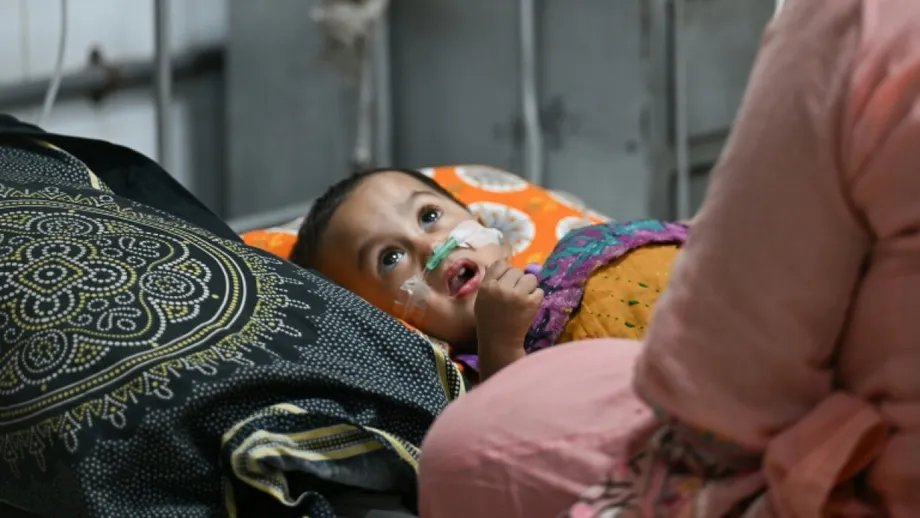
85 of 309 vaccinated children tested negative for measles antibodies
A study led by Bangladesh's Institute of Epidemiology, Disease Control and Research (IEDCR) found that 85 of 309 vaccinated children, or 27.5%, tested negative for measles antibodies after a national vaccination campaign. The finding comes as the Directorate General of Health Services (DGHS) records 1,233 deaths associated with the outbreak, including 104 deaths from confirmed measles and 1,129 among patients with measles symptoms.
Contents
- 85 of 309 vaccinated children tested negative for measles antibodies
- What the September study measured
- A campaign followed by months of transmission
- Why the Matlab trial matters
- Infants face a gap before routine vaccination
- Storage, nutrition and earlier antibody findings
- What hospital testing and virus sequencing found
- The programme has too few vaccinators
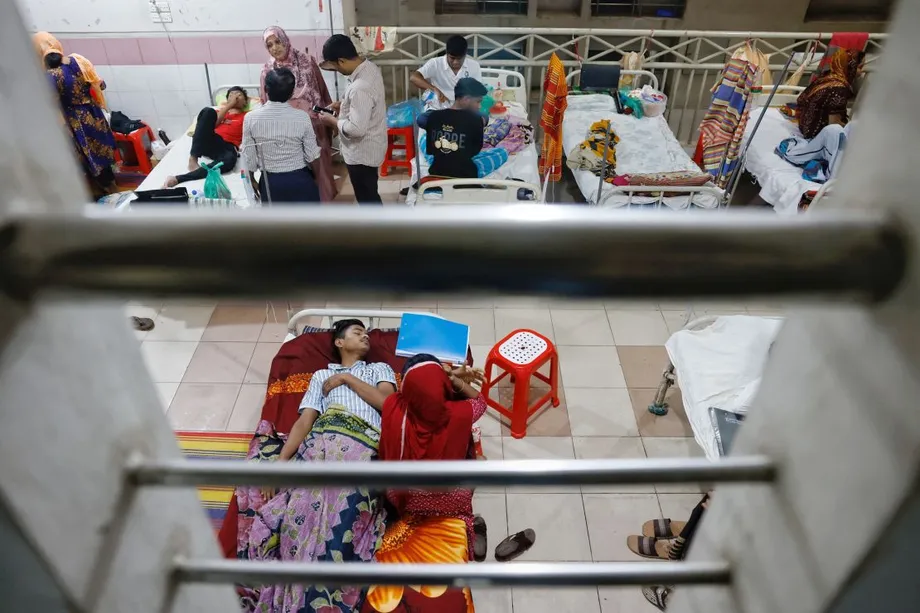
- Severe illness is stretching hospital care
- A larger study and decisions on vaccination
- Key Points
Researchers tested children aged 9 to 59 months in six suburban and rural locations across Dhaka, Mymensingh and Munshiganj districts in September. Of those tested, 203 children, or 65.7%, had positive antibody results. Another 21, or 6.8%, had borderline results, meaning their readings fell between the laboratory's clear positive and negative categories.
The youngest children in the study, aged 9 to 14 months, were less likely to have positive antibody results than those aged 15 to 59 months. Children who had received two or three doses generally showed stronger immune responses than those who had received one.
The findings place two problems at the centre of Bangladesh's response: reaching children who have missed vaccinations and understanding why some vaccinated children have low antibody levels. A national review has separately found that only 82% of children were fully immunised, against a target of 95%, while about 40% of vaccinator positions were vacant.
Bangladesh also has evidence of strong vaccine responses under closely monitored conditions. A randomised trial in Matlab found that 94% of infants developed a measles antibody response after vaccination at six months, rising to a cumulative 99% after another dose at nine months. Understanding the different results now matters for vaccination services and families facing a prolonged outbreak.
What the September study measured
IEDCR led a team of 12 researchers and officials from government health agencies, the Institute of Public Health, the Eastern Mediterranean Public Health Network and Dhaka Homoeopathic Medical College. Researchers described the work as the first assessment of measles immunity among children younger than five following the national campaign.
Vaccination histories were checked using vaccination cards and information from parents. Blood samples were then tested at IEDCR's laboratory. Antibodies are proteins the immune system makes to recognise a virus and help defend the body against it.
The September results describe antibody levels at the time blood was collected. Explaining why a child had a negative result requires examining the doses received, their timing, vaccine storage and the child's health. The study's investigators have called for further investigation into the low response.
Health Minister Sardar Md Sakhawat Hossain said the study was small and that a larger investigation was needed before reaching a final conclusion. He defended vaccine quality, pointing to the use of the same vaccines in many countries.
A campaign followed by months of transmission
Health authorities began the national measles and rubella vaccination campaign on April 20, after the outbreak emerged in March. The campaign covered children from six months to five years and ended on May 20. Officials had expected transmission to come under control within three to four weeks of its completion, yet infections continued five months later.
The main developments span several months:
- March: The measles outbreak began.
- April 20 to May 20: Authorities conducted the national measles and rubella campaign.
- September: IEDCR researchers tested blood samples from 309 vaccinated children.
- October 14: An independent review presented weaknesses in the routine immunisation programme.
- Late November: Results were expected from a larger study involving 3,000 children.
DGHS's latest cited daily bulletin recorded 1,388 people seeking hospital care with measles symptoms and six deaths among patients with those symptoms in 24 hours. The cumulative number seeking care at government and private hospitals reached 222,552. These hospital figures include suspected illness as well as laboratory confirmed disease.
Why the Matlab trial matters
A randomised trial in Matlab offers a detailed comparison. Conducted from March 2017 to March 2018, it enrolled 620 healthy infants and randomly assigned them either to vaccination at six and nine months or to a first dose at nine months.
Among 301 infants vaccinated at six months and included in the antibody analysis, 282 developed a measles antibody response, or 94%. After a second dose at nine months, 297 had responded by 11 months, a cumulative 99%. In the group receiving its first dose at nine months, 291 of 292 infants responded by 11 months, reported as 100% after rounding.
The trial measured seroconversion, meaning that antibody concentrations rose sufficiently after vaccination or reached a level associated with protection. Researchers compared blood samples collected before vaccination with samples taken afterwards. The September investigation instead assessed antibody status after the national campaign among children with different ages and vaccination histories.
The Matlab results also provide a more specific picture than general estimates cited in public discussion that about 50% of infants respond at six months, 85% at nine months and 90% at 12 months. In the trial population, the measured responses were 94% after a dose at six months and approximately 100% after a first dose at nine months. Age matters, while the vaccine, study population and way responses are measured also shape the figures.
The trial recorded 123 adverse events across the two groups, with similar severity and outcomes. Most were mild, resolved without lasting effects and were unrelated to vaccination. Its authors supported vaccination at six months during outbreaks or periods of increased transmission and recommended further research on how long immunity lasts.
Infants face a gap before routine vaccination
Bangladesh's routine schedule gives the first measles and rubella dose at nine months and the second at 15 months. Younger infants depend partly on antibodies passed from their mothers and on protection created when people around them are immune.
A hospital investigation by Bangladesh Shishu Hospital and Institute and icddr,b illustrates the danger before nine months. Researchers studied 341 children younger than 14 admitted with measles symptoms between April 20 and May 21. Measles was confirmed in 324. Among 141 infants aged three to eight months, 137 tested positive.
The Matlab trial's explanation of World Health Organization guidance is especially relevant here: a dose given at six months during an outbreak is a supplementary dose, often called a zero dose. Children receiving it still need both doses in the routine schedule. For parents, an early campaign vaccination therefore adds protection before routine vaccination begins, while later appointments remain necessary.
At a seminar organised by the Society of Microbiologists at Jahangirnagar University, speakers said about 33% of children admitted to hospital were younger than nine months. They also cited figures showing that 74% of affected children had received no vaccine and 14% had not completed their doses. Together, those categories accounted for 88% of the affected children described at the seminar.
Research on maternal antibodies remains limited. An earlier preliminary icddr,b investigation involved only 16 infants and found that antibody levels could fall quickly during the first months of life. Larger studies are needed to guide decisions about protection in this vulnerable period.
Storage, nutrition and earlier antibody findings
Vaccine specialist Tajul A Bari has identified storage and transport as priorities for investigation. Vaccines must remain within specified temperatures as they move through warehouses, vehicles and clinics. This controlled journey is known as the cold chain. A temperature problem at any stage can reduce a vaccine's ability to produce an immune response.
Bari also pointed to severe malnutrition as a possible reason for weaker responses in some children. Investigating these factors requires checking delivery conditions alongside children's health and vaccination histories. Officials involved in vaccination have said that vaccines used in the Expanded Programme on Immunisation are approved by WHO, while raising concerns about the absence of a local system for checking their quality.
An earlier antibody study, published in 2016, examined 77 Bangladeshi children after a single measles vaccine dose. It found detectable antibodies in 75.3% and described about one quarter as antibody negative.
That study found the highest average antibody concentration among children aged 13 to 24 months, at 2.75 international units per millilitre, and the lowest among those aged 85 to 96 months, at 0.77. The results varied with age. Read alongside the newer investigation, they show that questions about antibody levels after vaccination predate the current campaign.
What hospital testing and virus sequencing found
The hospital investigation offers another view of vaccination and illness. Among children already admitted with measles symptoms, 142 of 146 infants younger than nine months tested positive, as did 122 of 126 children old enough for vaccination who had received no doses. Positive results occurred in 44 of 48 children with one dose and 16 of 21 with two doses.
All these children were recruited because they were ill enough to be admitted with suspected measles. The percentages describe test results within that hospital group. Measuring protection across the population requires comparing illness among vaccinated and unvaccinated children in a broader study.
Scientists also examined 55 complete virus genomes, the virus's genetic instructions. IEDCR sequenced 37 and icddr,b sequenced 18. Every sample belonged to the B3 genetic group, which has also been detected elsewhere in the world.
Four mutations were identified in the virus's H protein. Researchers said these changes had been observed internationally and described measles as remaining a single serotype, meaning one main type recognised by the immune system. Vaccine antibodies can recognise several parts of the virus. Icddr,b's assessment supported continued vaccination while scientists investigate the biological effects of the mutations.
The programme has too few vaccinators
A team of 70 national and international experts reviewed Bangladesh's immunisation programme in October with support from WHO, UNICEF, Gavi and other partners. It found full immunisation coverage of 82%, leaving a gap of 13 percentage points against the national target of 95%.
About 40% of vaccinator posts were vacant. The review also described roughly one in five children as missing routine vaccination because of weaknesses in the programme. Its account of disruptions included a campaign planned for 2024 that was delayed by the uprising that removed Sheikh Hasina from power, followed by strikes and political instability affecting a campaign in 2025.
The independent committee warned that the problems could extend to other diseases. In its assessment submitted to the government, it said:
The measles outbreak is a litmus test and a warning sign of a deteriorating immunisation system.
The committee identified risks from pertussis, or whooping cough, diphtheria and vaccine derived poliovirus. These diseases can cause severe breathing problems, damage to the heart and nerves, or paralysis, depending on the infection.
Health Ministry spokesman Zahid Raihan identified recruitment as the government's first response to the recommendations:
We are going to recruit vaccinators as quickly as possible as the first step towards implementing the recommendations.
Severe illness is stretching hospital care
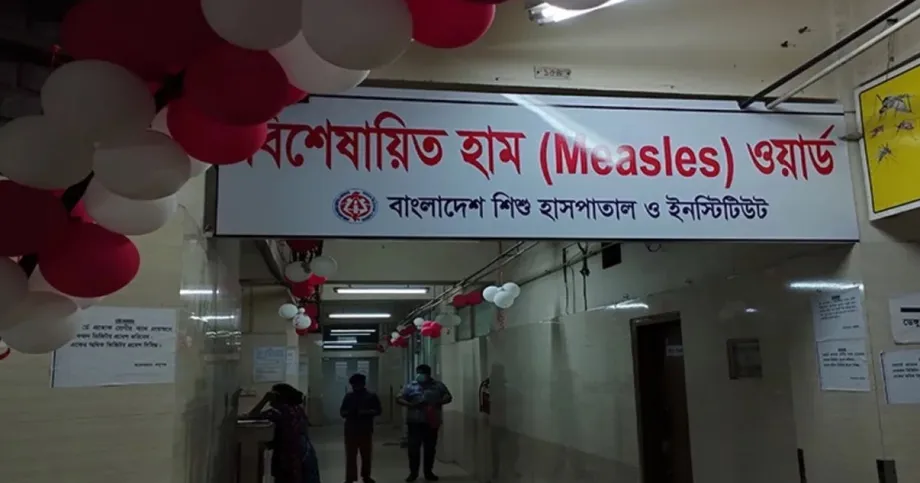
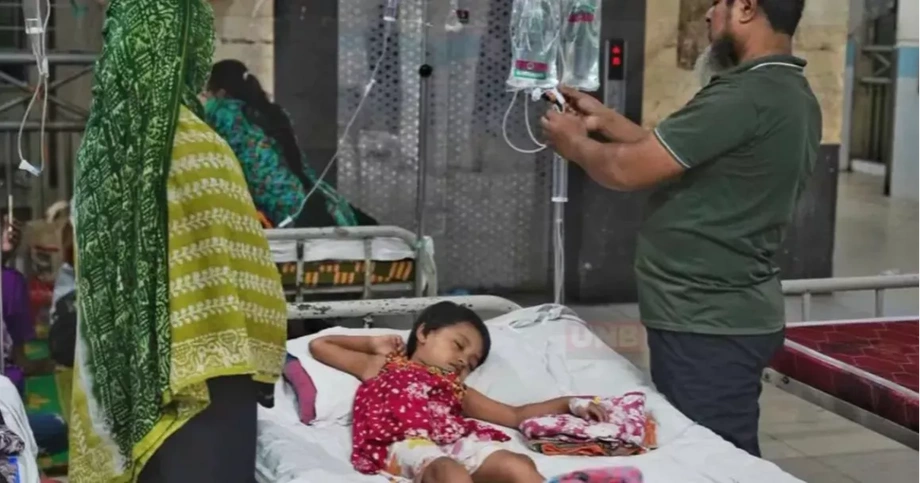
Bangladesh Shishu Hospital and Institute had treated about 3,500 children with measles by October 26, according to hospital authorities, with approximately 97 to 98 deaths. At that point, 97 children were receiving treatment, including 25 newly admitted that Monday.
The hospital has 700 beds but only 14 intensive care beds, equivalent to 2% of its total capacity. Children arriving with severe pneumonia may need continuous oxygen, intensive care or ventilation, which uses a machine to support breathing.
Hospital director Professor Mirza Md Ziaul Islam said delayed treatment and malnutrition were major problems. He estimated that about 90% of children arriving at the hospital were malnourished. Medical officer Marzia Afroz said staffing levels were low compared with the number of seriously ill patients.
Families were travelling long distances for care. Sanjida Khatun brought her son Ayman Sadiq from Jhikargacha in Jashore when he was two months and 27 days old. He had spent 16 days in a local private hospital's intensive care unit before transfer to Dhaka with pneumonia and severe breathing difficulties following measles.
The director said about 300 doctors were working at the hospital and another 50 were planned for recruitment in November. Clinicians urged families to seek care early for fever, cough and rash, and urgently for breathing difficulty, seizures, repeated vomiting or diarrhoea.
A larger study and decisions on vaccination
Institute of Public Health director S M A Safi said researchers were collecting samples from 3,000 children, with 100 children in each of 30 upazilas, or subdistricts. Results were expected in the final week of November. The reason for the low antibody readings in the September study remains unresolved.
Icddr,b has also begun a clinical cohort study across four divisional hospitals, following patients to understand their illness and outcomes. Related investigations cover virus genetics, immunity, nutrition, the possible role of zinc and reasons children miss vaccination.
Professor Be-Nazir Ahmed, a former director of the government's disease control branch, has called for vaccination coverage above 95%, campaigns every four years and wider age eligibility. He proposed including children older than five and eventually extending coverage to age 18. These are recommendations for government consideration.
Speakers at the Jahangirnagar seminar also called for stronger national capacity. Bangladesh Medical University paediatrics professor Sanjoy Kumar Dey urged investment in vaccine research, local production, quality control and storage. Virologist Khandaker Mahbuba Jamil called for stronger vaccination services and laboratory networks, while icddr,b scientist Firdausi Qadri stressed preparedness when external assistance is delayed or reduced.
For families, the immediate advice remains to complete every scheduled measles and rubella dose and follow government instructions during the outbreak. For health authorities, the priorities now run from recruiting vaccinators and reaching missed children to checking vaccine delivery and expanding care for those already seriously ill.
Key Points
- The September study found negative measles antibody results in 85 of 309 vaccinated children, or 27.5%, and borderline results in another 21.
- A randomised Matlab trial found a 94% antibody response after vaccination at six months, rising to 99% after a second dose at nine months.
- DGHS recorded 222,552 hospital presentations with measles symptoms and 1,233 deaths, including 104 confirmed measles deaths.
- An independent review found 82% full immunisation coverage against a 95% target, with about 40% of vaccinator posts vacant.
- Routine measles and rubella doses are scheduled at nine and 15 months. An early outbreak dose is additional to those appointments.
- A study involving 3,000 children was expected to release results in late November.