Deletion requests surged after the filing deadline
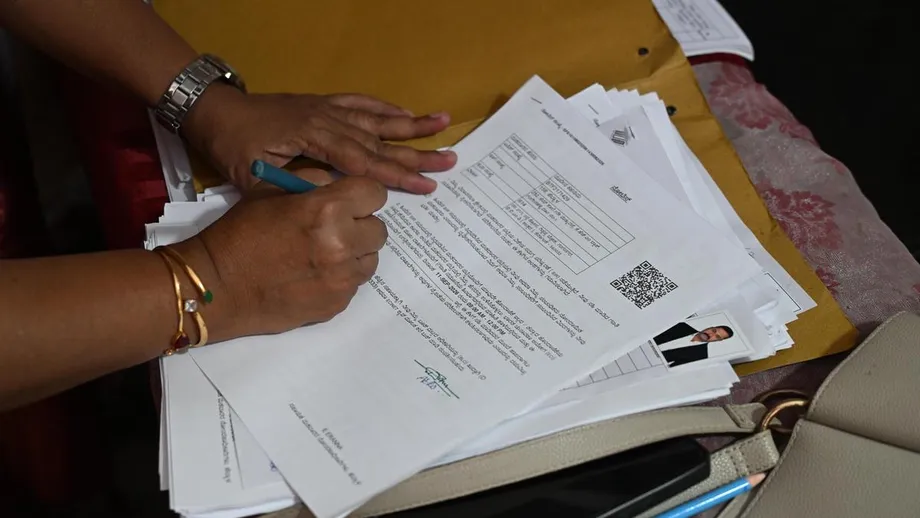
At least 61,059 applications seeking to remove voters from Karnataka's electoral rolls were filed by election officials themselves without recording a reason for deletion, according to an examination of election records. Most were filed after the September 23, 2026 deadline for claims and objections, ahead of the final roll scheduled for October 27.
Contents
- Deletion requests surged after the filing deadline
- What officials said happened inside the system
- Four days accounted for most official applications
- Officials submitted the majority in parts of Bengaluru
- A much larger revision had already reduced the draft roll
- What the election office said about hearings
- Two official tallies left a gap of 13,808 applications
- Political allegations prompted an inquiry
- Key Points
Electoral Registration Officers (EROs) and Assistant Electoral Registration Officers (AEROs) were listed as the objectors on the Form 7 applications. Officials said the system automatically generated the forms with their digital signatures when voters could not be reached during hearings concerning missing electoral mapping or discrepancies in their records. Those voters were then marked as ineligible.
The procedure placed the officials responsible for deciding whether a voter should remain registered in the position of also submitting the objection against that voter. The blank reason fields made it impossible to identify from the applications which legal ground was being used to seek removal.
The Registration of Electors Rules, 1960 require objections to be submitted in the prescribed form and manner, including the reason. Rule 17 requires the registration officer to reject claims or objections that fail those requirements or arrive outside the prescribed period.
Checks of several affected voters' Electoral Photo Identity Card (EPIC) numbers on the Election Commission of India portal found their names had already been deleted, including cases involving applications filed after September 23. The findings put the timing of removals, the adequacy of notices and the records supporting individual decisions at the centre of scrutiny.
What officials said happened inside the system
Election officials said they had been instructed to submit Form 7 applications when a voter had permanently moved, appeared in the rolls more than once, was underage, had died or was not an Indian citizen. Each category provides a different reason for questioning an entry and requires information relevant to that particular case.
The automatically generated applications left the reason field empty, officials said. A person examining one of these forms could therefore see that removal had been requested, but could not tell whether the case concerned a death, an alleged duplicate registration or another ground.
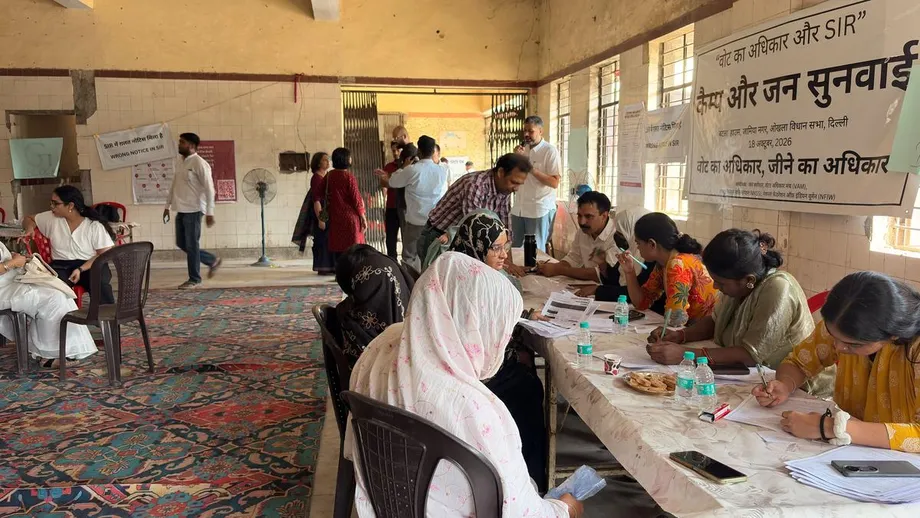
The hearings involved voters placed in the no mapping or logical discrepancy categories. In simple terms, those labels describe problems linking an entry to the records used during verification, or inconsistencies flagged in the information. Officials said inability to reach a voter during that process led the system to generate a deletion request.
A digital signature connects an electronic document to the official signing it. Here, the explanation that software produced the applications leaves a practical accountability issue: the forms carried official signatures, while the information needed to understand the objection was missing.
For an affected voter, the immediate consequence is concrete. A name missing from the electoral roll can prevent the person from voting unless registration is restored through the applicable process. Knowing the stated reason for removal also helps the voter identify which documents or explanation to submit.
Four days accounted for most official applications
Only 192 Form 7 applications filed by election officials were recorded between August 24 and September 23. More than 60,800 followed between September 24 and October 22, after the deadline for submitting claims and objections for the final roll.
Four dates accounted for 43,311 applications by officials, about 71% of the identified total of 61,059. The largest of those daily figures was 11,760 on October 19. Officials submitted another 10,105 on October 22, the last day for disposing of claims and objections.
The sequence matters because the deadline for filing applications and the deadline for deciding them served different purposes. According to the announced arrangements, applications received by September 23 were to be considered for the October 27 final roll. Later applications were to be handled for a supplementary roll after the Special Intensive Revision (SIR).
- June 16: Karnataka had 55,432,314 registered electors before the revision figures described by officials.
- August 24: The draft roll listed 44,635,975 electors.
- September 23: The filing period for claims and objections affecting the final roll closed.
- October 1: Congress leader D.K. Shivakumar held a protest outside the Chief Electoral Officer's office in Bengaluru.
- October 17 and 19: Officials filed 11,132 and 11,760 Form 7 applications respectively.
- October 21 and 22: Officials filed another 10,314 and 10,105 applications respectively, with disposal due to finish on October 22.
- October 27: The final electoral roll was scheduled for publication and distribution to political parties.
The portal checks showing that some voters named in applications submitted after September 23 had already been removed make the handling of those later requests a central issue. The published timetable assigned them to a subsequent supplementary roll.
Officials submitted the majority in parts of Bengaluru
In the Bruhat Bengaluru Mahanagara Palike South electoral district, officials filed 10,374 of 17,491 Form 7 applications. That is about 59%, meaning applications submitted by election officials outnumbered those filed by voters or other parties combined.
Bommanahalli Assembly constituency showed an even greater concentration. Officials submitted 4,095 of its 5,757 applications, or about 71%. The pattern of EROs and AEROs submitting more applications than voters or third parties appeared in at least 26 Assembly constituencies.
The geographical figures help explain why the issue extends beyond isolated mistakes on individual forms. Across those constituencies, the officers administering the rolls were also a major source of objections seeking to change them.
Each application still concerns an individual electoral entry. Resolving the issue therefore requires a record connecting the named voter, the reason for the objection, the notice and hearing process, and the officer's eventual decision.
A much larger revision had already reduced the draft roll
Karnataka's draft electoral roll had already fallen by 10,796,339 names between the June 16 count and its publication on August 24. Officials put the earlier electorate at 55,432,314 and the draft electorate at 44,635,975, a reduction of about 19.5%, or nearly one in five entries.
Those figures give the precise scale behind descriptions of roughly 1.08 crore names being left out. One crore equals 10 million. Election officials placed the excluded entries under the ASDDO categories: Absent, Shifted, Dead, Duplicate and Others.
The largest group of removals involved voters recorded as having permanently shifted, followed by those marked absent. These categories had already been examined during the enumeration stage, when officials checked electoral information through a survey of households.
The later Form 7 applications therefore arose after a substantial initial screening exercise. For voters whose records had already been examined, another objection could mean a further decision about eligibility or residence during the same revision.
The Chief Electoral Officer's office also recorded substantial demand for additions and corrections. Between June 16 and October 22, it received 1,042,863 Form 6 applications, 4,840 Form 6A applications and 1,310,841 Form 8 applications, alongside 228,917 Form 7 applications.
Form 6 seeks inclusion in the electoral roll, while Form 6A covers eligible Indian citizens living overseas. Form 8 is used for changes such as correcting an entry or updating residence. Together, the four categories amounted to 2,587,461 applications. The 61,059 deletion requests identified as having been filed by officials represent about 27% of the statewide Form 7 total.
What the election office said about hearings
Karnataka's Chief Electoral Officer, V Anbukkumar, said the final roll would be released on October 27, published on the CEO's website and shared with political parties. His office said all Form 7 applications received through September 23 had been cleared on priority.
The CEO's office also said the verification hearings had been completed statewide. Its statement described the scale of the exercise:
A total of 43,82,824 notices have been generated and delivered, and hearings have been completed across the state,
The notices concerned voters flagged under the no mapping and anomalies categories. Officials said EROs had processed and disposed of all notices served, and that some applications had been rejected.
Details of rejected applications and the reasons for rejection were being collected from EROs for sharing with political parties alongside the final roll. That promised disclosure would provide another opportunity to examine how individual cases were decided.
For the deletion cases examined through EPIC searches, the number of voters checked was not specified. It also remained unclear whether the required hearing notices and deletion orders had been issued in those particular cases, and which grounds supported their removal. The CEO's statement described completion of the statewide hearing exercise without resolving those individual records.
Two official tallies left a gap of 13,808 applications
The CEO's office recorded 170,442 Form 7 applications between September 24 and October 22. The consolidated Form 10 records available on the Election Commission website contained 156,634 for the same period, leaving a difference of 13,808, about 8.1% of the CEO's figure.
Form 10 provides a consolidated record of objections to inclusion. Its importance here is practical: examining those records makes it possible to identify who submitted applications and which electoral entries were challenged.
The lower number of applications available in those records means the identified total of 61,059 requests by officials could rise if additional records become available. The reason for the gap between the two published totals was not explained.
The broader statewide figures show how heavily Form 7 activity was concentrated near the end of the revision. The cumulative total stood at 58,475 on September 23 and reached 228,917 by October 22. About three quarters of all Form 7 applications recorded since June 16 arrived during that final period.
Political allegations prompted an inquiry
Congress leader D.K. Shivakumar alleged that Form 7 was being misused to target minority voters and people from Scheduled Caste, Scheduled Tribe and Backward Class communities. He accused BJP and JD(S) leaders and workers of organising bulk submissions using printed forms containing voter names, EPIC numbers and polling booth details.
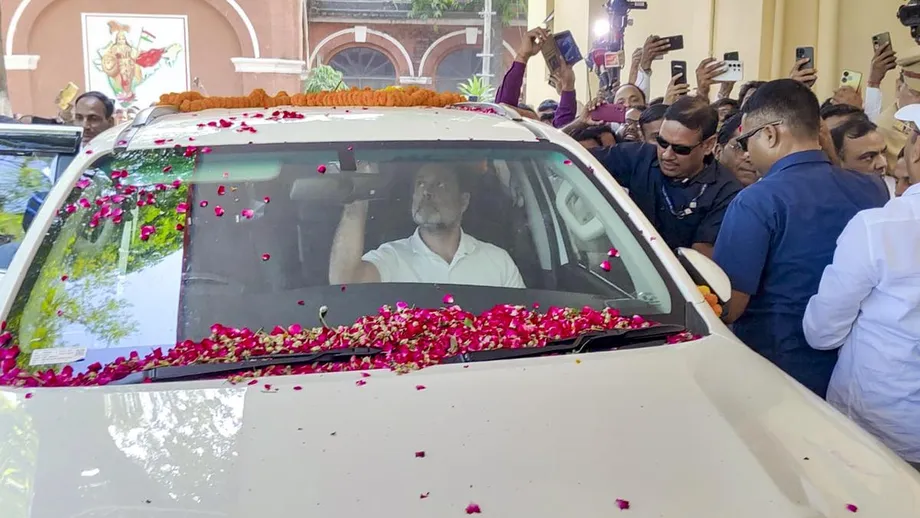
Shivakumar held a protest lasting five hours outside the CEO's Bengaluru office on October 1. The CEO subsequently directed EROs to investigate the alleged bulk submissions. More than 10 First Information Reports, the police records that begin criminal investigations, had been registered across Karnataka in connection with the issue.
Congress MP Pawan Khera also criticised the Election Commission and Chief Election Commissioner Gyanesh Kumar over the official deletion applications. His intervention widened the political dispute beyond Karnataka to the administration of electoral rolls elsewhere.
The inquiry into alleged organised submissions and the examination of forms generated under official signatures concern different routes through which names were challenged. Both place attention on who initiated an objection and what evidence supported it. The political accusations remain allegations under investigation.
Election officials said voters could challenge ERO decisions before district election officers and the CEO, submit Form 6 with relevant documents to seek inclusion, or approach a court where required. They said no challenges had yet been filed before the district election officers or the CEO.
Registration, correction and deletion were to continue after publication of the final roll. Officials said applications could be submitted online through ECINET or offline through election offices, with documents checked and verified before processing. For affected voters, the next practical issue is whether the October 27 roll contains their names and whether the decision records explain any removal.
Key Points
- At least 61,059 Form 7 applications filed by election officials omitted reasons for seeking deletion.
- More than 60,800 were filed after the September 23 deadline for claims and objections affecting the final roll.
- Checks of several EPIC numbers found names already deleted, including cases involving applications submitted after the deadline.
- Officials filed about 59% of Form 7 applications in BBMP South and about 71% in Bommanahalli.
- The draft roll contained 10,796,339 fewer names than the June 16 electorate, a reduction of about 19.5%.
- The CEO's application total exceeded the website's consolidated records by 13,808 for September 24 to October 22.
- The CEO's office said hearings for 4,382,824 notices were complete, with publication of the final roll scheduled for October 27, 2026.
- An inquiry into alleged bulk submissions was ordered, and more than 10 FIRs had been registered.