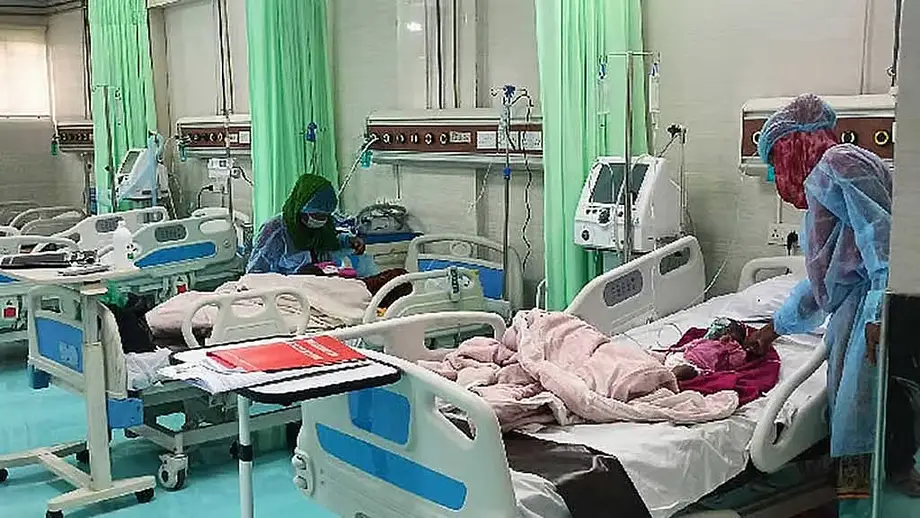
More than 218,000 admissions since March
Bangladesh has recorded 1,299 deaths among people with confirmed measles or symptoms of the disease since March 15, according to the Directorate General of Health Services (DGHS). Its latest Thursday bulletin recorded another four deaths among patients with measles symptoms, showing that the outbreak continues months after an emergency vaccination campaign began.
Contents
- More than 218,000 admissions since March
- Dhaka and Sylhet carry the largest reported death counts
- Two children die while receiving treatment in Sylhet
- How the outbreak and response unfolded
- Why babies were especially exposed
- Vaccine shortages and staffing gaps preceded the crisis
- An inquiry examines earlier vaccine decisions
- Hospital counts reveal only part of the burden
- What the continuing response requires
- Key Points
The national figures include 218,075 hospital admissions involving measles symptoms and 24,880 admissions involving confirmed measles. In the latest 24 hours, authorities recorded 1,384 people with symptoms and 157 confirmed infections. Two of the four deaths were in Sylhet division, with one each in Dhaka and Chattogram.
Dhaka division has the largest reported number of deaths among patients with symptoms, at 534, followed by Sylhet with 210. Across the country, families and hospitals are still facing a disease that vaccination can prevent, while an investigation examines earlier decisions about buying and distributing vaccines.
The World Health Organization had already documented widespread transmission in April. Its assessment identified vaccine shortages during 2024 and 2025, gaps in routine vaccination and a long interval since the previous mass campaign as contributors to the outbreak. Young children, including babies below the usual age for a first routine dose, carried much of the early burden.
The national death count combines confirmed and suspected cases. Patients with suspected measles have symptoms consistent with the disease, while confirmed cases have a diagnosis supported by testing. Bangladesh does not test every patient, and its hospital records leave infections outside medical facilities less visible.
Dhaka and Sylhet carry the largest reported death counts
The DGHS bulletin places Dhaka far ahead of the other divisions in deaths among people with measles symptoms. Its 534 deaths compare with 210 in Sylhet, 120 in Chattogram, 93 in Rajshahi, 92 in Mymensingh, 70 in Barishal, 57 in Khulna and 18 in Rangpur.
Those divisional figures add up to 1,194 deaths among patients with symptoms. Dhaka accounts for about 45% of that total, while Dhaka and Sylhet together account for about 62%. These percentages describe the distribution of recorded deaths, rather than the risk faced by an individual resident.
WHO's early outbreak investigation helps explain the pressure on the capital. By April 14, Dhaka division had recorded 8,263 suspected cases out of 19,161 nationally, or about 43%. In the city, cases were concentrated in densely populated settlements including Demra, Jatrabari, Kamrangirchar, Korail, Mirpur and the Tejgaon industrial area.
Measles spreads through the air and respiratory droplets. In crowded homes and busy medical facilities, an infected person can expose many others. WHO's response recommendations therefore include separating patients with suspected measles from other patients in waiting areas and hospital rooms.
Two children die while receiving treatment in Sylhet
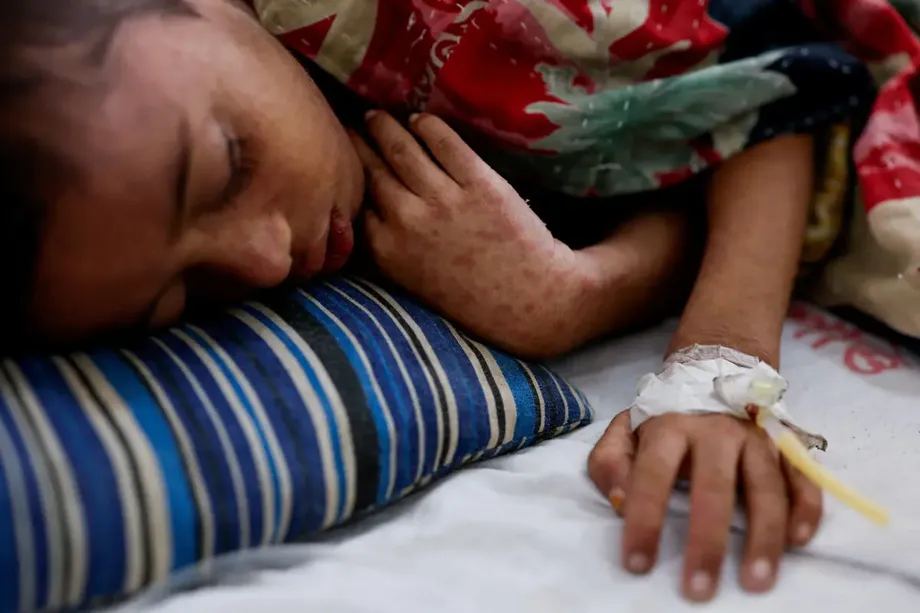
Two more children died in Sylhet hospitals between Wednesday morning and Thursday morning, according to Mohammad Nure Alam Shamim, assistant director of the Sylhet health department. They were two years old and seven months old.
Jhuhi Begum, the daughter of Riaz Uddin from Companiganj upazila in Sylhet, was receiving treatment at Shaheed Shamsuddin Ahmed Hospital. Tanisha, the daughter of Zahidul from Sunamganj Sadar upazila, was admitted to Sylhet MAG Osmani Medical College Hospital.
Sylhet's regional health department recorded 214 deaths among patients with confirmed measles or symptoms, including 10 with laboratory confirmation. The national bulletin listed 210 deaths involving symptoms in Sylhet. The two tallies use different categories, and health authorities have not explained how they reconcile.
By Thursday morning, 567 patients with measles symptoms were receiving treatment in hospitals across Sylhet division. Another 193 had been admitted during the preceding 24 hours. The regional department also recorded 1,207 laboratory confirmed infections from January 1, a longer counting period than the national outbreak series beginning March 15.
How the outbreak and response unfolded
Bangladesh's outbreak records begin on March 15, 2026. Within a month, cases had reached 58 of the country's 64 districts, spanning all eight divisions. WHO's April outbreak assessment, published on April 23, provides a detailed picture of that early spread and the first vaccination response.
The main dates show how emergency measures developed while infections continued:
- March 15: The starting date for the DGHS national outbreak totals.
- March 30: The National Immunization Technical Advisory Group approved an emergency measles and rubella vaccination campaign.
- April 4: Bangladesh formally notified WHO of the nationwide increase in measles.
- April 5: Vaccination began in 30 upazilas across 18 priority districts.
- April 14: WHO's detailed account recorded 19,161 suspected cases, 2,973 laboratory confirmed cases, 166 suspected deaths and 30 confirmed deaths.
- April 20: The vaccination campaign expanded nationwide.
- November 4: The Cabinet Division ordered an investigation into vaccine procurement and distribution failures.
- November 7: A DGHS update recorded 1,280 deaths among confirmed and suspected cases.
The latest Thursday bulletin raises the cumulative death count to 1,299. The continuing admissions and deaths put immediate treatment needs alongside the longer task of restoring reliable vaccination services.
Why babies were especially exposed
Children younger than five accounted for 79% of cases in WHO's April assessment. Children younger than two accounted for 66%, and infants younger than nine months accounted for 33%. These age groups overlap: the youngest babies are also included in the totals for children under two and under five.
Bangladesh's routine first measles vaccination was scheduled at nine months. Some babies became infected before reaching that age, which is why the emergency campaign included children from six months to 59 months. Seven month old Tanisha's death illustrates the young ages of children requiring hospital care during the outbreak.
WHO recorded that early suspected deaths were mainly among unvaccinated children younger than two. It also identified malnutrition, vitamin A deficiency and weakened immune systems as factors that increase the risk of severe illness.
Measles usually begins with fever, cough, a runny nose and red eyes, followed by a rash. Serious complications include pneumonia, diarrhoea, inflammation of the brain, blindness and death. A person can spread the virus from four days before the rash appears until four days afterward, allowing transmission before the illness is easily recognised.
Vaccine shortages and staffing gaps preceded the crisis
WHO linked the outbreak to a growing number of children without enough protection against measles. Its assessment cited nationwide shortages of the combined measles and rubella vaccine during 2024 and 2025, gaps in routine vaccination and the absence of a nationwide supplementary campaign since 2020.
Rubhana Raqib, a senior scientist at icddr,b, and Mahmudur Rahman, a former director of the Institute of Epidemiology, Disease Control and Research, examined the administrative failures in an academic analysis. They described disrupted vaccination activities during the interim government that held office from August 2024 to February 2026, amid strikes and political turmoil.
The authors identified vacant senior health posts, slow purchasing approvals, delayed funding and depleted vaccine stocks. They also reported that 45% of health worker positions were vacant in more than half of Bangladesh's districts in 2025. A campaign normally held every four years had not taken place after 2020.
Raqib and Rahman argued that vaccination programmes needed protection from political disruption. They wrote:
Vaccination campaigns in Bangladesh are generally supported by Gavi, Unicef, and the World Health Organization, and these campaigns should continue even in the middle of an ongoing political crisis, for the sake of children's lives.
Their account connects shortages at several stages: arranging money, buying vaccines, delivering supplies and having enough workers to administer them. A child needs each stage to function before a vaccine purchase becomes actual protection.
An inquiry examines earlier vaccine decisions
The Cabinet Division's November 4 notification established a commission to examine delays, irregularities and administrative failures in measles vaccine procurement and distribution. The investigation covers decisions during the interim administration led by Prof Muhammad Yunus.
Former High Court Division Justice Mamnoon Rahman chairs the commission. Its other members are Prof Dr Moudud Hossain Alamgir, president of the Bangladesh College of Physicians and Surgeons, and ANM Moinul Islam, an additional secretary of the Health Services Division.
The vaccine procurement inquiry was ordered when the national total stood at 1,269 confirmed and suspected deaths. It has 60 working days to report and recommend measures to prevent similar failures. Responsibility for the alleged failures has not yet been determined.
The investigation follows a change from direct vaccine procurement through UNICEF towards open tenders financed through the government revenue budget. The commission can examine decisions before purchases were made as well as difficulties getting vaccines to the places where children receive them.
Hospital counts reveal only part of the burden
DGHS records patients who come to hospitals or are admitted. People who remain at home, cannot reach care or receive care outside the reporting system are harder to count. Raqib and Rahman also identified a gap in routine government health data, which cover public facilities but leave out the private sector.
The November 7 bulletin illustrates the different measures used to track the outbreak. It recorded 237,702 people presenting to hospitals with symptoms, 211,865 admissions involving symptoms and 24,355 confirmed infections. It also recorded 203,257 discharges among patients admitted with symptoms.
Hospital visits, admissions, laboratory confirmations and deaths each answer a different question. Visits show how many people sought care; admissions show how many required a hospital bed; testing identifies confirmed infections. Some patients appear in more than one category.
Investigators have also examined immunity after vaccination. A September study led by IEDCR found that 85 of 309 vaccinated children, or 27.5%, lacked detectable measles antibodies when tested. The September antibody study prompted calls for further investigation, while Health Minister Sardar Md Sakhawat Hossain said a larger study was needed. Antibodies are proteins that help the body recognise and fight an infection.
What the continuing response requires
WHO recommends reaching at least 95% coverage with both routine measles vaccine doses in every municipality. Consistent local coverage matters because communities with many unprotected children can sustain transmission even when national vaccination totals look strong.
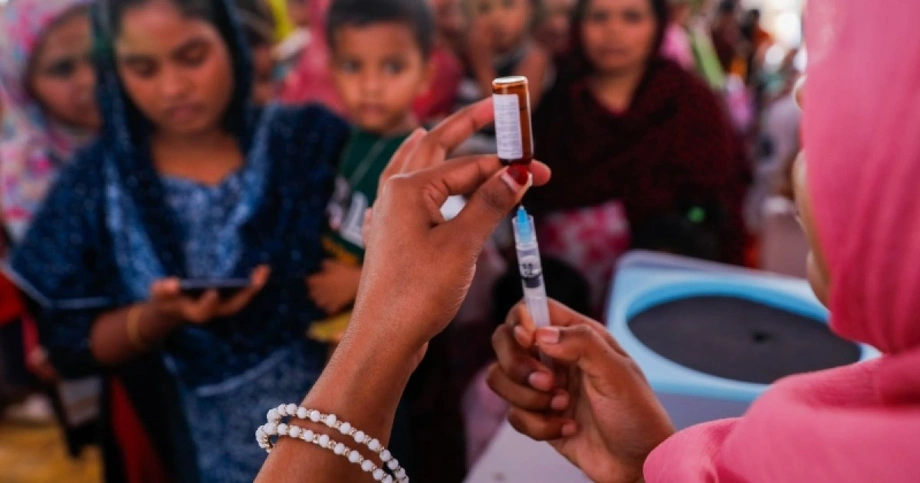
Bangladesh's response has included faster vaccine procurement, district rapid response teams, stronger surveillance, isolation facilities and vitamin A treatment for suspected and confirmed cases. Measles has no specific antiviral treatment, so care focuses on supporting recovery and treating complications.
WHO assessed national and regional risk as high and global risk as moderate in April. It identified travel hubs including Dhaka, Chattogram, Sylhet and Cox's Bazar, along with busy borders with India and Myanmar, as places requiring close attention. It recommended stronger surveillance and vaccination access rather than restrictions on travel or trade.
For families, the immediate needs remain accessible vaccination, prompt assessment of sick children and hospitals able to separate infectious patients safely. For the health system, the continuing outbreak demands dependable vaccine stocks, enough staff and records that show which communities are still being missed.
Key Points
- DGHS recorded 1,299 deaths among confirmed and suspected measles cases since March 15.
- The latest 24 hours brought four deaths involving symptoms, 1,384 suspected infections and 157 confirmed infections.
- Dhaka recorded 534 deaths involving symptoms, the largest divisional total, followed by Sylhet with 210.
- Two children, aged two years and seven months, died while receiving treatment in Sylhet hospitals.
- WHO identified vaccine shortages, missed vaccinations and gaps between mass campaigns as contributors to the outbreak.
- A commission established on November 4 has 60 working days to investigate vaccine procurement and distribution failures.