A small gain masks a worsening threat to children
Bangladesh's hunger score has improved by just 4% since 2018, while acute undernutrition among children under five has risen to its highest level since 2000. The 2026 Global Hunger Index places the country 84th among 122 countries with sufficient data, with a score of 19.2, compared with 20 in 2018.
Contents
- A small gain masks a worsening threat to children
- How the pace of progress changed
- Why rising wasting is the central warning
- What Bangladesh has achieved in child growth
- When food is available but a varied diet costs too much
- Where Bangladesh stands in South Asia
- National gains leave some communities exposed
- What the score measures and when the data were collected
- A global reversal puts the 2030 goal further away
- Key Points
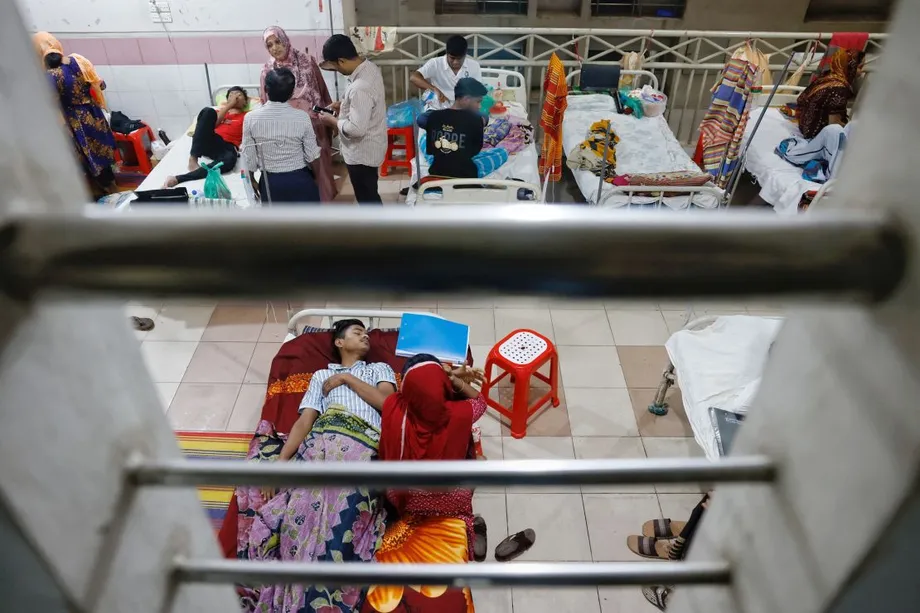
The most troubling figure is child wasting, which measures low weight for a child's height. It rose from 8.4% in the 2018 comparison to 12.9% in the latest assessment, even as Bangladesh reduced the share of people receiving insufficient calories, improved child survival and continued cutting child stunting.
Released on October 14 at an event in Berlin, the 2026 Global Hunger Index describes Bangladesh's longer progress as a generational achievement. Its findings also show how that progress has become uneven: several measures of nutrition and health are improving, while one measure of children's immediate nutritional condition is moving sharply in the opposite direction.
Bangladesh remains in the moderate hunger category, ahead of India and Pakistan but behind Sri Lanka and Nepal. Its score is 0.8 points below the threshold of 20 that begins the serious category.
The index is jointly published by Welthungerhilfe, Helvetas and the Institute for International Law of Peace and Armed Conflict. Its 2026 edition combines observations from several earlier years, so the figures describe conditions measured before 2026 rather than changes during the publication year.
How the pace of progress changed
Bangladesh reduced its hunger score from 34.6 in 2000 to 20 in 2018, an improvement of about 42.2%. The subsequent fall to 19.2 represents a much smaller gain of 0.8 points, or 4%, across the latest comparison period.
The recalculated scores in the report trace that change:
- 2000: Bangladesh scored 34.6, within the serious hunger category.
- 2006: The score fell to 30.0.
- 2012: It declined further to 27.3.
- 2018: The score reached 20.0, the threshold for serious hunger.
- 2026 edition: The score stands at 19.2, within the moderate category.
Bangladesh's total reduction since 2000 is 15.4 points, or about 44.5%. Most of that improvement had already happened by the 2018 benchmark. The latest figures therefore present two realities together: a substantial transformation over a generation and a much slower recent decline in hunger.
Why rising wasting is the central warning
Child wasting increased by 4.5 percentage points from the 2018 comparison, rising from 8.4% to 12.9%. Measured relative to the earlier rate, that is an increase of about 54%. Nearly 13 out of every 100 children under five are now affected in the latest assessment.
Wasting reflects acute undernutrition. A child weighs too little for their height, often in connection with inadequate nutrition or illness, and faces a greater risk of sickness and death. Stunting measures a different problem: being too short for one's age after a longer period of nutritional deprivation.
Bangladesh's wasting rate was 12.5% in 2000. It improved to 8.4% in the 2018 comparison before climbing above its starting level to 12.9%. That reversal makes wasting the major exception to the country's longer nutritional gains.
Dr Mehbuba Nur Protha, district technical coordinator at FIVDB, called for a response that combines nutrition services with affordable food, clean water and medical care:
Although Bangladesh has made significant progress in reducing child stunting, the high prevalence of child wasting remains a serious concern, which underscores the need to strengthen maternal and child health and nutrition services at primary health care centers, ensure access to affordable, diverse diets, and improve access to safe water, sanitation, and health care, particularly for vulnerable and marginalized communities.
What Bangladesh has achieved in child growth
Child stunting fell from 54.9% in 2000 to 29.8% in the 2018 comparison and then to 24% in the latest assessment. The full decline is 30.9 percentage points, meaning the proportion affected has more than halved since 2000.
The Global Hunger Index's Bangladesh country profile records that improvement alongside the country's current score. Yet 24% still means nearly one child in four is too short for their age, a condition associated with lasting difficulties in physical growth, learning and development.
Studies cited in the index identify improvements in parental education, especially maternal education, and household living conditions as major contributors to the long decline. Better health services, sanitation and changes in demographic conditions also helped.
Bangladesh improved two other indicators after the 2018 benchmark. Undernourishment, the share of people whose calorie intake is insufficient, fell from 12.1% to 8.2%, a reduction of 3.9 percentage points. Mortality before age five declined from 3.3% to 3%, compared with 8.6% in 2000.
Those gains explain why the combined hunger score still improved despite rising wasting. The four indicators follow different aspects of food intake, growth and survival, and their movements can diverge.
When food is available but a varied diet costs too much
Household purchasing power helps explain why national food availability and children's nutrition can follow different paths. Families need enough money to buy a varied diet, as well as access to food in markets.
Dr Khondaker Golam Moazzem, research director at the Centre for Policy Dialogue, identified food prices and household incomes as a threat to diet quality:
Rising food prices and stagnant household purchasing power can force low-income families to compromise on dietary diversity, making nutritious food increasingly unaffordable and worsening the risk of child malnutrition.
Families under financial pressure may continue buying rice and other inexpensive staples while reducing protein foods, fruit and vegetables. A household can keep eating regular meals while losing variety and nutrients from its diet. Children, pregnant women and mothers who are breastfeeding are particularly vulnerable to those changes.
Protha's recommendations address the same problem from the health side. Stronger maternal and child nutrition services, affordable varied diets, safe water and sanitation would address several routes through which children become undernourished. Illness and poor nutrition can reinforce each other, so food support and medical care need to reach the same vulnerable families.
Where Bangladesh stands in South Asia
South Asia's hunger score is 23.5, placing it in the serious category and making it the region with the second highest score after Africa south of the Sahara. The regional score has fallen from 37.5 in 2000, although most of that improvement occurred before 2018.
Bangladesh's score is 4.3 points lower than the South Asian figure, but 1.1 points higher than the global score of 18.1. Its position among neighbouring countries is:
- Sri Lanka: 53rd, with a score of 10.2, classified as moderate.
- Nepal: 72nd, with a score of 14.5, classified as moderate.
- Bangladesh: 84th, with a score of 19.2, classified as moderate.
- India: 100th, with a score of 24.1, classified as serious.
- Pakistan: 106th, with a score of 25.5, classified as serious.
- Afghanistan: 108th, with a score of 28.6, classified as serious.
Every South Asian country with enough data has a lower score than in 2000. Afghanistan and Pakistan, however, have worsened since the 2018 benchmark. Undernourishment now affects more than a quarter of Afghanistan's population.
Pakistan faces pressure from both economic instability and disasters. Heavy monsoon rains and flash floods affected more than 6 million people in 2025, destroying cropland and infrastructure. The report also identifies the lasting effects of sharp food price inflation on families' ability to buy food.
National gains leave some communities exposed
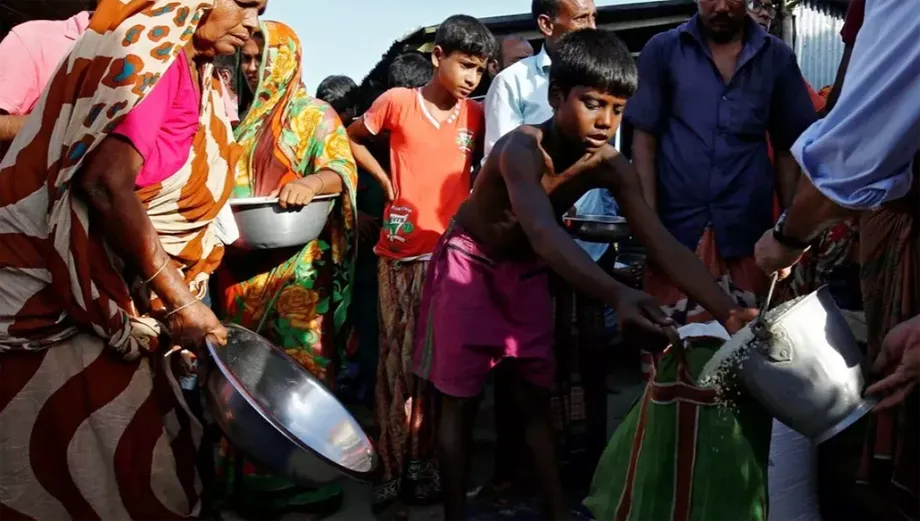
Bangladesh's national food security improved in 2025, according to the index, but conditions remained unequal across the country. Displaced Rohingya were added to the FAO and World Food Programme Hunger Hotspots list amid increased refugee arrivals, more frequent floods and reduced humanitarian assistance.
Refugee communities face several pressures at once. More arrivals increase the number of people needing assistance, floods can interrupt access to food and safe water, and reduced aid limits the support available to meet those needs.
The report places reaching displaced and marginalised populations among its priorities for protecting progress against hunger. In Bangladesh, that means addressing severe needs in particular communities alongside measures intended to improve nutrition across the population.
What the score measures and when the data were collected
The Global Hunger Index combines four indicators: undernourishment across the population, stunting among children under five, wasting among children under five and mortality before age five. Scores run from zero, the best outcome, to 100, the worst.
The classification thresholds are below 10 for low hunger, 10 to 19.9 for moderate hunger, 20 to 34.9 for serious hunger, 35 to 49.9 for alarming hunger, and 50 or above for extremely alarming hunger. A country's ranking also depends on the performance of the other countries included in the assessment.
The 2026 edition draws on undernourishment estimates for 2023 to 2025, wasting data from 2021 to 2025 and mortality figures for 2024. Although the general methodology uses stunting estimates for 2024, Bangladesh's 24% figure is marked as a survey value from 2025.
The report gives a period for the wasting data rather than a specific collection year for Bangladesh's 12.9% figure. Changes occurring during 2026 are outside the data used to calculate this edition's scores.
Historical comparisons use the recalculated figures printed in the 2026 report. The agencies producing the underlying data revise their estimates, so the index updates its earlier scores each year to maintain a consistent comparison.
A global reversal puts the 2030 goal further away
The global hunger score rose from 17.6 in the 2018 comparison to 18.1 in the 2026 edition, interrupting a decline from 28.2 in 2000. Undernourishment, child stunting and child wasting worsened globally, while child mortality continued to improve slowly.
Welthungerhilfe's global hunger assessment says hunger increased in 32 countries after 2018. At the same time, 31 countries reduced their scores by at least 10%, showing that progress continued in some places despite worsening global conditions.
The index identifies conflict, climate shocks, rising prices and reduced funding as major pressures. Conflict and insecurity were the main drivers of high acute food insecurity affecting 147.4 million people across 19 countries and territories in 2025.
Famine was confirmed in parts of the Gaza Strip and Sudan that year, the first time the Integrated Food Security Phase Classification reporting system confirmed famine in two countries or territories in a single year. That classification describes catastrophic deprivation accompanied by extreme levels of acute malnutrition and death across an area.
Funding has moved in the opposite direction from need. Welthungerhilfe says spending on food security fell to levels last seen in 2016 and 2017, forcing cuts to emergency rations and aid programmes while weakening the collection of nutrition data.
The report warns that, at the pace observed since 2000, 57 countries would fail to reach low hunger levels by 2030, the deadline for the United Nations goal of ending hunger. For Bangladesh, the immediate priority is more specific: reverse rising wasting while sustaining the improvements in child growth, survival and access to adequate food.
Key Points
- Bangladesh ranks 84th among 122 countries, with a hunger score of 19.2 in the moderate category.
- The score improved by 4% after the 2018 benchmark, compared with about 42.2% between 2000 and 2018.
- Child wasting rose from 8.4% to 12.9%, its highest level since 2000.
- Child stunting fell to 24%, while undernourishment and mortality before age five also declined.
- Displaced Rohingya face pressure from increased arrivals, floods and reduced humanitarian assistance.
- The 2026 index uses earlier observations and recalculated historical scores, with Bangladesh's stunting survey value dating from 2025.