From a Screening Pilot to Training in Andijan
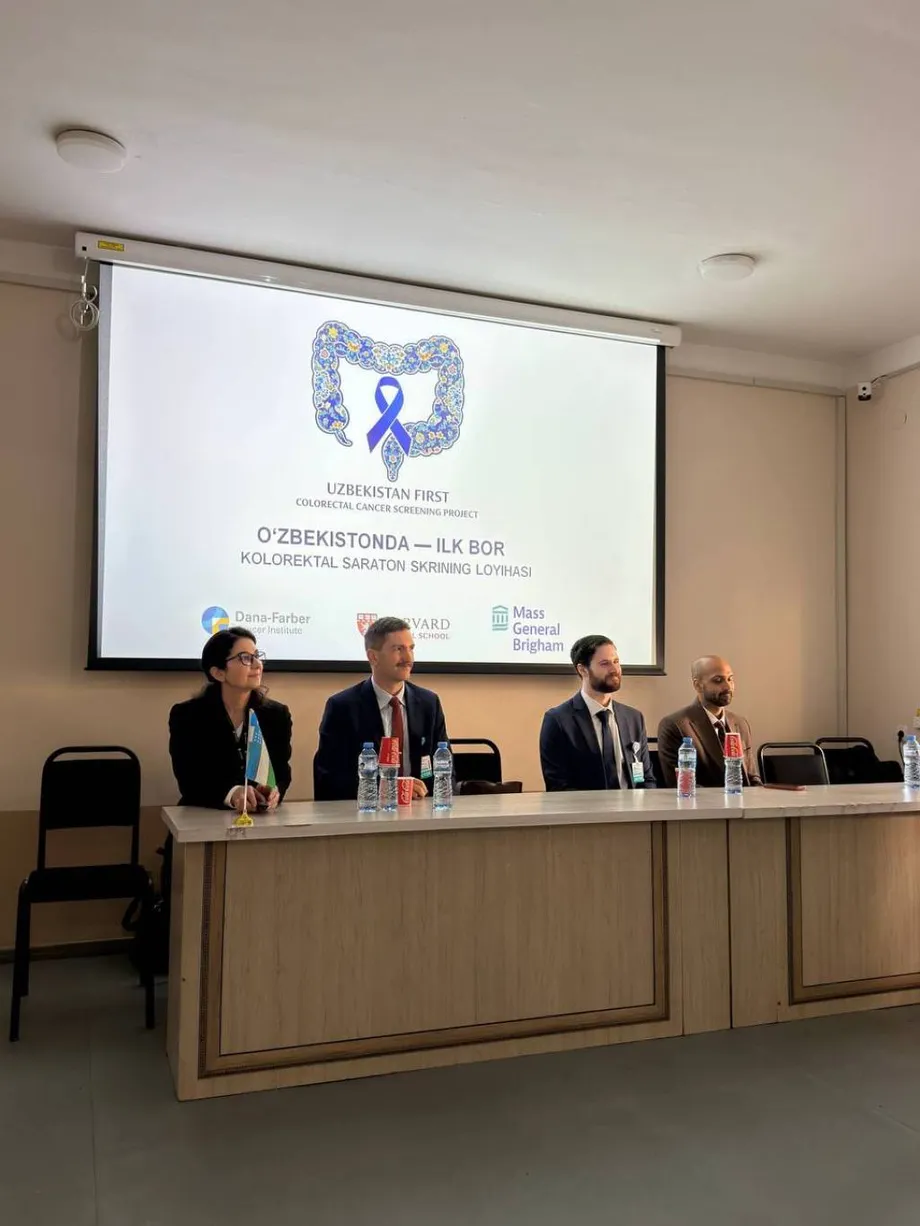
Uzbekistan is building a colorectal cancer screening system around a practical challenge: finding people who need a closer examination while improving the quality of the examinations themselves. Dana-Farber Cancer Institute announced a pilot with the Ministry of Health and the National Cancer Center on February 10, 2026. International training in Tashkent and Andijan is also bringing specialists together to improve colonoscopy, detect suspicious growths and discuss difficult cases.
Contents
- From a Screening Pilot to Training in Andijan
- What Dana-Farber's Pilot Introduces
- Who Is Organizing the Training?
- How the Dates Fit Together
- What Doctors Are Learning to Find
- Why FIT and Colonoscopy Work Together
- What Changes Under the 2027 Cancer Program?
- Who Will Pay for Diagnosis and Treatment?
- Equipment Investment and Regional Capacity
- Key Points
The pilot introduces fecal immunochemical testing, usually called FIT, to help identify people at higher risk and direct limited colonoscopy resources toward them. The training program focuses on what happens during that closer examination, including checking the entire colon and recognizing early changes that may need further investigation.
Uzbekistan's wider cancer policy sets another milestone: January 1, 2027. From that date, a national program covering stomach, colorectal, lung and prostate cancers is scheduled to begin gradually across the regions, alongside state insurance coverage for specified cancer diagnosis and treatment services.
Colorectal cancer develops in the colon or rectum, the final parts of the digestive tract. Screening looks for warning signs before a person necessarily feels ill. The Uzbek initiatives connect three parts of that process: selecting people for examination, training clinicians to find abnormalities, and arranging access to diagnosis and treatment.
The immediate activity in Andijan concerns professional training and improvements at regional oncology branches. The February pilot, the October teaching schedule and the broader reforms beginning in 2027 have distinct dates and scopes. Together, they describe how Uzbekistan intends to move early detection from a specialist service toward a more organized system.
What Dana-Farber's Pilot Introduces
Dana-Farber's Center for Global Health described the initiative as the first colorectal cancer screening program in Central Asia in its February 10 announcement. A team drawn from several medical specialties traveled to Uzbekistan to introduce FIT screening, provide practical colonoscopy training and help establish the arrangements needed to run the program.
FIT checks a stool sample for tiny amounts of blood that may be invisible to the eye. Blood can have several causes, so a result that needs investigation leads to a closer assessment. Colonoscopy allows a clinician to inspect the inside of the bowel using a flexible instrument with a camera.
Uzbekistan was chosen because of strong government support and its role as a regional center for cancer care, according to Dana-Farber. National health leaders have committed to supporting the initiative beyond the initial pilot. Local partners and the visiting team will refine procedures, collect data and consider expansion after the pilot phase.
Timothy R. Rebbeck, the Vincent L. Gregory, Jr. Professor of Cancer Prevention at Harvard T.H. Chan School of Public Health and Dana-Farber Cancer Institute, is a leader of the initiative. He described the purpose of the partnership in these terms:
This work is about partnering with countries to build programs that last and have real impact.
Who Is Organizing the Training?
The Uzbekistan Association of Oncologists, the Republican Specialized Scientific and Practical Medical Center of Oncology and Radiology, and Gustave Roussy International Uzbekistan Medical Center are organizing the international educational program. The national oncology center's training program announcement lists Dana-Farber Cancer Institute and Brigham and Women's Hospital as partner organizations.
Specialists from the United States, the United Kingdom and Uzbekistan are participating. The center names Anne Liu, Pranay Sinha, Davis Harnett, Nilufar Qahorova, Jacob Dockterman and Selvin Marroquin as members of the international expert team.
The invitation extends beyond doctors who perform colonoscopy. It includes endoscopists, who examine internal organs with camera instruments; coloproctologists, who specialize in the colon and rectum; cancer specialists; digestive disease specialists; surgeons; and pathologists, who examine tissue to help diagnose disease.
That range of participants reflects the work required after an abnormality is found. A clinician may identify a suspicious growth, a pathologist may assess a tissue sample, and other specialists may decide what treatment is needed. The program brings these professions into shared seminars and discussions of complex clinical cases.
How the Dates Fit Together
The oncology center scheduled teaching sessions in Tashkent for October 5 and 6, followed by Andijan on October 8 and 9. The Tashkent venues were the national oncology and radiology center and Gustave Roussy International Uzbekistan Medical Center.
An account dated October 14, 2026, describes the visiting team's work as beginning in Andijan and calls the region its first stop, while the center's published teaching schedule places Tashkent first. The visit description and the scheduled sessions therefore give different sequences.
The main dates are:
- February 10, 2026: Dana-Farber announces the screening pilot with Uzbekistan's Ministry of Health and National Cancer Center.
- October 5 and 6: The oncology center schedules practical teaching sessions in Tashkent.
- October 8 and 9: The center schedules sessions in Andijan.
- October 14, 2026: An account describes the international team's training activity in Andijan.
- January 1, 2027: Regional implementation of the broader national cancer program and specified insurance coverage is scheduled to begin.
The October educational activities focus on clinical skills. Dana-Farber's February announcement also addresses testing procedures and program infrastructure, while the January 2027 changes concern a wider national cancer policy.
What Doctors Are Learning to Find
The Andijan workshops concentrate on modern colonoscopy techniques, a complete examination of the colon, detection of polyps and early neoplastic changes, and assessment of suspicious lesions. A lesion is an area of tissue that looks abnormal. Neoplastic changes involve abnormal cell growth that requires medical assessment.
Polyps are growths on the inner lining of the bowel. Some can develop into cancer over time. Identifying them is one reason colonoscopy matters in a program designed to prevent cancer as well as diagnose it early.
The oncology center places particular attention on examination quality. Seeing the whole colon and evaluating suspicious areas carefully are practical skills, rather than simply matters of owning modern equipment. The workshops combine direct instruction with scientific seminars and discussion of difficult patient cases.
Regional branches are a central part of the effort. Visiting experts and doctors from the national center are working to improve care in Andijan, giving local specialists opportunities to exchange experience and apply current medical approaches in their daily practice. Dana-Farber's pilot similarly includes training local providers so that expertise remains within Uzbekistan after visiting teams leave.
Why FIT and Colonoscopy Work Together
Dana-Farber's plan uses FIT to decide where scarce colonoscopy capacity should be directed. A stool test and a camera examination do different jobs: the first helps identify people who need further investigation, while the second lets a clinician look inside the bowel.
That sequence matters when specialist time and examination facilities are limited. Sending everyone directly for colonoscopy would require much more capacity. Using FIT first creates a route for selecting people for closer assessment, while the training program addresses the quality of that assessment.
The partners have not published the pilot's participant numbers, eligible age range, testing interval, results or timetable for nationwide expansion. The next stated steps are to refine procedures, collect data and plan possible growth after the pilot.
Dana-Farber says a successful Uzbek model could inform similar programs in neighboring countries. Its announcement also describes parallel work on prostate cancer early detection in sub-Saharan Africa. For Uzbekistan, the immediate task is more specific: making testing, referral and skilled examination work together within local health services.
What Changes Under the 2027 Cancer Program?
President Shavkat Mirziyoyev has signed a decision on improving cancer prevention, early detection and treatment. It provides for gradual regional implementation of a national cancer control program developed with the World Health Organization and international experts, beginning on January 1, 2027.
The program covers stomach, colorectal, lung and prostate cancers. Its goals include reaching at least 60% of the population with targeted examinations for common cancers, increasing public awareness of risk factors and early symptoms, improving diagnosis and treatment, and reducing deaths.
The detection targets are numerical. The share of cancers found at stages 1 and 2 is intended to rise from 30% to 40%. The share found at stages 3 and 4 is intended to fall from 65% to 55%. Stages describe how far a cancer has developed or spread, helping doctors plan treatment.
Both targets represent a change of 10 percentage points. Put simply, among 100 diagnoses measured under those indicators, the early stage target corresponds to 40 cases rather than 30, and the later stage target to 55 rather than 65. These are goals for the broader cancer program, rather than published results from the colorectal pilot.
The policy extends the focus beyond detecting abnormalities. Its priorities also cover the quality of medical care and the services needed after diagnosis, making treatment part of the national plan from the outset.
Who Will Pay for Diagnosis and Treatment?
The State Health Insurance Fund is scheduled to cover specified cancer services from January 1, 2027, within guaranteed medical care financed by the state budget. The listed services span early testing, confirmation of a diagnosis and treatment.
Coverage includes laboratory and instrumental examinations for early detection and prevention, diagnosis and staging, surgery, basic medicines against tumors, hormonal treatment, supportive treatment and radiation therapy. Rehabilitation and continuing medical follow up are also included.
Palliative care appears on the list as well. This is care aimed at relieving pain, other symptoms and distress for people with serious illness. Its inclusion gives the policy a broader reach than screening alone, addressing needs at different points in a patient's illness.
A Noncommunicable Disease Control Fund will also be established under the State Health Insurance Fund. Noncommunicable diseases are illnesses that do not pass directly from one person to another, including cancer.
The screening pilot selects people for closer examination, the educational program builds clinical skills, and the insurance changes address payment for specified services. Each serves a different part of the patient journey, from an initial test through treatment and continued care.
Equipment Investment and Regional Capacity
An additional $10 million is planned for modernization of the Republican Oncology Center, as discussed at a presidential meeting on January 20. The planned purchases include 1,027 items of medical equipment across 80 types, along with a cyclotron and a radiosynthesis laboratory.
A cyclotron is a machine used to produce radioactive materials for medical purposes. A radiosynthesis laboratory prepares substances containing those materials for use in medicine. The planned facilities are intended for producing radiopharmaceutical products, which can be used in specialized diagnosis and treatment.
The equipment investment sits alongside the training effort rather than replacing it. The workshops in Andijan focus on how specialists examine patients and assess what they find, while the modernization plan concerns the tools and facilities available to the national center.
Uzbekistan's stated approach combines regional teaching, a pilot screening pathway, national detection targets and financing for cancer care. The practical test will be whether those connected services can take a person from an initial screening result to a timely examination and appropriate care. The partners' planned data collection will be central to assessing the pilot and deciding how it can expand.
Key Points
- Dana-Farber announced a colorectal cancer screening pilot with Uzbekistan's Ministry of Health and National Cancer Center on February 10, 2026.
- The pilot uses FIT stool testing to identify people who need closer assessment by colonoscopy.
- International training in Tashkent and Andijan covers complete colon examination, polyps, suspicious lesions and complex cases.
- A broader national program covering four cancers is scheduled to begin gradually across regions on January 1, 2027.
- National targets include raising early stage detection from 30% to 40% and reducing later stage detection from 65% to 55%.
- Specified cancer diagnosis, treatment and continuing care services are scheduled for state insurance coverage from January 1, 2027.