Qwen moves from the phone to glasses and earbuds
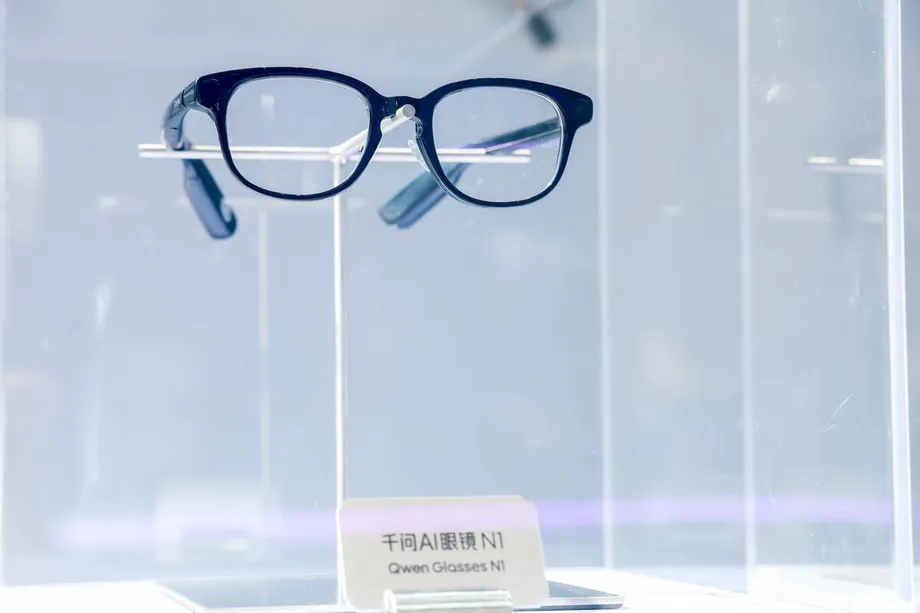
Alibaba began selling its Qwen Glasses N1, N1 Pro and Qwen Clip earbuds in China on October 13, 2026, putting cameras, voice controls, payments and AI task handling into devices people can wear throughout the day. After government subsidies and launch discounts, prices start at 2,218 yuan for the N1, 2,600 yuan for the N1 Pro and 1,099 yuan for the earbuds developed with Bose.
Contents
- Qwen moves from the phone to glasses and earbuds
- What buyers get and what they pay
- How the glasses turn sight into requests
- Pro payments use an iris scan and a nod
- Health monitoring joins the Pro feature list
- Bose earbuds provide a cheaper route to Qwen
- The battery strategy behind continuous sensing
- One assistant across a growing service network
- A rapid rollout meets an uneven market
- Key Points
The launch in Hangzhou follows a September preview and gives Alibaba three new ways to bring its Qwen assistant into daily life. The glasses combine a 50 megapixel camera with translation, meeting notes and voice services. The Pro adds eye tracking, iris verification for payments and sensors for heart rate, blood oxygen and skin temperature.
Song Gang, vice president of Alibaba's Qwen business, described the ambition at the launch:
The goal of Qwen is to become everyone's Personal Agent.
A personal agent is an AI assistant designed to carry out tasks, rather than simply answer questions. Alibaba wants Qwen to understand what someone is looking at or asking for, connect that request to a service and complete the job. The glasses supply visual information; the earbuds provide another way to listen, speak and assign work.
Song also explained how the hardware fits that plan:
We believe that AI wearables are an extension of Qwen in the physical world and an important part of Personal Agents.
The commercial challenge is substantial. IDC figures put China's smart glasses shipments at 611,000 units in the second quarter of 2026, down 8% from a year earlier. Alibaba is introducing more capable devices into a market that has just recorded its first quarterly decline compared with the same period a year earlier.
What buyers get and what they pay
The N1 and N1 Pro are available through Taobao, Tmall, JD.com and Douyin. Their advertised starting prices depend on the package, government subsidy and temporary promotion applied at checkout.
Standard packages are listed at 2,899 yuan for the N1 and 3,399 yuan for the Pro. Launch pricing also puts the models at 2,999 yuan and 3,499 yuan before discounts, respectively. The discounted starting prices are more consistent across the launch information:
- N1 standard package: from 2,218 yuan.
- N1 package with extra battery capacity: from 2,446 yuan.
- N1 Pro standard package: from 2,600 yuan.
- N1 Pro package with extra battery capacity: from 2,827 yuan.
- Qwen Clip earbuds: 1,299 yuan before discounts, or from 1,099 yuan with launch offers.
At the discounted standard package prices, the Pro costs 382 yuan more than the N1, a premium of about 17%. Buyers paying that difference get the eye tracking, iris verification and physical monitoring features.
China added smart glasses to its government subsidy programme in 2026, with support equal to 15% of the retail price, capped at 500 yuan per device. Alibaba's lowest advertised prices combine subsidies with limited promotional discounts, making the final checkout amount an important part of the purchase decision.
How the glasses turn sight into requests
The N1 series supports photography from the wearer's viewpoint and 4K video recording. Bone conduction microphones pick up speech, allowing users to ask Qwen for translations, notes, shopping assistance and payments.
The N1 Pro adds information about where the wearer is looking. At an exhibition, a person can look at an object and ask about it; the assistant uses their gaze to identify the subject. At a cafe, someone looking at a foreign language menu can ask about a particular item and hear a translation.
Eye tracking supplies a missing piece of an ordinary spoken request. A person often says "this one" while looking at something. For an assistant to respond usefully, it needs to connect those words to the right object or line of text.
Travel reminders offer another example of Alibaba's proposed shift toward proactive service. With the relevant functions enabled and linked to an itinerary, the glasses can prompt travellers with boarding gate or departure information at stations and airports. Qwen is intended to bring up the information when it becomes useful, without requiring a fresh question each time.
Pro payments use an iris scan and a nod
The N1 Pro's iris verification system was developed with GPASS, an Ant Group subsidiary. The iris is the coloured part of the eye, whose detailed pattern can be used to check a person's identity.
The payment sequence combines several steps. A wearer starts an Alipay payment, looks at a merchant's payment QR code, checks the payment details and nods to confirm. Iris verification then authorises the transaction.
Qwen claims the system has a false recognition rate below one in a million. In plain language, that is a measure of how often the identity check incorrectly accepts someone. The figure is a company claim about the verification technology.
Alipay says it will continue opening its iris recognition security technology to eyewear partners. Huawei, RayNeo, Qwen and Rokid are among the brands that have introduced its Look to Pay function. Alibaba's payment push therefore extends beyond selling its own glasses: Alipay is also seeking a place in devices made by other companies.
Health monitoring joins the Pro feature list
The N1 Pro monitors heart rate, blood oxygen and skin temperature, then uses AI reports to explain the readings. Qwen describes it as the first AI glasses in the industry with real time monitoring of physical signs.
Alibaba's examples focus on everyday activity. During cycling, changes in heart rate can trigger a prompt to adjust breathing or movement rhythm. During ordinary wear, the glasses can record eye use and remind someone to take a break after looking continuously for too long.
Those functions broaden the Pro's role from a camera and assistant to a device that watches aspects of the wearer's condition. Battery life and comfort become especially relevant when features depend on people keeping the glasses on for extended periods.
Bose earbuds provide a cheaper route to Qwen
The Qwen Clip earbuds use an open ear design that clips onto the ear. Developed with Bose, they combine audio tuning with translation, transcription, meeting notes and voice requests to the Qwen assistant.
The earbuds support real time translation across 89 languages. They can also turn speech into written records in multiple languages, giving users an alternative to typing notes during conversations or meetings.
Task delegation goes further than recording what someone says. Alibaba gives the example of a commuter asking Qwen to research a product launch, organise the main announcements and prepare a report. The assistant works in the background and alerts the user when the task is finished.
Scheduled requests are another advertised function. A wearer can ask for an industry news briefing at 9 a.m. each day, making the earbuds a way to assign recurring work as well as immediate tasks.
Qwen lists more than nine hours of battery life for each earbud and more than 40 hours including the charging case. At a discounted starting price of 1,099 yuan, the Clip costs less than half the N1's discounted starting price of 2,218 yuan, giving Alibaba a cheaper entry into its wearable assistant range.
The battery strategy behind continuous sensing
Alibaba lists nine hours of use for the N1 and eight hours for the N1 Pro. It also gives figures of 25 hours on standby or nine hours of music playback for the glasses. Both models have replaceable batteries in their temples, the arms that sit beside the wearer's head.
Continuous environmental sensing creates a different energy problem from taking an occasional photograph. A device needs to notice something useful while conserving enough power for audio, image capture and other work.
Himax Technologies disclosed on October 14 that its WiseEye HX6538 processor is used in the N1 series. The chip supplier says the processor performs visual AI processing on the device at 5 milliwatts, using an Arm Cortex-M55 central processor and an Ethos-U55 neural processing unit. The latter is a component designed to handle AI calculations efficiently.
Himax describes a system that keeps a small visual processor running while leaving the main system inactive until needed. When it detects a relevant event or human presence, it wakes the main system for further processing. Its sensing path operates independently of the conventional image capture system.
The 5 milliwatt figure refers to that visual processing function. The glasses' cameras, audio, connectivity and other components also draw power. Selectively waking the main system is intended to reduce unnecessary activity and make continuous sensing more practical within a small battery.
One assistant across a growing service network
Alibaba is connecting the wearables to a wider business spanning data centres, AI chips, language models, software, commerce and payments. Its aim is to make Qwen useful across those services while allowing people to start a task from whichever device they are wearing.
Song has said that, with user authorisation, perception from the wearer's viewpoint and voice interaction can build personal context across multiple devices. Context means the relevant information an assistant uses to understand a request, such as the user's itinerary or what they are looking at.
Qwen's Skill Plaza platform is also gradually introducing functions from outside developers that users can activate by voice on the glasses and earbuds. This gives Alibaba a way to expand the devices' capabilities beyond the functions included at launch.
Privacy is part of that design challenge because the devices can process speech, surroundings, physical readings and identity information. China issued voluntary guidance in September asking AI glasses to display a light when recording. Authorisation and visible recording signals matter both to wearers and to people nearby.
A rapid rollout meets an uneven market
Alibaba's latest launch follows a series of hardware and software changes over less than a year. The progression shows how the company has brought eyewear, its Qwen app and services such as Alipay closer together:
- November 2025: Alibaba introduced the Quark AI Glasses S1 and G1 series.
- December 2025: Alibaba formed a Qwen consumer business group combining the Qwen app, Quark and AI hardware operations.
- March 2026: The first glasses carrying the Qwen brand, the G1, launched.
- April 2026: A software update connected Qwen glasses to Taobao Flash Purchase and Alipay for tasks including food orders, parking payments and mobile credit top ups.
- September 22 to 24, 2026: Alibaba displayed the N1 range and earbuds at its Yunqi conference in Hangzhou, with reservations opening on September 22.
- October 13, 2026: The N1, N1 Pro and Qwen Clip went on sale.
- October 14, 2026: Himax disclosed its processor's role in the N1 series.
IDC projects global smart glasses shipments of 23.687 million units in 2026. It forecasts China's annual shipments at 4.915 million, compared with about 2.75 million in 2025, an increase of roughly 79%. That projected annual expansion sits alongside the 8% decline recorded in China's second quarter, illustrating how uneven demand remains.
Alibaba's prices before discounts put the N1 in a similar range to Meta's Ray-Ban smart glasses. Its sales pitch therefore rests heavily on functions such as payments, translation, task execution and integration with existing services, alongside camera and audio performance.
The launch also drew attention to suppliers. Conant Optical shares rose more than 5% during trading on October 14, reaching HK$35.08. The company supplies prescription lenses for Alibaba's Quark glasses and signed four framework agreements with smart glasses clients in July 2026.
Alibaba has not announced shipment targets for the three new products. Its next commercial test is whether people find enough everyday value in the combined services to keep wearing the devices, recharge or replace their batteries, and continue using Qwen after the launch promotions end.
Key Points
- Alibaba began selling the Qwen N1, N1 Pro and Bose collaboration Qwen Clip earbuds in China on October 13, 2026.
- Discounted starting prices are 2,218 yuan for the N1, 2,600 yuan for the Pro and 1,099 yuan for the earbuds.
- The glasses offer a 50 megapixel camera, 4K video, translation, notes and voice services; the Pro adds eye tracking, iris payment verification and physical monitoring.
- Both glasses models have replaceable batteries. Listed use time is nine hours for the N1 and eight hours for the Pro.
- The earbuds support translation across 89 languages, transcription and tasks performed in the background or on a schedule.
- Alibaba is connecting wearable hardware to Qwen, commerce, payments and outside developers while China's smart glasses market faces uneven demand.