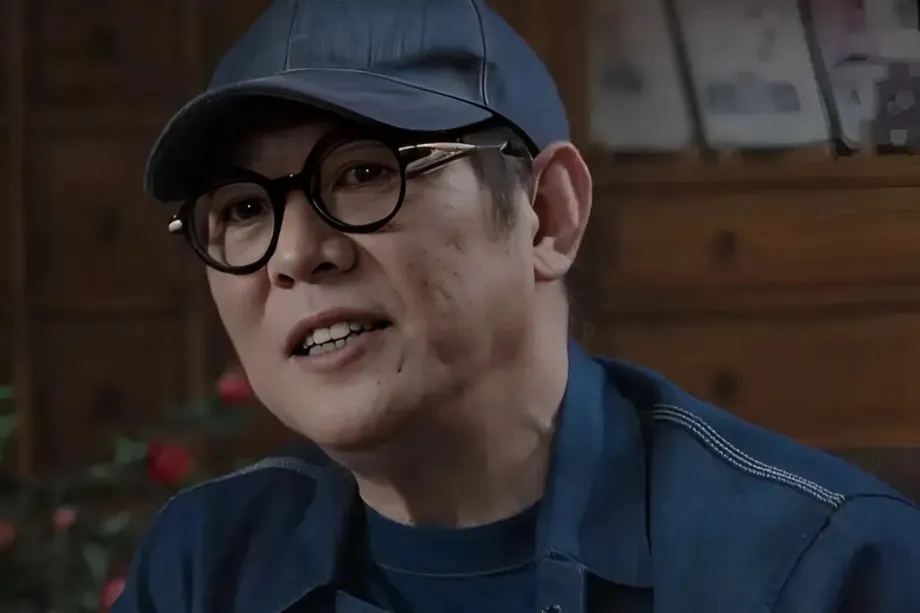
A Father's Account of a Crisis He Recognized Late
Jet Li has described how his youngest daughter showed signs of distress at seven, experienced a severe worsening of depression at around 12 or 13, and later sent him a message from a French airport promising that she would not give up on life. His account connects a frightening period in her childhood with a lasting change in their relationship.
Contents
The actor recalled that she would hide beneath a chair and say little. At the time, he was occupied with his career and did not give those signs the attention he now believes they required. He said he understood the seriousness of her condition only years later, when she developed suicidal thoughts.
One episode was especially distressing: his daughter had tried to help another child who was experiencing mental illness and suicidal thoughts. About a month later, Li said, both children were thinking about ending their lives. No suicide attempt is described in his account.
Li, speaking as a father recalling that moment, described his reaction in words translated from Chinese:
Suddenly, my whole world collapsed.
What followed, he said, was a decision to examine what he had missed and begin talking with his daughter about what she was experiencing. His recollection centers on listening and the closeness that developed afterward, rather than providing a detailed account of medical care.
What the Childhood Timeline Shows
The ages Li gives distinguish the first signs he remembers from the later crisis. He described noticeable distress at seven and a sharp deterioration at 12 or 13, leaving roughly five or six years between those points.
That interval does not establish when a diagnosis was made or whether symptoms continued at the same level throughout. It shows how much time separated the behavior he now recalls as concerning from his recognition of the severity of the situation.
The sequence described in the accounts is:
- At seven, his daughter frequently hid beneath a chair and remained quiet.
- At around 12 or 13, her condition worsened severely and she experienced suicidal thoughts.
- During another child's crisis, an effort to help was followed about a month later by suicidal thoughts involving both children.
- One account places her online study of meditation and mindfulness in 2019.
- She later spent three months attending classes and courses in the United States and Europe, then sent her father a reassuring message from France.
The calendar years for the childhood episodes and the three months abroad are not established. One account dates the interview with Yang Lan to October 11, 2026, but that date is not independently confirmed here. The ages and sequence should therefore not be treated as a fully verified calendar chronology.
When Helping Another Child Became Part of the Crisis
Li's description of his daughter trying to support another child adds a difficult dimension to the story. She was dealing with her own distress while attempting to help someone else who was also struggling.
The account says that about a month later both children were considering suicide. It does not explain how their conversations developed, whether adults knew about them at the time, or what professional support either child received. Those omissions limit any conclusion about why the situation worsened.
The sequence alone does not establish that helping the other child caused his daughter's deterioration. Nor does it establish a wider pattern involving other young people. It is one episode recalled by a parent, without a separate account from either child.
For Li, the incident became a turning point in how he understood his role. He said he began asking himself whether he had overlooked something and actively sought conversations with his daughter. Another account of the interview says those exchanges also made him recognize how little he understood about mental illness.
His explanation is personal rather than clinical. It describes a change from not fully recognizing her distress to trying to understand it. It does not identify a particular intervention at the moment of crisis or explain how the immediate danger was addressed.
Three Months Abroad and a Message From France
Li said his daughter subsequently spent three months in the United States and Europe, taking different classes and courses. A more detailed account says she had explored meditation and mindfulness through online learning in 2019 before pursuing further study abroad.
Mindfulness generally means paying attention to present experiences, including thoughts and feelings, without immediately judging them. That explains the term, but it does not tell readers which practices she used, how the courses were organized, or whether they formed part of treatment supervised by a clinician.
At the end of the trip, she sent her father a message from a French airport. One account identifies the location as Charles de Gaulle Airport, where she was making a connection. The central detail is her assurance that she intended to keep living and hoped to help other children.
Li recalled his daughter's message in these words, translated from Chinese:
Dad, don't worry. I won't give up on life. I've found a home, and I want to use this method to help many children.
The accounts differ in their wording. Another version describes her as saying she had found a direction, rather than a home, while retaining the promise not to give up on life and the wish to help others. Without the original message, those versions cannot be reconciled word for word.
Neither version identifies precisely what she meant by the method she wanted to share. Her message conveys hope and purpose, but it should not be read as documentation of a cure or as evidence that a particular course would produce the same result for someone else.
A Relationship Built Around More Conversation
Li said that after this period, he and his daughter became very close, comparing their relationship to that of close friends. His description suggests that their conversations became more open and that support increasingly ran in both directions.
The contrast with his earlier recollection is striking. At seven, she was quiet and physically withdrawn while he was focused on work. Later, she was communicating directly with him about her determination to live and the purpose she hoped to pursue.
Li's account also separates material provision from emotional understanding. His career and the family's resources did not mean he immediately recognized what his daughter was experiencing. The change he described began with paying closer attention and asking her to explain.
That does not make his account a complete picture of their family life. His daughter does not give an extended account in the interview descriptions, and her airport message offers only a brief glimpse of her perspective. The reported closeness is principally her father's assessment.
Family Claims and the Limits of What Is Known
The broader interview account also describes Li discussing his divorce from Huang Qiuyan and his responsibilities toward their two daughters. He said the separation followed an agreement, that he gave property to his former wife, and that he took responsibility for supporting the children. These are his descriptions of the arrangement, not findings established through legal documents.
That account also attributes a public statement dated May 5, 2026, to entertainment figure Tiffany Chen, known as Xiang Tai. She said Li left housing to Huang and bought her a vehicle. Her description provides a second account of the financial arrangements, though no documentation accompanies it.
Li was also described as saying that his current wife, Nina Li Chi, took responsibility for planning the daughters' lives and upbringing. The account attributes to her a promise that they would not need to worry about basic financial survival through the age of 100. That is a reported family assurance, not a measurable guarantee.
These details explain why discussion of the daughter's depression appeared alongside questions about Li's family responsibilities. They do not establish what medical care she received or resolve every claim about the family's past.
The key unanswered matters are clinical: when she was diagnosed, whether she received medication or psychotherapy, who organized the courses, and what ongoing support she has had. Her current health is not described in enough detail to assess. No future treatment milestone or public update is announced.
The most firmly described change is in the father and daughter relationship. Li recalls recognizing a crisis late, beginning more direct conversations, receiving a message of hope, and developing a closeness that he says has endured.
Key Points
- Jet Li said his youngest daughter showed signs of distress at seven and experienced severe depression and suicidal thoughts at around 12 or 13.
- He recalled another crisis involving a child she had tried to help, then began examining what he had missed and talking with her.
- She spent three months attending courses in the United States and Europe and sent him a reassuring message from France.
- Accounts differ on the exact wording of that message, but both describe her determination to live and help other children.
- Li said their relationship became much closer. Details of her diagnosis, treatment and current health have not been established.