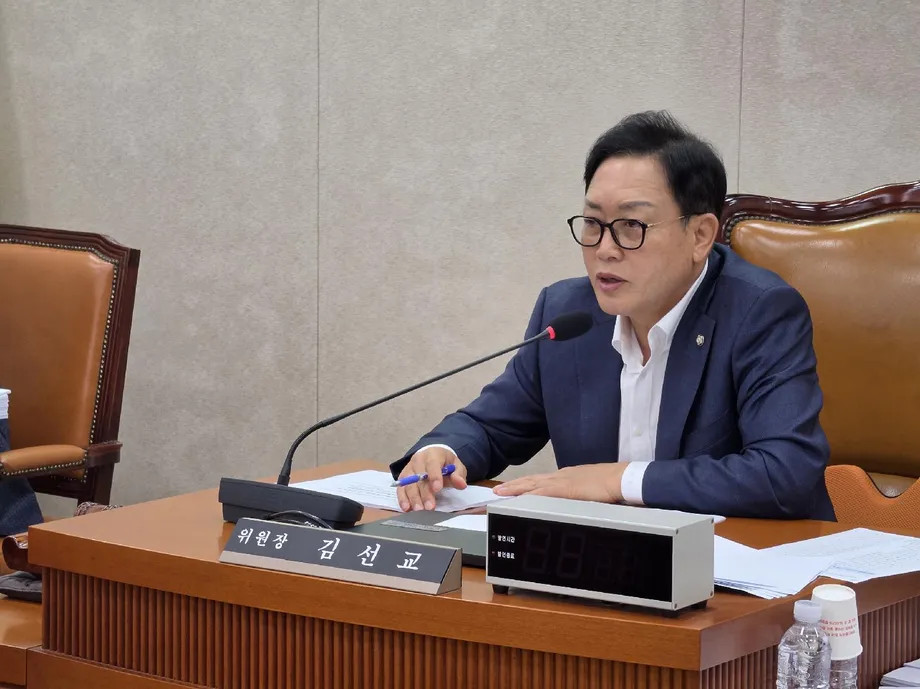
490 cases reveal a gap between harm and discipline
South Korean education committees reviewed 490 cases of emerging forms of school violence involving 684 victims and 1,232 students identified as perpetrators from the 2024 academic year through August 2026. Yet 1,523 of the 1,961 disciplinary measures imposed, or 77.7 percent, were written apologies, prohibitions on contact or retaliation, and service within school.
Contents
- 490 cases reveal a gap between harm and discipline
- What the penalties actually mean
- Violence extends beyond the fight itself
- Agreement does not settle the legal question
- How the cases and policy changes accumulated
- The wider survey shows a different pattern
- Why victims may stay silent
- Admissions consequences are driving legal disputes
- What authorities are being asked to change
- Key Points
The figures, released on October 12 by Rep. Han Byung-do of the ruling Democratic Party, come as authorities warn about yacha rule fights: physical confrontations presented as voluntary contests, sometimes accompanied by promises not to report injuries. Students may be pressured to participate, while others arrange the fights, watch, film them or circulate recordings.
The Education Ministry submitted the figures to Han, a member of the National Assembly’s Education Committee. His analysis also found that treatment or recuperation measures for victims rose from 10.8 per 100 victims in 2024 to 19.3 in March through August 2026. Over the same comparison period, suspension or more severe disciplinary measures fell from 20.6 to 12.6 per 100 perpetrators.
Those contrasting trends are the central concern: recorded demand for victim care increased while the rate of stronger disciplinary action declined. The figures do not establish whether individual committee decisions were justified, because they do not give the evidence, injuries or circumstances behind each decision.
They also require a distinction between cases, students and measures. The 77.7 percent figure describes disciplinary actions, not the proportion of cases receiving only light penalties. A student can receive several measures, and a case can involve several students.
What the penalties actually mean
The three lowest disciplinary levels accounted for 1,523 actions. Level 1 requires a written apology; level 2 prohibits contact, threats or retaliation against the victim; and level 3 requires school service. Entry of these measures in school records can be deferred when prescribed conditions are met. That is more qualified than saying every light penalty automatically leaves no record.
Level 4 involves community service, while level 5 involves special education or psychological treatment. Including those two categories, 90.2 percent of all measures were below suspension. The remaining 193 measures, or 9.8 percent, involved suspension or more severe action, including a change of class or transfer to another school.
At least 794 of the 1,232 students, or 64.4 percent, received no measure at level 4 or above, the threshold identified in Han’s analysis as subject to school record entry. This student count is a separate measure from the percentage of disciplinary actions.
The distinction matters because the data do not show that all students escaped consequences. Apologies, restrictions on contact, service and education are consequences. Han’s concern is whether their severity, documentation and educational content match the harm involved in forced fights and the circulation of footage.
Violence extends beyond the fight itself
Physical violence appeared in 88.8 percent of the 490 reviewed cases. Verbal violence appeared in 42.7 percent, coercion in 28.8 percent and cyberviolence in 18.6 percent. The categories overlap, with roughly two forms of violence identified per case, so the percentages should not be added as though each case belonged to one category.
Cyberviolence featured in 14 percent of cases in the 2024 academic year and 20 percent in March through August 2026, an increase of six percentage points. A fight can therefore produce several connected harms: pressure to participate, physical injury, verbal humiliation and renewed exposure when a recording spreads online.
Accounts of yacha fights describe confrontations in underground parking lots and alleys, away from adult supervision. Students may be told that accepting the fight means agreeing not to contact police, even if injured. Footage is sometimes posted online or sold.
A middle school teacher identified by the surname Seo, aged 55, described how claims of play can conceal unequal power between students.
Students say they do Yacha to test their strength or skills, but in reality, it is often a case of a strong student bullying or flaunting power over another student. It is nothing more than school violence disguised as a play culture.
Agreement does not settle the legal question
Police have warned that yacha fights can constitute crimes despite mutual consent or a written agreement. The Seoul Metropolitan Office of Education has also warned families that agreement does not exempt students from punishment for school violence. A promise not to report a fight is not a guarantee against investigation or disciplinary review.
The school violence prevention act, published in English through the Korea Legislation Research Institute, defines school violence to include assault, coercion, bullying and harmful conduct through information networks between students inside or outside school. Its definition of an aggressor includes a student who takes part in violence, not just the person delivering blows.
Article 17 sets out disciplinary responses ranging from written apologies and restrictions on contact to suspension and expulsion. Article 16 provides victim protections, including psychological counseling, temporary protection, treatment and changes of class. The linked English text reflects an earlier version of the law, so its descriptions of committee structures should not be treated as the current procedure.
Criminal liability remains a separate question from school discipline. A reported appeals ruling in July acquitted a defendant of fatal assault following a February 2024 fight between apartment resident representatives in Pyeongtaek. One participant died after the two reportedly signed an agreement to fight. That outcome does not establish that all agreed fights are lawful; criminal findings depend on the charge, evidence and circumstances.
A separate reported case in Cheongju illustrates the danger of coercion. In May 2026, a woman in her 20s died after allegedly being forced to fight two teenagers in succession. Two people in their 20s were detained on suspicion of joint coercion, and the teenagers were booked on suspicion of special assault. Those are reported allegations and investigative steps, not findings of guilt.
How the cases and policy changes accumulated
Education Ministry figures put reviews of yacha related violence at 107 in the 2024 academic year, 223 in 2025 and 160 in the first semester of 2026. The increase from 107 to 223 was 116 cases, or about 108 percent. Those three counts total 490.
Reports use slightly different descriptions of the latest period. The disciplinary analysis generally identifies March through August 2026, while one summary describes January through August. The latest 160 cases are also described as first semester cases. These labels should not be treated as interchangeable when comparing reporting periods.
The main developments span several years:
- 2019: A revision to the school violence prevention law changed responsibility for reviewing cases.
- 2020: Reviews moved from individual schools to committees under district education offices.
- February 2024: A dedicated school bullying investigator system began.
- 2025 academic year: 147 universities voluntarily began considering school bullying records in admissions.
- April 2026: Sokcho Police Station produced yacha prevention materials through its Women and Youth Division.
- August 2026: The Education Ministry and National Police Agency issued an alert about yacha fights.
- October 12, 2026: Han released his analysis of the ministry’s case and disciplinary data.
The timeline shows that the latest concerns have emerged within a system already undergoing changes in investigations, admissions and prevention. The figures do not establish which of those changes has affected disciplinary decisions.
The wider survey shows a different pattern
The 2026 first round national school violence survey found that 2.9 percent of participating students reported experiencing school violence, up from 2.5 percent in 2025. It was the highest reported rate since the survey began covering all eligible students in 2013.
The survey covered approximately 3.9 million students in grades 4 through 12. About 3.19 million participated, a response rate of 81.9 percent, during four weeks beginning in April. Reported victimization was highest among elementary students at 5.7 percent, followed by middle school students at 2.3 percent and high school students at 0.8 percent.
Verbal harassment accounted for 37.8 percent of reported types of violence, group bullying for 17.1 percent, physical violence for 15.7 percent and cyberviolence for 7 percent. These results describe school violence broadly. They are not directly comparable with the 490 committee cases, which concern emerging forms of violence and are dominated by physical attacks.
The share admitting to bullying others was 0.8 percent, down 0.3 percentage points from 2025. Among reported reasons for committing violence, treating it as a prank or acting without a particular reason ranked first at 30.6 percent. Different perceptions of the same conduct may help explain the gap between students reporting harm and those acknowledging that they caused it.
Seong Yun-sook, a senior research fellow at the National Youth Policy Institute who analyzed the survey, attributed the increase partly to fewer opportunities to build relationships in person and greater sensitivity to bullying among students and parents. That interpretation does not mean that changes in awareness explain every increase in reported violence.
Why victims may stay silent
The no reporting condition attached to some yacha fights creates pressure beyond the confrontation itself. A victim may fear being labeled disloyal for seeking help after supposedly agreeing to participate. Filming can add another source of embarrassment or intimidation.
Separate reporting figures show that fear of making matters worse was the most common reason for not disclosing bullying, at 24.6 percent. Among high school students, 20.8 percent said reporting seemed useless, compared with 13.8 percent across elementary, middle and high schools. Only about 2 percent used each of the official routes identified, such as the 117 reporting center or school police officers.
These figures describe broader reporting behavior, not just victims in the 490 reviewed cases. They nevertheless identify a practical limit of disciplinary statistics: reviewed cases cannot capture incidents that students never disclose.
Teacher reported incidents also clustered during breaks, at 29.8 percent, and lunch, at 21.2 percent. Together, those periods accounted for 51 percent. Prevention therefore depends partly on what happens outside formal lessons, when students have more opportunity to gather without close supervision.
Online attention can extend the audience far beyond the school. A channel specializing in yacha content reportedly had about 500,000 subscribers. Kim Seok-min, head of counseling at the Blue Tree Foundation, called for joint monitoring by platforms and relevant organizations, alongside protection involving education offices, school police officers and social workers.
Admissions consequences are driving legal disputes
School records now carry greater weight because bullying findings can affect access to university. After the Education Ministry announced measures in April 2023, 147 universities voluntarily incorporated bullying records into admissions reviews from the 2025 academic year. The ministry’s announced policy requires all universities to consider them across admissions routes from the 2026 academic year.
The stakes have increased pressure to contest findings or reduce disciplinary levels. Reports describe retaliatory complaints intended to portray a case as shared fault or pressure the student who first reported it. Such disputes complicate the task of separating genuine mutual conflict from coercion presented as agreement.
Kim Ju-hyeon, a lawyer at Sugar Square Law & Advisors, connected the stricter admissions consequences with growing disputes.
From the perspective of admissions officers, even minor disciplinary actions related to school bullying can become an important factor in admissions decisions.
School bullying cases filed with the Seoul Administrative Court rose from 51 in 2022 to 134 in the year described as the previous year in reporting on the court. That is an increase of 83 cases, or about 163 percent. Dedicated divisions increased from two to four in February. The account does not establish an absolute year for those latter dates.
The investigator system introduced in February 2024 uses retired teachers or police officers appointed by district education offices. Investigators reportedly receive 100,000 to 200,000 won per case. It was intended to reduce teachers’ administrative workload, but critics argue that excluding teachers can remove knowledge of classroom relationships.
Hyun Kyung-hui of the Korean Teachers and Education Workers Union called for restoring teachers’ ability to intervene. Park Ju-hyung, a professor at Gyeongin National University of Education, proposed legal protections for teachers investigating or mediating cases, except where intentional misconduct or gross negligence occurs. Seoul has also introduced a relationship recovery reflection program for younger elementary students focused on conversation and mediation in minor cases.
What authorities are being asked to change
Han’s proposed response extends beyond stronger punishment for the students who fight. He called for more detailed review guidelines covering arranging, watching, filming and distributing footage, so committees can identify coercion concealed by claims of consent.
He also sought measures to stop the spread of recordings, strengthen victim protection and recovery, and provide education and behavior correction programs suited to these forms of violence. The requested changes address both the initial assault and the people or online activity that sustain it.
The National Police Agency plans prevention education through school police officers. The Education Ministry has said it will work with the Korea Media and Communications Commission to improve procedures for responding quickly when school violence videos spread online. Youngsan University professor Lee Hyo-min has also called for coordinated prevention and protection against further victimization, rather than relying on warnings of criminal punishment alone.
No implementation deadline for Han’s proposed guidelines, completed nationwide video response procedure or scheduled parliamentary vote is identified. The figures also do not show repeat offending, the duration of victims’ treatment or how often circulated recordings were removed.
The evidence supports a specific conclusion: care measures rose, cyberviolence became more common within the reviewed cases, and stronger disciplinary measures became less frequent per perpetrator. Determining why that happened requires closer examination of individual decisions, while protecting students whose apparent agreement may have concealed pressure.
Key Points
- Committees reviewed 490 emerging school violence cases involving 684 victims and 1,232 students identified as perpetrators.
- The lowest three disciplinary levels accounted for 77.7 percent of measures, not 77.7 percent of cases.
- At least 794 students received no measure at level 4 or above.
- Treatment or recuperation measures rose from 10.8 to 19.3 per 100 victims.
- Suspension or more severe measures fell from 20.6 to 12.6 per 100 perpetrators.
- The national survey found reported victimization at 2.9 percent, its highest rate since 2013.
- Han called for guidelines addressing organizers, spectators, filming and distribution, alongside stronger victim support.